The Case for a Pre-Owned Tesla in 2026
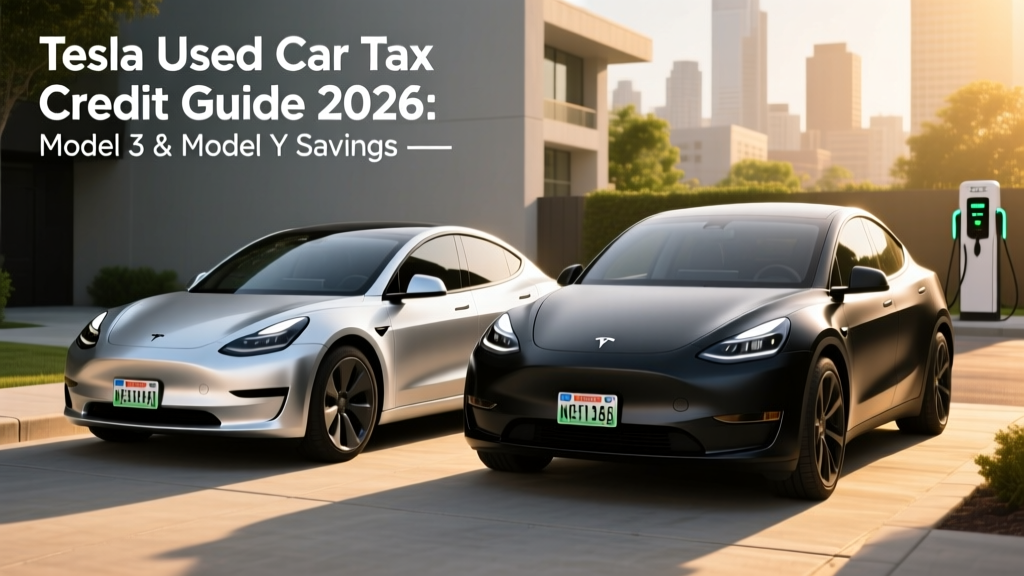
If you have been watching Tesla prices fluctuate over the past few years, buying a used Model 3 or Model Y in 2026 may be one of the smartest electrified-vehicle decisions you can make. The federal tesla used car tax credit — officially known as the Previously-Owned Clean Vehicle Credit under IRS §25E — lets qualifying buyers claim up to $4,000 (or 30% of the sale price, whichever is lower) when purchasing an eligible pre-owned EV from a licensed dealer. Combined with Tesla's proven Supercharger network, strong battery longevity data, and aggressive used-market pricing, the value proposition is compelling for cost-conscious EV shoppers.
But eligibility is far from automatic. Income caps, MSRP ceilings, battery-sourcing rules, model-year requirements, and dealer-reporting mandates all apply. Below, we break down exactly how the credit works for Tesla's two highest-volume models — the refreshed Model 3 Highland and the Model Y — and pair that with the real-world range, charging, and ownership data you need before signing the paperwork.
Tesla Used Car Tax Credit: §25E Rules Explained
Unlike the new-vehicle §30D credit (up to $7,500), the used-EV credit under §25E tops out at $4,000. Here is the 2026 eligibility checklist straight from the IRS:
- Credit amount: 30% of the sale price, capped at $4,000
- Maximum vehicle sale price: $25,000 (before taxes and fees)
- Buyer income caps (MAGI): $75,000 single / $112,500 head of household / $150,000 married filing jointly
- Model year rule: Vehicle must be at least two model years older than the calendar year of purchase (so for 2026 purchases, model year 2024 or earlier)
- First-time transfer: The vehicle must not have been previously transferred to you after August 16, 2022
- Dealer sale required: Private-party and direct Tesla-to-consumer sales do not qualify — must be a licensed dealer
- Battery capacity: Minimum 7 kWh (all Model 3/Y variants clear this easily)
- Point-of-sale transfer: You may elect to transfer the credit to the dealer at purchase, reducing the sale price directly
- Claim frequency: Once every three years per buyer
The $25,000 sale-price cap is the biggest hurdle for Tesla buyers. A 2023 Model 3 Long Range or 2022 Model Y Long Range with moderate mileage can land just under this threshold in 2026, especially through third-party dealers like CarMax or local franchise lots. Tesla's own used inventory often prices above $25,000, which disqualifies those specific listings. Always confirm the final negotiated sale price — not the sticker — before assuming eligibility.
Model 3 vs Model Y: Spec-by-Spec Breakdown
The used Tesla market concentrates on two models. Here is how the most common qualifying trims compare. Note that 2022-2024 Model 3 pre-Highland and 2022-2023 Model Y are the most likely to clear the $25,000 cap.
| Spec | 2023 Model 3 RWD | 2023 Model 3 Long Range AWD | 2022 Model Y Long Range AWD |
|---|---|---|---|
| EPA Range | 272 mi | 358 mi | 330 mi |
| Battery (usable) | ~57.5 kWh (LFP) | ~75 kWh (NMC) | ~75 kWh (NMC) |
| Drivetrain | Rear-Wheel Drive | Dual-Motor AWD | Dual-Motor AWD |
| 0-60 mph | 5.8 sec | 4.2 sec | 4.8 sec |
| Horsepower | 283 hp | 346 hp | 384 hp |
| MPGe (combined) | 132 MPGe | 131 MPGe | 122 MPGe |
| Efficiency | 25 kWh/100mi | 26 kWh/100mi | 28 kWh/100mi |
| Max DC Fast Charge | 170 kW | 250 kW | 250 kW |
| 10-80% DCFC Time | ~25 min | ~27 min | ~27 min |
| Level 2 Home Charge | 11.5 kW / ~37 mi/hr | 11.5 kW / ~44 mi/hr | 11.5 kW / ~40 mi/hr |
| Cargo Volume | 23 cu ft (trunk+frunk) | 23 cu ft | 76 cu ft (rear seats folded) |
| Battery Warranty (remaining) | 8 yr/100,000 mi | 8 yr/120,000 mi | 8 yr/120,000 mi |
| Typical Used Price (2026) | $19,000-$23,000 | $24,000-$28,000 | $24,000-$29,000 |
Real-World Range: What the EPA Sticker Doesn't Tell You
EPA vs Reality: The 2023 Model 3 RWD posts a 272-mile EPA estimate, but its LFP battery and RWD layout mean real-world results vary significantly by condition. Expect approximately 240-255 miles in mixed driving, dropping to 195-215 miles on sustained 75+ mph highway runs. In freezing temperatures (below 30°F), plan for a 20-30% reduction, bringing usable range to roughly 170-200 miles until the battery warms.
The Model 3 Long Range AWD's 358-mile EPA figure translates to roughly 290-320 miles highway and 240-270 miles in cold weather. The Model Y Long Range's taller, heavier profile reduces efficiency to about 270-300 miles real-world under normal conditions.
Tesla's thermal management system is among the best in the industry. Preconditioning the battery while plugged in — either via scheduled departure or the Tesla app — recovers significant range in cold weather by warming the pack before you drive. On road trips, routing through Superchargers automatically triggers battery preconditioning for faster DC charging upon arrival, a feature many competitors still lack.
Charging Speed: DC Fast, Level 2, and the Supercharger Advantage
Charging speed remains a Tesla strong suit, particularly because of the proprietary Supercharger network — now increasingly open to other brands via NACS adapters, but still the most reliable and widespread DC fast-charging infrastructure in the U.S.
| Charging Level | Model 3 RWD (LFP) | Model 3 LR / Model Y LR (NMC) |
|---|---|---|
| Level 1 (120V, 12A) | ~1.4 kW / ~4 mi/hr | ~1.4 kW / ~3 mi/hr |
| Level 2 (240V, 48A) | 11.5 kW / ~37 mi/hr | 11.5 kW / ~44 mi/hr |
| DC Fast Charge (peak) | 170 kW | 250 kW |
| 10-80% DCFC Time | ~25 minutes | ~27 minutes |
| Sustained Rate (avg 10-80%) | ~100 kW | ~130 kW |
Key charging-curve reality: peak kW is not sustained kW. A Model 3 Long Range may hit 250 kW briefly around 10-15% SoC, but the charge curve tapers progressively — dropping to ~100 kW by 60% and ~50 kW above 80%. This is why Tesla quotes 10-80% times rather than 0-100%. For road trips, charging from 10% to 80% at a V3 Supercharger (250 kW) takes roughly 27 minutes. Charging above 80% is best reserved for overnight Level 2 sessions.
For home charging, a 48-amp Level 2 wall connector on a 60-amp circuit delivers the full 11.5 kW, adding roughly 37-44 miles of range per hour. Most owners charge overnight and wake up to a full battery. Installation costs for a 240V/60A circuit typically run $800-$2,000 depending on panel proximity and local permit requirements — consult a licensed electrician for your specific setup.
Battery Chemistry, Degradation, and Warranty
Understanding what battery is in the used Tesla you are considering is critical, because chemistry affects daily charging habits and long-term longevity.
| Factor | LFP (Model 3 RWD) | NMC (Model 3 LR, Model Y LR) |
|---|---|---|
| Energy Density | Lower (heavier pack) | Higher (more range per kg) |
| Cycle Life | 3,000+ cycles | 1,500-2,000 cycles |
| Daily Charging Recommendation | Charge to 100% regularly | Charge to 80% daily; 100% for trips |
| Cold-Weather Performance | Slightly weaker in extreme cold | Better low-temp output |
| Cost | Lower (lower replacement cost) | Higher |
| Typical 100k-mi Degradation | ~5-8% | ~8-12% |
Tesla's battery and drive unit warranty provides strong used-buyer protection. The Model 3 RWD carries an 8-year/100,000-mile battery warranty, while Long Range and Model Y variants carry 8-year/120,000-mile coverage. The warranty guarantees the battery will retain at least 70% of its original capacity during the coverage period. If you are buying a 2022 Model Y with 45,000 miles in 2026, roughly 5 years and 75,000 miles of battery warranty remain — meaningful protection.
Check the vehicle's State of Health (SoH) before purchasing. The Tesla service menu displays battery degradation percentage. A 2022 Model Y at 60,000 miles showing 92% SoH (8% degradation) is well within normal expectations and suggests a healthy pack.
Pricing and Total Cost After the Used EV Credit
| Scenario | Model 3 RWD (2023) | Model 3 LR (2023) | Model Y LR (2022) |
|---|---|---|---|
| Typical Dealer Price | $21,500 | $26,000 | $26,500 |
| Under $25K Cap? | Yes | Borderline — negotiate | Borderline — negotiate |
| §25E Credit (30% of price, max $4K) | -$4,000 | -$4,000 (if ≤$25K) | -$4,000 (if ≤$25K) |
| Effective Price After Credit | ~$17,500 | ~$22,000 | ~$22,500 |
| Est. Annual Charging (12k mi/yr) | ~$480 | ~$500 | ~$540 |
| Est. Annual Fuel Cost (gas equivalent) | ~$1,650 | ~$1,650 | ~$1,800 |
| Annual Fuel Savings | ~$1,170 | ~$1,150 | ~$1,260 |
At $17,500 effective for a 2023 Model 3 RWD, you are getting a 272-mile EPA-range EV with Supercharger access, a 15-inch touchscreen, and over-the-air updates for less than many new compact gas sedans. The fuel savings alone — roughly $1,100-$1,300 per year depending on local electricity and gas prices — pay back the purchase quickly. Factor in minimal maintenance (no oil changes, fewer brake replacements thanks to regen braking) and the 5-year total cost of ownership is highly competitive.
One cost to budget for: insurance. Teslas typically carry higher insurance premiums than comparable gas vehicles, averaging $1,800-$2,500 annually depending on state, age, and driving record. Get quotes before committing.
Tech, Driver Assistance, and Interior
Every used Tesla from the 2022-2024 model years includes:
- Infotainment: 15-inch (Model 3) or 15-inch (Model Y) center touchscreen with navigation, streaming, and OTA updates
- Autopilot (standard): SAE Level 2 driver assistance — adaptive cruise control and lane-keeping. The driver must remain fully engaged at all times.
- Full Self-Driving (Supervised): Optional upgrade (often $8,000-$12,000 when new; may transfer with the vehicle). Still SAE Level 2 — not autonomous. Check if FSD transfers with the specific used listing; Tesla has changed transfer policies multiple times
- Sentry Mode / Dashcam: Built-in camera recording for security and incident capture
- Heat pump: Standard on 2022+ Model 3/Y — significantly improves cold-weather range and cabin heating efficiency vs older resistive heaters
- Phone-as-key: Bluetooth proximity unlock; no physical key fob needed
ADAS Reality Check: Tesla Autopilot and FSD (Supervised) are SAE Level 2 driver-assistance systems. They do NOT make the car self-driving. You must keep your hands on the wheel and eyes on the road at all times. Tesla's camera-based vision system performs well on highways but can struggle with construction zones, faded lane markings, and adverse weather. Never treat it as a substitute for attentive driving.
Pros, Cons, and Who Should Buy
Pros
- Supercharger network — most reliable DC fast-charging in the U.S.
- Strong battery longevity data; many Teslas exceed 150k miles with <10% degradation
- OTA updates keep older vehicles current with new features
- Low running costs: ~$480-$540/year in electricity for 12,000 miles
- Up to $4,000 federal tax credit brings effective price well under $20K for Model 3 RWD
- Remaining battery warranty provides years of coverage on 2022-2023 models
- Heat pump standard on all 2022+ units
Cons
- $25,000 sale-price cap disqualifies many used Tesla listings — requires negotiation
- Insurance premiums run 20-40% higher than gas equivalents
- Model 3 cargo space (23 cu ft) trails Model Y and competitors like the Hyundai Ioniq 5
- FSD transfer to used buyers is inconsistent — do not assume it carries over
- Camera-only vision system lacks radar/lidar redundancy found in some competitors
- Dealer-sale requirement excludes Tesla's direct-to-consumer used inventory from the credit
- No Apple CarPlay / Android Auto — Tesla's native system only
Best For
- Commuters: Model 3 RWD at ~$17,500 after credit is a bargain daily driver with low running costs
- Small families needing cargo space: Model Y's 76 cu ft with seats folded and available 7-seat option make it the practical choice, though the $25K cap requires careful shopping
- Road trippers: Model 3 Long Range's 358-mile EPA range and 250-kW Supercharger access make it the best Tesla for frequent long-distance travel
- Second-car buyers: Any Model 3 variant excels as a high-efficiency second vehicle for errands and commuting
Frequently Asked Questions
Does a used Tesla qualify for the federal EV tax credit?
Yes, but under §25E (the Previously-Owned Clean Vehicle Credit), not §30D. The credit is up to $4,000 or 30% of the sale price — whichever is lower. The vehicle must cost $25,000 or less, be at least two model years old, be purchased from a licensed dealer, and the buyer must fall under the income caps ($75K single / $150K joint). Confirm all details at irs.gov.
Can I get the used EV credit buying directly from Tesla?
Generally no. The §25E credit requires a sale by a licensed dealer. Tesla's direct-to-consumer model in most states does not meet this requirement. To claim the credit, purchase through a third-party dealer such as CarMax, Carvana, or a franchise dealership that stocks used Teslas.
What is the real-world range of a used Model 3 or Model Y?
The 2023 Model 3 RWD delivers roughly 240-255 miles in mixed driving, 195-215 miles highway, and 170-200 miles in freezing weather. The Model 3 Long Range achieves approximately 290-320 miles highway and 240-270 miles in cold conditions. The Model Y Long Range posts roughly 270-300 miles real-world. All figures assume a healthy battery with minimal degradation.
How fast does a used Tesla charge at home?
On a 48-amp Level 2 home charger (240V), a Model 3 or Model Y adds approximately 37-44 miles of range per hour at 11.5 kW. A full overnight charge (8-10 hours) replenishes the entire battery. Level 1 (standard 120V outlet) adds only 3-4 miles per hour and is best for occasional top-offs.
Is a used Tesla worth it vs a new Hyundai Ioniq 5 or Chevy Equinox EV?
At $17,500-$22,500 after the credit, a used Tesla undercuts nearly every new EV on the market while offering Supercharger access and proven battery longevity. However, a new Ioniq 5 or Equinox EV includes a full factory warranty, the latest safety tech, and potentially the $7,500 new-vehicle credit. If the $25,000 cap forces you into a high-mileage Tesla, a new budget EV with the full credit may be the better deal.
How do I check battery health on a used Tesla?
Navigate to Service > Battery Health on the touchscreen, or request a pre-purchase inspection at a Tesla Service Center. The display shows estimated range at 100% charge and a degradation percentage. Compare the displayed range at 100% to the original EPA rating — a 2023 Model 3 RWD showing 250 miles at 100% has roughly 8% degradation, which is normal for the mileage.
Does FSD (Full Self-Driving) transfer with a used Tesla?
Not always. Tesla's FSD transfer policy has changed repeatedly. Some used Teslas sold through third-party dealers retain FSD; others have it removed. Always verify FSD status in the Tesla app or on the vehicle's Software page before purchasing. Never pay a premium for FSD on a used Tesla without written confirmation it transfers.
Sources: IRS Clean Vehicle Credits, EPA Fuel Economy, Tesla Vehicle Warranty.