Why Tesla Used Car Price Declines Are Reshaping the EV Market
Something remarkable has happened to the Tesla resale market between 2023 and early 2026. After years of holding value better than almost any other EV brand, Tesla used car price declines have accelerated — driven by aggressive new-vehicle price cuts, an influx of off-lease Model 3 and Model Y inventory, and intensifying competition from Hyundai, Kia, Ford, and BMW. For buyers, this is the most favorable window in Tesla's history to acquire a lightly used electric vehicle with strong range, access to the Supercharger network, and over-the-air updates.
But a lower sticker price doesn't automatically mean a smart buy. Battery health, warranty transferability, charging hardware generation, and the loss of free Supercharging on most used units all factor into total cost of ownership. This guide dissects what Tesla's used-market pricing means in 2026, which model years offer the best value, and how pre-owned Teslas stack up against new competitors on range, charging, and real-world usability.
| Model / Year | Typical Used Price | Original MSRP | EPA Range | Battery |
|---|---|---|---|---|
| 2022 Model 3 Long Range AWD | $23,500–$27,000 | $50,990 | 358 mi | ~75 kWh NMC |
| 2023 Model 3 RWD (Highland) | $27,000–$31,000 | $38,990 | 272 mi | ~57.5 kWh LFP |
| 2022 Model Y Long Range AWD | $28,000–$33,000 | $58,990 | 330 mi | ~75 kWh NMC |
| 2024 Model Y Long Range (Juniper) | $37,000–$41,000 | $47,990 | 320 mi | ~75 kWh NMC |
| 2021 Model S Long Range | $38,000–$45,000 | $79,990 | 405 mi | ~100 kWh NMC |
Real-World Range: What the EPA Sticker Doesn't Tell You
Tesla's EPA range estimates remain among the most optimistic in the industry — and real-world results depend heavily on driving style, temperature, and terrain. Here's what you can actually expect from the most popular used models.
Model 3 RWD Highland (2023+): EPA 272 miles. The LFP battery's lower energy density means highway range drops to ~220–240 miles at sustained speeds. LFP chemistry tolerates regular 100% charging, partially offsetting the smaller pack.
Model Y Long Range AWD (2022): EPA 330 miles. Crossover aerodynamics and extra weight reduce real highway range to ~270–295 miles. Cold weather: 220–250 miles.
Model S Long Range (2021+): EPA 405 miles. The largest pack delivers genuine 340+ mile road-trip range in mild conditions — the most comfortable buffer in Tesla's lineup.
For context, the EPA's fueleconomy.gov listings show combined MPGe figures of 132 MPGe for the 2022 Model 3 LR and 122 MPGe for the Model Y LR — translating to roughly 25–28 kWh per 100 miles depending on conditions. These efficiency numbers still lead the segment, though Hyundai's Ioniq 6 (140 MPGe) has narrowed the gap.
Charging Speed: Supercharger Access Is the Used-Tesla Advantage
The single biggest reason buyers choose a used Tesla over a used Chevrolet Bolt, Nissan Leaf, or even a used Ford Mustang Mach-E is the Supercharger network. As of 2026, Tesla operates over 6,500 Supercharger stalls in North America, and the NACS connector standard has been adopted by Ford, GM, Rivian, and others — but used Teslas still enjoy the most seamless plug-and-charge experience.
| Metric | Model 3 LR / RWD | Model Y LR | Model S LR |
|---|---|---|---|
| Max DC Fast Charge | 250 kW (V3 Supercharger) | 250 kW | 250 kW |
| 10–80% DC Time | ~28 min (LR) / ~25 min (RWD LFP) | ~28 min | ~35 min |
| Sustained Rate (10–50%) | ~170–200 kW avg | ~170–200 kW avg | ~150–180 kW avg |
| Level 2 Home (11.5 kW / 48A) | ~44 mi/hr | ~42 mi/hr | ~41 mi/hr |
| Level 2 Home (7.7 kW / 32A Mobile Connector) | ~30 mi/hr | ~28 mi/hr | ~27 mi/hr |
| Level 1 (120V / 12A) | ~3–4 mi/hr | ~3–4 mi/hr | ~3–4 mi/hr |
Charging curve reality check: Tesla's peak 250 kW rate only holds between roughly 10–30% state of charge on NMC packs. By 50%, the rate tapers to ~120 kW, and above 80% it drops below 50 kW. This is why Tesla's navigation system manages preconditioning — it warms the battery before arrival at a Supercharger to maximize the peak-rate window. On a used Tesla, ensure the latest software is installed so preconditioning works optimally.
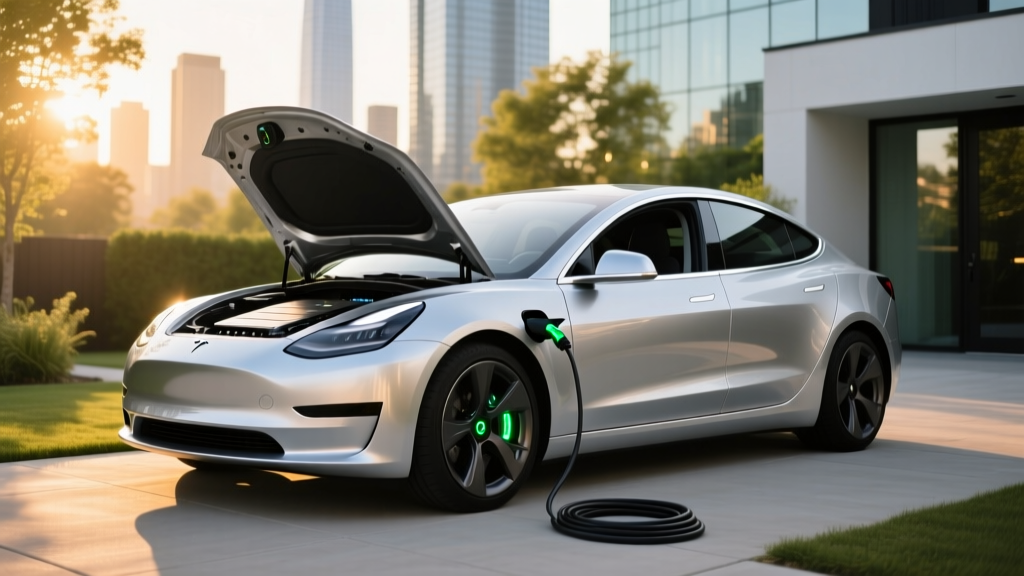
For home charging, a Tesla Wall Connector ($475, hardwired at up to 11.5 kW / 48 amps) adds roughly 44 miles of range per hour on a Model 3 — enough to fully replenish overnight. Installation costs vary: expect $500–$1,500 for a standard 240V/60A circuit if your electrical panel has capacity, or $2,000–$4,000+ if a panel upgrade is needed.
Battery Chemistry, Health, and Warranty on a Used Tesla
Understanding what's under the floor is critical when buying any used EV. Tesla uses two primary battery chemistries across its used inventory:
| Factor | LFP (Lithium Iron Phosphate) | NMC (Nickel Manganese Cobalt) |
|---|---|---|
| Found In | Model 3 RWD (2021+), some Model Y RWD | Model 3 LR, Model Y LR, Model S, Model X |
| Energy Density | Lower (~160 Wh/kg cell-level) | Higher (~250 Wh/kg cell-level) |
| Range | Shorter (272 mi EPA on Model 3) | Longer (330–358 mi EPA) |
| Degradation | Slower; 3,000+ cycle life typical | Moderate; 1,500–2,000 cycle life typical |
| Charging to 100% | Recommended weekly for calibration | Daily limit to 80–90% recommended |
| Cold Performance | More range loss in freezing temps | Better cold-weather retention |
| Cost to Replace (out of warranty) | $10,000–$14,000 est. | $13,000–$20,000 est. |
Warranty transferability is one of Tesla's strongest used-car advantages. The battery and drive unit warranty is fully transferable to subsequent owners with no paperwork required. Per Tesla's warranty documentation:
- Model 3 RWD: 8 years / 100,000 miles, whichever comes first, with minimum 70% battery capacity retention.
- Model 3 Long Range / Model Y LR: 8 years / 120,000 miles, minimum 70% retention.
- Model S / Model X: 8 years / 150,000 miles, minimum 70% retention.
For a 2022 Model 3 LR purchased in 2026, you still have roughly 4 years and 80,000+ miles of battery warranty remaining — substantial coverage. Check the vehicle's service history in the Tesla app for any battery replacement records, and use third-party tools like Tessie or the car's built-in battery health screen (available in recent software versions) to assess current degradation. Most 3-year-old Teslas with normal charging habits show 5–10% degradation — well within the warranty threshold.
Performance and Driving Dynamics
Even base-model used Teslas deliver performance that embarrasses most gas-powered cars at similar price points. Here's the performance breakdown:
| Model | 0–60 mph | Horsepower | Drivetrain | Top Speed |
|---|---|---|---|---|
| 2022 Model 3 LR AWD | 4.2 sec | 346 hp | Dual Motor AWD | 145 mph |
| 2023 Model 3 RWD | 5.8 sec | 271 hp | Rear-Wheel Drive | 125 mph |
| 2022 Model Y LR AWD | 4.8 sec | 384 hp | Dual Motor AWD | 135 mph |
| 2021 Model S LR | 3.1 sec | 670 hp | Dual Motor AWD | 155 mph |
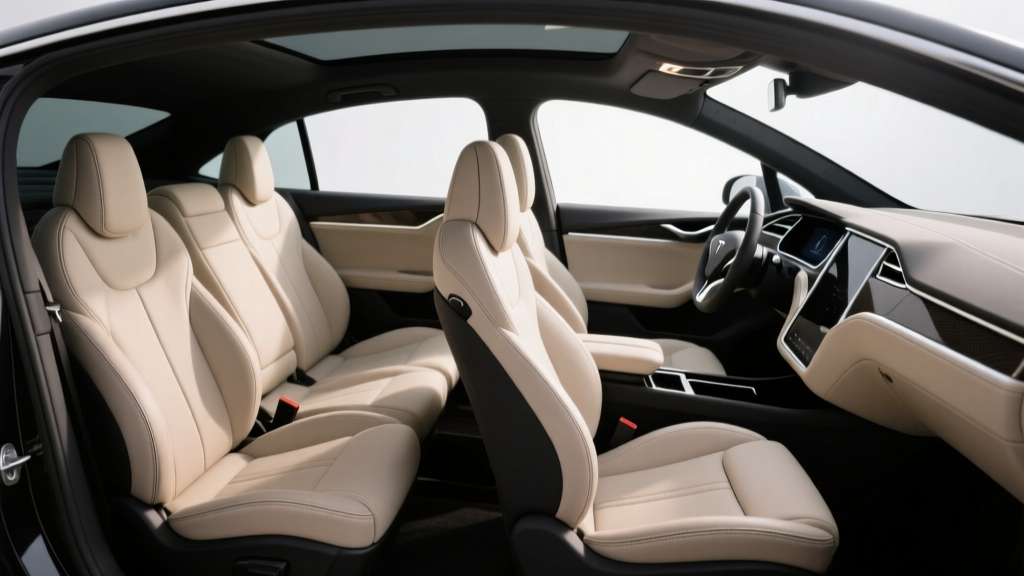
All models feature regenerative braking with one-pedal driving capability, a low center of gravity from the under-floor battery pack, and Tesla's adaptive cruise control with Autosteer (basic Autopilot). The 2023+ "Highland" Model 3 refresh added ventilated seats, ambient lighting, rear-seat touchscreen, and improved ride quality via retuned suspension — a meaningful upgrade over the 2021–2022 interior.
ADAS clarity: Tesla's Autopilot and Full Self-Driving (Supervised) are SAE Level 2 driver-assistance systems. The driver must remain fully engaged, hands on or near the wheel, and eyes on the road at all times. FSD (Supervised) can navigate intersections, stop signs, and highway interchanges, but it is not autonomous driving and requires constant supervision. Only Level 4 services like Waymo operate without a human driver.
Cargo, Interior Space, and Practicality
| Model | Cargo (rear seats up) | Cargo (rear seats folded) | Frunk | Rear Legroom |
|---|---|---|---|---|
| Model 3 | 23 cu ft (trunk) | N/A (sedan trunk) | 3.1 cu ft | 35.2 in |
| Model Y | 30 cu ft | 72 cu ft | 4.1 cu ft | 41.6 in |
| Model S | 28 cu ft (rear trunk) | N/A | 5.3 cu ft | 40.9 in |
The Model Y is the clear practicality winner. Its hatchback design, available third-row (very small, best for children), and 72 cu ft of total cargo volume rival mid-size SUVs. The Model 3's trunk is generous for a sedan but less versatile. The Model S offers a liftback and the largest frunk, making it the road-trip cargo king.
Tax Credits and Total Cost on a Used Tesla
Federal tax credits for used Teslas operate under a different section of the tax code than new-vehicle credits. Under IRS §25E, the Used Clean Vehicle Credit provides up to $4,000 (30% of the sale price, capped at $4,000) for qualifying pre-owned EVs. Key requirements:
- Vehicle price cap: Sale price must be $25,000 or less.
- Vehicle age: Must be at least 2 model years old (a 2024 or older model purchased in 2026).
- Buyer income limits: AGI ≤ $75,000 (single), $112,500 (head of household), $150,000 (joint).
- Dealer requirement: Must be purchased from a licensed dealer (private-party sales do not qualify).
- First-time transfer: The credit applies only on the first resale since the vehicle was new, and only once per vehicle per 3-year period.
- Point-of-sale transfer: As of 2024+, the credit can be transferred to the dealer at purchase for an immediate price reduction.
What this means in practice: A 2022 Model 3 RWD listed at $24,000 from a qualified dealer could net a $4,000 credit, bringing the effective price to $20,000 — a remarkable entry point into a 272-mile EV with Supercharger access. However, the $25,000 price cap means most used Model Y and Model S listings won't qualify, and higher-income buyers are excluded.
The new-vehicle §30D credit ($7,500) does not apply to used Teslas. However, a new 2026 Model 3 RWD starts at approximately $38,990, and depending on battery-sourcing compliance and buyer income, may qualify for up to $7,500 — narrowing the gap between new and used. Always verify current-year eligibility on the IRS website or with a tax professional, as critical-mineral and battery-component sourcing rules change annually.
Pros of Buying a Used Tesla in 2026
- Significant depreciation already absorbed — 2022 Model 3 LR at ~50% of original MSRP
- Full Supercharger network access with NACS native connector
- Transferable 8-year battery/drive unit warranty with years of coverage remaining
- Over-the-air software updates keep older models current with new features
- Up to $4,000 used-EV federal tax credit on qualifying purchases under $25,000
- Industry-leading efficiency (kWh/100mi) keeps charging costs low
- Strong performance even in base trims — 0-60 under 5 seconds for most AWD models
Cons and Risks
- Out-of-warranty repairs can be expensive; Tesla service center availability varies by region
- No free Supercharging on most used units (expired with original ownership or promotional period)
- FSD (Supervised) purchased by the original owner does not always transfer — verify before buying
- Pre-2023 Model 3 interior feels dated compared to Highland refresh and competitors
- Insurance premiums remain above segment average for Tesla vehicles
- LFP-equipped RWD models suffer greater cold-weather range loss than NMC AWD variants
- Tesla's build quality on 2021–2022 Fremont vehicles is inconsistent — inspect panel gaps carefully
Used Tesla vs. New Competition: Which Is the Better Buy?
The Tesla used car price declines have placed 2-year-old Model 3s and Model Ys in direct competition with brand-new EVs from legacy automakers. Here's how the math works:
| Vehicle | Price (est.) | EPA Range | DC Fast Charge | 10–80% Time |
|---|---|---|---|---|
| 2022 Tesla Model 3 LR (used) | $25,000 | 358 mi | 250 kW | ~28 min |
| 2026 Hyundai Ioniq 6 SEL (new) | $42,500 | 361 mi | 350 kW | ~18 min |
| 2026 Chevy Equinox EV LT (new) | $34,900 | 319 mi | 150 kW | ~34 min |
| 2022 Tesla Model Y LR (used) | $30,000 | 330 mi | 250 kW | ~28 min |
| 2026 Kia EV6 Wind (new) | $47,500 | 310 mi | 350 kW | ~18 min |
A used 2022 Model 3 Long Range at $25,000 delivers 358 miles of EPA range and 250 kW charging for $17,500 less than a new Ioniq 6. The Hyundai charges faster (350 kW peak on 800V architecture) and comes with a full new-vehicle warranty, but the Tesla's range, efficiency, and Supercharger access remain compelling — especially after the $4,000 used-EV credit.
For SUV buyers, a used Model Y at $30,000 undercuts a new Equinox EV on range and performance while offering similar cargo space. The Equinox charges slower but comes with 3 years/36,000 miles bumper-to-bumper and 8 years/100,000 miles battery coverage from day one.
- You prioritize Supercharger network access and seamless road-trip charging
- You want maximum range per dollar — 358 EPA miles for ~$25K is unmatched
- You value OTA updates and Tesla's software ecosystem
- You qualify for the $4,000 used-EV credit (income and price caps apply)
- You want a full new-vehicle warranty and the latest safety/ADAS hardware
- Faster DC charging (350 kW on Hyundai/Kia 800V) matters for your road-trip routes
- You prefer a traditional dealer service experience with local support
- You qualify for the full $7,500 new-vehicle §30D credit, narrowing the price gap
Frequently Asked Questions
What is the real-world range of a used Tesla Model 3 Long Range?
The EPA rates the 2022 Model 3 Long Range at 358 miles. In real-world highway driving at 70 mph in mild temperatures, expect 290–320 miles. In freezing conditions with cabin heating, range drops to approximately 240–270 miles. City driving with regenerative braking can match or slightly exceed the EPA figure.
How fast does a used Tesla charge at home and on the road?
On a V3 Supercharger (250 kW DC), a Model 3 LR charges from 10–80% in about 28 minutes, adding roughly 200 miles in 15 minutes at peak rate. At home on a 48-amp Level 2 Wall Connector (11.5 kW), it gains approximately 44 miles of range per hour — a full charge in about 8 hours from empty. On a standard 120V outlet (Level 1), expect just 3–4 miles per hour.
Does a used Tesla qualify for the federal EV tax credit?
Used Teslas can qualify for the IRS §25E Used Clean Vehicle Credit of up to $4,000, but only if the sale price is $25,000 or less, the vehicle is at least 2 model years old, the buyer meets income caps ($75K single / $150K joint), and the purchase is through a licensed dealer. The new-vehicle §30D credit ($7,500) does not apply to used purchases.
Is a used Tesla worth buying versus a new Hyundai or Kia EV?
It depends on priorities. A used 2022 Model 3 LR at ~$25,000 offers 358 miles of range, Supercharger access, and strong performance at a fraction of a new competitor's price. However, new Hyundai/Kia models charge faster (350 kW vs 250 kW), include full warranties, and may qualify for the $7,500 new-vehicle credit. If your budget is under $30,000 and Supercharger access matters, a used Tesla is hard to beat. If you want the latest hardware and full warranty protection, a new competitor may justify the premium.
What are the biggest risks of buying a used Tesla?
Key risks include out-of-warranty repair costs (Tesla parts and service can be expensive), potential build-quality issues on 2021–2022 Fremont-built vehicles, FSD non-transferability on some units, and higher-than-average insurance premiums. Always verify battery health through the Tesla app or third-party tools, check service history, inspect panel gaps, and confirm remaining warranty coverage before purchase.
How long will a used Tesla battery last?
Tesla's battery warranty guarantees at least 70% capacity retention for 8 years and 100,000–150,000 miles depending on the model. Independent data from fleet analyses suggests Tesla NMC batteries typically retain 85–90% capacity at 100,000 miles with normal charging habits. LFP batteries in RWD models show even slower degradation. A well-maintained Tesla battery should outlast 200,000 miles before approaching the 70% warranty threshold.