As Q1 2026 closes, Tesla's US sales volume reflects a lineup that has matured significantly since the Highland and Juniper refreshes. While the brand no longer dominates headlines the way it did during the early EV adoption wave, Tesla remains the single largest EV seller in the United States by a wide margin. For buyers navigating the current market, understanding what Tesla actually delivers in 2026 — in terms of real-world range, charging infrastructure access, pricing after federal tax credits, and competitive positioning — matters far more than quarterly sales figures alone.
This review breaks down the core Tesla lineup available to US buyers in early 2026: the Model 3, Model Y, Cybertruck, and Model S/X. We cover EPA range versus real-world expectations, DC fast-charge curves, LFP versus NMC battery chemistry, §30D tax credit eligibility, and who each vehicle actually suits.
Tesla US Sales Context: Q1 2026 Market Position
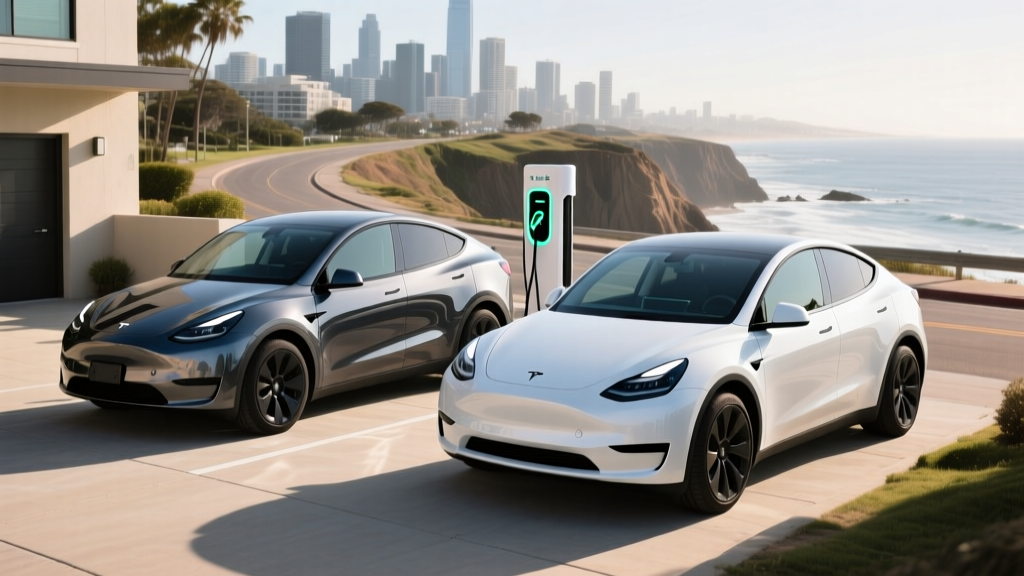
Tesla's US deliveries in Q1 2026 continue to be anchored by the Model Y, which remains the best-selling electric vehicle in the country. The Juniper-refreshed Model Y (introduced for the 2025 model year) brought a quieter cabin, ventilated front seats, a rear touchscreen, and slightly improved efficiency. The Model 3 Highland, now in its second full model year, competes in the entry-luxury sedan segment against the Hyundai Ioniq 6, BMW i4, and Polestar 2.
Cybertruck deliveries have ramped to meaningful volume, though the stainless-steel pickup remains a niche product. Model S and Model X continue in low-volume production, serving as halo products rather than volume drivers. Collectively, Tesla's Q1 2026 US sales reflect a brand transitioning from early-adopter darling to mainstream incumbent — with the Supercharger network (now open to NACS-equipped competitors) serving as a significant competitive moat.
2026 Tesla Model 3: Range, Charging, and Pricing
The 2026 Tesla Model 3 is available in three primary configurations: Long Range RWD, Long Range AWD, and Performance. The base RWD model was discontinued for the 2026 model year in the US market, streamlining the lineup around dual-motor and extended-range variants.
| Spec | Long Range RWD | Long Range AWD | Performance |
|---|---|---|---|
| EPA Range | 363 mi | 346 mi | 315 mi |
| Battery (usable) | ~75 kWh (NMC) | ~75 kWh (NMC) | ~75 kWh (NMC) |
| MPGe (combined) | 132 MPGe | 125 MPGe | 118 MPGe |
| 0-60 mph | 5.8 sec | 4.2 sec | 2.9 sec |
| Horsepower | ~346 hp | ~440 hp | ~510 hp |
| Drivetrain | RWD | Dual-Motor AWD | Dual-Motor AWD |
| Base MSRP | $42,380 | $47,380 | $54,380 |
| Peak DC Charge Rate | 250 kW | 250 kW | 250 kW |
| 10-80% DCFC Time | ~25 min | ~25 min | ~25 min |
EPA estimate: 346 miles. In real-world highway driving at 70-75 mph in moderate temperatures (60-80°F), expect approximately 290-310 miles before needing to charge. In cold weather (below 32°F), range can drop to 240-270 miles due to battery resistance and cabin heating demands. City driving with regenerative braking recovers energy more effectively, often yielding closer to the EPA sticker or slightly above in stop-and-go conditions.
Model 3 Charging Details
At a Tesla V3 Supercharger (250 kW peak), the Model 3 Long Range sustains peak charge rate only up to roughly 30-35% state of charge (SoC), then tapers progressively. The 10-80% charge takes approximately 25 minutes under optimal conditions (battery preconditioned via navigation to a Supercharger). Above 80%, charging slows dramatically — adding the final 20% can take as long as the first 70%. This charge-curve taper is common across all lithium-ion EVs but is particularly pronounced above 80% SoC.
For home Level 2 charging, the Model 3 accepts up to 11.5 kW (48 amps) via its onboard charger. On a Tesla Wall Connector or equivalent Level 2 station, this translates to roughly 44 miles of range per hour of charging — meaning a full overnight charge from 20% to 80% takes approximately 5-6 hours.
Model 3 Cargo and Interior Space
The Model 3 offers 23 cu ft of total cargo volume (15 cu ft trunk + 8 cu ft frunk). Rear legroom measures 35.2 inches, which is adequate for adults on shorter trips but tighter than competitors like the Hyundai Ioniq 6 (38.4 inches rear legroom). The minimalist interior centers on a 15.4-inch touchscreen; there is no traditional instrument cluster, and climate controls, mirror adjustments, and glovebox release are all screen-mediated.
2026 Tesla Model Y: The Volume Leader
The Juniper-refreshed Model Y continues as Tesla's sales leader in Q1 2026. Now in its second model year post-refresh, the Model Y benefits from a redesigned interior with ambient lighting, ventilated front seats, a rear passenger touchscreen, improved sound insulation, and a slightly more efficient powertrain.
| Spec | Long Range AWD | Performance |
|---|---|---|
| EPA Range | 335 mi | 300 mi |
| Battery (usable) | ~75 kWh (NMC) | ~75 kWh (NMC) |
| MPGe (combined) | 117 MPGe | 111 MPGe |
| 0-60 mph | 4.8 sec | 3.5 sec |
| Horsepower | ~384 hp | ~470 hp |
| Drivetrain | Dual-Motor AWD | Dual-Motor AWD |
| Base MSRP | $48,380 | $54,380 |
| Peak DC Charge Rate | 250 kW | 250 kW |
| 10-80% DCFC Time | ~27 min | ~27 min |
EPA estimate: 335 miles. Highway driving at 70-75 mph in moderate conditions yields approximately 275-300 miles of real range. The Model Y's taller, less aerodynamic crossover profile costs it roughly 10-15% more highway energy consumption compared to the Model 3. In cold weather (below freezing), expect 225-260 miles before requiring a charge. The Model Y's heat pump (standard) helps mitigate cold-weather losses compared to older resistance-heater EVs.
Model Y Cargo and Practicality
The Model Y provides 76 cu ft of cargo space with the rear seats folded (34 cu ft behind the second row), making it one of the most practical EVs in its class. The optional third row (best suited for children) reduces cargo flexibility but adds seating for up to seven. Rear legroom in the second row is 41.6 inches — genuinely spacious for adult passengers. The front trunk (frunk) adds an additional 4.1 cu ft.
Model Y Charging Profile
Like the Model 3, the Model Y peaks at 250 kW on V3 Superchargers but sustains that peak for only a narrow SoC window. Real-world 10-80% charging averages 27 minutes with battery preconditioning. Without preconditioning (e.g., arriving at a charger without navigating to it), the same session can stretch to 35-40 minutes, especially in cooler ambient temperatures. Home Level 2 charging mirrors the Model 3 at 11.5 kW / ~44 miles per hour.
2026 Cybertruck and Model S/X: Niche and Halo
The Cybertruck (AWD and Cyberbeast trims) has reached steadier production volumes in 2026, though it remains a polarizing product. The AWD variant delivers an EPA-estimated 340 miles of range (with the optional range extender battery), 0-60 in 3.9 seconds, and a starting MSRP of approximately $79,990. The Cyberbeast trim adds a tri-motor setup, dropping 0-60 to 2.6 seconds at an MSRP of $99,990. Towing capacity is rated at 11,000 lbs. Note: the Cybertruck does not qualify for the §30D federal tax credit because its MSRP exceeds the $80,000 cap for trucks (and the Cyberbeast exceeds it further).
The Model S (Long Range and Plaid) and Model X continue in limited production. The Model S Long Range starts at $79,990 with an EPA range of 402 miles — the longest of any current Tesla. The Model X Long Range starts at $84,990 with 348 miles EPA. Neither qualifies for the §30D credit due to MSRP caps ($55,000 for sedans, $80,000 for SUVs/trucks — the Model X may qualify at certain trims if the buyer meets income requirements).
Federal Tax Credit Eligibility: §30D Rules for 2026
The IRS §30D Clean Vehicle Credit provides up to $7,500 for eligible buyers purchasing qualifying new EVs. However, eligibility is governed by three intersecting requirements:
- MSRP Caps: Sedans (Model 3) must have an MSRP of $55,000 or less. SUVs, trucks, and vans (Model Y, Cybertruck) must be $80,000 or less.
- Buyer Income Caps: Modified adjusted gross income (MAGI) must not exceed $150,000 (single), $225,000 (head of household), or $300,000 (joint filers).
- Battery Sourcing: The $7,500 credit is split into two halves — $3,750 for critical minerals sourcing and $3,750 for battery component manufacturing. Vehicles with battery components from a "foreign entity of concern" (FEOC) may receive a reduced credit or none at all. Tesla's US-built vehicles with NMC batteries sourced from approved suppliers generally qualify for the full or partial credit, but specific eligibility varies by production batch and battery supplier.
| Model | MSRP | Under MSRP Cap? | Est. Credit (if income-eligible) |
|---|---|---|---|
| Model 3 Long Range RWD | $42,380 | Yes ($55K cap) | Up to $7,500 |
| Model 3 Long Range AWD | $47,380 | Yes ($55K cap) | Up to $7,500 |
| Model 3 Performance | $54,380 | Yes ($55K cap) | Up to $7,500 |
| Model Y Long Range AWD | $48,380 | Yes ($80K cap) | Up to $7,500 |
| Model Y Performance | $54,380 | Yes ($80K cap) | Up to $7,500 |
| Cybertruck AWD | $79,990 | Borderline ($80K cap) | Up to $7,500 (if under cap) |
| Cybertruck Cyberbeast | $99,990 | No | $0 |
| Model S Long Range | $79,990 | No ($55K sedan cap) | $0 |
| Model X Long Range | $84,990 | No ($80K SUV cap) | $0 |
Note: As of 2026, the §30D credit can be transferred to the dealer at the point of sale, effectively reducing the purchase price at the dealership rather than requiring the buyer to claim the credit on their tax return. Always verify current eligibility on fueleconomy.gov before purchasing, as battery sourcing rules can change mid-year.
Tesla vs. Key Competitors: 2026 Comparison
Tesla's Q1 2026 sales reflect competition that has intensified dramatically since 2023. Here's how the core models stack up:
| Vehicle | EPA Range | Peak DCFC | 10-80% Time | Base MSRP | §30D Credit |
|---|---|---|---|---|---|
| Tesla Model 3 LR AWD | 346 mi | 250 kW | ~25 min | $47,380 | Up to $7,500 |
| Hyundai Ioniq 6 SEL | 342 mi | 350 kW | ~18 min | $42,715 | Up to $7,500 |
| BMW i4 eDrive40 | 307 mi | 205 kW | ~31 min | $52,200 | Up to $7,500 |
| Tesla Model Y LR AWD | 335 mi | 250 kW | ~27 min | $48,380 | Up to $7,500 |
| Ford Mustang Mach-E Premium | 320 mi | 150 kW | ~36 min | $48,175 | Up to $7,500 |
| Hyundai Ioniq 5 SEL AWD | 290 mi | 350 kW | ~18 min | $48,715 | Up to $7,500 |
The Hyundai Ioniq 6's 800V architecture gives it a decisive DC fast-charging advantage (350 kW peak, ~18-minute 10-80% sessions). The Model 3 counters with a more mature software ecosystem, access to the Supercharger network (though NACS adoption is opening this to competitors), and a slightly longer EPA range. The Model Y remains the default EV crossover for buyers who prioritize Supercharger access and cargo space, though the Ioniq 5 and Mach-E offer compelling alternatives.
Autopilot, FSD (Supervised), and Safety
Tesla Autopilot and FSD (Supervised) are SAE Level 2 driver-assistance systems. The driver must remain fully engaged, hands on or near the wheel, and eyes on the road at all times. These systems do not make the vehicle self-driving. Only SAE Level 4 services like Waymo operate without a human driver in defined geographic areas.
Tesla's Autopilot (standard) includes adaptive cruise control and lane-keeping assist. Full Self-Driving (Supervised), available as an $8,000 add-on or $99/month subscription, adds automated lane changes, intersection handling, and parking assistance. Despite the name, FSD remains a Level 2 system requiring constant driver supervision. NHTSA continues to monitor Tesla's Autopilot/FSD through its Standing General Order on crash reporting.
The Model 3 and Model Y earned the IIHS Top Safety Pick+ designation in prior model years; 2026 ratings should be verified on the IIHS website as testing is updated.
Warranty and Long-Term Ownership
Tesla's warranty structure for 2026:
- Basic Vehicle: 4 years / 50,000 miles
- Battery & Drive Unit (Model 3/Y Long Range & Performance): 8 years / 120,000 miles, with a minimum 70% capacity retention guarantee
- Battery & Drive Unit (Model S/X): 8 years / 150,000 miles, 70% retention
The 70% retention threshold is standard for the industry, though some competitors (Hyundai/Kia) offer 10-year/100,000-mile battery warranties. Tesla's 8-year/120,000-mile coverage is competitive but not class-leading. Battery replacement costs outside warranty remain high — approximately $12,000-$16,000 for a Model 3/Y pack replacement at a Tesla service center, based on current service estimates.
Who Should Buy a Tesla in 2026?
Choose the Model 3 Long Range if: You prioritize maximum range per dollar, commute long distances on highways, and want access to the most reliable DC fast-charging network in the US. Best for single professionals or couples without large cargo needs.
Choose the Model Y Long Range if: You need crossover cargo space (76 cu ft), carry rear-seat passengers regularly, and want the best balance of range, practicality, and Supercharger access. Best for families and frequent road-trippers.
Choose the Cybertruck if: You need truck utility (11,000-lb towing, 6.5-ft bed), accept the high MSRP and no tax credit, and are comfortable with a polarizing design. Best for truck buyers who want electrification without sacrificing towing.
Look elsewhere if: You want the fastest DC charging (Hyundai/Kia 800V platforms charge significantly faster), prefer physical buttons and a traditional instrument cluster, or want a longer battery warranty (Hyundai/Kia 10-year coverage).
Frequently Asked Questions
What is the real-world range of the 2026 Tesla Model Y?
The EPA estimates 335 miles for the Model Y Long Range AWD. In real-world highway driving at 70-75 mph, expect 275-300 miles. Cold weather (below 32°F) reduces this to approximately 225-260 miles. City driving with regenerative braking can approach or slightly exceed the EPA estimate.
How fast does a Tesla charge on DC fast chargers and at home?
On a V3 Supercharger (250 kW peak), the Model 3 and Model Y charge from 10-80% in approximately 25-27 minutes with battery preconditioning. At home on a Level 2 charger (11.5 kW), both vehicles add roughly 44 miles of range per hour, meaning an overnight session easily replenishes daily driving.
How much does a Tesla cost after federal tax credits?
The Model 3 Long Range AWD at $47,380 MSRP could cost as low as ~$39,880 after the full $7,500 §30D credit (if the buyer meets income, sourcing, and MSRP requirements). The Model Y Long Range AWD at $48,380 could drop to ~$40,880. Always verify eligibility via fueleconomy.gov and consult a tax professional, as battery sourcing rules affect credit amounts.
Is a Tesla worth buying versus Hyundai, Ford, or BMW competitors?
Tesla's primary advantages are Supercharger network access, software maturity, and proven efficiency. Its disadvantages relative to Hyundai/Kia include slower peak DC charging (250 kW vs. 350 kW on 800V platforms) and a shorter battery warranty (8 years vs. 10). For buyers who road-trip frequently, the Supercharger network remains a meaningful advantage, though NACS adoption by competitors is narrowing this gap in 2026.
What are the biggest pros and cons of Tesla's 2026 lineup?
- Class-leading Supercharger network access
- Excellent real-world efficiency (kWh/mile)
- Over-the-air updates continuously add features
- Strong resale value relative to EV average
- Model Y cargo space (76 cu ft) is best-in-class
- DC charging slower than 800V competitors (250 vs 350 kW)
- No physical buttons — all controls via touchscreen
- Battery warranty shorter than Hyundai/Kia (8 vs 10 years)
- FSD (Supervised) remains Level 2 despite $8,000 price
- Service center wait times can be long in some markets
Does the 2026 Tesla Model 3 or Model Y qualify for the federal EV tax credit?
Yes — both the Model 3 (all trims under the $55,000 sedan cap) and Model Y (all trims under the $80,000 SUV cap) are potentially eligible for up to $7,500 under §30D, provided the buyer's income falls within the caps ($150K single / $300K joint) and the vehicle's battery meets critical-mineral and component-sourcing requirements. The credit can be transferred at the point of sale. Verify current eligibility at irs.gov before purchase.