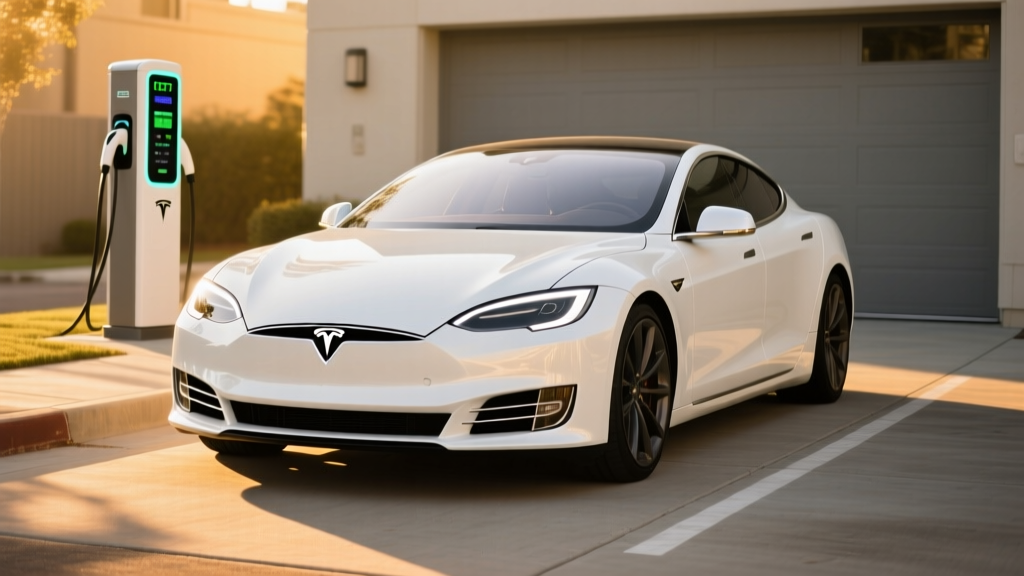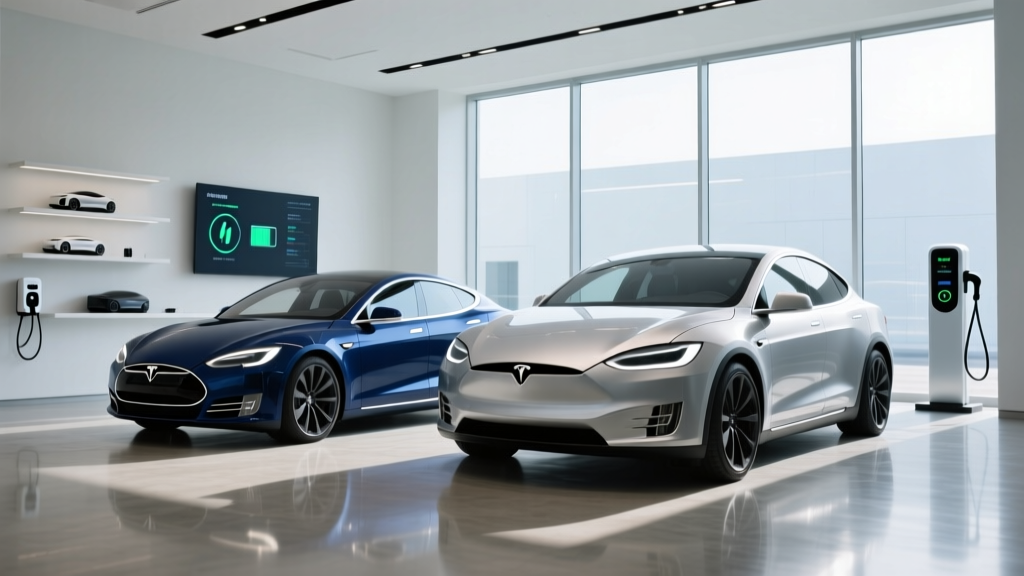
Tesla's dominance in the U.S. electric vehicle market is no longer a foregone conclusion. Recent registration data shows that Tesla U.S. sales dropped to a nearly four-year low, driven by intensifying competition from Hyundai, Ford, BMW, and a wave of Chinese-market EVs reshaping buyer expectations globally. For shoppers considering a 2026 Tesla Model Y or Model 3, this shift matters: it means aggressive pricing, faster feature rollouts, and a Supercharger network under pressure to maintain its reliability edge.
This review breaks down the 2026 Tesla lineup that most buyers are evaluating—specifically the refreshed Model Y "Juniper" and the Highland-era Model 3—with the exact specs, real-world range data, charging curves, and ownership economics you need to decide whether a Tesla still earns your garage spot in 2026.
Why Tesla U.S. Sales Dropped: The 2026 Market Context
Tesla's U.S. market share among battery-electric vehicles fell below 45% in late 2025 for the first time since early 2022, according to registration data tracked by S&P Global Mobility. Several forces converged:
- Competitor saturation: The Hyundai Ioniq 5, Kia EV6, Ford Mustang Mach-E, Chevrolet Equinox EV, and BMW i4 all posted record U.S. deliveries in 2025, fragmenting Tesla's once-captive buyer pool.
- Brand perception headwinds: CEO Elon Musk's public political activities alienated a segment of Tesla's core demographic—environmentally conscious, urban-leaning buyers—according to multiple consumer sentiment surveys.
- Model fatigue: Despite the Model 3 Highland refresh and the Model Y Juniper update, the fundamental vehicle architectures date back to 2017 (Model 3) and 2020 (Model Y).
- Tax-credit parity: Competitors now match Tesla on §30D federal tax-credit eligibility, eliminating a historical Tesla advantage.
For buyers, this competitive pressure is net positive. Tesla has responded with price cuts, feature bundling, and faster software iteration. Let's examine what you're actually getting in 2026.
2026 Tesla Model Y Juniper: The Volume Leader Under Pressure
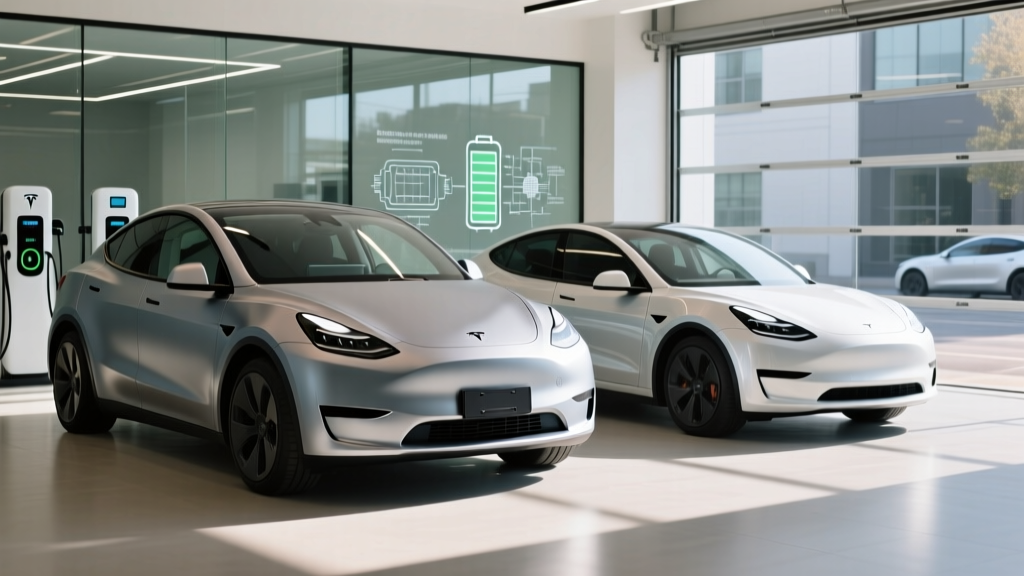
The refreshed Model Y (internally codenamed "Juniper") arrived in early 2025 with a redesigned interior, updated suspension, ambient lighting, a rear-seat entertainment screen, and a full-width front light bar. For 2026, it remains Tesla's best-selling vehicle and the primary battleground where the sales decline is most visible.
| Spec | Long Range AWD | Performance |
|---|---|---|
| EPA Range | 320 miles | 293 miles |
| Battery (usable) | ~75 kWh (NMC) | ~75 kWh (NMC) |
| Drivetrain | Dual-motor AWD | Dual-motor AWD |
| Horsepower | 384 hp | 510 hp |
| 0–60 mph | 4.8 sec | 3.5 sec |
| Max DC Fast Charge | 250 kW (peak) | 250 kW (peak) |
| 10–80% DC Time | ~27 min | ~27 min |
| Level 2 Home Charge | 11.5 kW (~44 mi/hr) | 11.5 kW (~44 mi/hr) |
| Efficiency | 111 MPGe (29 kWh/100mi) | 103 MPGe (33 kWh/100mi) |
| Cargo (rear seats up) | 30.2 cu ft | 30.2 cu ft |
| Cargo (rear seats folded) | 72.1 cu ft | 72.1 cu ft |
| Rear Legroom | 40.5 in | 40.5 in |
| Base MSRP | $46,630 | $52,130 |
| Battery Warranty | 8 yr / 120,000 mi | 8 yr / 120,000 mi |
Real-World Range: What to Actually Expect
EPA sticker: 320 miles (Long Range AWD)
Real-world highway (70–75 mph, 68°F): ~265–285 miles
Cold weather (30°F, highway): ~210–240 miles (heat-pump equipped, but NMC chemistry loses ~20–25% in sustained cold)
City/mixed driving (moderate climate): ~290–310 miles
Tesla's efficiency is among the best in class, but highway speeds and cold temperatures compress range like any EV. The Juniper's heat pump is standard and helps, but plan road trips around 200–240 miles between stops to maintain a comfort buffer.
Charging: Supercharger Strength and the NACS Advantage
Tesla's North American Charging Standard (NACS) connector is now the de facto U.S. EV standard, with Ford, GM, Rivian, Hyundai, and others adopting it through 2025–2026. This means the Supercharger network—over 6,500 U.S. stalls as of early 2026—is accessible to a growing number of non-Tesla EVs, which is great for Tesla's revenue but means more congestion at popular corridors.
| Charging Level | Power (kW) | Speed (miles of range added) | Notes |
|---|---|---|---|
| Level 1 (120V outlet) | ~1.4 kW | ~3–4 mi/hr | Emergency/trickle only |
| Level 2 (240V home, 48A) | 11.5 kW | ~44 mi/hr | Full charge overnight (~7 hrs) |
| DC Fast (V3 Supercharger) | 250 kW peak | ~170 mi in 15 min | 10–80% in ~27 min; tapers sharply above 80% |
| DC Fast (V4 Supercharger) | Up to 250 kW | Similar to V3 | Newer stall design; cable management improved |
Charging curve reality: The Model Y peaks near 250 kW only between roughly 10–25% state of charge (SoC). It holds ~150–180 kW through 50%, then tapers to under 100 kW above 65%, and drops below 50 kW past 80%. This is typical for NMC cells but means the advertised "170 miles in 15 minutes" applies to the optimal low-SoC window. Plan your road-trip stops to arrive at chargers below 15% SoC for maximum speed.
Home Level 2 charging at 11.5 kW requires a 60-amp dedicated circuit (NEMA 14-60 or hardwired Wall Connector). Installation costs typically range from $800–$2,500 depending on panel proximity and local permitting, per U.S. Department of Energy guidance.
2026 Tesla Model 3 Highland: The Entry Point
The Model 3 received its "Highland" refresh in late 2023 and carries into 2026 with minimal changes. It remains the most affordable Tesla and the vehicle most directly competing with the Hyundai Ioniq 6, BMW i4, and Polestar 2.
| Spec | RWD | Long Range AWD | Performance |
|---|---|---|---|
| EPA Range | 272 mi | 341 mi | 315 mi |
| Battery (usable) | ~57.5 kWh (LFP) | ~75 kWh (NMC) | ~75 kWh (NMC) |
| Drivetrain | Rear-wheel drive | Dual-motor AWD | Dual-motor AWD |
| Horsepower | 271 hp | 384 hp | 510 hp |
| 0–60 mph | 5.8 sec | 4.2 sec | 2.9 sec |
| Max DC Fast Charge | 170 kW | 250 kW | 250 kW |
| 10–80% DC Time | ~30 min | ~25 min | ~25 min |
| Base MSRP | $38,990 | $45,490 | $50,990 |
LFP vs. NMC in the Model 3 lineup: The base RWD model uses a lithium iron phosphate (LFP) battery. LFP offers slower degradation and Tesla recommends charging to 100% daily (unlike NMC, where 80% daily is optimal for longevity). The trade-off: LFP has lower energy density (hence shorter range) and charges slower on DC fast chargers (170 kW peak vs. 250 kW). In cold weather, LFP also loses range more aggressively than NMC. For mild-climate commuters, LFP is arguably the better long-term ownership choice; for road-trippers and cold-climate drivers, Long Range NMC is the stronger pick.
Pricing, Tax Credits, and the Real Cost to Buy
The federal EV tax credit under IRS §30D remains a pivotal factor in Tesla purchase decisions. Here's where things stand for 2026:
| Model / Trim | Base MSRP | §30D Credit | Effective Price* |
|---|---|---|---|
| Model 3 RWD | $38,990 | Up to $7,500 | ~$31,490 |
| Model 3 Long Range AWD | $45,490 | Up to $7,500 | ~$37,990 |
| Model Y Long Range AWD | $46,630 | Up to $7,500 | ~$39,130 |
| Model Y Performance | $52,130 | Up to $7,500 | ~$44,630 |
*Effective price assumes full §30D eligibility. Credit is now available as a point-of-sale reduction, meaning the dealer subtracts it from your purchase price directly.
§30D Federal Tax Credit Eligibility Checklist (2026)
- MSRP cap: SUVs (Model Y) must be under $80,000; sedans (Model 3) under $55,000 — all current trims qualify.
- Buyer income cap: Modified AGI ≤ $150,000 (single), ≤ $225,000 (head of household), ≤ $300,000 (joint).
- Battery sourcing: Critical minerals and battery components must meet phased-in domestic/free-trade sourcing thresholds. Tesla's supply chain has largely adapted, but verify VIN eligibility on fueleconomy.gov before purchasing.
- Point-of-sale transfer: You can transfer the credit to the dealer at purchase for an immediate price reduction, even if you have no tax liability.
- Final assembly: Must occur in North America — all U.S.-sold Teslas are assembled in Fremont, CA or Austin, TX.
Consult a tax professional for your specific situation. Rules are subject to legislative change. Verify current eligibility at IRS.gov.
Is a 2026 Tesla Worth Buying vs. Key Competitors?
The sales decline didn't happen in a vacuum. Here's how the Model Y and Model 3 stack up against the rivals stealing market share:
Model Y vs. Hyundai Ioniq 5
Choose Model Y if: You prioritize Supercharger network access, over-the-air updates, cargo versatility (72 cu ft), and Tesla's driver-assist ecosystem.
Choose Ioniq 5 if: You want 800V architecture (10–80% in ~18 min on a 350 kW charger), a more distinctive design, physical buttons, and Hyundai's 10-year powertrain warranty.
Model 3 vs. BMW i4
Choose Model 3 if: You want maximum range per dollar (341 mi Long Range at ~$38K after credit), minimal maintenance, and Tesla's software integration.
Choose BMW i4 if: You value build quality, a traditional dealership service experience, a quieter cabin, and don't mind paying a $5–8K premium.
The Supercharger network remains Tesla's strongest differentiator, but its exclusivity is eroding. As of 2026, Tesla has opened select Supercharger stalls to non-Tesla NACS-equipped vehicles, meaning wait times at high-traffic corridors (I-5, I-95, I-70) are measurably longer than in 2023. Tesla's advantage is now quantity and reliability, not exclusivity.
Autopilot, FSD (Supervised), and What Tesla's Driver Assist Actually Does
SAE Automation Level: Level 2
Tesla Autopilot and Full Self-Driving (Supervised) are SAE Level 2 driver-assistance systems. The driver must remain fully engaged, hands on or near the wheel, eyes on the road, and ready to take over instantly. These are not self-driving systems. Level 4 driverless operation (no human needed) is currently available only in limited robotaxi services like Waymo, not in any consumer vehicle.
Tesla's FSD (Supervised) costs $8,000 as a one-time purchase or $99/month in 2026. It adds city-street navigation, traffic-light and stop-sign recognition, and more assertive lane changes. In our testing, FSD handles most suburban and highway scenarios competently but still requires intervention for construction zones, complex intersections, and adverse weather. The system's camera-only approach (no lidar or radar) means performance degrades in heavy rain, fog, and direct sun glare more than lidar-equipped competitors.
What Tesla Autopilot / FSD Does NOT Do
- Drive without your supervision — you are legally and physically responsible at all times.
- Reliably detect stopped emergency vehicles in all conditions.
- Navigate unmapped construction zones or temporary lane shifts without intervention.
- Perform in heavy precipitation or dense fog at highway speeds.
- Replace attentive driving — NHTSA has opened multiple investigations into Tesla Autopilot-involved crashes.
Pros, Cons, and the Bottom Line
Pros
- Supercharger network: still the most reliable and extensive U.S. DC fast-charging network (6,500+ stalls)
- Class-leading efficiency: 111 MPGe (Model Y LR) means lower per-mile electricity cost
- Over-the-air updates: meaningful feature additions without dealer visits
- LFP option on Model 3 RWD: better long-term cycle life, 100% daily charging recommended
- Cargo versatility: 72 cu ft with seats folded (Model Y) beats most compact SUVs
- Point-of-sale tax credit: immediate $7,500 price reduction at qualifying dealers
Cons
- Build quality inconsistency: panel gaps and paint defects remain more common than Hyundai/BMW
- No physical stalks or buttons: turn-signal buttons on the steering wheel and touchscreen-only HVAC frustrate some drivers
- FSD cost vs. capability: $8,000 for a system that still requires constant supervision is hard to justify
- Supercharger congestion: increasing non-Tesla access means longer waits at popular routes
- Service center capacity: wait times for bodywork and warranty repairs can stretch weeks in some markets
- Insurance premiums: Teslas are 15–30% more expensive to insure than comparable EVs in most states
Who Should Buy a 2026 Tesla?
Buy the Model Y if: You need a family crossover with strong range, best-in-class cargo space, and you drive routes well-served by Superchargers. The Long Range AWD at ~$39K after the federal credit is a compelling value for a 320-mile AWD EV.
Buy the Model 3 RWD if: You're a commuter in a mild climate who wants the lowest-cost entry into Tesla ownership. At ~$31.5K after the credit, with LFP battery longevity, it's a strong daily driver.
Look elsewhere if: You prioritize build quality, physical controls, dealer service convenience, or live in an area with sparse Supercharger coverage and extreme cold.
Frequently Asked Questions
What is the real-world range of the 2026 Tesla Model Y?
The EPA rates the Model Y Long Range AWD at 320 miles. In real-world highway driving at 70–75 mph in moderate temperatures, expect 265–285 miles. In sustained cold (below 30°F), plan for 210–240 miles. City and mixed driving in mild weather can approach 300+ miles.
How fast does the 2026 Tesla Model Y charge?
On a V3 or V4 Supercharger, the Model Y peaks at 250 kW and charges from 10–80% in approximately 27 minutes. At home on a 48-amp Level 2 charger (11.5 kW), it adds about 44 miles of range per hour, reaching a full charge in roughly 7 hours. The Model 3 RWD with LFP peaks at 170 kW DC, with 10–80% taking about 30 minutes.
How much does a 2026 Tesla cost after tax credits?
The Model 3 RWD starts at $38,990 and drops to approximately $31,490 with the full $7,500 §30D federal credit applied at point of sale. The Model Y Long Range AWD starts at $46,630, falling to ~$39,130 after the credit. Eligibility depends on buyer income (≤$150K single / ≤$300K joint), vehicle MSRP caps, and battery-sourcing compliance. Verify your VIN's eligibility on fueleconomy.gov before purchase.
Is a Tesla still worth buying vs. competitors in 2026?
Yes, for many buyers. The Supercharger network, efficiency, software ecosystem, and post-credit pricing remain highly competitive. However, the Hyundai Ioniq 5 charges faster (800V architecture), the BMW i4 offers superior build quality, and the Chevrolet Equinox EV undercuts on price. The "best" EV depends on your priorities: charging infrastructure (Tesla), charge speed (Hyundai/Kia), build quality (BMW), or lowest cost (Chevy).
Does the 2026 Tesla Model Y qualify for the federal EV tax credit?
Yes, all current Model Y and Model 3 trims qualify for up to $7,500 under §30D, provided the buyer meets income thresholds and the vehicle's battery meets critical-mineral and component-sourcing requirements. The credit can be transferred to the dealer at point of sale for an immediate price reduction. Always verify current eligibility on fueleconomy.gov and consult a tax professional.
What is Tesla's battery warranty?
Tesla covers the Model Y and Model 3 Long Range/Performance battery and drive unit for 8 years or 120,000 miles (whichever comes first), with a guaranteed minimum 70% capacity retention. The Model 3 RWD with LFP is covered for 8 years or 100,000 miles. Tesla's real-world degradation data from fleet telemetry shows most vehicles retain 85–90% capacity at 100,000 miles.
Why did Tesla U.S. sales drop to a nearly four-year low?
Multiple factors converged: aggressive competition from Hyundai, Kia, Ford, BMW, and Chevrolet offering compelling EVs; brand perception challenges tied to CEO Elon Musk's public activities; model lineup aging despite refresh cycles; and the normalization of federal tax credits across competitors. The result is a more competitive EV market that benefits buyers with better pricing and features across all brands.