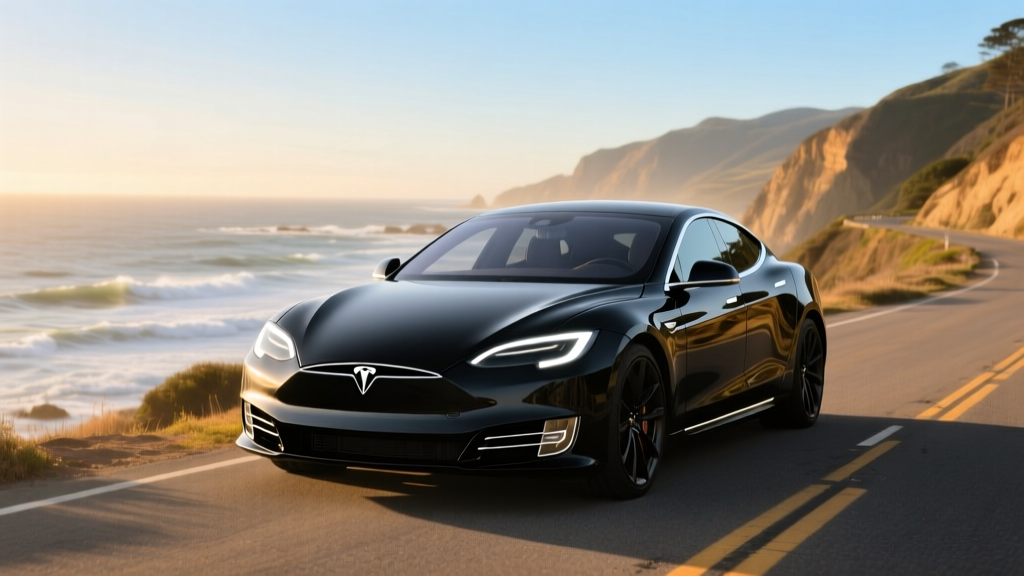
If you've searched cuánto vale un Tesla en Estados Unidos, you've likely found a tangle of trim levels, shifting prices, and confusing tax-credit rules. Tesla's lineup has stabilized heading into the 2026 model year, but the real question isn't just sticker price — it's what you'll actually pay after incentives, what range you'll actually get, and whether the Supercharger advantage still justifies the premium.
This guide walks through every current Tesla model sold in the U.S. with exact MSRPs, EPA range figures, real-world range expectations, DC fast-charging speeds, and federal §30D tax credit eligibility. We'll also cover the ownership math that determines whether a Tesla makes financial sense for your situation.
Tesla's 2026 U.S. Lineup: Price & Range at a Glance
Tesla currently sells four core models in the United States: the Model 3 sedan, Model Y crossover, Model S luxury sedan, and Model X luxury SUV. The Cybertruck rounds out the lineup as a niche electric pickup. Here's how they stack up on paper.
| Model | Base MSRP | EPA Range | Battery (kWh) | 0-60 mph | Drivetrain |
|---|---|---|---|---|---|
| Model 3 RWD | $38,990 | 272 mi | ~60 kWh (LFP) | 5.8 sec | RWD |
| Model 3 Long Range AWD | $45,490 | 341 mi | ~79 kWh (NMC) | 4.2 sec | Dual-Motor AWD |
| Model 3 Performance | $52,990 | 315 mi | ~79 kWh (NMC) | 2.9 sec | Dual-Motor AWD |
| Model Y Long Range AWD | $44,990 | 320 mi | ~79 kWh (NMC) | 4.8 sec | Dual-Motor AWD |
| Model Y Performance | $51,490 | 293 mi | ~79 kWh (NMC) | 3.5 sec | Dual-Motor AWD |
| Model S Long Range | $74,990 | 402 mi | ~100 kWh (NMC) | 3.1 sec | Dual-Motor AWD |
| Model S Plaid | $89,990 | 359 mi | ~100 kWh (NMC) | 1.99 sec | Tri-Motor AWD |
| Model X Long Range | $79,990 | 335 mi | ~100 kWh (NMC) | 3.8 sec | Dual-Motor AWD |
| Model X Plaid | $94,990 | 311 mi | ~100 kWh (NMC) | 2.5 sec | Tri-Motor AWD |
| Cybertruck AWD | $79,990 | 340 mi | ~123 kWh (NMC) | 4.1 sec | Dual-Motor AWD |
Sources: fueleconomy.gov, Tesla.com. MSRP reflects base price before destination fee ($1,390–$1,990 depending on model). Prices subject to change.
Real-World Range: What the EPA Sticker Doesn't Tell You
Tesla's efficiency is among the best in the industry, but physics still applies. Here's what to actually expect from the most popular trims:
Model 3 Long Range AWD (EPA 341 mi): Expect 280–310 miles on a highway road trip at 70–75 mph. In winter conditions (below 32°F), range can drop to 230–260 miles due to battery heating demands and cabin climate use. City driving with regenerative braking can match or slightly exceed the EPA figure.
Model Y Long Range AWD (EPA 320 mi): The taller, heavier crossover loses efficiency at speed. Highway range: 260–290 miles. Cold weather: 210–245 miles. Its heat pump helps mitigate winter losses compared to older EVs without one.
Model S Long Range (EPA 402 mi): The 100 kWh-class battery delivers genuine 330–370 mile highway runs in mild weather. Cold weather still knocks off 15–25%, landing around 280–320 miles.
Cold-weather impact: All Teslas use a heat pump (standard since ~2021), which reduces but doesn't eliminate winter range loss. Expect 15–30% reduction depending on severity. Preconditioning the battery while plugged in recovers some of this loss.
Charging Speed: Supercharger, Home, and the Charge Curve
Charging speed is where Tesla still holds a meaningful advantage. The proprietary Supercharger network — now opening to other brands via NACS adapters — remains the most reliable DC fast-charging ecosystem in the U.S.
| Model | Max DC Fast Charge | 10–80% Time | Level 2 Home Rate | Miles/Hour (L2) |
|---|---|---|---|---|
| Model 3 RWD (LFP) | 170 kW | ~25 min | 11.5 kW (48A) | ~37 mi/hr |
| Model 3 LR / Perf | 250 kW | ~18 min | 11.5 kW (48A) | ~44 mi/hr |
| Model Y LR / Perf | 250 kW | ~20 min | 11.5 kW (48A) | ~40 mi/hr |
| Model S / X | 250 kW | ~22 min | 11.5 kW (48A) | ~41 mi/hr |
| Cybertruck | 250 kW | ~25 min | 11.5 kW (48A) | ~35 mi/hr |
Understanding the charge curve: The peak kW number (e.g., 250 kW) is only sustained at low states of charge, typically 10–30%. Above 50% SoC, the rate tapers significantly. By 80%, you're often charging at 50–70 kW. This is why manufacturers quote 10–80% times — the final 20% can take as long as the first 70%.
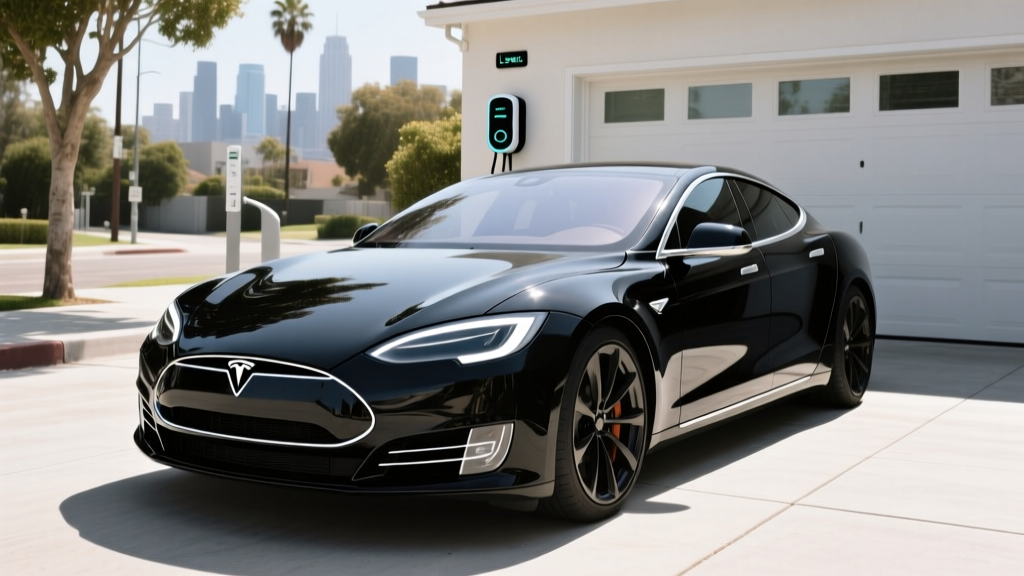
Home charging setup: Tesla's Wall Connector costs $475 and delivers up to 11.5 kW on a 60A circuit (48A continuous). Installation by a licensed electrician typically runs $500–$2,000 depending on panel proximity and whether a panel upgrade (to 200A service) is needed — which can add $1,500–$3,000. Most owners charge overnight and start each day at 80–90% SoC, making public charging a road-trip-only affair.
kW vs kWh — the critical distinction: kW (kilowatts) measures power — how fast energy flows into the car. kWh (kilowatt-hours) measures energy capacity — how much the battery holds. A 79 kWh battery charging at 250 kW doesn't fill in 19 minutes because the rate tapers. Think of kW as the hose diameter and kWh as the bucket size.
Federal Tax Credit: How Much Does a Tesla Actually Cost?
The IRS §30D Clean Vehicle Credit can reduce your effective purchase price by up to $7,500, but eligibility depends on multiple factors that change frequently. Here's the current framework for 2026:
- MSRP Cap: Sedans (Model 3, Model S) must be under $55,000. SUVs, vans, and pickups (Model Y, Model X, Cybertruck) must be under $80,000.
- Income Cap: Modified AGI must not exceed $150,000 (single), $225,000 (head of household), or $300,000 (joint filers).
- Battery Sourcing: The $7,500 credit splits into two halves — $3,750 for critical minerals and $3,750 for battery component assembly, each with phased-in domestic/FHA content requirements per IRS rules.
- Point-of-Sale Transfer: Buyers can transfer the credit to the dealer at purchase, reducing the sale price directly rather than waiting for a tax refund.
- Final Assembly: Vehicle must undergo final assembly in North America (all U.S.-sold Teslas are assembled in Fremont, CA, or Austin, TX).
Rules are subject to legislative change. Consult a tax professional and verify at irs.gov before purchasing.
| Model / Trim | Base MSRP | Est. §30D Credit | Effective Price* |
|---|---|---|---|
| Model 3 RWD | $38,990 | $7,500 (if eligible) | ~$31,490 |
| Model 3 Long Range AWD | $45,490 | $7,500 (if eligible) | ~$37,990 |
| Model 3 Performance | $52,990 | $7,500 (if eligible) | ~$45,490 |
| Model Y Long Range AWD | $44,990 | $7,500 (if eligible) | ~$37,490 |
| Model Y Performance | $51,490 | $7,500 (if eligible) | ~$43,990 |
| Model S Long Range | $74,990 | $0 (exceeds $55K sedan cap) | $74,990 |
| Model X Long Range | $79,990 | $7,500 (if eligible, under $80K SUV cap) | ~$72,490 |
| Cybertruck AWD | $79,990 | $7,500 (if eligible, under $80K pickup cap) | ~$72,490 |
*Effective price assumes full §30D eligibility. Does not include destination fees, state incentives, or optional equipment. State and local rebates vary by jurisdiction — check your state's energy office for details.
Efficiency, Performance & Technology
Tesla's powertrain efficiency remains a benchmark. The Model 3 Long Range achieves approximately 132 MPGe combined (25 kWh/100 mi) per the EPA, meaning it converts electrical energy to distance more efficiently than nearly every competing EV. The Model Y Long Range lands around 122 MPGe combined (28 kWh/100 mi).
Performance highlights:
- Model 3 Performance: 510 hp, 2.9-second 0–60, adaptive dampers, track mode. Genuinely sports-car quick at a sedan price.
- Model S Plaid: 1,020 hp, tri-motor torque vectoring, 1.99-second 0–60. Among the quickest production cars ever made.
- Cybertruck: 600+ hp (AWD), 11,000-lb towing capacity, stainless steel exoskeleton. Polarizing design with legitimate truck capability.
Standout technology:
- Infotainment: 15.4-inch center touchscreen (17-inch in S/X) with integrated navigation, streaming, gaming, and over-the-air updates that add features post-purchase.
- Autopilot (standard): SAE Level 2 adaptive cruise + lane centering. Competent highway assist but requires continuous driver supervision — it is not self-driving.
- Full Self-Driving (Supervised): $8,000 option (or $99/month subscription) adds automated lane changes, traffic light recognition, and city-street navigation. Still SAE Level 2 — you must monitor the road and keep hands available at all times.
- Sentry Mode & Dashcam: Continuous 360° camera recording when parked, with motion-triggered alerts sent to your phone.
Cargo, Passenger Space & Practicality
| Model | Cargo (rear seats up) | Cargo (seats folded) | Front Legroom | Rear Legroom |
|---|---|---|---|---|
| Model 3 | 23 cu ft (trunk + frunk) | — (sedan) | 42.7 in | 35.2 in |
| Model Y | 30 cu ft | 72 cu ft | 41.8 in | 39.5 in |
| Model S | 28 cu ft (trunk + frunk) | — (sedan) | 42.4 in | 35.4 in |
| Model X | 15 cu ft (6-seat) / 42 cu ft (5-seat) | 82 cu ft | 41.2 in | 38.4 in |
| Cybertruck | 67 cu ft (bed, vault closed) | — (truck bed) | 41.8 in | 41.6 in |
The Model Y's 72 cu ft of maximum cargo space with seats folded rivals midsize SUVs like the Honda CR-V, making it a legitimate family hauler. The Model 3's trunk, while generous for a sedan at 23 cu ft, can't match hatchback versatility. The Model X offers falcon-wing rear doors for easier child-seat loading in tight parking spots — a genuine practicality feature, not just theater.
Warranty, Reliability & Ownership Costs
Tesla's warranty structure is straightforward:
- Basic Vehicle: 4 years / 50,000 miles
- Battery & Drive Unit: 8 years / 100,000 miles (Model 3 RWD) or 8 years / 120,000 miles (Long Range, Performance, Model S, Model X). Coverage applies if battery capacity drops below 70% of original.
Battery chemistry matters for longevity:
- LFP (Lithium Iron Phosphate): Used in Model 3 RWD. Heavier and lower energy density, but significantly longer cycle life (3,000+ cycles vs ~1,500 for NMC). Tesla recommends charging LFP to 100% regularly. Better suited for owners who plan to keep the car 10+ years.
- NMC (Nickel Manganese Cobalt): Used in Long Range, Performance, S, X, and Cybertruck. Higher energy density (more range per kg), but benefits from daily charge limits of 80–90% for longevity. Degradation typically levels off at 8–12% loss after 100,000 miles based on fleet data.
Ownership economics: Electricity costs roughly $0.13–$0.16/kWh nationally for home charging, translating to approximately $0.04–$0.05 per mile in a Model 3. Compare that to $0.12–$0.15 per mile for a 30 MPG gas car at $3.50/gallon. Over 5 years and 75,000 miles, fuel savings can reach $5,000–$7,000, partially offsetting the Tesla's higher purchase price. Insurance premiums, however, run 15–30% higher than comparable gas vehicles due to repair costs — get quotes before committing.
Pros, Cons & Who Should Buy
Pros
- Supercharger network — most reliable DC fast-charging in the U.S.
- Class-leading efficiency (kWh/100 mi)
- Over-the-air updates add features post-purchase
- Strong resale value relative to most EVs
- Competitive pricing after §30D credit (Model 3/Y)
- Heat pump standard on all models
Cons
- No physical buttons — all controls via touchscreen
- Build quality inconsistencies still reported (panel gaps, paint)
- FSD (Supervised) expensive and still requires full driver attention
- Higher insurance premiums than gas equivalents
- Model S/X exceed sedan tax-credit MSRP cap
- Service center availability limited in rural areas
Decision Framework
Choose the Model 3 RWD if: You want the lowest entry price (~$31,490 after credit), commute under 50 miles daily, and can charge at home. LFP battery is ideal for long-term ownership.
Choose the Model 3/Y Long Range if: You take regular road trips (300+ miles), live in a cold climate, or want dual-motor AWD for snow. The 341/320-mile EPA range provides genuine flexibility.
Choose the Model 3 Performance if: You want sports-car acceleration in a daily driver and don't need maximum range.
Choose the Model Y if: You need SUV cargo space, child-seat room, or the higher seating position. It's the best-selling vehicle in the world for a reason.
Look elsewhere if: You need a sub-$30K EV (consider the Chevy Equinox EV), prefer physical controls, or want a luxury interior at the Model S/X price point (BMW i5, Mercedes EQE are more refined).
Frequently Asked Questions
What is the real-world range of the Tesla Model Y?
The Model Y Long Range AWD carries an EPA rating of 320 miles. In real-world highway driving at 70–75 mph, expect 260–290 miles. In cold weather (below freezing), range drops to approximately 210–245 miles. City driving with regenerative braking can match or slightly exceed the EPA figure.
How fast does a Tesla charge at home and on the road?
At home on a Level 2 Tesla Wall Connector (11.5 kW / 48A), a Model 3 Long Range gains roughly 44 miles of range per hour — enough to fully replenish overnight. On a V3 Supercharger (250 kW peak), the 10–80% charge takes approximately 18–20 minutes for Model 3/Y. The Model 3 RWD with LFP peaks at 170 kW, taking about 25 minutes for 10–80%.
How much does a Tesla cost after the federal tax credit?
If you qualify for the full $7,500 §30D credit, the Model 3 RWD drops to approximately $31,490, the Model 3 Long Range to ~$37,990, and the Model Y Long Range to ~$37,490. Eligibility requires meeting income caps ($150K single / $300K joint), MSRP caps ($55K sedans / $80K SUVs and trucks), and battery sourcing requirements. The Model S does not qualify (exceeds sedan cap). Verify current rules at irs.gov.
Is Tesla worth buying vs. Hyundai, Ford, or BMW EVs?
Tesla's advantages are the Supercharger network, efficiency, and software. The Hyundai Ioniq 5 and Ioniq 6 charge faster on 350 kW chargers and offer more conventional interiors. The Ford Mustang Mach-E provides a more engaging driving feel. BMW's i4 and i5 deliver superior interior quality. If reliable public charging matters most to you, Tesla's ecosystem is still the strongest — but the gap is narrowing as other automakers gain NACS access to Superchargers.
Does the Tesla Model 3 qualify for the full $7,500 tax credit?
The Model 3 qualifies for up to $7,500 depending on battery sourcing compliance, which has shifted as Tesla adjusts its supply chain. The credit is split into two $3,750 halves (critical minerals + battery components). Check the latest eligibility on fueleconomy.gov's credit lookup tool, which is updated as sourcing changes.
How long does a Tesla battery last?
Tesla's battery warranty guarantees at least 70% capacity retention for 8 years / 100,000–120,000 miles depending on trim. Fleet data suggests NMC batteries degrade approximately 8–12% over 100,000 miles, then plateau. LFP batteries (Model 3 RWD) show even slower degradation. Out-of-warranty battery replacement currently costs $12,000–$20,000 depending on the model — a meaningful long-term cost to factor in.
Prices, incentives, and specifications reflect 2026 model year data available at publication. Verify current pricing at Tesla.com and tax credit rules at irs.gov before purchasing.