What "Tesla Unsupervised" Actually Means in 2026
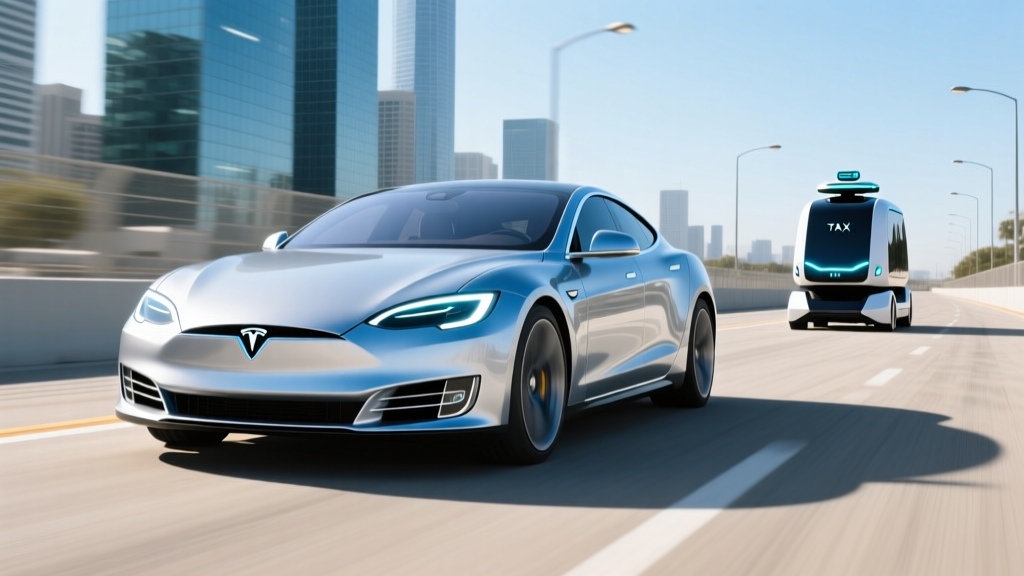
When Tesla refers to unsupervised Full Self-Driving, it is describing a future state where the vehicle operates without a human driver monitoring the road. As of early 2026, that state has not been delivered to consumer-owned vehicles. What Tesla has launched is a limited driverless ride-hail service in Austin, Texas, using purpose-built Model Y variants — a program the company calls its robotaxi service. Consumer vehicles with FSD (Supervised) remain SAE Level 2 systems that require continuous driver attention.
Level 2 (FSD Supervised, Autopilot, BlueCruise): The system can steer, accelerate, and brake, but the driver must remain engaged and ready to take over at all times.
Level 4 (Waymo, Zoox, Tesla's limited Austin robotaxi): The vehicle handles all driving tasks in a defined operational domain with no human driver required. Tesla's Austin service is a geofenced Level 4 pilot — not a consumer feature you can buy.
Bottom line: No Tesla sold to consumers in 2026 drives itself unsupervised. FSD (Supervised) is a $8,000 add-on that still requires your hands on or near the wheel and your eyes on the road.
For buyers considering a Tesla today — whether drawn by the unsupervised FSD narrative or simply evaluating the Model Y as an electric SUV — the decision comes down to hard vehicle specs, charging infrastructure, and ownership economics. This review covers the 2026 Tesla Model Y Long Range AWD, the volume seller that anchors Tesla's lineup, with context on where the unsupervised robotaxi program actually stands.
2026 Model Y Long Range: Full Specifications
| Spec | 2026 Model Y Long Range AWD |
|---|---|
| EPA Range | 320 miles |
| Battery (usable) | ~75 kWh, NMC chemistry |
| Drivetrain | Dual-motor AWD |
| Horsepower | 384 hp combined |
| 0–60 mph | 4.8 seconds |
| Efficiency | 122 MPGe combined / 28 kWh/100 mi |
| Max DC Fast Charge | 250 kW (CCS1/NACS) |
| 10–80% DCFC Time | ~27 minutes |
| Level 2 Home Charging | 11.5 kW (44 mi/hr) |
| Cargo Volume | 30.2 cu ft (rear seats up) / 72.0 cu ft (folded) |
| Rear Legroom | 38.9 inches |
| Battery Warranty | 8 years / 120,000 miles (70% retention) |
| Base MSRP | $47,990 (before destination) |
Real-World Range: What the EPA Sticker Doesn't Tell You
Real-World Highway (70–75 mph, moderate temps): ~265–285 miles
Cold Weather (below 30°F, mixed driving): ~210–240 miles
City/Stop-and-Go with Regen: ~300–315 miles
The Model Y Long Range's 320-mile EPA figure is achievable in favorable conditions — mild weather, moderate speeds, and generous regenerative braking in city traffic. But the physics of aerodynamic drag and battery chemistry tell a different story on the highway and in winter.
At sustained 75 mph, energy consumption climbs to roughly 32–34 kWh/100 mi, cutting effective range to around 270 miles. In sub-freezing temperatures, the battery's internal resistance increases and cabin heating draws additional power (the Model Y uses a heat pump, which helps but doesn't eliminate the penalty). Expect a 20–30% range reduction in deep winter, bringing the realistic figure to 210–240 miles before you need to find a charger.
For daily commuting under 60 miles round-trip, the Model Y's range is more than adequate even in worst-case conditions. For road trips, Tesla's Supercharger network remains the strongest in the industry, and preconditioning the battery en route to a Supercharger (a feature built into navigation) keeps charging speeds near peak.
Charging Speed: DC Fast, Level 2, and the Curve Reality
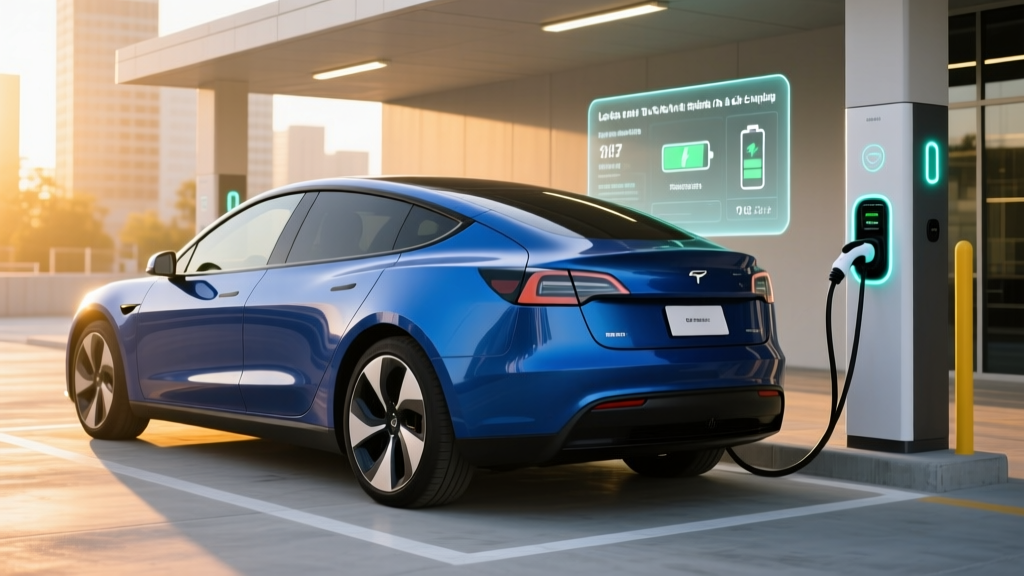
The Model Y Long Range peaks at 250 kW on a V3 Supercharger or any CCS1/NACS DC fast charger capable of that rate. But peak kW is not sustained kW. Here's what the charge curve actually looks like:
| Charging Level | Power | Speed | Notes |
|---|---|---|---|
| Level 1 (120V) | ~1.4 kW | ~5 mi/hr | Emergency/trickle only; ~64 hrs for full charge |
| Level 2 (240V, 48A) | 11.5 kW | ~44 mi/hr | Full charge in ~7 hrs; ideal home setup |
| DCFC (V3 Supercharger) | Peak 250 kW | 10–80% in ~27 min | Tapers sharply above 80%; 80–100% adds ~20 min |
| DCFC (50 kW public) | 50 kW | ~180 mi/hr | 10–80% in ~60 min; common at older stations |
The 10–80% time of roughly 27 minutes assumes you arrive at the charger with a low state of charge (around 5–10%) and the battery is preconditioned. If you plug in at 30% SoC without preconditioning, expect slower initial speeds and a longer session. The charge curve tapers significantly above 80% — Tesla recommends charging to 100% only when needed for a trip, as frequent 100% sessions accelerate NMC battery degradation over time.
For home charging, a 48-amp Level 2 wall connector on a 60-amp circuit delivers the full 11.5 kW, adding about 44 miles of range per hour. Most owners plug in overnight and wake up with a full battery. Installation costs for a Level 2 home setup typically run $500–$2,000 depending on panel capacity and run length from your electrical panel to the garage — a licensed electrician should assess whether your home's 200-amp service can support a dedicated 60-amp circuit.
Pricing, Tax Credits, and What You'll Actually Pay
| Trim | MSRP | Est. Federal Credit | Effective Price |
|---|---|---|---|
| Model Y Long Range AWD | $47,990 | $3,750–$7,500* | ~$40,490–$44,240 |
| Model Y Performance AWD | $52,990 | $3,750–$7,500* | ~$45,490–$49,240 |
| + FSD (Supervised) Add-On | +$8,000 | Not eligible | Adds to total |
*Federal tax credit amounts vary based on battery component sourcing, critical mineral content, buyer income, and MSRP caps under IRS §30D rules. The credit can be transferred at the point of sale to reduce the purchase price directly.
The Model Y's eligibility for the full $7,500 federal tax credit has been inconsistent across model years due to evolving battery-sourcing requirements. As of 2026, the credit splits into two $3,750 halves: one tied to critical mineral sourcing and one to battery component manufacturing. Tesla has worked to qualify for at least one half ($3,750) on most Model Y configurations, with the full $7,500 available on certain build weeks where battery cells meet all sourcing thresholds.
Buyer income caps also apply: modified adjusted gross income must not exceed $150,000 (single), $225,000 (head of household), or $300,000 (joint). The Model Y's MSRP falls under the $80,000 SUV cap, so price is not a disqualifier. Always verify eligibility at the point of sale — the dealer's system will confirm whether the specific VIN qualifies.
Tech, Driver Assistance, and the Unsupervised FSD Question
The 2026 Model Y ships with Tesla's latest infotainment running on the AMD Ryzen processor, a 15-inch center touchscreen, and over-the-air update capability. The interface consolidates nearly all vehicle controls into the screen — there are no physical buttons for climate, mirrors, or glovebox. This minimalism is polarizing: some owners find it clean and intuitive after a week; others miss tactile controls, especially for climate adjustments while driving.
Standard driver assistance includes Basic Autopilot (traffic-aware cruise control and lane-keeping), which is competent highway cruising but requires hands on the wheel. The $8,000 FSD (Supervised) upgrade adds automatic lane changes, traffic light and stop sign recognition, and city street navigation. It has improved substantially since 2023, handling many urban scenarios smoothly, but it still makes errors that require immediate driver intervention — phantom braking, missed construction zones, and occasional lane-choice confusion at complex intersections.
Tesla's FSD is an SAE Level 2 system. You are the driver. You must monitor the road, keep your hands available, and be prepared to take over instantly. Tesla's cabin camera monitors your attention, and the system will issue warnings and eventually disengage if you look away. No consumer Tesla vehicle can operate unsupervised. The Austin robotaxi pilot uses a separate, geofenced, Level 4 system not available for purchase.
Tesla's unsupervised robotaxi ambitions remain the company's most talked-about narrative. In June 2025, Tesla launched a limited driverless ride service in Austin using modified Model Y vehicles operating within a tight geofence. The service is invitation-only, covers a small area, and is not available to the public as a product or feature. Tesla has stated plans to expand to additional cities, but regulatory approval in each jurisdiction is required, and timelines have historically slipped. For buyers, the practical takeaway: do not purchase FSD (Supervised) expecting it to become an unsupervised system via software update. Treat it as an advanced driver-assist feature, not a path to autonomous ownership.
How the Model Y Stacks Up Against Competitors
320 mi EPA, 122 MPGe — still the class benchmark for a dual-motor AWD crossover.
Access to 6,000+ Superchargers plus the expanding NACS-compatible network. No competitor matches this reliability.
More physical controls, richer materials, and quieter cabins at similar or higher price points.
After the $3,750–$7,500 credit, no AWD EV SUV under $50K delivers this combination of range, space, and performance.
The Model Y's closest rivals — the Hyundai Ioniq 5, Ford Mustang Mach-E, and BMW iX — each have advantages. The Ioniq 5 charges faster (350 kW peak on 800V architecture, 10–80% in ~18 minutes). The Mach-E offers a more traditional cockpit layout. The iX delivers luxury refinement the Tesla can't match. But none combine 320 miles of range, 30 cu ft of cargo space, dual-motor AWD, and Supercharger access at the Model Y's effective price point.
Pros, Cons, and Who Should Buy
- 320-mile EPA range leads the segment
- Supercharger network is the most reliable DCFC ecosystem in the US
- 44 mi/hr Level 2 home charging is fast for overnight top-ups
- Class-leading cargo space (72 cu ft with seats folded)
- Strong efficiency (28 kWh/100 mi) keeps charging costs low
- OTA updates continue to add features post-purchase
- Point-of-sale tax credit transfer reduces upfront cost
- All-screen interface lacks physical climate/volume controls
- Ride quality is firm; road noise is noticeable above 65 mph
- FSD (Supervised) costs $8,000 and still requires full driver attention
- No unsupervised driving capability despite marketing narrative
- NMC battery chemistry degrades faster than LFP if routinely charged to 100%
- Insurance premiums run 15–30% higher than comparable gas SUVs
- Service center wait times can stretch weeks in some metro areas
- You need a daily-driver family SUV with 300+ miles of range and AWD
- You take road trips and want the most reliable fast-charging network
- You can install Level 2 charging at home and want low per-mile energy costs
- You value cargo space and efficiency over luxury interior finishes
- You want a true self-driving vehicle (no consumer car offers this in 2026)
- You prioritize a quiet, button-rich cabin (consider the BMW iX or Genesis GV60)
- You need ultra-fast 800V DC charging for frequent long trips (Hyundai Ioniq 5 or Kia EV6)
- You can't charge at home and your area has sparse public DCFC infrastructure
Frequently Asked Questions
Can I buy a Tesla that drives itself without supervision?
No. As of 2026, no Tesla sold to consumers can operate without a driver. The FSD (Supervised) system is SAE Level 2 and requires your full attention. Tesla's unsupervised robotaxi service in Austin is a geofenced pilot using fleet vehicles — it is not a feature available for purchase or activation on consumer cars.
What is the real-world range of the 2026 Model Y Long Range?
The EPA rates it at 320 miles. In real-world highway driving at 70–75 mph, expect 265–285 miles. In cold weather below 30°F, expect 210–240 miles. City driving with regenerative braking gets closest to the EPA figure, around 300–315 miles.
How fast does the Model Y charge at home and on the road?
At home on a 48-amp Level 2 charger, it adds about 44 miles of range per hour (full charge in ~7 hours). On a 250 kW DC fast charger (V3 Supercharger), it charges from 10–80% in approximately 27 minutes, with significant tapering above 80%.
Does the 2026 Model Y qualify for the federal EV tax credit?
It qualifies for between $3,750 and $7,500 depending on battery sourcing compliance for the specific VIN, your income level, and current IRS §30D requirements. The credit can be applied at the point of sale. Verify eligibility with your Tesla advisor before finalizing your order.
Is the Model Y worth buying over the Hyundai Ioniq 5 or Ford Mach-E?
The Model Y wins on range, efficiency, cargo space, and charging network access. The Ioniq 5 wins on DC fast-charge speed (350 kW peak) and interior ergonomics. The Mach-E offers a more conventional cockpit. If Supercharger access and maximum range matter most, the Model Y is the strongest choice. If interior quality and ultra-fast charging are priorities, test-drive the Ioniq 5.
Should I pay $8,000 for FSD (Supervised)?
Only if you value the advanced driver-assist features for daily use and accept that you remain the driver at all times. FSD handles many city and highway scenarios well but still requires intervention. Do not buy FSD expecting unsupervised capability — that feature does not exist on consumer vehicles and has no guaranteed timeline.
How long will the Model Y battery last?
Tesla warranties the Long Range battery for 8 years or 120,000 miles, whichever comes first, against degradation below 70% capacity. NMC chemistry typically retains 85–90% capacity at 100,000 miles with proper care (avoiding frequent 100% charges and extreme heat exposure). Replacement costs, if needed out of warranty, currently range from $12,000–$16,000.
Sources: EPA Fuel Economy, IRS Clean Vehicle Credits, Tesla specifications. Pricing and credit eligibility reflect 2026 model year data and are subject to change.