The Labor Question Hovering Over America's Best-Selling EV
Search interest in whether workers will Tesla unionize has surged as the United Auto Workers (UAW) expands campaigns at non-union EV plants across the American South and West. For buyers, the question isn't political — it's practical. A unionized Fremont or Austin workforce could reshape vehicle pricing, production cadence, and even the feature-set cadence of the Model Y, the vehicle that accounted for roughly one in every three EVs sold in the U.S. through 2025.
This review evaluates the 2026 Tesla Model Y on the metrics that actually matter to owners — range, charging, cost, and daily usability — while weighing what a potential labor organizing win could mean for the sticker price and delivery timeline of the EV you're considering today.
2026 Tesla Model Y: The Numbers That Matter
Before the labor debate, the spec sheet. The refreshed Model Y (internally "Juniper") carries over into 2026 with minor software and battery-pack tweaks.
| Spec | Long Range RWD | Long Range AWD | Performance |
|---|---|---|---|
| EPA Range | 320 mi | 308 mi | 285 mi |
| Battery (usable) | ~75 kWh, NMC | ~75 kWh, NMC | ~75 kWh, NMC |
| 0-60 mph | 5.6 s | 4.8 s | 3.5 s |
| Peak DC Charge | 250 kW | 250 kW | 250 kW |
| 10-80% DC Time | ~25 min | ~25 min | ~25 min |
| Level 2 Rate | 11.5 kW (~44 mi/hr) | 11.5 kW | 11.5 kW |
| MPGe (combined) | 123 MPGe | 117 MPGe | 111 MPGe |
| Drivetrain | RWD single motor | Dual-motor AWD | Dual-motor AWD |
| Cargo (rear seats up) | 30.2 cu ft | 30.2 cu ft | 30.2 cu ft |
| Cargo (seats folded) | 72.0 cu ft | 72.0 cu ft | 72.0 cu ft |
| Base MSRP | $44,990 | $47,990 | $52,490 |
Source: fueleconomy.gov and Tesla.com.
Real-World Range Reality Check
EPA sticker: 320 miles (Long Range RWD). Expect in practice: ~265-285 miles at sustained 75 mph highway driving; ~230-250 miles in sub-30°F winter conditions with cabin heat. The NMC pack's thermal management is strong, but highway speed and cold air density still cut 15-25% off the sticker. Plan road trips around 220-mile legs for comfort.
Charging Speed and Network Advantage
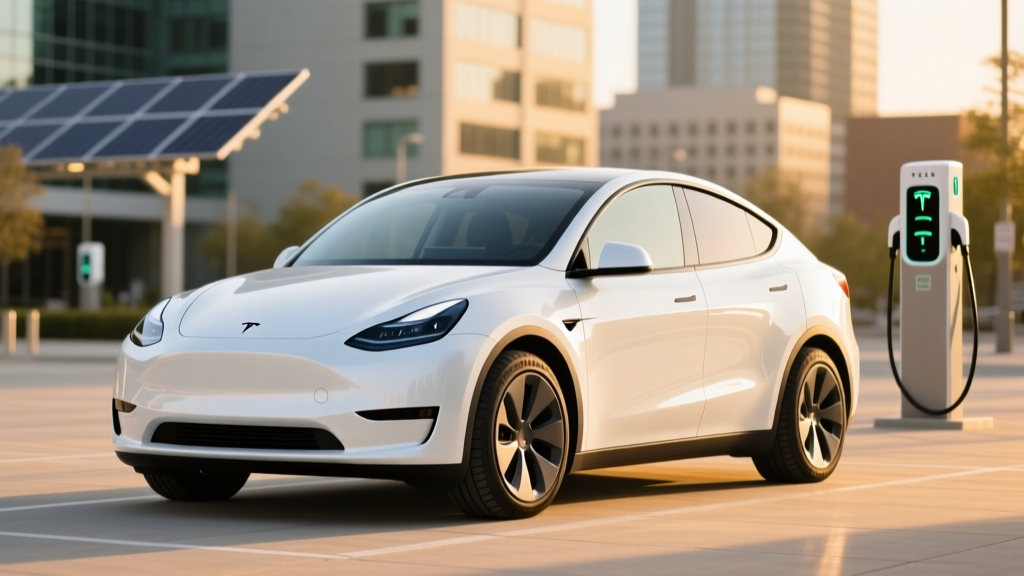
The Model Y still runs on Tesla's 400-volt architecture, which caps peak DC fast charging at 250 kW — roughly 15-20 minutes slower than 800V rivals like the Hyundai Ioniq 5 or Kia EV6 on a 10-80% fill. The tradeoff: access to Tesla's Supercharger network, which remains the most reliable public DC network in North America by uptime metrics.
| Charging Level | Power | Miles Added / Hour | Notes |
|---|---|---|---|
| Level 1 (120V) | ~1.4 kW | ~4-5 mi/hr | Emergency/trickle only |
| Level 2 (240V, 48A) | 11.5 kW | ~44 mi/hr | Home Wall Connector |
| DC Fast (V3 Supercharger) | 250 kW peak | ~180 mi in 15 min | Tapers sharply above 80% SoC |
| DC Fast (V4 Supercharger) | 250 kW (Y limited) | ~180 mi in 15 min | 400V pack cannot use full 350 kW |
Preconditioning the battery via navigation routing to a Supercharger is essential — without it, peak charge rates can drop below 100 kW on a cold pack. The Model Y's charge curve holds near peak only between 10-40% SoC, then tapers progressively; charging from 80-100% can take as long as 10-80%.
Pricing, Trims, and the Federal Tax Credit
The 2026 Model Y lineup is simplified to three trims. Federal tax credit eligibility under IRS §30D remains one of the strongest purchase incentives in the segment — but only if you meet the full criteria.
| Trim | MSRP | After $7,500 Credit | Credit Eligible? |
|---|---|---|---|
| Long Range RWD | $44,990 | ~$37,490 | Yes (if buyer meets income caps) |
| Long Range AWD | $47,990 | ~$40,490 | Yes |
| Performance | $52,490 | ~$44,990 | Yes (below $80K SUV cap) |
Critical caveats per IRS.gov:
- MSRP cap: Vehicle must be below $80,000 (SUVs/vans). All Model Y trims qualify.
- Buyer income cap: MAGI ≤ $150K single / $300K joint filers.
- Battery sourcing: Critical minerals + battery components must meet phased-in domestic/FEOC-free thresholds — Tesla's Austin-built packs currently satisfy this, but rules tighten annually.
- Point-of-sale transfer: Eligible buyers can apply the $7,500 as a down-payment reduction at delivery.
Confirm eligibility with a tax professional before ordering — rules shift and IRS guidance updates quarterly.
What a Tesla Unionize Win Would Actually Change
If the UAW successfully organizes Fremont or Gigafactory Texas, the impact on buyers won't be overnight, but it will be structural:
- Pricing pressure: Union labor contracts historically add 15-25% to fully loaded hourly compensation. On a ~$45,000 vehicle, that could translate to $1,500-$3,500 in upward price pressure over a contract cycle — partially offset by productivity gains.
- Build quality consistency: Union shops enforce standardized work rules that can reduce the panel-gap and trim variability Tesla has historically battled.
- Delivery timelines: Strikes or contract negotiations could introduce 2-6 week delivery delays during bargaining windows.
- Feature cadence: Union contracts typically slow mid-cycle hardware revisions (seats, suspension, interior materials) due to retraining requirements.
For buyers ordering in 2026, the practical takeaway: if a union vote appears imminent, locking in a price via order now insulates you from post-ratification price adjustments. Tesla has historically honored order pricing for 120 days.
Tech, Driver Assistance, and What's Missing
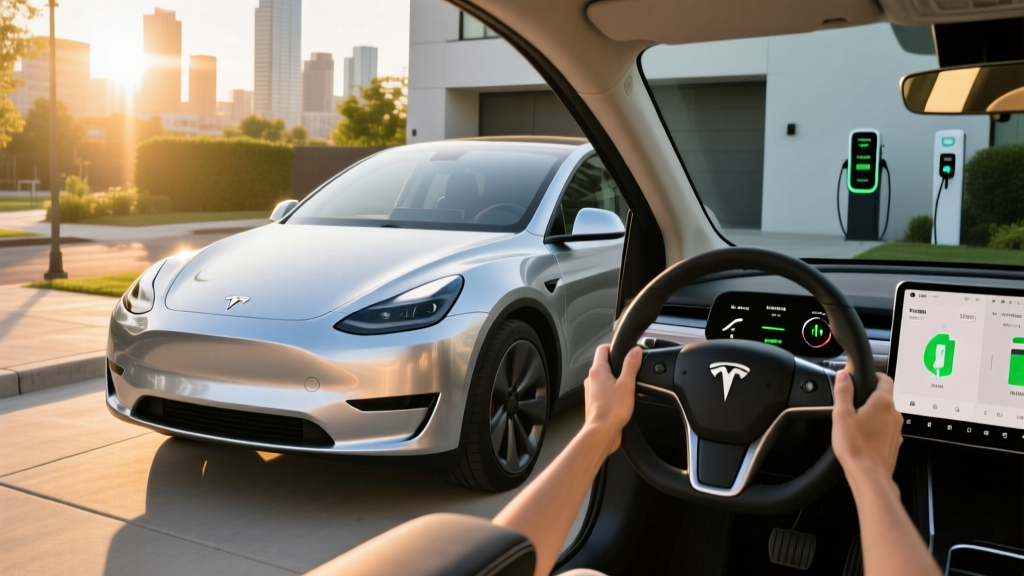
The 2026 Model Y ships with Tesla's latest infotainment stack, a 15.4-inch center display, rear-seat touchscreen, and ventilated front seats (added in the Juniper refresh). Autopilot remains standard; Full Self-Driving (Supervised) is a $8,000 option or $99/month subscription.
Driver-Assist Reality Check
Autopilot and FSD (Supervised) are SAE Level 2 systems. The driver must remain fully engaged, eyes on road, hands available. They are not self-driving. Only Level 4 services like Waymo operate without a human driver in defined zones.
Notable drawbacks vs. rivals:
- No head-up display (Hyundai, Kia, BMW all offer one)
- No Apple CarPlay / Android Auto (Tesla-only ecosystem)
- No physical stalks for turn signals (steering-wheel buttons, divisive)
- Rear visibility is compromised by the sloping roofline — a backup camera is essential
Ownership Costs: 5-Year Outlook
| Cost Category | Model Y LR AWD | Hyundai Ioniq 5 (AWD) |
|---|---|---|
| Purchase (after credit) | ~$40,490 | ~$44,500 |
| Electricity (15K mi/yr × 5) | ~$4,200 | ~$4,500 |
| Insurance (avg) | ~$11,500 | ~$9,200 |
| Maintenance | ~$1,800 | ~$2,100 |
| Depreciation (est.) | ~$18,000 | ~$16,500 |
| 5-Year Total | ~$75,990 | ~$76,800 |
Tesla's insurance premiums run higher than average due to repair-cost data from collision shops. Battery warranty: 8 years / 120,000 miles with a 70% minimum capacity retention threshold — competitive with the industry standard.
Pros and Cons at a Glance
Pros
- Best-in-class Supercharger network access
- Strong efficiency (117+ MPGe combined)
- Spacious cargo area (72 cu ft max)
- OTA updates add features post-purchase
- Full $7,500 federal credit eligibility (as of 2026)
Cons
- 250 kW peak charge rate trails 800V rivals
- No Apple CarPlay / Android Auto
- Higher insurance premiums than segment average
- Turn-signal buttons (no stalks) polarize drivers
- Labor uncertainty could shift pricing/delivery
Who Should Buy the 2026 Model Y?
- Choose the Model Y if: You road-trip frequently and value Supercharger reliability, want maximum cargo space in a compact SUV footprint, and live where home Level 2 charging is feasible.
- Look elsewhere if: You prioritize fastest DC charging (Ioniq 5/EV6), need Apple CarPlay (Ford Mach-E, BMW iX), or want to avoid labor-uncertainty risk (legacy OEM EVs).
Frequently Asked Questions
What is the real-world range of the 2026 Tesla Model Y?
EPA-rated 320 miles for the Long Range RWD. Expect ~265-285 miles at highway speeds and ~230-250 miles in freezing weather. Plan road trips around 220-mile segments.
How fast does the Model Y charge at home and on the road?
At home on a 48A Level 2 Wall Connector: ~44 miles of range per hour (11.5 kW). On a V3 Supercharger: 10-80% in roughly 25 minutes at a peak of 250 kW, with taper above 80%.
Does the 2026 Model Y qualify for the federal EV tax credit?
Yes, all trims currently qualify for the full $7,500 under IRS §30D, provided the buyer meets income caps ($150K single / $300K joint) and battery sourcing rules hold. Confirm at IRS.gov before ordering.
Would a Tesla unionize vote raise the price of the Model Y?
Likely yes, over a 2-4 year contract horizon. Union labor typically adds 15-25% to hourly compensation, which could push MSRPs up $1,500-$3,500 per vehicle over time, though productivity gains may offset some of this.
Is the Model Y worth buying vs. the Hyundai Ioniq 5 or Ford Mach-E?
For road-trippers and Supercharger-dependent buyers, yes. For those prioritizing fastest DC charging (Ioniq 5) or CarPlay integration (Mach-E), the rivals are stronger fits.