If you have visited Las Vegas in the last few years and taken a ride between convention centers, casinos, or the airport, you may have traveled through the Tesla underground tunnel in Vegas — officially known as the Vegas Loop. Operated by The Boring Company, this expanding network of subterranean tunnels uses Tesla electric vehicles to shuttle passengers at speed beneath the Strip and beyond. For EV shoppers and enthusiasts, the Vegas Loop is both a fascinating real-world deployment of Tesla's ecosystem and a lens into how electric vehicles perform in high-utilization fleet service.
This guide breaks down the Tesla vehicles powering the Vegas Loop, the engineering behind the tunnel system, and — critically — what the consumer versions of these same EVs deliver in terms of range, charging, pricing, and ownership. If you are considering a Tesla Model Y or Model 3 (the two vehicles most commonly used in the Loop), this article gives you the exact specs and real-world data you need.
What Is the Tesla Underground Tunnel in Vegas?
The Vegas Loop is a network of underground tunnels built by The Boring Company, Elon Musk's infrastructure firm. The system currently connects key destinations across Las Vegas, including the Las Vegas Convention Center (LVCC), Resorts World, The Wynn, Encore, and an expanding route toward Harry Reid International Airport. Unlike traditional subway systems, the Loop uses standard Tesla vehicles — primarily the Model Y and Model 3 — driven by human operators through narrow, purpose-built tunnels.
The tunnels are approximately 12 feet in diameter, with stations featuring dedicated loading areas. Vehicles travel at speeds up to 35–40 mph within the tunnels, and the system is designed for point-to-point or loop-style transit without intermediate stops. As of 2026, the network continues to expand, with additional casino and airport connections under construction.
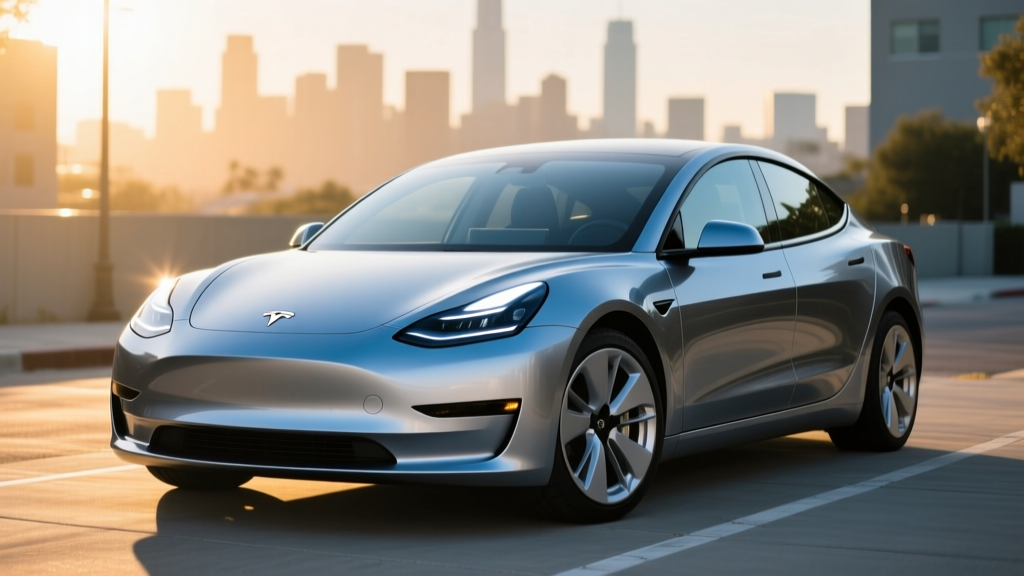
For EV buyers, the relevance is direct: the Tesla vehicles used in the Vegas Loop are the same consumer models available at your local Tesla showroom. The fleet deployment offers real-world insight into how these vehicles handle extreme duty cycles, high-frequency charging, and sustained operation in a controlled environment.
The Tesla Vehicles Behind the Vegas Loop
The Vegas Loop fleet has primarily relied on the Tesla Model Y Long Range AWD and, in some corridors, the Model 3 Long Range AWD. Both vehicles are consumer-available and represent Tesla's highest-volume platforms. Below, we profile the 2026 Tesla Model Y Long Range AWD — the dominant vehicle in the tunnel fleet — with full consumer specs.
| Spec | Value |
|---|---|
| EPA Estimated Range | 320 miles |
| Battery Capacity | ~75 kWh usable (NMC chemistry) |
| Drivetrain | Dual-Motor AWD |
| Horsepower | 384 hp (combined) |
| 0–60 mph | 4.8 seconds |
| Max DC Fast Charge | 250 kW (peak) |
| 10–80% DC Charge Time | ~25 minutes |
| Level 2 Home Charge Rate | 11.5 kW (~44 miles/hr) |
| MPGe (Combined) | 122 MPGe |
| Energy Consumption | 28 kWh/100 mi |
| Cargo Volume | 76 cu ft (rear seats folded) |
| Rear Legroom | 41.6 inches |
| Battery Warranty | 8 years / 120,000 miles |
| Base MSRP | $48,990 |
Sources: fueleconomy.gov, Tesla Model Y specs.
Real-World Range: What the EPA Sticker Doesn't Tell You
Real-World Expectation: 260–290 miles on mixed highway driving; 230–260 miles in sustained cold weather (below 32°F); up to 300+ miles in city/regen-heavy driving.
The EPA's 320-mile estimate for the Model Y Long Range AWD is a useful baseline, but real-world conditions shift the number significantly. On highway road trips at 70–75 mph, expect roughly 260–290 miles before needing to charge. In cold climates, battery chemistry (NMC in this trim) and cabin heating demands can reduce range by 15–25%, dropping usable range to approximately 230–260 miles.
In the Vegas Loop context, range is less of a concern. Tunnel vehicles operate short routes (typically 1–3 miles per trip) and charge frequently at depot stations. For consumer owners, the Model Y's 75 kWh battery with NMC chemistry provides strong energy density but requires more attention to thermal management in extreme temperatures compared to LFP batteries found in the Model Y RWD trim.
Charging Speed: DC Fast and Home Level 2
| Charging Level | Power | Speed |
|---|---|---|
| Level 1 (120V) | ~1.4 kW | ~4–5 miles/hr |
| Level 2 (240V, 48A) | 11.5 kW | ~44 miles/hr |
| DC Fast Charge (V3 Supercharger) | 250 kW peak | 10–80% in ~25 min |
| DC Fast Charge (V4 Supercharger) | Up to 250 kW | Similar; improved cable management |
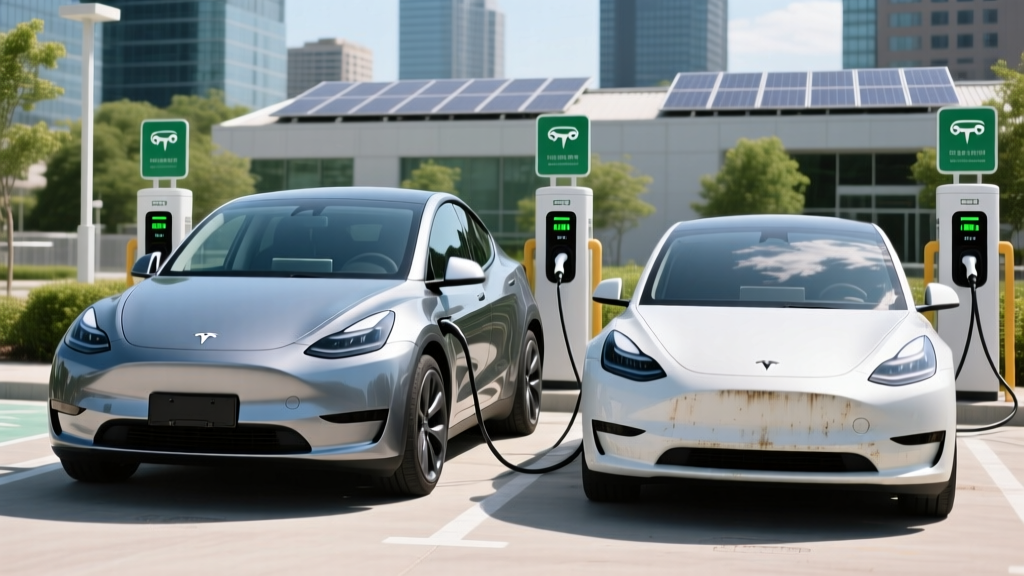
The Model Y Long Range peaks at 250 kW on Tesla's V3 and V4 Superchargers. However, peak rate is not sustained rate. The charge curve tapers notably above 50% SoC, and by 80%, charging speed drops to roughly 50–70 kW. A 10–80% session takes approximately 25 minutes under optimal conditions (battery preconditioned, moderate ambient temperature).
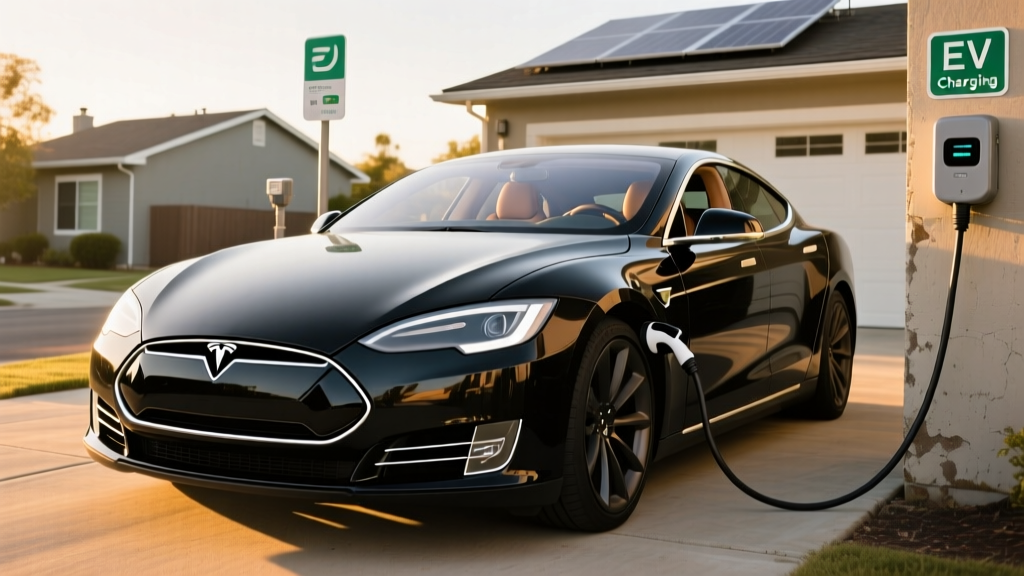
For home charging, a Level 2 wall connector at 11.5 kW (48 amps on a 60-amp circuit) adds roughly 44 miles of range per hour — enough to fully replenish the battery overnight. Installation costs vary widely: expect $500–$1,500 for a straightforward install, or $2,000–$4,000+ if a panel upgrade (to 200A service) is needed. Always consult a licensed electrician for a site-specific quote.
In the Vegas Loop fleet, Tesla vehicles charge at depot locations using high-power connectors, often cycling through multiple short charge sessions per shift. This high-frequency charging pattern has implications for long-term battery degradation — data that consumer owners can reference when evaluating Tesla's battery durability.
Pricing, Trims, and Federal Tax Credit Eligibility
| Trim | Base MSRP | Est. After §30D Credit |
|---|---|---|
| Long Range AWD | $48,990 | ~$41,490 (if eligible) |
| Performance AWD | $53,990 | ~$46,490 (if eligible) |
The 2026 Model Y Long Range AWD starts at $48,990 before destination fees. The Performance trim adds roughly $5,000 for enhanced acceleration (0–60 in 3.5 seconds) and track-oriented features.
Federal Tax Credit (§30D): The Model Y may qualify for up to $7,500 under the IRS Clean Vehicle Credit, but eligibility depends on several factors:
- MSRP Cap: SUVs/vans/pickups must be under $80,000 — the Model Y qualifies.
- Buyer Income Cap: Modified AGI must not exceed $150,000 (single), $225,000 (head of household), or $300,000 (joint).
- Battery Sourcing: Critical minerals and battery components must meet phased-in domestic-content thresholds per IRS rules. These requirements tighten annually.
- Point-of-Sale Transfer: As of 2024+, eligible buyers can transfer the credit to the dealer at purchase, reducing the upfront price.
Always verify current-year eligibility on IRS.gov and consult a tax professional before relying on credit assumptions. Battery sourcing rules change yearly and can shift a vehicle's eligibility without notice.
Driver Assistance: Autopilot and FSD in Context
Tesla Autopilot and Full Self-Driving (Supervised) are Level 2 driver-assistance systems. The driver must remain fully engaged, hands on the wheel, and eyes on the road at all times. These are NOT autonomous or self-driving systems.
Inside the Vegas Loop tunnels, Tesla vehicles are driven by human operators — Autopilot and FSD are not used in the tunnel environment. This is an important distinction: while Tesla's driver-assist technology is advanced, it remains a Level 2 system requiring constant supervision.
For consumer owners, Autopilot (standard) includes adaptive cruise control and lane-keeping. FSD (Supervised), available as a $8,000 add-on or $99/month subscription, adds features like automatic lane changes, traffic-light recognition, and city-street navigation. However, FSD performance varies by geography and road complexity, and the driver bears full responsibility for safe operation.
- Drive the vehicle without human supervision
- Handle all weather, construction-zone, or unmapped-road scenarios
- Replace attentive driving — NHTSA data shows misuse of Level 2 systems contributes to preventable incidents
Pros and Cons of the 2026 Tesla Model Y Long Range
Pros
- 320-mile EPA range covers most road trips with one charge stop
- Tesla Supercharger network — the most reliable and extensive DC fast-charging network in the US
- Strong 0–60 performance (4.8 sec) with dual-motor AWD traction
- Spacious cargo area (76 cu ft) and comfortable rear seat for a crossover
- Over-the-air updates continuously add features
- Proven in high-utilization fleet service (Vegas Loop, ride-hail)
Cons
- NMC battery degrades faster than LFP under frequent fast-charging
- Build-quality inconsistencies still reported (panel gaps, trim alignment)
- No Apple CarPlay or Android Auto — Tesla's proprietary infotainment only
- FSD (Supervised) remains expensive and is not truly autonomous
- Insurance premiums often higher than competing EVs in the same class
- Tax credit eligibility subject to shifting battery-sourcing rules
Who Should Buy the Tesla Model Y Long Range AWD?
The Model Y Long Range AWD is best suited for:
- Commuters and road-trippers who want 300+ mile range with access to the Supercharger network for hassle-free long-distance travel.
- Small families needing a practical, spacious crossover with strong safety ratings and low operating costs.
- Tech-forward buyers comfortable with Tesla's proprietary ecosystem (no CarPlay, app-based controls, OTA updates).
- Fleet and ride-hail operators seeking a proven EV platform with high utilization tolerance — as demonstrated by the Vegas Loop deployment.
It may not be ideal for buyers who prioritize traditional dealership service, want Apple CarPlay integration, or need a vehicle with Level 4 autonomous capability (which does not exist in any consumer vehicle as of 2026).
How Does the Model Y Compare to Key Competitors?
The Model Y Long Range competes directly with the Hyundai Ioniq 5, Ford Mustang Mach-E, and Kia EV6. Key differentiators:
- Charging network: Tesla's Supercharger network remains the gold standard for reliability. Competitors now access Superchargers via NACS adapters, but native Tesla integration (plug-and-charge, navigation preconditioning) still offers the smoothest experience.
- Range: At 320 miles EPA, the Model Y edges out the Ioniq 5 (305 mi) and Mach-E Extended Range (312 mi).
- Efficiency: The Model Y's 28 kWh/100 mi is competitive but not class-leading — the Ioniq 5 achieves slightly better efficiency in some trims.
- Interior: Tesla's minimalist interior divides opinion. Competitors offer more traditional layouts with physical buttons and CarPlay.
FAQ: Tesla Underground Tunnel Vegas & the Model Y
What is the real-world range of the Tesla Model Y used in the Vegas Loop?
The consumer Model Y Long Range AWD has an EPA range of 320 miles. In real-world highway driving, expect 260–290 miles. In the Vegas Loop, vehicles travel short routes and charge frequently, so range depletion is minimal.
How fast does the Model Y charge at home and on DC fast chargers?
At home on a Level 2 (11.5 kW) charger, the Model Y adds ~44 miles of range per hour. On a Tesla V3/V4 Supercharger (250 kW peak), a 10–80% charge takes approximately 25 minutes with a preconditioned battery.
How much does the Model Y cost after the federal tax credit?
The 2026 Model Y Long Range AWD starts at $48,990. If you qualify for the full $7,500 §30D credit (income, MSRP, and battery-sourcing requirements met), the effective price drops to approximately $41,490. Verify eligibility on IRS.gov.
Is the Tesla Model Y worth buying vs. the Hyundai Ioniq 5 or Ford Mach-E?
The Model Y wins on Supercharger access, range (320 mi), and proven fleet durability (as the Vegas Loop demonstrates). The Ioniq 5 and Mach-E offer more traditional interiors, CarPlay, and competitive pricing. Choose Tesla if charging-network reliability and OTA updates are priorities.
Does the Tesla Model Y qualify for the federal EV tax credit?
It may, depending on your income, the vehicle's MSRP (under the $80,000 SUV cap), and current battery-sourcing compliance. Rules tighten annually — always check IRS.gov for the latest eligibility matrix before purchasing.
Does the Vegas Loop use self-driving Teslas?
No. Vegas Loop vehicles are operated by human drivers. Tesla's Autopilot and FSD are Level 2 driver-assist systems, not autonomous driving. Only Level 4 services like Waymo operate without a driver in designated zones.