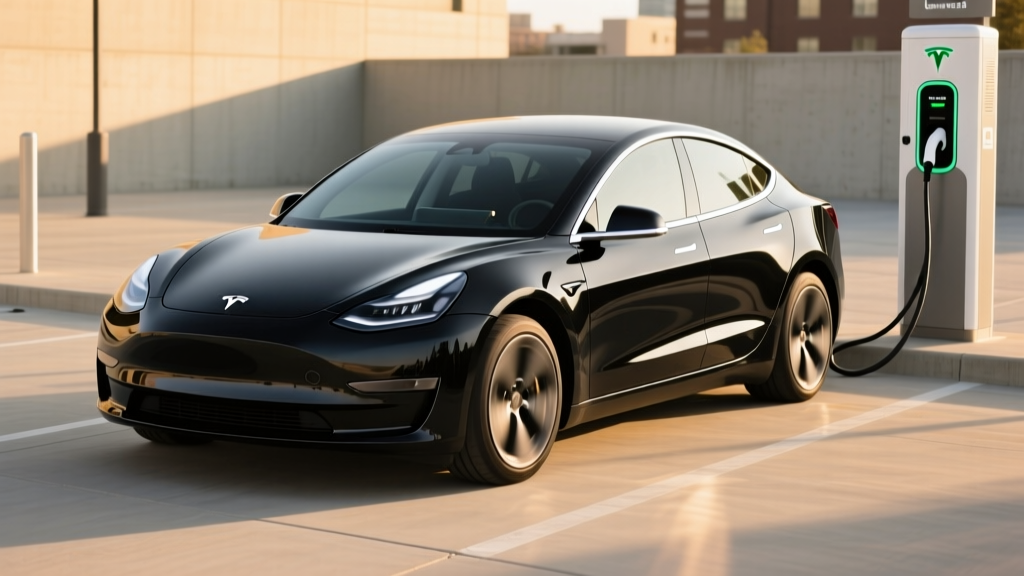
When Tesla began pulling ultrasonic sensors (USS) from its vehicles in late 2022, it sparked one of the most contentious debates in the EV world. The company bet that its camera-only Tesla Vision system could outperform the sensor-fusion approach used by virtually every other automaker. Now, with the 2026 Model 3, Model Y, Model S, and Model X all shipping without a single ultrasonic transducer, owners and shoppers need to know: does the absence of Tesla ultrasonic sensors actually matter in daily driving, and how does it affect the ownership experience across range, charging, tech, and value?
This review examines the full Tesla lineup through the lens of the USS removal — covering real-world parking performance, Autopilot implications, and the hard specs (range, charging, pricing, tax credit eligibility) that should drive your purchase decision in 2026.
Why Tesla Removed Ultrasonic Sensors
Ultrasonic sensors emit high-frequency sound waves to detect nearby objects — typically within 6 to 8 feet. They've been an industry standard for parking assist and low-speed obstacle detection for over a decade. Tesla used eight ultrasonic sensors per vehicle until October 2022, when CEO Elon Musk announced a transition to Tesla Vision: a purely camera-based perception system relying on neural networks to estimate depth and proximity.
Tesla's rationale was twofold: eliminate hardware redundancy (cameras already cover the sensor field of view) and unify the perception stack so that improvements to the neural network benefit all driving scenarios simultaneously. Critics argued that cameras struggle in low-light, heavy rain, and with thin objects like poles or chains — situations where ultrasonic reflections excel.
As of the 2026 model year, every new Tesla rolls off the line with Tesla Vision as the sole proximity-detection system. There is no option to add ultrasonic sensors back. Let's look at what that means on the spec sheet and in the driver's seat.
2026 Tesla Lineup: Core Specs at a Glance
| Spec | Model 3 RWD | Model Y Long Range AWD | Model S Long Range | Model X Long Range |
|---|---|---|---|---|
| EPA Range | 363 mi | 320 mi | 402 mi | 335 mi |
| Battery (usable) | ~60 kWh (LFP) | ~75 kWh (NMC) | ~95 kWh (NMC) | ~95 kWh (NMC) |
| MPGe (combined) | 132 MPGe | 122 MPGe | 120 MPGe | 109 MPGe |
| Efficiency | 25 kWh/100mi | 28 kWh/100mi | 28 kWh/100mi | 31 kWh/100mi |
| 0-60 mph | 5.8 sec | 4.8 sec | 3.1 sec | 3.8 sec |
| Horsepower | 271 hp | 384 hp | 670 hp | 670 hp |
| Drivetrain | RWD | Dual-Motor AWD | Dual-Motor AWD | Dual-Motor AWD |
| Peak DC Charge | 170 kW | 250 kW | 250 kW | 250 kW |
| 10-80% DC Time | ~25 min | ~27 min | ~30 min | ~31 min |
| Level 2 Rate | 11.5 kW (~44 mi/hr) | 11.5 kW (~44 mi/hr) | 11.5 kW (~34 mi/hr) | 11.5 kW (~30 mi/hr) |
| Base MSRP | $38,990 | $44,990 | $79,990 | $84,990 |
Sources: fueleconomy.gov, Tesla.com 2026 configurator. Specs reflect base trims; Performance and Plaid variants differ.
Real-World Range: What the EPA Number Doesn't Tell You
The EPA sticker is a useful baseline, but real-world results diverge based on speed, temperature, and terrain. Here's what to expect:
- Model 3 RWD (EPA 363 mi): Expect ~300-320 mi on mixed highway driving at 70 mph. In cold weather (below 32°F), range drops to ~250-280 mi due to battery resistance and cabin heating demands. The LFP battery's lower energy density partially offsets its excellent cycle life.
- Model Y LR AWD (EPA 320 mi): Highway-heavy trips yield ~260-280 mi. Cold weather: ~220-250 mi. The taller, less aerodynamic crossover body costs ~15% efficiency vs. the Model 3 at speed.
- Model S LR (EPA 402 mi): Highway: ~340-360 mi. Cold: ~300-330 mi. The larger 95 kWh NMC pack provides a bigger buffer.
- Model X LR (EPA 335 mi): Highway: ~275-295 mi. Cold: ~240-265 mi. Falcon-wing doors and heavier curb weight work against efficiency.
For context, the LFP (lithium iron phosphate) chemistry in the Model 3 RWD offers superior longevity — Tesla recommends charging to 100% regularly — but trades off cold-weather performance and energy density compared to the NMC (nickel manganese cobalt) packs in Long Range variants. If you live in northern climates and commute long distances, the NMC-equipped Long Range models provide a more predictable winter range.
Charging Speed: DC Fast and Home Level 2
| Charging Level | Power (kW) | Miles Added/Hour | Notes |
|---|---|---|---|
| Level 1 (120V) | ~1.4 kW | ~3-5 mi/hr | Emergency/trickle only; not practical for daily use |
| Level 2 (240V, 48A) | 11.5 kW | 30-44 mi/hr | Home Wall Connector; full charge overnight for all trims |
| DC Fast (V3 Supercharger) | Up to 250 kW | ~1,000 mi/hr peak | 10-80% in ~25-31 min; rate tapers significantly above 80% |
| DC Fast (V4 Supercharger) | Up to 250+ kW | Similar to V3 | Newer cabinet design; same CCS/NACS connector |
A critical nuance: peak kW is not sustained kW. A Model Y Long Range may hit 250 kW briefly between 10-30% state of charge, but the charge curve tapers progressively — dropping to ~100 kW by 60% and ~40 kW above 85%. The 10-80% time of ~27 minutes reflects this taper. If you regularly charge past 80%, add 15-20 minutes to your stop.
All 2026 Teslas use the NACS (North American Charging Standard) connector natively. With the broader industry adopting NACS, Tesla owners now have access to their own Supercharger network (20,000+ stalls in North America) plus a growing number of third-party stations equipped with NACS cables. Tesla's Supercharger network remains the most reliable public charging infrastructure available, with real-time stall availability and automatic billing via the vehicle's connectivity.
For home charging, the Tesla Wall Connector ($420) on a 60-amp circuit delivers the full 11.5 kW (48A continuous). Installation costs range from $500-$2,000 depending on panel proximity and whether a 200-amp service upgrade is needed. Always hire a licensed electrician and check local permitting requirements.
Tesla Vision vs. Ultrasonic Sensors: What Changed in Practice
Tesla Autopilot and Full Self-Driving (Supervised) are SAE Level 2 driver-assistance systems. The driver must remain fully engaged, hands on or near the wheel, eyes on the road at all times. These are not self-driving systems. Only Level 4 services like Waymo operate without a human driver in defined areas.
Here's how the removal of ultrasonic sensors affects day-to-day ownership:
Parking and Low-Speed Maneuvers
Tesla Vision now generates a 3D proximity visualization on the touchscreen, estimating distances to curbs, poles, and other vehicles using camera data processed through neural networks. In our experience and consistent owner feedback:
- Daylight, clear conditions: Tesla Vision performs comparably to USS-equipped vehicles. Distance estimates are generally accurate within 6-12 inches.
- Nighttime and low-light: Performance degrades. Camera-based depth estimation struggles in poorly lit parking garages. The visualization may show phantom objects or miss thin obstacles like bike racks or trailer hitches.
- Heavy rain, fog, or dirty cameras: The system can become limited or disabled entirely, displaying a "Tesla Vision degraded" warning. Ultrasonic sensors were unaffected by these conditions.
- Parallel parking assist: Tesla removed automatic park assist during the transition and has been gradually reintroducing features via over-the-air updates. As of early 2026, automatic parking is available but requires clear camera visibility.
Autopilot and FSD (Supervised)
The USS removal was part of Tesla's broader bet that a unified vision stack would accelerate FSD development. On highway driving, the absence of ultrasonic sensors is irrelevant — Autopilot's lane-keeping and adaptive cruise control rely on cameras and radar (where equipped) for forward perception. The impact is felt primarily in:
- Low-speed summon: Smart Summon in tight parking lots is less confident without ultrasonic proximity confirmation.
- FSD in urban environments: The neural network handles most scenarios, but edge cases involving thin poles, chains, or uneven curbs remain areas where sensor fusion (cameras + ultrasonics) had a hardware advantage.
Tesla Vision cannot match ultrasonic sensors in all conditions. If you frequently park in dimly lit garages, deal with heavy precipitation, or rely on automated parking features, test-drive a 2026 Tesla in those exact conditions before purchasing. The system is competent but not infallible, and camera obstruction (road salt, bug splatter, condensation) can disable proximity alerts mid-drive.
Pricing, Trims, and Federal Tax Credit Eligibility
| Model / Trim | Base MSRP | As-Tested (typical) | §30D Credit Eligible? |
|---|---|---|---|
| Model 3 RWD | $38,990 | $40,500 (w/ FSD, paint) | Yes — up to $7,500 (subject to income & sourcing) |
| Model 3 Long Range AWD | $44,990 | $48,000 | Yes — up to $7,500 |
| Model Y Long Range AWD | $44,990 | $49,500 | Yes — up to $7,500 |
| Model Y Performance | $48,990 | $52,000 | Yes — up to $7,500 |
| Model S Long Range | $79,990 | $88,000 | No — exceeds $55,000 sedan MSRP cap |
| Model X Long Range | $84,990 | $93,000 | No — exceeds $80,000 SUV MSRP cap |
The IRS §30D federal tax credit provides up to $7,500 for qualifying new EVs, but eligibility depends on several conditions that change frequently:
- MSRP caps: Sedans (Model 3) must be under $55,000; SUVs/trucks (Model Y) under $80,000.
- Buyer income caps: Modified AGI must not exceed $150,000 (single), $225,000 (head of household), or $300,000 (joint).
- Battery sourcing: The $7,500 credit splits into two halves — $3,750 for critical minerals sourcing and $3,750 for battery component manufacturing. Sourcing requirements tighten annually. Verify current-year compliance on fueleconomy.gov.
- Point-of-sale transfer: As of 2024, buyers can transfer the credit to the dealer at purchase, reducing the out-of-pocket price directly rather than waiting for a tax refund.
Because battery-sourcing rules are updated annually, always confirm eligibility with your tax professional and the IRS before finalizing a purchase. The Model 3 and Model Y have consistently qualified for the full or partial credit, but this is not guaranteed for every configuration or model year.
Interior, Cargo, and Standout Tech
Cabin and Cargo Dimensions
| Model | Front Legroom | Rear Legroom | Cargo (rear seats up) | Cargo (seats folded) | Frunk |
|---|---|---|---|---|---|
| Model 3 | 42.7 in | 35.2 in | 23 cu ft | ~50 cu ft (est.) | 3.1 cu ft |
| Model Y | 41.8 in | 41.6 in | 30 cu ft | 72 cu ft | 4.1 cu ft |
| Model S | 42.7 in | 35.4 in | 28 cu ft | ~63 cu ft | 5.3 cu ft |
| Model X | 41.2 in | 38.4 in | 15 cu ft (5-seat) | 82 cu ft | 6.6 cu ft |
The Model Y remains the standout for families — its 72 cu ft of cargo space with seats folded rivals midsize SUVs, and the optional third row (though cramped) adds flexibility. The Model 3's 23 cu ft trunk is generous for a sedan but can't match the hatchback utility of the Model Y.
Tech and Infotainment
All 2026 Teslas feature a 15.4-inch center touchscreen (Model 3/Y) or 17-inch touchscreen (Model S/X) running Tesla's proprietary infotainment OS. Highlights include:
- Native navigation with real-time Supercharger routing and battery preconditioning
- Over-the-air updates that add features and improve performance post-purchase
- Streaming (Netflix, YouTube, Spotify) while parked
- Dashcam and Sentry Mode using the same camera array as Tesla Vision
- No Apple CarPlay or Android Auto — Tesla's ecosystem is self-contained
The absence of Apple CarPlay is a dealbreaker for some buyers. Tesla's native navigation and media apps are capable, but if you're deeply invested in Apple Maps or Google Assistant, the closed ecosystem requires adjustment.
Warranty and Battery Longevity
| Coverage | Model 3 / Model Y | Model S / Model X |
|---|---|---|
| Basic Vehicle | 4 years / 50,000 mi | 4 years / 50,000 mi |
| Battery & Drive Unit | 8 years / 120,000 mi (Model 3 RWD) 8 years / 120,000 mi (LR/AWD) | 8 years / 150,000 mi |
| Capacity Retention Threshold | 70% minimum | 70% minimum |
Tesla's battery warranty guarantees at least 70% capacity retention over the warranty period. Real-world degradation data from Tesla's fleet shows most packs retain 85-90% capacity at 100,000 miles. LFP packs in the Model 3 RWD may show slower degradation due to the chemistry's inherent cycle-life advantage, though they start with less total range.
Out-of-warranty battery replacement costs range from $8,000-$16,000 depending on the pack size. This is a long-tail ownership cost to budget for if you plan to keep the vehicle past 150,000 miles.
Pros, Cons, and Who Should Buy
Pros
- Class-leading Supercharger network access (NACS native)
- Over-the-air updates continuously improve the vehicle
- Best-in-class efficiency (Model 3: 132 MPGe combined)
- Strong resale value relative to most EVs
- Model 3 and Model Y qualify for up to $7,500 federal credit
- LFP battery option offers excellent long-term cycle life
- Minimal maintenance — no oil, filters, or spark plugs
Cons
- No ultrasonic sensors — parking in low light or bad weather is less reliable
- No Apple CarPlay or Android Auto
- FSD (Supervised) costs $8,000 extra and remains Level 2 — not autonomous
- Service center wait times can be long in high-volume metro areas
- Model S and Model X do not qualify for federal tax credit (MSRP cap)
- Build quality has improved but still inconsistent vs. legacy luxury brands
- Insurance premiums are 15-30% higher than comparable gas vehicles
Who This EV Suits Best
- Commuters with home charging: The Model 3 RWD at ~$31,500 after the federal credit is one of the most affordable long-range EVs available. Daily charging at home on Level 2 eliminates range concerns entirely.
- Families needing cargo space: The Model Y's 72 cu ft of cargo room and available third row make it the default choice for households with children and gear.
- Tech-forward buyers: If you value OTA updates, native navigation, and the Supercharger ecosystem, Tesla's software advantage is real and widening.
- Not ideal for: Buyers who frequently park in dim garages or harsh weather without covered parking. The lack of ultrasonic sensors is a genuine usability regression in these conditions. Also not ideal for CarPlay-dependent users or those who want a traditional dealer service experience.
Frequently Asked Questions
What is the real-world range of Tesla vehicles in 2026?
The EPA rates the Model 3 RWD at 363 miles, but real-world highway driving at 70 mph yields approximately 300-320 miles. In cold weather (below freezing), expect 250-280 miles. The Model Y Long Range delivers ~260-280 miles highway, and the Model S Long Range achieves ~340-360 miles. Always plan charging stops around 80% of the EPA figure for highway road trips.
How fast do 2026 Teslas charge at home and on DC fast chargers?
On a home Level 2 Tesla Wall Connector (11.5 kW / 48A), expect 30-44 miles of range per hour — a full overnight charge for any trim. On V3/V4 Superchargers, the Model 3 RWD peaks at 170 kW (10-80% in ~25 min), while Long Range models peak at 250 kW (10-80% in ~27-31 min). Charging slows significantly above 80% state of charge due to battery protection protocols.
How much does a Tesla cost after the federal tax credit?
The Model 3 RWD starts at $38,990 and can drop to approximately $31,490 after the full $7,500 §30D credit — if you meet income caps (under $150K single / $300K joint) and the vehicle's battery sourcing qualifies for the current year. The Model Y Long Range at $44,990 can reach ~$37,490. Model S and Model X exceed MSRP caps and do not qualify. Always verify with a tax professional.
Does Tesla Vision perform as well as ultrasonic sensors for parking?
In daylight and clear weather, Tesla Vision's camera-based proximity detection performs comparably to ultrasonic sensors. However, in low-light parking garages, heavy rain, fog, or when cameras are dirty, the system degrades. Ultrasonic sensors were impervious to these conditions. If low-visibility parking is a daily reality, test the system in your environment before committing.
Is Tesla's Autopilot or FSD self-driving?
No. Both Autopilot and Full Self-Driving (Supervised) are SAE Level 2 driver-assistance systems. You must keep your eyes on the road and be prepared to take over at any moment. Tesla's FSD can navigate city streets, stop signs, and traffic lights, but it makes errors and requires constant supervision. Only Level 4 robotaxi services like Waymo operate without a human driver.
Is a 2026 Tesla worth buying vs. competitors like the Hyundai Ioniq 5 or BMW i4?
The Tesla Model 3 and Model Y remain compelling for their efficiency, Supercharger access, software ecosystem, and tax-credit-adjusted pricing. However, the Hyundai Ioniq 5 offers 800V ultra-fast charging (10-80% in ~18 min), a more refined interior, and physical buttons. The BMW i4 provides a more traditional luxury experience with CarPlay. If the ultrasonic sensor removal and lack of CarPlay don't bother you, and you value the Supercharger network, Tesla remains the default EV choice for many buyers. If parking-assist reliability or infotainment flexibility are priorities, cross-shop aggressively.