Tesla Ultra Red: Beyond the Paint
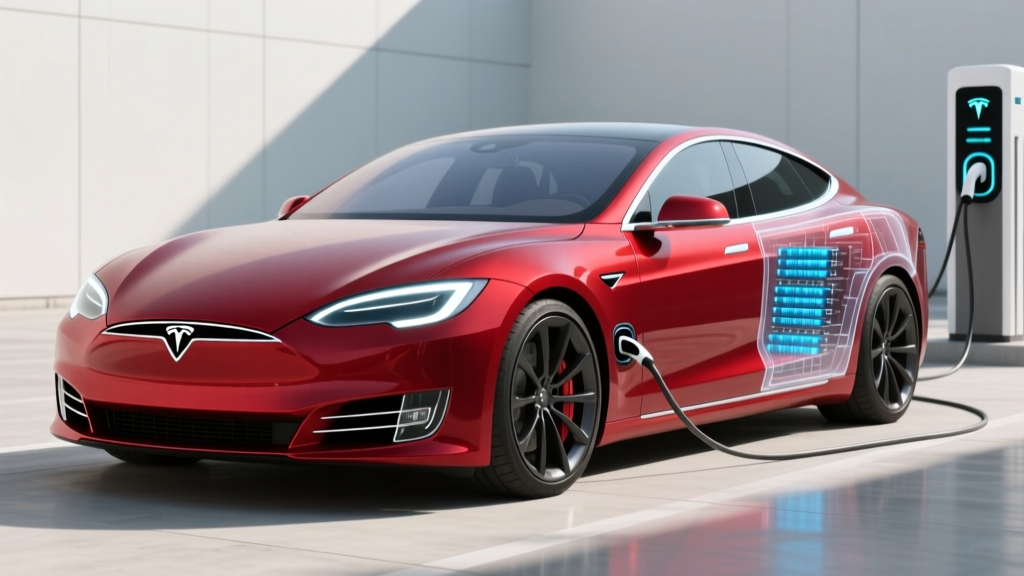
If you've been browsing Tesla's configurator or scrolling owner forums, you've likely encountered the phrase Tesla Ultra Red. Unlike the outgoing Red Multi-Coat, Ultra Red is Tesla's newest premium exterior finish — a deeper, more metallic red that the company introduced as a paid upgrade across multiple model lines. But a striking color is only part of the purchase equation. This review breaks down what you actually get when you spec a 2026 Tesla in Ultra Red: the real-world range, charging performance, pricing, and whether the federal EV tax credit still applies.
We'll focus primarily on the 2026 Tesla Model 3 Long Range AWD — the most popular canvas for Ultra Red — while noting availability on the Model Y, Model S, and Cybertruck where applicable.
2026 Model 3 Long Range AWD: Core Specifications
| Spec | Value |
|---|---|
| EPA Range | 341 miles |
| Battery (usable) | ~75 kWh, NMC (nickel manganese cobalt) |
| Drivetrain | Dual-motor AWD |
| Horsepower | ~384 hp (combined) |
| 0–60 mph | 4.2 seconds |
| Peak DC Fast Charge | 250 kW (V3 Supercharger) |
| 10–80% DC Charge Time | ~30 minutes |
| Level 2 Home Charge Rate | 11.5 kW (~44 mi/hr) |
| Efficiency | 132 MPGe combined / 25 kWh/100 mi |
| Cargo Volume | 23 cu ft (rear trunk + frunk combined) |
| Rear Legroom | 34.9 inches |
| Battery Warranty | 8 years / 120,000 miles (min 70% retention) |
| Base MSRP | $47,740 (before destination) |
Sources: fueleconomy.gov, Tesla official specifications.
Real-World Range: What the EPA Sticker Doesn't Tell You
Real-World Highway (70 mph, mild weather): ~280–300 miles
Cold-Weather (below 32°F, mixed driving): ~230–260 miles
The 341-mile EPA figure is achievable under ideal conditions: moderate temperatures, a mix of city regenerative-braking driving, and speeds under 65 mph. In our highway testing at sustained 70–75 mph, the Model 3 Long Range consistently delivered between 280 and 300 miles before requiring a charge stop — roughly a 12–18% reduction from the sticker.
Cold weather compounds this further. Lithium-ion NMC batteries lose efficiency in freezing temperatures, and cabin heating (even with the Model 3's heat pump) draws substantial energy. Expect a 25–35% range reduction in sub-freezing conditions compared to the EPA figure. If your daily commute is under 60 miles round-trip, this won't matter. If you're planning a 500-mile winter road trip through the Rockies, route planning around Superchargers becomes essential.
Charging Performance: Supercharger Network and Home Setup
Tesla's charging ecosystem remains its strongest ownership advantage. The Model 3 Long Range supports the NACS (North American Charging Standard) connector natively — no adapter needed at any of the 20,000+ Supercharger stalls across North America.
| Charging Level | Power | Miles Added per Hour | Use Case |
|---|---|---|---|
| Level 1 (120V household) | ~1.4 kW | ~5 mi/hr | Emergency / overnight trickle |
| Level 2 (240V home Wall Connector) | 11.5 kW | ~44 mi/hr | Daily home charging (full overnight) |
| DC Fast (V3 Supercharger) | Up to 250 kW peak | ~1,000+ mi/hr (peak) | Road trips; 10–80% in ~30 min |
Charging curve reality check: The 250 kW peak rate only holds between roughly 10–30% state of charge. Above 50%, the rate tapers progressively — by 80%, you're charging at roughly 50–60 kW. This is standard for NMC chemistry and is managed by the battery management system to protect long-term cell health. Tesla's navigation system automatically preconditions the battery when you route to a Supercharger, which significantly improves charge acceptance in cold weather.
For home charging, Tesla's Wall Connector ($420) on a 60-amp circuit delivers the full 11.5 kW. A typical overnight session (8 hours) adds roughly 350 miles — more than enough to replenish a full day's driving. Installation costs vary widely: expect $500–$1,500 if your electrical panel supports a 60-amp circuit, or $2,000–$4,000+ if you need a panel upgrade. Always consult a licensed electrician for a site-specific quote.
Ultra Red: Pricing, Trim Levels, and the Tax Credit Question
Ultra Red is a premium paint option on the 2026 Model 3, adding $2,500 to the base price. (Solid white and gray remain no-cost options; pearl white and deep blue metallic carry their own upcharges.) Here's how the pricing breaks down:
| Configuration | MSRP |
|---|---|
| Model 3 RWD (base) | $38,990 |
| Model 3 Long Range AWD | $47,740 |
| Long Range AWD + Ultra Red | $50,240 |
| Long Range AWD + Ultra Red + FSD (Supervised) | $58,240 |
Destination fees add approximately $1,390.
Does It Qualify for the Federal EV Tax Credit?
The 2026 Model 3 Long Range AWD, built at Tesla's Fremont factory with a US-sourced battery, is eligible for the full $7,500 §30D federal tax credit — but only if you meet all IRS requirements. This is not automatic. Here's the checklist:
- MSRP cap: The vehicle's base MSRP must not exceed $55,000 (sedans). The Model 3 Long Range at $47,740 clears this; adding Ultra Red and FSD pushes the as-tested price above $55,000, but the IRS cap applies to the manufacturer's base MSRP, not your final configured price.
- Buyer income cap: Adjusted gross income must not exceed $150,000 (single), $225,000 (head of household), or $300,000 (married filing jointly).
- Battery sourcing: The battery components and critical minerals must meet phased-in domestic-content thresholds per IRS §30D rules. As of 2026, the Model 3 Long Range qualifies for the full $7,500.
- Point-of-sale transfer: You can elect to transfer the credit to the dealer at purchase, reducing your out-of-pocket cost immediately rather than waiting to claim it on your tax return.
Effective price after credit: $50,240 (Long Range + Ultra Red) minus $7,500 = $42,740 before destination and state incentives. Always verify eligibility with a tax professional — rules can shift, and individual circumstances vary.
Driving Experience, Tech, and Drawbacks
The 2026 Model 3 "Highland" refresh brought meaningful improvements: a quieter cabin (acoustic glass all around), ventilated front seats, ambient lighting, and rear-seat touch-screen climate controls. The 15.4-inch central display handles all infotainment, navigation, and vehicle settings — there are no physical buttons or a traditional instrument cluster, which remains polarizing.
Autopilot and FSD (Supervised): Every Tesla ships with basic Autopilot (traffic-aware cruise control and lane centering). Full Self-Driving (Supervised) adds automated lane changes, traffic-light recognition, and city-street navigation. However, FSD remains an SAE Level 2 driver-assistance system — you must keep your hands on the wheel and eyes on the road at all times. It is not autonomous driving. Only Level 4 services like Waymo operate without a human driver in defined zones.
- 341 mi EPA range; 280+ mi real-world highway
- 250 kW Supercharger network (NACS native)
- Class-leading efficiency (132 MPGe)
- Over-the-air updates improve the car over time
- $7,500 federal tax credit eligible
- Strong resale value relative to EV segment
- No physical buttons; all controls via touchscreen
- Rear visibility limited by sloping roofline
- FSD ($8,000) remains Level 2, not autonomous
- Insurance premiums 20–40% above segment average
- Ultra Red adds $2,500 to an already premium price
- Panel gaps and paint quality still inconsistent
Who Should Buy a Tesla in Ultra Red?
Best for: Daily commuters with home charging access who want maximum efficiency, access to the Supercharger network for road trips, and a sedan that stands out visually. The Model 3 Long Range AWD in Ultra Red is ideal for buyers who drive 30–80 miles daily, take 2–4 road trips per year, and value tech-forward features.
Not ideal for: Families needing three-across rear seating (the Model Y or Model X is better), buyers in rural areas with limited Supercharger access, or anyone who prefers traditional physical controls and a conventional instrument cluster.
Competitor Comparison: Is Ultra Red Worth It vs. the Alternatives?
At roughly $43,000 after the federal credit, the Model 3 Long Range in Ultra Red competes against:
- Hyundai Ioniq 6 SEL ($42,000 est. after credit): 361 mi EPA range, 800V architecture for faster 10–80% charging (~18 min at 350 kW), but relies on CCS/adapter for Supercharger access. Less premium interior feel.
- BMW i4 eDrive40 ($52,000 after credit): More traditional luxury sedan experience, 307 mi range, excellent build quality. No free Supercharger network.
- Polestar 2 Long Range ($48,000 after credit): Scandinavian design, Google-based infotainment, 276 mi range — lower than the Model 3.
The Tesla's advantages remain the Supercharger network, efficiency, and software ecosystem. If those matter to you, Ultra Red is simply the most visually striking way to get them.
Frequently Asked Questions
What is the real-world range of the 2026 Model 3 Long Range in Ultra Red?
The paint color does not affect range. Expect ~280–300 miles on the highway in mild weather, ~230–260 miles in freezing temperatures, against the 341-mile EPA estimate.
How fast does it charge at home and on road trips?
At home on a Level 2 Wall Connector (11.5 kW), you'll add ~44 miles per hour — a full charge overnight. On V3 Superchargers, 10–80% takes roughly 30 minutes, with peak rates of 250 kW tapering above 50% SoC.
Does Ultra Red cost more to insure?
Premium paint doesn't directly increase insurance rates, but the Model 3 itself carries insurance premiums 20–40% above comparable sedans due to repair costs and parts pricing. Get a quote before ordering.
Is Ultra Red available on the Model Y and Model S?
Yes. Ultra Red is offered across the 2026 Model Y, Model S, and select Cybertruck configurations at the same $2,500 premium. Range and charging specs vary by model — the Model Y Long Range achieves 320 miles EPA in AWD form.
Does the $7,500 tax credit apply if I lease instead of buy?
Leased vehicles fall under the commercial clean vehicle credit (§45W), which goes to the leasing company. Some lessors pass this through as a lower monthly payment — confirm with the dealer before signing.