If you've been searching for "Tesla Transformer" online, you've likely stumbled into one of the most confusing corners of EV speculation. There is no official Tesla vehicle called the Transformer. But the name has become shorthand among EV enthusiasts and rumor aggregators for a vehicle Tesla has strongly hinted at: an all-electric van or "Robovan" that could reshape commercial and family electric transport. Here's what we actually know, what's speculation, and what it means for buyers watching the EV market in 2026.
What Is the Tesla Transformer, Exactly?
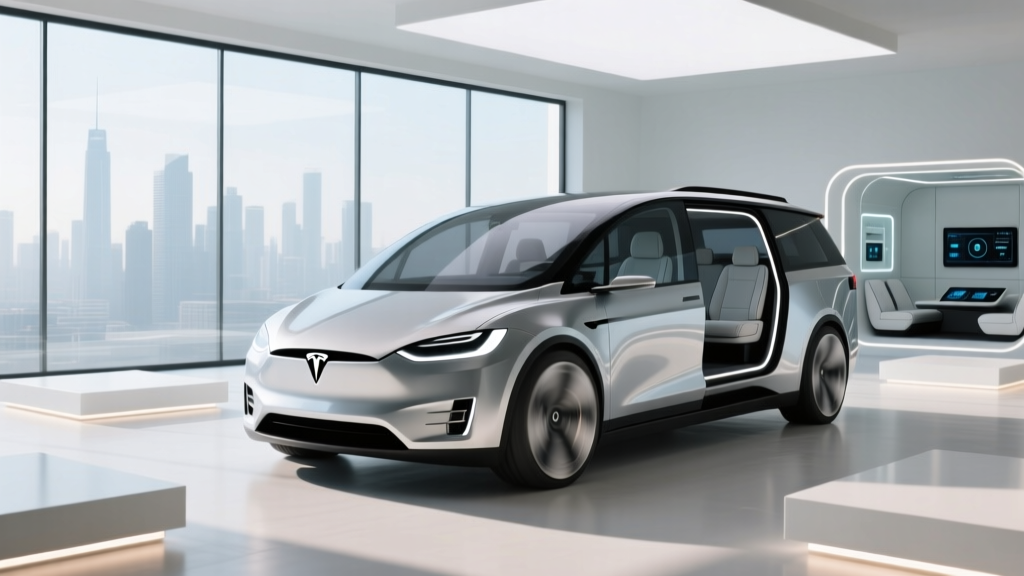
The "Tesla Transformer" label isn't from Tesla itself. It's a community-coined name that has attached to Tesla's long-teased electric van concept, sometimes referred to internally and by Elon Musk as the Tesla Robovan. The Transformer moniker likely stems from the vehicle's rumored modular interior — a platform that could transform between passenger van, cargo hauler, and autonomous shuttle configurations.
Tesla first mentioned a van-like vehicle during its 2016 Master Plan Part Deux, where Musk wrote about creating "a new kind of pickup truck" and a vehicle that would "handle high-density inner-city transport." In October 2024, at the Cybercab reveal event, Musk briefly showed a rendered concept of a larger autonomous van alongside the Cybercab robotaxi, confirming the Robovan was still in development.
Predicted Specs: What a Tesla Van Would Likely Offer
While Tesla hasn't published a spec sheet, we can make informed projections based on the architecture shared across Tesla's current lineup and the company's stated engineering direction. The table below reflects estimated specifications based on comparable Tesla platforms.
| Specification | Estimated (Based on Tesla Architecture) |
|---|---|
| EPA Range (est.) | 250–350 miles (depending on battery/config) |
| Battery Capacity | ~100–120 kWh (likely 4680-cell NMC or LFP variant) |
| Battery Chemistry | LFP (base) / NMC (long-range) — TBD |
| Max DC Fast Charge | ~250 kW (V3 Supercharger compatible) |
| 10–80% Charge Time | ~25–35 minutes (estimated) |
| Level 2 Home Charge Rate | ~11.5 kW / ~30–44 mi/hr |
| 0–60 mph | ~5.0–7.0 seconds (depending on drivetrain) |
| Horsepower | ~350–500 hp (dual-motor AWD likely) |
| Drivetrain | RWD (base) / Dual-Motor AWD (expected) |
| Seating Capacity | 7–14 passengers (config dependent) |
| Cargo Volume | 200–400+ cu ft (cargo variant) |
| Estimated Base MSRP | $50,000–$70,000 (passenger); potentially lower for fleet |
| Battery Warranty | Expected 8 yr / 150,000 mi (consistent with Tesla's commercial vehicles) |
Range, Efficiency, and Real-World Expectations
Range for a vehicle of this size is the critical question. Tesla's Model X, a large crossover SUV with a ~100 kWh battery, achieves an EPA-estimated 311–348 miles depending on trim. A taller, boxier van with a larger frontal area will face more aerodynamic drag, reducing efficiency.
EPA Estimate (projected): 250–350 miles
Real-World Highway (70 mph): Expect ~210–290 miles
Cold Weather (below 32°F): Expect an additional 15–30% range reduction
Loaded/Cargo Variant: Heavy payloads will further reduce range by 10–20%
These are projections based on physics and Tesla's existing fleet data — not confirmed EPA figures.
Efficiency will likely land in the 45–55 kWh/100mi range (roughly 60–75 MPGe equivalent), which is typical for large electric vans. For comparison, the Ford E-Transit achieves about 2.0–2.4 kWh/mile in real-world commercial use.
Charging Speed: What to Expect from a Tesla Van Platform
Tesla's 4680 battery cells and V3/V4 Supercharger network give the company a charging infrastructure advantage no other automaker currently matches. A Tesla van would almost certainly charge on the Supercharger network natively — no adapter needed.
| Charge Level | Power / Speed | Notes |
|---|---|---|
| Level 1 (120V) | ~1.4 kW / ~3–5 mi/hr | Emergency/trickle only — impractical for a van this size |
| Level 2 (240V, 48A) | ~11.5 kW / ~30–44 mi/hr | Overnight home/depot charging; full charge in ~10–12 hours |
| DC Fast Charge | ~250 kW peak / 10–80% in ~25–35 min | Charge curve tapers significantly above 80% SoC |
A critical note for fleet operators: charging a 100+ kWh battery from empty on Level 2 takes 10–12 hours, making overnight depot charging the practical standard. DC fast charging at 250 kW is fast, but sustained rates drop as the battery fills — expect an average rate closer to 150–180 kW across a 10–80% session, not the peak number.
Tax Credit Eligibility and Pricing Outlook
Pricing for the Tesla Robovan/Transformer remains unannounced. Industry analysts project a starting MSRP between $50,000 and $70,000 for passenger variants, with cargo versions potentially starting lower for fleet buyers.
Federal tax credit eligibility under IRS §30D depends on several factors that won't be confirmed until the vehicle enters production:
- MSRP Cap: Vans and SUVs qualify up to an $80,000 MSRP cap; sedans are capped at $55,000. A Tesla van would likely fall under the van/SUV classification.
- Buyer Income Limits: AGI must not exceed $150,000 (single), $225,000 (head of household), or $300,000 (joint) — per current IRS rules.
- Battery Sourcing: Critical minerals and battery components must meet phased-in domestic-sourcing thresholds that tighten annually through 2029. Tesla's increasing use of North American-sourced materials works in its favor, but exact compliance for a new model is unconfirmed.
- Point-of-Sale Transfer: As of 2024, eligible buyers can transfer the credit to the dealer at purchase, reducing the upfront cost. This option is expected to continue.
For fleet and commercial buyers, the separate §45W Commercial Clean Vehicle Credit (up to $7,500 for vehicles under 14,000 lbs GVWR, $40,000 for heavier) may apply instead of §30D. Consult a tax professional for your specific situation.
Autonomous Capability: Robotaxi DNA in a Van?
The most intriguing aspect of the Tesla Robovan concept is its potential integration with Tesla's autonomous driving ambitions. At the October 2024 Cybercab event, Musk positioned the Robovan alongside the Cybercab as part of a future autonomous fleet.
Tesla's current Autopilot and Full Self-Driving (Supervised) software is SAE Level 2 — a driver-assistance system that requires continuous driver supervision. The driver must remain alert, hands available, and ready to intervene at any moment. Tesla's FSD is not a self-driving system. Only Level 4 services like Waymo's driverless robotaxis operate without a human driver in defined areas. If Tesla eventually deploys a driverless Robovan, it would need to achieve Level 4 certification — which has not happened for any Tesla vehicle as of 2026.
For a passenger van or shuttle application, the distinction matters enormously. A Level 2 system means a human driver is still required. A Level 4 Robovan operating without a driver would face a different regulatory pathway entirely, requiring approval from NHTSA and state-level regulators.
How It Compares: Tesla Transformer vs. Existing Electric Vans
While the Tesla Transformer remains in development, here's how its projected specs stack up against electric vans currently on the market:
| Spec | Tesla Robovan (Est.) | Ford E-Transit | Mercedes eSprinter | Rivian EDV |
|---|---|---|---|---|
| EPA Range | 250–350 mi* | 108–126 mi | ~200 mi | ~150 mi |
| Battery | ~100–120 kWh* | 68 kWh | 113 kWh | ~105 kWh |
| DC Fast Charge | ~250 kW* | 115 kW | 115 kW | ~150 kW |
| Supercharger Access | Native | Via NACS adapter | Via NACS adapter | No (Amazon fleet) |
| Starting Price | $50K–$70K* | ~$47,000 | ~$57,000 | Fleet-only |
* Estimated — not confirmed by Tesla
The clear projected advantage for the Tesla Robovan is range and charging speed. Existing electric vans prioritize short urban delivery routes where 100–150 miles of range is sufficient. If Tesla targets longer-range passenger and shuttle use, its Supercharger network integration and larger battery would be a significant differentiator.
Who Should Watch This Vehicle (And Who Shouldn't Wait)?
- You need a 7+ seat electric passenger van for family or shuttle use
- Range above 200 miles is essential for your routes
- You want native Supercharger network access
- You're a fleet operator with a 2027+ vehicle procurement timeline
🚗 Don't wait — buy an existing EV now if:
- You need a vehicle within the next 12 months
- You're buying for personal/family use and a Model X, Rivian R1S, or Kia EV9 meets your needs
- You require a confirmed federal tax credit — the Robovan's eligibility is unproven
- You need a cargo van today (Ford E-Transit and Mercedes eSprinter are available now)
Frequently Asked Questions
Is the Tesla Transformer a real vehicle I can buy today?
No. The "Tesla Transformer" is not an official Tesla product name. It's a community label for Tesla's in-development Robovan concept. As of early 2026, the vehicle has not entered production and cannot be ordered. Tesla has not announced a release date.
What is the real-world range of the Tesla Transformer/Robovan?
There is no confirmed EPA range. Based on Tesla's battery architecture and the vehicle's projected size, industry estimates suggest 250–350 miles EPA. Real-world highway driving at 70 mph would likely yield 210–290 miles, with further reduction in cold weather or under heavy cargo loads.
How fast would the Tesla Robovan charge?
Projected DC fast-charging speed is approximately 250 kW peak on Tesla's V3/V4 Superchargers, with a 10–80% session taking roughly 25–35 minutes. Home Level 2 charging at 11.5 kW would add approximately 30–44 miles of range per hour.
How much will the Tesla Transformer cost after tax credits?
Estimated base pricing is $50,000–$70,000. Federal §30D tax credit eligibility (up to $7,500) depends on MSRP classification, buyer income, and battery sourcing requirements — none of which are confirmed for this unreleased vehicle. Commercial buyers may qualify for the §45W credit instead. Consult a tax professional for eligibility.
Does the Tesla Robovan qualify for the federal EV tax credit?
It's too early to confirm. Eligibility under IRS §30D requires the vehicle to meet MSRP caps ($80,000 for vans/SUVs), buyer income limits, and increasingly strict battery component and critical mineral sourcing rules. Tesla's North American manufacturing helps, but compliance for a new model is determined at the time of production and sale. Check IRS.gov for the latest qualified vehicle list.
Is it worth waiting for vs. buying a Ford E-Transit or Mercedes eSprinter?
If you need a van now for commercial delivery routes under 120 miles, the Ford E-Transit is available today and proven in fleet service. If you need passenger seating, longer range, and can wait 1–3 years, the Tesla Robovan could offer advantages in range, charging speed, and Supercharger access. However, waiting carries risk: Tesla has a history of delayed product timelines.
Will the Tesla Robovan be self-driving?
Not at launch, based on current regulatory realities. Tesla's FSD (Supervised) is SAE Level 2 and requires an attentive driver. A fully driverless (Level 4) Robovan would require separate regulatory approval from NHTSA and state authorities. Tesla has expressed this ambition, but no Tesla vehicle currently operates without a driver in public service.