How Tesla Trade-In Incentives Actually Work in 2026
If you're eyeing a new Model Y or Model 3 and wondering what to do with your current vehicle, Tesla's trade-in program is one path — but it's not always the most lucrative one. Unlike traditional dealerships that might slap a "bonus" on top of your trade to close a deal, Tesla operates more like a wholesale buyer: you submit your vehicle details online, receive an offer (often within 24–48 hours), and that number is generally firm. There's no haggling with a finance manager in a back office.
The trade-in value you receive can be applied directly toward the purchase price of your new Tesla, reducing your out-of-pocket cost and, importantly, potentially lowering the financed amount. But here's what many buyers miss: the trade-in value does not reduce the MSRP for the purposes of IRS §30D federal tax credit eligibility. The MSRP cap ($55,000 for sedans, $80,000 for SUVs/pickups) is evaluated before your trade-in is applied. This matters if you're configuring a higher-trim Model Y and want to ensure it stays under the cap.
Tesla also periodically runs promotional incentives — referral credits, limited-time price cuts, or free Supercharging miles — that can stack with a trade-in. As of early 2026, Tesla's pricing has stabilized after several rounds of cuts in 2023–2025, and the company has shifted toward offering inventory discounts on specific configurations rather than broad trade-in bonuses.
What Tesla Will Accept — and What It Won't
Tesla's trade-in program accepts most vehicles, not just Teslas or even just EVs. You can trade in a gas-powered sedan, a hybrid, a competing EV, or a truck. The key requirements:
- The vehicle must have a clear title (no salvage or rebuilt titles).
- It must be drivable and in reasonable condition — Tesla uses a third-party inspection network to verify.
- Outstanding liens must be resolved before delivery of your new Tesla.
- Some high-mileage or heavily damaged vehicles may receive a below-market offer or be declined.
What Tesla typically does not accept: motorcycles, RVs, commercial trucks, non-running project cars, or vehicles with branded titles. If you have a leased vehicle, Tesla can sometimes facilitate a lease buyout, but this adds complexity and varies by leasing company.
Stacking Your Trade-In With the Federal Tax Credit
The real financial play in 2026 is combining your Tesla trade-in value with the §30D Clean Vehicle Credit. Here's how the mechanics work:
Federal §30D Tax Credit Requirements (2026)
- MSRP Cap: $55,000 for sedans (Model 3); $80,000 for SUVs/trucks (Model Y, Cybertruck)
- Buyer Income Cap: $150,000 single / $225,000 head of household / $300,000 joint (modified AGI)
- Battery Sourcing: Critical minerals and battery components must meet phased-in domestic/free-trade-partner thresholds — check Tesla's current eligibility page before ordering
- Point-of-Sale Transfer: You can transfer the credit to Tesla at purchase, reducing your upfront cost by up to $7,500 — this is effectively an instant discount
- One Vehicle Per Year: The credit is limited to one new EV per taxpayer per calendar year
The point-of-sale transfer is where trade-in strategy matters most. If your trade-in is worth $15,000 and you qualify for the full $7,500 credit transferred at purchase, your effective reduction on a $44,990 Model Y Long Range is $22,500 — bringing your net cost to roughly $22,490 before state incentives, taxes, and fees. That's a dramatically different equation than the sticker price alone suggests.
Important caveat: Battery sourcing requirements have tightened under the Inflation Reduction Act. As of 2026, a larger percentage of critical minerals must come from the U.S. or free-trade-agreement partners. Tesla has generally maintained eligibility for its U.S.-built vehicles, but always verify current credit status on fueleconomy.gov before finalizing your order.
Is Tesla's Trade-In Offer Competitive?
This is the question every buyer asks, and the honest answer: it depends on your vehicle. Tesla uses algorithmic pricing tied to wholesale auction values, which means:
- High-demand used EVs (e.g., a 2-year-old Model 3 with low miles) may receive offers slightly below what you'd get selling privately, because Tesla factors in reconditioning costs and market risk.
- Gas cars in average condition often receive offers within 5–10% of Kelley Blue Book "trade-in" values — convenient, but not top dollar.
- Niche or high-value vehicles (e.g., a Porsche Cayenne, a low-mileage Tacoma) are where Tesla's offer is most likely to fall short of private-party or CarMax/Carvana bids.
The trade-off is convenience. Tesla's process is integrated: you get an offer, apply it at checkout, and drop off your old car when you pick up your new one. No separate sale, no strangers test-driving your car from a Facebook listing. For many buyers, the $1,000–$3,000 gap between Tesla's offer and a private sale is worth the time savings and certainty.
Pros of Tesla's Trade-In Program
- Seamless integration with new vehicle purchase
- No haggling — firm offer within 48 hours
- Drop-off at delivery; no separate transaction
- Accepts most makes, models, and powertrains
- Reduces financed amount, lowering monthly payments
Cons of Tesla's Trade-In Program
- Offers often 5–15% below private-party value
- No negotiation — take it or leave it
- Offers expire (typically 7–30 days; mileage caps apply)
- Does not reduce MSRP for tax-credit cap purposes
- Leased vehicle trade-ins add complexity
2026 Model Y and Model 3: What You're Trading Toward
To evaluate whether a Tesla trade-in makes sense, you need to know what you're buying. Here are the core specs for the two most popular models in 2026:
| Spec | Model Y Long Range AWD | Model 3 Long Range AWD |
|---|---|---|
| Base MSRP | $44,990 | $42,490 |
| EPA Range | 320 miles | 341 miles |
| Battery (usable) | ~75 kWh, NMC | ~75 kWh, NMC |
| Efficiency | 27 kWh/100 mi (124 MPGe) | 25 kWh/100 mi (132 MPGe) |
| Max DC Fast Charge | 250 kW | 250 kW |
| 10–80% DC Charge | ~27 minutes | ~25 minutes |
| Level 2 Home Charge | 11.5 kW (~44 mi/hr) | 11.5 kW (~44 mi/hr) |
| 0–60 mph | 4.8 seconds | 4.2 seconds |
| Horsepower | 384 hp | 346 hp |
| Drivetrain | Dual-motor AWD | Dual-motor AWD |
| Cargo Volume | 76 cu ft (rear seats folded) | 23 cu ft trunk + frunk |
| Battery Warranty | 8 yr / 120,000 mi | 8 yr / 120,000 mi |
| §30D Credit Eligible | Yes (under $80K SUV cap) | Yes (under $55K sedan cap) |
Real-World Range Expectations
Model Y Long Range: EPA 320 miles. Expect ~270–290 miles on mixed highway driving at 70–75 mph. In cold weather (below 32°F), plan for 220–250 miles due to battery resistance and cabin heating load. The heat pump helps, but physics wins in sub-zero conditions.
Model 3 Long Range: EPA 341 miles. Highway real-world is ~290–310 miles. Cold weather drops this to roughly 240–270 miles. The Model 3's superior efficiency (lower weight, better aero) gives it a meaningful edge on road trips.
Charging Speed: What to Expect at Home and on the Road
Both the Model Y and Model 3 Long Range support Tesla's V3 Supercharger architecture at a peak of 250 kW. However, peak is not sustained — the charge curve tapers significantly above 60% state of charge (SoC). Here's what that looks like in practice:
| Charging Method | Power (kW) | Speed (miles/hr) | Notes |
|---|---|---|---|
| Level 1 (120V outlet) | ~1.4 kW | ~3–5 mi/hr | Emergency/trickle only |
| Level 2 (240V, 48A Wall Connector) | 11.5 kW | ~44 mi/hr | Full overnight charge in ~7–8 hours |
| DC Fast (V3 Supercharger) | Peak 250 kW | Up to ~1,000 mi/hr | 10–80% in ~25–27 min; tapers above 60% |
| DC Fast (V4 Supercharger) | Up to 250 kW* | Similar to V3 | *Current Teslas limited to 250 kW acceptance |
A critical ownership note: if you charge primarily at home with a Level 2 Wall Connector ($400–$500 for the unit, $500–$1,500 for installation depending on your electrical panel), your "fueling" cost drops to roughly $0.04–$0.06 per mile at the national average electricity rate of $0.16/kWh. That compares to $0.12–$0.15 per mile for a 28 MPG gas car at $3.40/gallon. Over 15,000 miles per year, home charging saves roughly $1,200–$1,500 annually.
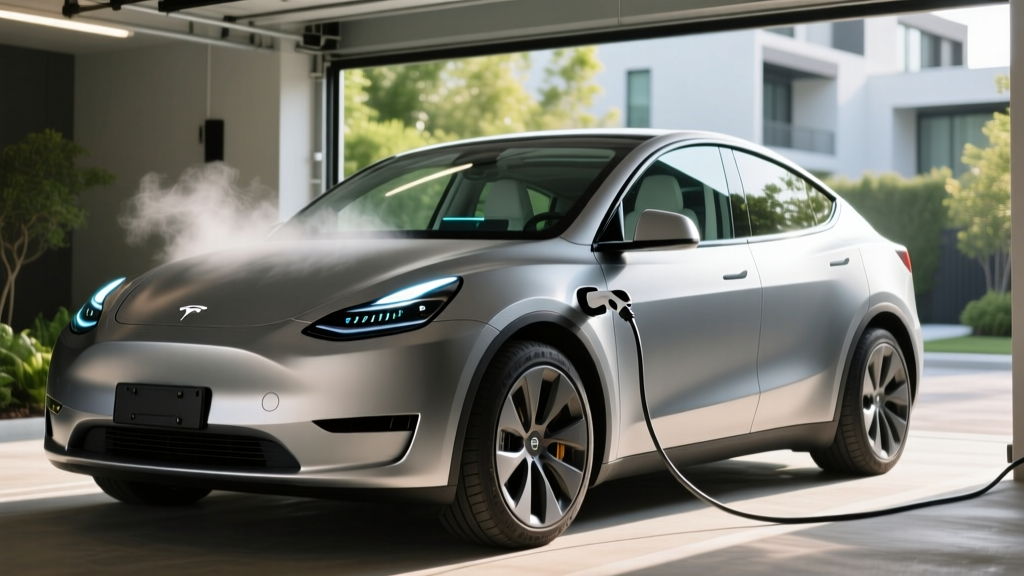
Preconditioning matters. When navigating to a Supercharger, the Tesla automatically warms the battery to optimal charging temperature. If you arrive at a charger without preconditioning (e.g., a third-party station or a Supercharger you navigated to manually), expect slower initial charge rates — sometimes 30–50% below peak for the first several minutes.
Who Should Use Tesla's Trade-In — and Who Should Sell Privately
The decision comes down to three factors: how much your car is worth, how much your time is worth, and how quickly you need to close the deal.
Choose Tesla's Trade-In If:
- Your current car is worth $5,000–$20,000 and the convenience gap is $1,000–$2,000
- You want a single, integrated transaction with no separate sale logistics
- You're taking delivery within 2–4 weeks and need the trade resolved quickly
- Your car has average-to-high mileage and private-sale demand is low
Sell Privately or to CarMax/Carvana If:
- Your vehicle is a high-demand model (trucks, popular SUVs, low-mileage sports cars)
- The gap between Tesla's offer and market value exceeds $3,000
- You're not in a rush and can manage listings, test drives, and paperwork
- Your car has modifications, rare options, or collector appeal
One more strategy: get competitive offers before submitting your Tesla trade-in request. Carvana, CarMax, and online tools like Kelley Blue Book Instant Cash Offer give you a baseline. If Tesla matches or comes close, the convenience wins. If the gap is large, sell elsewhere and apply the cash toward your Tesla purchase.
Tesla Trade-In Incentives FAQ
Does Tesla offer bonus trade-in incentives on top of my car's value?
Not typically. Tesla's trade-in offers are market-based and generally firm. Unlike some legacy automakers that run "trade-in bonus" promotions (e.g., "$2,000 above KBB"), Tesla prices algorithmically. Occasionally, Tesla may run referral or inventory incentives that reduce the new vehicle price, which has a similar financial effect.
How long is a Tesla trade-in offer valid?
Offers are typically valid for 7–30 days and include a mileage cap (often 500–1,000 additional miles). If you exceed the time or mileage limit, Tesla will re-evaluate the offer, and the value may decrease.
Can I trade in a leased vehicle to Tesla?
Sometimes. Tesla can facilitate a third-party lease buyout, but the process depends on your leasing company's policies. Some lessors (like Tesla's own leasing arm) make this straightforward; others require you to buy out the lease independently first, then trade or sell the vehicle.
Does the trade-in value affect my §30D tax credit eligibility?
No. The IRS evaluates the vehicle's MSRP against the cap ($55,000 sedans / $80,000 SUVs) before any trade-in, discount, or incentive is applied. Your trade-in reduces your out-of-pocket cost but doesn't change the tax credit calculation. Verify current eligibility at fueleconomy.gov.
Can I trade in a non-Tesla EV?
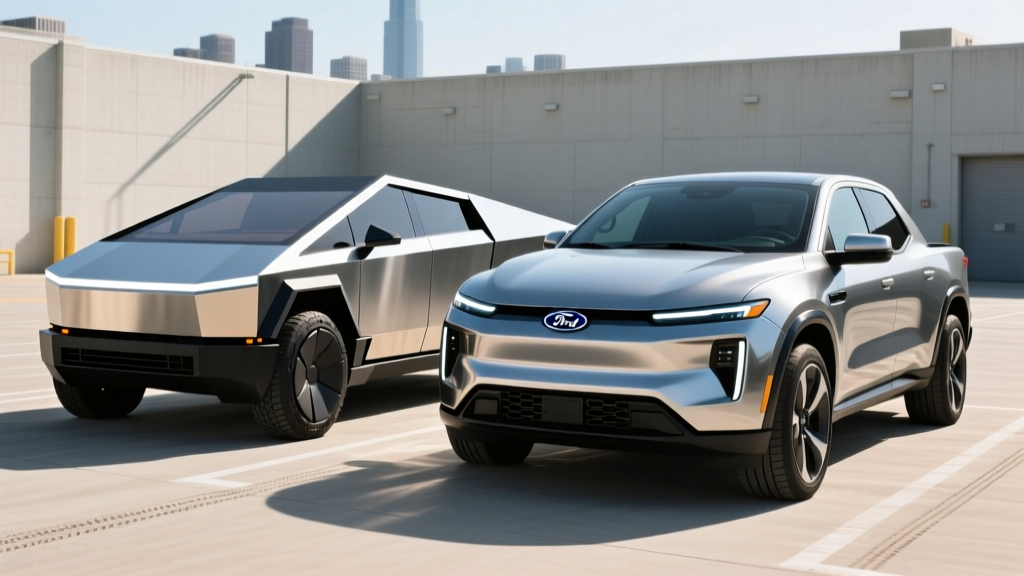
Yes. Tesla accepts trade-ins of any make and model, including competing EVs like the Ford Mustang Mach-E, Hyundai Ioniq 5, Chevrolet Bolt, and others. The offer will reflect wholesale market value for that specific vehicle.
What happens if my trade-in car has an outstanding loan?
Tesla can handle lien payoff as part of the transaction. The outstanding loan balance is deducted from the trade-in value, and any remaining equity is applied to your new Tesla purchase. If you're underwater (owe more than the car is worth), the negative equity may be rolled into your new Tesla financing, subject to lender approval.