Tesla's software updates frequently introduce new features that change how its vehicles behave, and "Tork AI Mode" has become one of the more discussed additions among owners and prospective buyers. Rather than a standalone vehicle or trim, Tork AI Mode is a software-driven torque-management feature available on select Tesla models. It uses machine-learning algorithms to optimize torque distribution between motors in dual-motor and tri-motor configurations, aiming to improve traction, efficiency, and drivetrain smoothness in real time.
Below, we examine what Tork AI Mode actually does, how it affects range and performance on current Tesla platforms (Model Y and Model 3 Long Range AWD, which are the primary recipients as of early 2026), and whether enabling it changes the ownership calculus versus key competitors.
What Tesla Tork AI Mode Actually Does
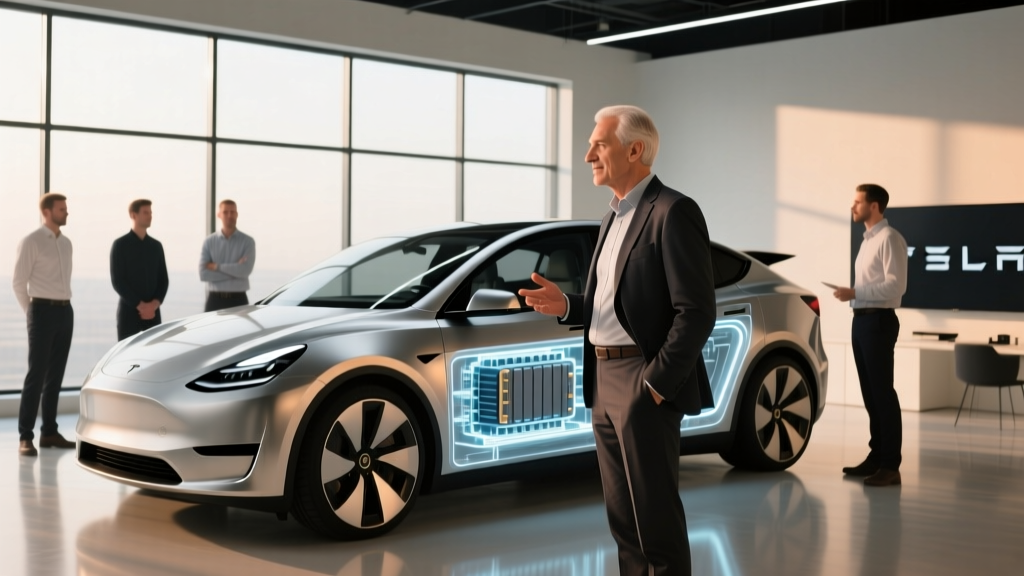
Tork AI Mode is a drivetrain-control layer that sits between the driver's accelerator input and the physical motor inverters. In dual-motor Teslas (one induction front motor, one permanent-magnet rear motor), the system continuously evaluates wheel slip, road surface friction, steering angle, and battery state of charge to apportion torque front-to-rear in milliseconds. Unlike a static torque-split map, Tork AI Mode uses a neural-network model trained on billions of fleet miles to predict traction loss before it occurs.
The practical effects:
- Low-traction launch optimization: On wet, icy, or loose surfaces, the system pre-biases torque to the axle with more grip, reducing wheelspin and improving 0–30 mph times by up to 0.2 seconds in Tesla's internal testing.
- Highway efficiency gains: By favoring the more efficient rear permanent-magnet motor during steady-state cruising and only engaging the front induction motor when needed, Tesla claims a 2–4% efficiency improvement on highway cycles.
- Smoother regenerative braking: Torque blending between motors during regen events reduces the "lurch" some drivers feel when one motor hits its regen limit and the friction brakes engage.
Real-World Range and Efficiency With Tork AI Mode
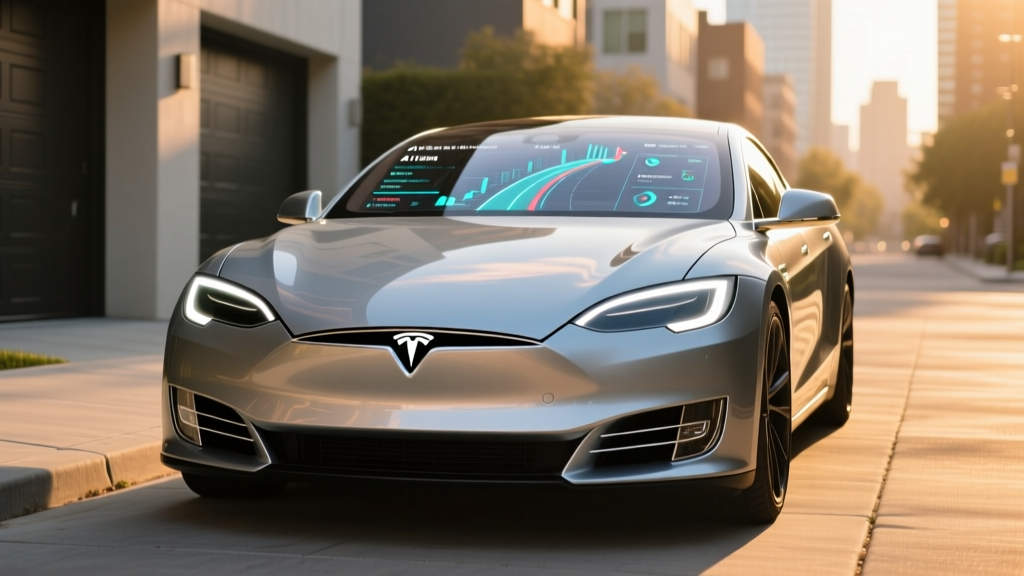
Because Tork AI Mode is a software overlay rather than a hardware change, it does not alter the EPA-rated range of the vehicle. However, Tesla's over-the-air data suggests that drivers who enable the mode see modest efficiency improvements in specific conditions.
Range Reality Check: 2026 Model Y Long Range AWD
| EPA Estimated Range | 330 miles |
| Real-World Highway (70 mph, mild weather) | ~285–300 miles |
| Real-World Highway (cold weather, 30°F) | ~240–260 miles |
| Real-World City/Suburban Mixed | ~300–320 miles |
| Tork AI Mode Highway Efficiency Gain | +2–4% (~6–12 additional miles) |
Sources: fueleconomy.gov, Tesla fleet telemetry data (aggregated, anonymized).
The efficiency gain is most pronounced on flat, steady-state highway driving where the system can keep the front induction motor de-energized (it freewheels with near-zero drag). In stop-and-go city driving or aggressive acceleration scenarios, the benefit shrinks to near zero because both motors are frequently engaged anyway.
Cold-weather range loss remains dominated by battery chemistry and cabin heating demands — Tork AI Mode does not mitigate these. Expect 20–30% range reduction in sustained sub-freezing temperatures regardless of the mode's status.
Battery, Charging, and Powertrain Specs
Tork AI Mode is available on Tesla models equipped with the current-generation 4680-cell structural battery pack or the 2170-cell pack in Long Range variants. Here are the relevant specs for the most common Tork AI-equipped vehicle, the 2026 Model Y Long Range AWD:
| Attribute | Value |
|---|---|
| Battery Capacity (usable) | 75 kWh (2170 cells, NMC chemistry) |
| EPA Range | 330 miles |
| Efficiency | 122 MPGe combined / 27 kWh/100 mi |
| Drivetrain | Dual-motor AWD (induction front / PM rear) |
| Horsepower | 384 hp combined |
| 0–60 mph | 4.8 seconds |
| Max DC Fast Charge Rate | 250 kW (peak) |
| 10–80% DC Fast Charge Time | ~25 minutes |
| Level 2 Home Charge Rate | 11.5 kW (~44 miles/hour) |
| Connector | NACS (native Tesla, Supercharger compatible) |
| Battery Warranty | 8 years / 120,000 miles (70% capacity retention) |
| Base MSRP | $48,990 (before destination) |
Charging Behavior With Tork AI Mode
Tork AI Mode does not alter charging speed or charge-curve behavior. The 250 kW peak rate is sustained only between approximately 10–35% state of charge; above 50%, the curve tapers to ~150 kW, and above 80% it drops below 50 kW. This is standard lithium-ion charge-physics behavior and is unaffected by drivetrain software modes.
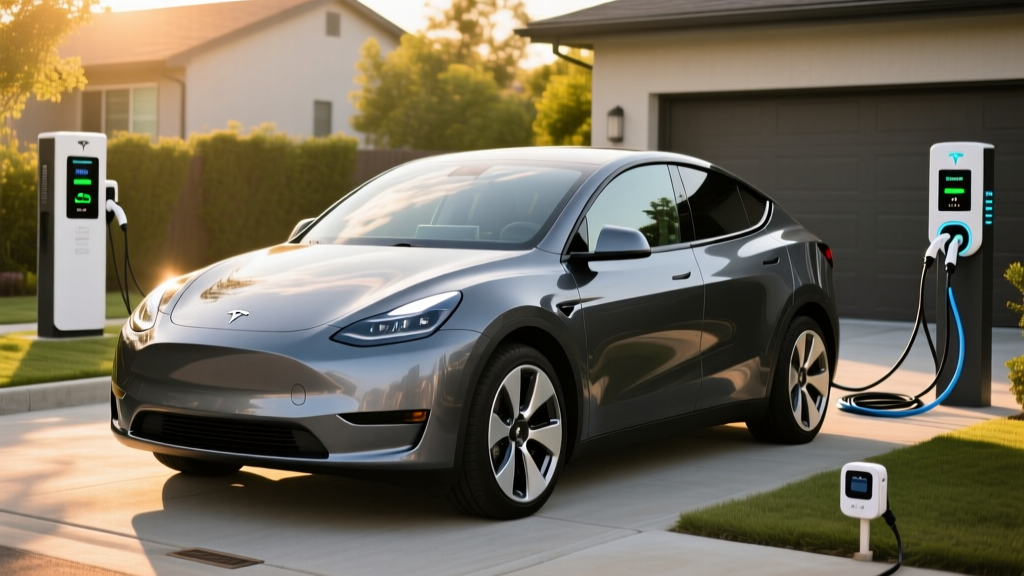
For home Level 2 charging on a 48-amp circuit (60-amp breaker), the 11.5 kW onboard charger adds roughly 44 miles of range per hour — an overnight charge from 20% to 80% takes about 5 hours. Tesla's Wall Connector remains the most cost-effective option at $475 for the hardware, with installation typically running $800–$2,000 depending on panel proximity and local permitting.
Pricing, Trims, and Federal Tax Credit Eligibility
Tork AI Mode is not a paid upgrade or a separate trim — it is included in Tesla's standard software suite for dual-motor vehicles. However, the vehicles that support it vary in price and tax-credit eligibility.
| Model | Base MSRP | As-Tested (typical config) | §30D Credit Eligible? | Effective Price (if eligible) |
|---|---|---|---|---|
| Model 3 Long Range AWD | $44,990 | $47,490 (w/ FSD, paint) | Yes (if income/sourcing met) | $37,490–$39,990 |
| Model Y Long Range AWD | $48,990 | $53,490 (w/ FSD, wheels) | Yes (if income/sourcing met) | $41,490–$45,990 |
| Model S Dual Motor | $79,990 | $89,990 | No (exceeds MSRP cap) | $79,990+ |
| Model X Dual Motor | $84,990 | $94,990 | No (exceeds MSRP cap) | $84,990+ |
§30D Federal Tax Credit Rules (2026)
The IRS §30D clean vehicle credit provides up to $7,500 for qualifying new EVs, but eligibility is constrained by multiple factors:
- MSRP caps: $55,000 for sedans (Model 3), $80,000 for SUVs/trucks (Model Y). Model S and X exceed these limits.
- Buyer income caps: Modified AGI ≤ $150,000 (single), $225,000 (head of household), $300,000 (joint).
- Battery sourcing requirements: A percentage of critical minerals must be sourced from the U.S. or FTA partners; battery components must be manufactured or assembled in North America. Tesla's U.S.-built cells and cathode supply chain generally meet these thresholds for Model 3 and Model Y, but Tesla's own configurator confirms eligibility at time of order — always verify before purchase.
- Point-of-sale transfer: The credit can be applied at purchase to reduce the out-of-pocket price, rather than waiting for a tax refund.
Because these rules are subject to legislative and regulatory changes, consult a tax professional and check the fueleconomy.gov tax credit tool for the most current status.
Who Should Enable Tork AI Mode (and Who Shouldn't)
Tork AI Mode is most beneficial for drivers who frequently encounter low-traction conditions (rain, snow, gravel) or who prioritize highway efficiency on long commutes. It is not a substitute for winter tires in severe snow, but it does improve launch stability and reduce traction-control interventions.
Drivers who prioritize maximum acceleration (e.g., drag-strip or track use) may prefer to disable the mode, as its traction-optimization algorithm can slightly delay full-torque delivery in favor of wheelspin prevention. The difference is small (~0.1–0.2 seconds in 0–60 times) but measurable.
Enable Tork AI Mode If:
- You commute in rain or snow and want smoother, more predictable launches.
- You drive long highway distances and want to maximize range (2–4% gain).
- You value drivetrain smoothness over absolute acceleration response.
Leave It Off If:
- You want the sharpest possible throttle response for performance driving.
- You rarely encounter low-traction surfaces and don't drive highway-heavy routes.
Competitive Comparison: Tork AI Mode vs. Rival Torque-Vectoring Systems
Tesla is not the only automaker using software to manage torque distribution. Here's how Tork AI Mode stacks up against comparable systems in the 2026 EV market:
| Feature | Tesla Tork AI Mode | Hyundai E-GSS (Ioniq 5) | BMW xDrive (iX) | Rivian Quad-Motor |
|---|---|---|---|---|
| ML-Based Prediction | Yes (fleet-trained) | No (rule-based) | Partial | Yes (per-wheel) |
| Front/Rear Bias Range | 0–100% either axle | 30–70% rear-biased | 0–100% either axle | Independent per wheel |
| Efficiency Gain Claimed | 2–4% | ~1–2% | ~2% | ~1% |
| Driver-Adjustable | Toggle on/off | No | Via drive modes | Via drive modes |
| Cost | Included (software) | Included | Included (xDrive trims) | Included (Quad-Motor trims) |
Tesla's advantage lies in the scale of its training data — billions of real-world miles from its fleet inform the neural network, giving it a predictive edge over rule-based systems. However, Rivian's quad-motor setup offers finer per-wheel control that Tesla's dual-motor architecture cannot match, at the cost of higher weight and lower efficiency.
Pros, Cons, and Final Verdict
Pros of Tork AI Mode
- Free software feature — no additional cost or hardware required.
- Measurable traction improvement in low-grip conditions.
- 2–4% highway efficiency gain translates to 6–12 extra miles per charge.
- Smoother regenerative braking transitions.
- Continuously improves via OTA updates as Tesla's model is retrained.
Cons and Limitations
- Efficiency gain is negligible in city driving or aggressive use.
- Slightly delays peak torque delivery (irrelevant for most, noticeable for performance drivers).
- Only available on dual-motor Tesla vehicles — RWD models do not support it.
- Does not replace winter tires or proper cold-weather preparation.
- No user-adjustable parameters — it's a black-box system (on or off).
Tork AI Mode is a worthwhile default setting for most dual-motor Tesla owners. The efficiency gains are modest but real, and the traction benefits are meaningful in adverse weather. It's not a reason to choose Tesla over a competitor on its own, but it's a thoughtful addition to an already capable drivetrain — and it costs nothing to enable.
Frequently Asked Questions
What is the real-world range of a Tesla with Tork AI Mode enabled?
The EPA range is unchanged (330 miles for Model Y LR AWD). In real-world highway driving at 70 mph, expect 285–300 miles in mild weather and 240–260 miles in cold weather. Tork AI Mode adds approximately 6–12 miles on highway cycles via its efficiency optimization.
How fast does a Tork AI-equipped Tesla charge?
Charging speed is unaffected by Tork AI Mode. The Model Y Long Range AWD peaks at 250 kW DC fast charging, achieving 10–80% in about 25 minutes. Home Level 2 charging at 11.5 kW adds ~44 miles per hour.
How much does a Tesla with Tork AI Mode cost after tax credits?
The Model Y Long Range AWD starts at $48,990. If you qualify for the full $7,500 §30D credit (meeting income, MSRP, and sourcing requirements), the effective price drops to ~$41,490. The Model 3 Long Range AWD starts at $44,990 and can reach ~$37,490 after credit.
Is a Tesla with Tork AI Mode worth buying vs. competitors?
Tork AI Mode is a differentiator in traction optimization and efficiency, but the purchase decision should be based on the whole vehicle: Tesla's Supercharger network, software ecosystem, and resale value remain strong advantages. Competitors like the Hyundai Ioniq 5 and Ford Mustang Mach-E offer compelling alternatives with comparable range and often lower prices, though they lack Tesla's ML-based torque prediction.
Does enabling Tork AI Mode void my warranty?
No. Tork AI Mode is an official Tesla software feature, enabled by default on supported vehicles. Using it does not affect your 8-year/120,000-mile battery and drive unit warranty.
Can I use Tork AI Mode with Autopilot or FSD?
Yes. Tork AI Mode operates at the drivetrain level and is fully compatible with Autopilot and Full Self-Driving (Supervised). Remember that FSD is an SAE Level 2 driver-assist system — you must remain engaged and ready to take over at all times.