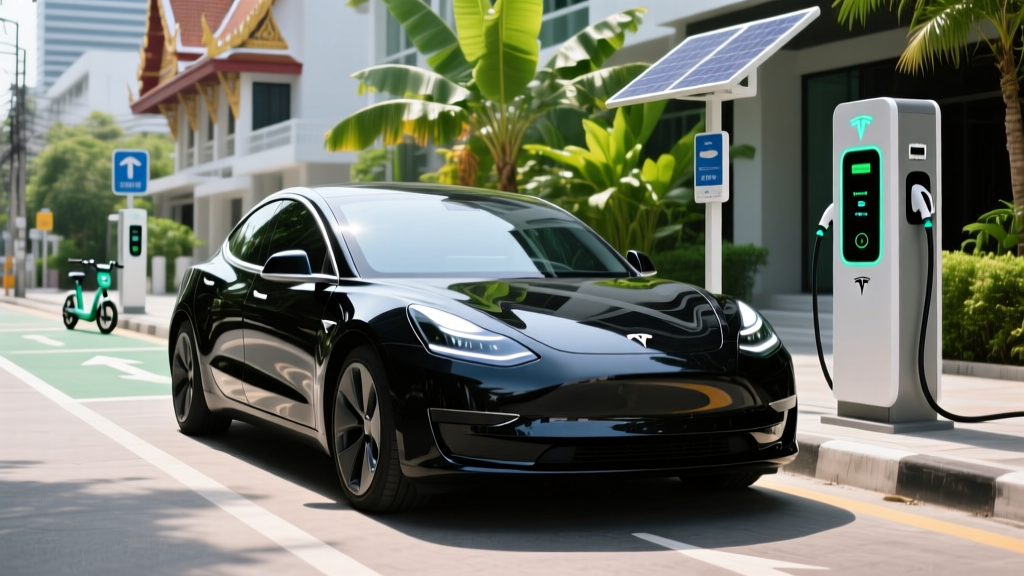
Tesla's presence in Southeast Asia has expanded rapidly, and for buyers researching a Tesla in Thailand, the 2026 Model 3 remains the most accessible entry point into the brand's ecosystem. Thailand's EV incentives, growing Supercharger network, and tropical driving conditions create a unique ownership equation that differs significantly from the US or European markets. This review covers the 2026 Model 3 lineup available in Thailand — the Rear-Wheel Drive (RWD) and Long Range AWD — with precise specs, real-world range expectations in hot climates, charging infrastructure realities, and total cost of ownership for Thai buyers.
2026 Tesla Model 3 Thailand: Specifications at a Glance
| Spec | Model 3 RWD | Model 3 Long Range AWD |
|---|---|---|
| Battery (usable) | 57.5 kWh (LFP) | 75 kWh (NMC) |
| WLTP Range | 491 km (305 mi) | 629 km (391 mi) |
| EPA Equiv. Range | ~272 mi | ~341 mi |
| Motor / Drivetrain | Single motor RWD | Dual motor AWD |
| Power | 271 hp | 346 hp |
| 0-100 km/h (0-62 mph) | 6.1 sec | 4.4 sec |
| Max DC Charge Rate | 170 kW peak | 250 kW peak |
| 10-80% DC Time | ~28 min | ~25 min |
| AC Charge (Level 2) | 11 kW (~44 mi/hr) | 11 kW (~44 mi/hr) |
| Thailand Price (2026) | ฿1,699,000 | ฿2,059,000 |
| Warranty (Battery) | 8 yr / 160,000 km | 8 yr / 192,000 km |
Real-World Range in Thailand's Tropical Climate
Thailand's year-round heat (average 30-35°C / 86-95°F) affects EV range differently than cold climates. While you avoid the 20-30% range loss that northern winters inflict on batteries, constant air conditioning use draws 1-3 kW continuously. The LFP battery in the RWD model handles heat well — LFP chemistry is inherently more thermally stable than NMC — but sustained high ambient temperatures do accelerate long-term degradation slightly.
For the Model 3 Long Range with its NMC pack, Tesla's thermal management system actively cools the battery during fast charging and heavy use, which is critical in Thai conditions. Expect roughly 10-15% less range than WLTP figures in mixed driving, and up to 20% less in heavy Bangkok congestion where regen braking opportunities are limited and HVAC load is constant.
Charging the Tesla Model 3 in Thailand
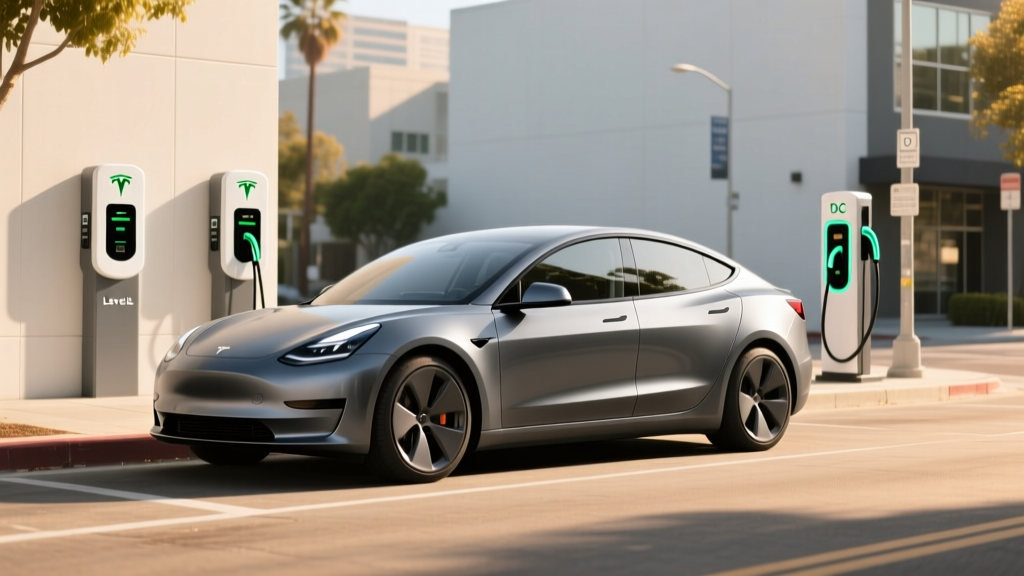
Tesla's Supercharger network in Thailand has grown to over 25 stations as of early 2026, concentrated along key corridors: Bangkok-Pattaya, Bangkok-Hua Hin, Bangkok-Chiang Mai (with intermediate stops), and the southern route toward Phuket. Most stations feature V3 Superchargers capable of 250 kW, though the RWD model's LFP battery caps at approximately 170 kW peak.
| Charging Method | Power | Speed (RWD) | Speed (Long Range) | Cost per Session |
|---|---|---|---|---|
| Supercharger V3 (DC) | Up to 250 kW | ~170 kW peak, 10-80% in 28 min | ~250 kW peak, 10-80% in 25 min | ฿400-600 (~$11-17) |
| Destination Charger (AC) | 7-22 kW | ~44 mi/hr at 11 kW | ~44 mi/hr at 11 kW | Often free / ฿3-5/kWh |
| Home Wall Connector | 11 kW (3-phase) | Full charge in ~6 hr | Full charge in ~8 hr | ฿180-250 (TOU rate) |
| Standard Outlet (Granny) | ~2.3 kW | ~9 mi/hr | ~9 mi/hr | ฿200-280 |
Home charging reality in Thailand: Most Thai homes have single-phase 220V/15A service, which limits AC charging to about 3.3 kW (~13 mi/hr). To unlock the Model 3's full 11 kW AC rate, you need a 3-phase electrical connection — common in newer condominiums and larger homes but requiring an upgrade in older residences. A Tesla Wall Connector installation typically costs ฿25,000-45,000 ($700-$1,250) including electrical work, assuming your panel can support it.
Non-Tesla public charging: Thailand's public charging network includes PTT (EV Station PluZ), EA Anywhere, and MG Super Charge stations. The Model 3 uses Tesla's proprietary connector in Thailand (NACS-equivalent), so you'll need a Type 2 adapter for non-Tesla AC chargers and a CCS adapter for third-party DC fast chargers. Tesla sells these adapters through their Thai store.
Performance and Driving Dynamics
The 2026 Model 3 "Highland" refresh brought meaningful improvements to ride quality and cabin noise — both critical for Thai roads, which range from smooth expressways to uneven rural surfaces. The RWD's single rear motor delivers 271 hp and a 6.1-second 0-100 km/h time, which is more than adequate for Bangkok traffic and highway merging. The Long Range AWD's 346 hp and 4.4-second sprint provide genuine sports-sedan performance.
Tesla's regenerative braking in the refreshed Model 3 is now adjustable (a welcome return from the forced one-pedal mode of 2023-2024 models). In Bangkok's stop-and-go traffic, moderate regen captures energy efficiently without the lurching feel that passengers often dislike. On the highway, the improved suspension tuning absorbs Thailand's frequent speed bumps and expansion joints with less harshness than the pre-Highland model.
Ground clearance is 138 mm (5.4 inches) — adequate for most Thai roads but tight for steep parking garage ramps or flooded streets during rainy season. If your route regularly includes unmaintained roads or deep water crossings, a crossover like the Model Y may be more practical.
Pricing, Thai EV Subsidies, and Total Cost
Thailand's EV 3.5 incentive program (effective 2024-2027) provides subsidies of up to ฿100,000 ($2,800) for qualifying EVs, plus excise tax reduction from 8% to 2% and import duty exemptions for CBU (completely built up) vehicles from FTA-partner countries. These incentives are already reflected in Tesla's Thai pricing:
| Model | Price (THB) | USD Equiv. | After Thai Incentives |
|---|---|---|---|
| Model 3 RWD | ฿1,699,000 | ~$47,500 | Subsidy included in price |
| Model 3 Long Range AWD | ฿2,059,000 | ~$57,600 | Subsidy included in price |
| Model 3 Performance | ฿2,349,000 | ~$65,700 | Limited subsidy eligibility |
Note for US readers: If you're a US citizen living in Thailand, the US federal §30D tax credit does not apply to vehicles purchased and registered outside the United States. Thai residents benefit from the local EV 3.5 subsidies and reduced registration taxes instead. Always consult a local tax professional regarding Thai personal income tax implications of EV ownership.
Running costs in Thailand: Electricity from the Metropolitan Electricity Authority (MEA) costs approximately ฿4-5/kWh at standard residential rates, or ฿3-4/kWh on Time-of-Use (TOU) tariffs if you charge overnight. At 15 kWh/100km efficiency, that translates to ฿0.60-0.75 per kilometer — roughly 1/4 the cost of petrol for a comparable ICE sedan at current Thai fuel prices (฿36-40/liter for Gasohol 95).
Interior, Tech, and Cargo Space
The refreshed Model 3 interior has moved upmarket with ventilated front seats (essential for Thai climate), ambient lighting, a rear-seat touchscreen for climate and media control, and significantly improved sound insulation. The 15.4-inch center touchscreen handles navigation, media, and vehicle settings with Tesla's characteristic responsiveness.
Cargo dimensions:
- Rear trunk: 561 liters (19.8 cu ft)
- Front trunk (frunk): 88 liters (3.1 cu ft)
- Total cargo: 649 liters (22.9 cu ft)
- Rear legroom: 894 mm (35.2 in)
- Front headroom: 1,010 mm (39.8 in)
The frunk is useful for charging cables and small bags but won't fit a carry-on suitcase. Rear seat space is adequate for adults on shorter trips but tight for tall passengers on long journeys — the sloping roofline compromises headroom. For families needing more space, the Model Y offers substantially more cargo volume and headroom.
Autopilot in Thailand: Tesla's basic Autopilot (Traffic-Aware Cruise Control + Autosteer) functions on Thai highways, but Full Self-Driving (Supervised) capability is not currently available in Thailand due to regulatory restrictions and mapping requirements. This is a Level 2 driver-assistance system — you must keep your hands on the wheel and eyes on the road at all times. Thai traffic patterns (motorbikes filtering, erratic lane changes, unmapped construction zones) demand constant driver attention regardless of assistance systems.
Warranty and Long-Term Battery Outlook
Tesla's warranty coverage in Thailand mirrors global terms:
- Vehicle warranty: 4 years / 80,000 km
- Battery & Drive Unit (RWD): 8 years / 160,000 km, 70% minimum capacity retention
- Battery & Drive Unit (Long Range): 8 years / 192,000 km, 70% minimum capacity retention
The LFP battery in the RWD model is particularly well-suited to Thailand. LFP chemistry tolerates regular 100% charging (Tesla recommends charging to 100% at least weekly for LFP packs), has a longer cycle life (3,000+ cycles vs ~1,500 for NMC), and is more resistant to thermal degradation. In Thailand's heat, this matters: NMC packs degrade faster when repeatedly exposed to high temperatures at high states of charge.
Real-world degradation data from global Tesla fleets suggests LFP packs lose approximately 10-12% capacity over 200,000 km, while NMC packs lose 8-12% over the same distance under moderate conditions. In consistently hot climates like Thailand, expect degradation on the higher end of these ranges.
Who Should Buy a Tesla Model 3 in Thailand?
- Bangkok-based commuters with home charging access (condo or house with dedicated parking)
- Professionals making regular highway trips to Pattaya, Rayong, or Hua Hin (within Supercharger range)
- Tech-forward buyers who prioritize over-the-air updates and app integration
- Cost-conscious drivers who want to eliminate petrol expenses in a high-fuel-price market
- You regularly drive to rural areas outside Supercharger coverage (Isan region, deep south)
- You need ground clearance for flooded roads or rough surfaces (consider Model Y or BYD Atto 3)
- You frequently carry 4+ adults (rear space is tight)
- You want FSD capability (not available in Thailand as of 2026)
Tesla Model 3 vs. Thailand Competitors
The Model 3 faces strong competition in Thailand from Chinese EVs that benefit from the same government incentives:
- BYD Seal (฿1,399,000-1,599,000): Comparable range, lower price, but no Supercharger access and less proven long-term reliability
- GWM Ora 07 (฿1,299,000-1,499,000): Stylish, affordable, but smaller charging network and less performance
- Mercedes EQA/EQB (฿2,500,000+): Premium badge, but significantly more expensive and shorter range
The Tesla's advantages remain the Supercharger network, software ecosystem, and proven powertrain durability. Its disadvantage is price — the BYD Seal undercuts it by ฿100,000-300,000 while offering similar real-world range and features.
Frequently Asked Questions
What is the real-world range of the Tesla Model 3 in Thailand?
Expect 350-380 km (217-236 mi) for the RWD on highway trips at 100-110 km/h, and 230-260 km (143-162 mi) in Bangkok city traffic with air conditioning. The Long Range adds roughly 25-30% more range in both scenarios.
How fast does the Model 3 charge at Thai Superchargers?
The RWD peaks at approximately 170 kW (10-80% in ~28 minutes), while the Long Range peaks at 250 kW (10-80% in ~25 minutes). Actual speeds depend on battery temperature, state of charge, and whether other vehicles share the charging stall.
Can I charge a Tesla at non-Tesla chargers in Thailand?
Yes, with adapters. You'll need a Type 2 adapter for AC destination chargers and a CCS2 adapter for third-party DC fast chargers (PTT, EA Anywhere). Tesla sells official adapters, and third-party options are available but may void warranty if they cause damage.
Does the Tesla Model 3 qualify for Thai EV subsidies?
Yes. The Model 3 RWD and Long Range qualify for Thailand's EV 3.5 program, which includes a ฿100,000 subsidy (already reflected in pricing), reduced excise tax (2% vs 8%), and import duty exemptions. These incentives apply through 2027.
Is a Tesla practical for driving outside Bangkok?
For trips along Supercharger-equipped corridors (Pattaya, Hua Hin, Chiang Mai via intermediate stops), yes. For remote areas in Isan or the deep south with limited charging infrastructure, plan carefully or consider a PHEV. The Tesla navigation system routes through Superchargers automatically.
How does Thai heat affect the Tesla battery long-term?
Consistent high temperatures accelerate battery degradation modestly. The LFP battery in the RWD model handles heat better than NMC chemistry. Tesla's active thermal management helps, but expect 10-15% capacity loss over 8-10 years in tropical conditions — still within warranty thresholds.
Final Assessment
The 2026 Tesla Model 3 in Thailand offers a compelling package for urban and suburban buyers with reliable home charging access. The Supercharger network, while still growing, covers Thailand's most-traveled routes. The LFP-equipped RWD model at ฿1,699,000 represents the best value, with tropical-friendly battery chemistry and adequate range for most use cases. Buyers prioritizing maximum range or all-weather capability should step up to the Long Range AWD. Those frequently venturing off the beaten path or needing more cargo space should cross-shop the Model Y or consider a Thai-market PHEV as a bridge solution.