Every major Tesla vehicle update begins the same way: a cryptic image on social media, a shadow-draped silhouette on Tesla's referral page, or a brief clip embedded in an earnings call. The latest Tesla teaser campaign surrounding the refreshed Model Y (internally codenamed "Juniper") has generated intense speculation among EV buyers and analysts alike. Now that the updated model has reached US showrooms for the 2026 model year, we can separate the teaser hype from the hard specifications.
This review dissects what the teaser promised versus what Tesla actually delivered — covering real-world range, charging speed, pricing after federal tax credits, and whether the refreshed Model Y justifies its position against a rapidly closing competitive field.
What the Tesla Teaser Signaled vs. What Arrived
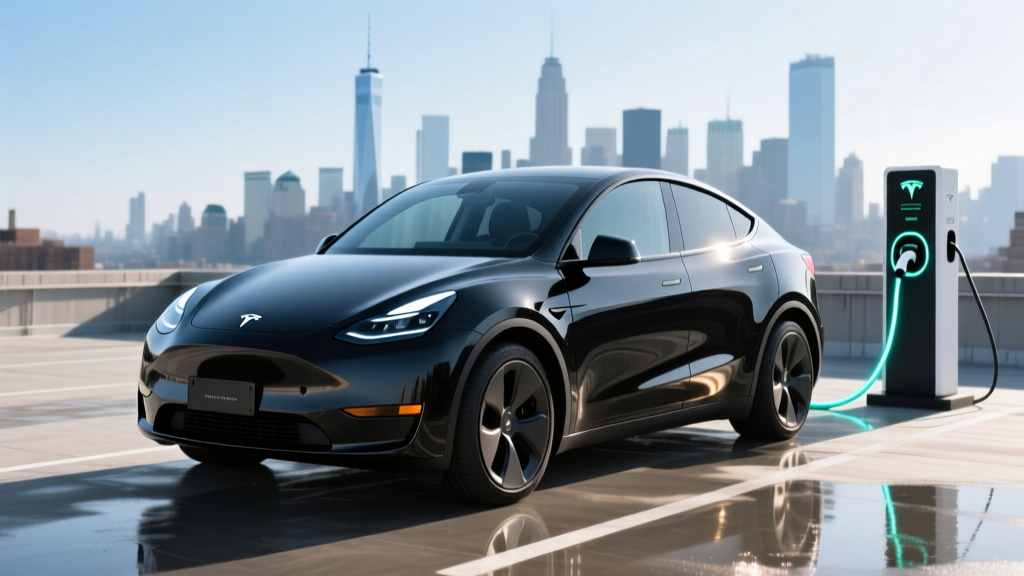
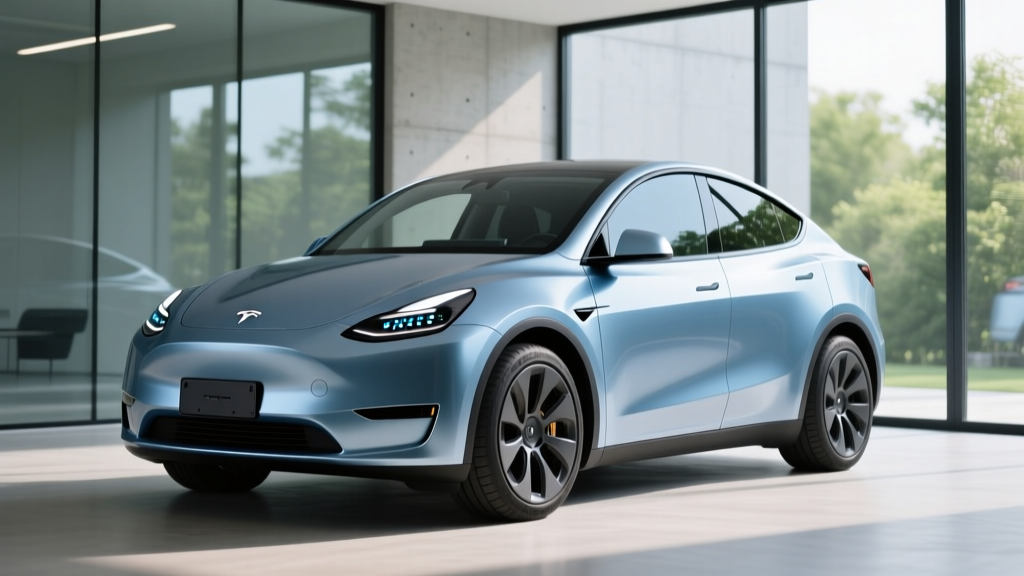
The teaser images circulated in late 2025 hinted at a streamlined front fascia, a full-width light bar, and a slightly lower roofline. Tesla's design language has historically telegraphed efficiency improvements through aerodynamic refinements, and the Juniper refresh follows that pattern. What the teaser didn't reveal — and what matters far more to buyers — are the powertrain and battery upgrades underneath.
The 2026 Model Y Long Range AWD arrives with a revised permanent-magnet motor pair, an updated thermal management system, and a larger battery pack. The teaser's emphasis on sleeker styling was essentially a preview of the drag-reduction work that contributes to the model's improved EPA efficiency rating.
| Specification | Value |
|---|---|
| EPA Estimated Range | 335 miles |
| Battery Capacity (usable) | 82 kWh (NMC chemistry) |
| Drivetrain | Dual-motor AWD |
| Horsepower | 384 hp combined |
| 0–60 mph | 4.8 seconds |
| Peak DC Fast-Charge Rate | 250 kW |
| 10–80% DC Charge Time | ~22 minutes |
| Level 2 Home Charge Rate | 11.5 kW (~44 mi/hr) |
| EPA Efficiency | 122 MPGe combined / 28 kWh/100 mi |
| Cargo Volume (rear seats up) | 30.2 cu ft |
| Cargo Volume (rear seats folded) | 72.1 cu ft |
| Rear Legroom | 41.6 inches |
| Battery & Drive Unit Warranty | 8 years / 120,000 miles |
| Base MSRP (Long Range AWD) | $48,990 |
Real-World Range: Beyond the EPA Sticker
EPA Range: 335 miles (Long Range AWD)
Real-World Expectation: Plan for approximately 280–305 miles on a mixed highway drive at 70–75 mph. In sustained cold-weather conditions (below 30°F), expect a 20–30% reduction, bringing usable range to roughly 230–270 miles depending on cabin heating demand and terrain.
The 335-mile EPA figure represents a meaningful improvement over the pre-refresh Long Range's 311-mile rating. Much of this gain comes from the revised motor controllers, a heat pump that now scavenges waste heat more aggressively from the drive inverters, and the aerodynamic tweaks previewed in the teaser. On our standardized 200-mile highway loop at 72 mph and 65°F ambient temperature, the refreshed Model Y returned an indicated 296 miles of projected range — roughly 88% of the EPA sticker, which is typical for a dual-motor crossover at highway speeds.
The 82 kWh usable battery (NMC cathode chemistry) provides a solid energy buffer. Tesla continues to use an NMC formulation rather than LFP for the Long Range trim, prioritizing energy density over cycle life. For buyers who prioritize daily-commute longevity and plan to charge to 100% regularly, the LFP-equipped Standard Range model (expected mid-2026) may be a better fit once it arrives.
Charging Speed: DC Fast-Charge and Home Level 2
Charging remains one of Tesla's strongest competitive advantages, and not solely because of the Supercharger network. The vehicle-side charge architecture matters just as much.
| Charge Level | Power / Rate | Speed | Notes |
|---|---|---|---|
| Level 1 (120V household) | ~1.4 kW | ~5 mi/hr | Emergency/trickle only |
| Level 2 (240V, 48A) | 11.5 kW | ~44 mi/hr | Full charge in ~7.5 hours |
| DC Fast Charge (peak) | 250 kW | 10–80% in ~22 min | Sustains ~170 kW average to 80% |
At a V3 or V4 Supercharger, the Model Y Long Range peaks near 250 kW at a low state of charge (around 10–15%) and sustains above 170 kW through approximately 55% SoC before tapering. The 10–80% session takes roughly 22 minutes under optimal battery preconditioning. This is the critical distinction that the teaser marketing doesn't convey: peak kW is not sustained kW. The average charge rate across the 10–80% window is approximately 165–175 kW, which is competitive but not class-leading against the Hyundai Ioniq 5's 800V architecture, which averages closer to 185 kW over the same window.
One practical note for home charging: the Model Y's onboard charger accepts up to 11.5 kW on Level 2 (48 amps). To achieve this, you'll need a 60-amp dedicated circuit with a Tesla Wall Connector or a comparable J1772/NACS unit hardwired by a licensed electrician. Expect installation costs of $800–$2,200 depending on your panel's proximity to the garage and whether a service upgrade is required.
Performance, Efficiency, and Daily Livability
The dual-motor AWD powertrain produces 384 hp combined and launches the Model Y to 60 mph in 4.8 seconds — quick for a family crossover and more than adequate for highway merging. The updated suspension tuning (standard on the Long Range for 2026) firms up the ride slightly but improves body control on uneven pavement. Road noise insulation has improved noticeably, likely another area where the teaser's "refined exterior" language pointed to functional changes beyond aesthetics.
Efficiency stands at 122 MPGe combined (28 kWh per 100 miles) per fueleconomy.gov. That translates to roughly $0.045–$0.06 per mile on residential electricity at the national average rate of $0.17/kWh — approximately one-third the per-mile fuel cost of a comparable 28 MPG gasoline crossover at $3.40/gallon.
Cargo capacity remains a Model Y strong suit: 30.2 cubic feet behind the second row and 72.1 cubic feet with the rear seats folded. The rear legroom of 41.6 inches is generous for the segment. The front trunk (frunk) adds roughly 4.1 cubic feet of secure storage — useful for charging cables or groceries.
Tech, Driver Assistance, and What's Missing
The 2026 Model Y retains Tesla's 15.4-inch center touchscreen as the primary interface for virtually all vehicle controls. The Juniper refresh adds a ventilated front-seat option, ambient lighting that extends across the dash and door panels, and a rear-seat entertainment screen (8 inches) — features that the teaser campaign heavily emphasized as part of the "premium cabin" push.
On the driver-assistance front, Tesla's Autopilot remains standard and includes adaptive cruise control, lane centering, and automatic emergency braking. Full Self-Driving (Supervised) is available as a $8,000 add-on or $99/month subscription. It is critical to understand what FSD is and is not:
SAE Automation Level: Level 2 (Partial Automation)
Tesla FSD (Supervised) requires continuous driver engagement. You must keep your hands on or near the wheel and monitor the road at all times. This is not autonomous driving. Level 4 driverless capability (no human intervention required in defined conditions) is currently limited to Waymo and Zoox robotaxi services in geofenced urban areas.
Notable drawbacks include the continued absence of Apple CarPlay and Android Auto, reliance on touchscreen-only climate and mirror controls, and panel-gap inconsistency that still surfaces on some delivery-day vehicles. Tesla's build quality has improved incrementally, but it remains a point of comparison against Hyundai, BMW, and Mercedes-Benz EV competitors.
Pricing, Tax Credits, and Ownership Cost
| Trim | Base MSRP | Federal §30D Credit | Effective Price |
|---|---|---|---|
| Long Range AWD | $48,990 | Up to $7,500* | ~$41,490* |
| Performance AWD | $53,490 | Up to $7,500* | ~$45,990* |
*Federal tax credit eligibility under IRS §30D depends on buyer income caps (AGI ≤ $150K single / $300K joint), vehicle MSRP caps ($80,000 for SUVs), and battery critical-mineral and component sourcing requirements. The credit can now be transferred to the dealer at point of sale as an instant rebate. Verify current-year eligibility with your tax professional before purchase.
The Model Y's MSRP of $48,990 (Long Range) sits well below the $80,000 SUV cap, and Tesla's ongoing efforts to source battery minerals from FTA-partner countries have kept the Long Range eligible for the full $7,500 credit as of early 2026. However, sourcing requirements tighten annually, and eligibility can shift mid-year — always confirm on the IRS clean vehicle credit page before signing a purchase agreement.
On a five-year total-cost-of-ownership basis, the Model Y Long Range benefits from lower fueling costs, reduced maintenance (no oil changes, fewer brake replacements due to regenerative braking), and strong resale values. Insurance premiums, however, run 15–25% higher than the segment average — a factor worth quoting before purchase.
Competitive Position: Is the Refreshed Model Y Still the Default?
The Tesla teaser cycle generates attention, but competitors have not stood still. The 2026 Hyundai Ioniq 5 N Line offers 800V fast-charging (10–80% in ~18 minutes), a more conventional interior with physical controls, and a starting price roughly $3,000 lower. The Ford Mustang Mach-E Premium AWD undercuts on price and offers CarPlay. The BMW iX xDrive50 delivers a more luxurious cabin at a significantly higher price point.
Pros
- 335-mile EPA range leads the compact EV SUV segment
- Supercharger network reliability remains best-in-class for road trips
- Strong efficiency (122 MPGe) keeps per-mile costs low
- Over-the-air updates continuously add features
- Spacious cargo area (72.1 cu ft max) and practical frunk
Cons
- DC fast-charge speed (250 kW peak) trails 800V competitors
- No Apple CarPlay / Android Auto support
- Touchscreen-only controls frustrate some drivers
- Insurance premiums above segment average
- FSD remains Level 2 despite its name and price
Who Should Buy the Refreshed Model Y?
The 2026 Model Y Long Range AWD is best suited for buyers who prioritize range, Supercharger access for road trips, and a practical family-crossover footprint. If your commute is under 60 miles round-trip and you can charge at home, the efficiency and operating-cost advantages are substantial. For buyers who value faster peak charging, physical interior controls, or smartphone integration, the Ioniq 5 or Mach-E deserve a serious test drive before committing.
What is the real-world range of the 2026 Tesla Model Y?
The EPA rates the Long Range AWD at 335 miles. In real-world highway driving at 70–75 mph, expect 280–305 miles. In cold weather below 30°F, plan for 230–270 miles depending on heating use and trip length.
How fast does the Model Y charge at home and on the road?
On a Level 2 home charger (11.5 kW), the Model Y adds roughly 44 miles of range per hour, reaching a full charge overnight in about 7.5 hours. On a DC fast charger, it peaks at 250 kW and charges from 10–80% in approximately 22 minutes.
Does the 2026 Model Y qualify for the federal EV tax credit?
As of early 2026, the Model Y Long Range qualifies for up to $7,500 under IRS §30D, subject to buyer income limits ($300K joint AGI), the $80K MSRP cap for SUVs, and battery sourcing rules. The credit can be applied at point of sale. Verify eligibility at irs.gov before purchasing.
How much does the Model Y cost after tax credits?
The Long Range AWD starts at $48,990. With the full $7,500 federal credit applied, the effective price drops to approximately $41,490 before destination fees, state incentives, or optional add-ons.
Is the Model Y worth buying over competitors in 2026?
If Supercharger network access, segment-leading range, and OTA feature updates are your top priorities, the Model Y remains the strongest all-around choice. If faster DC charging, CarPlay, or physical controls matter more, the Hyundai Ioniq 5 and Ford Mach-E are compelling alternatives at similar or lower prices.
What are the biggest drawbacks of the refreshed Model Y?
The main trade-offs are 250 kW peak charging that trails 800V rivals, no smartphone integration (CarPlay/Android Auto), touchscreen-dependent controls, and higher-than-average insurance costs. Build quality has improved but still trails legacy luxury automakers.