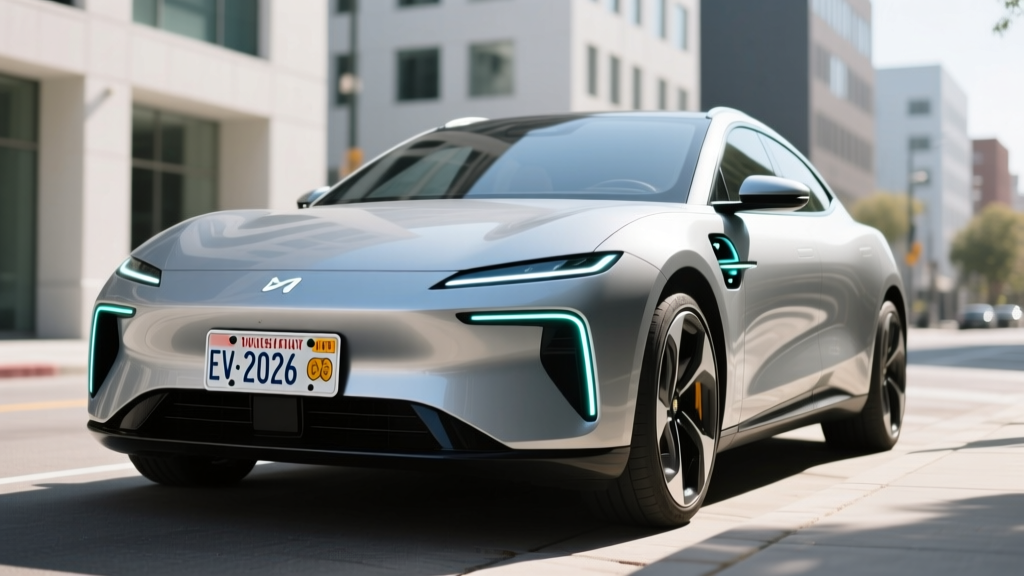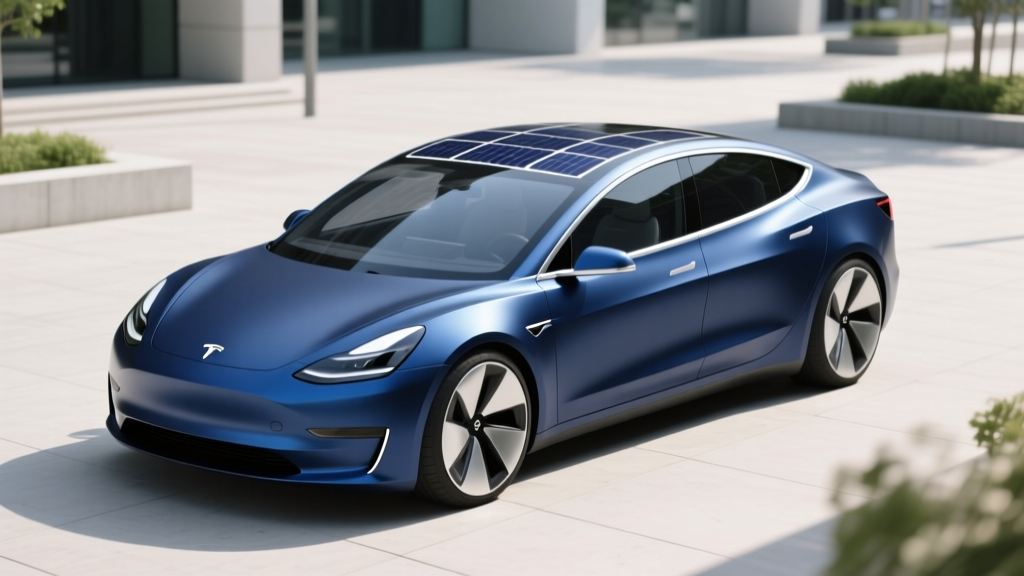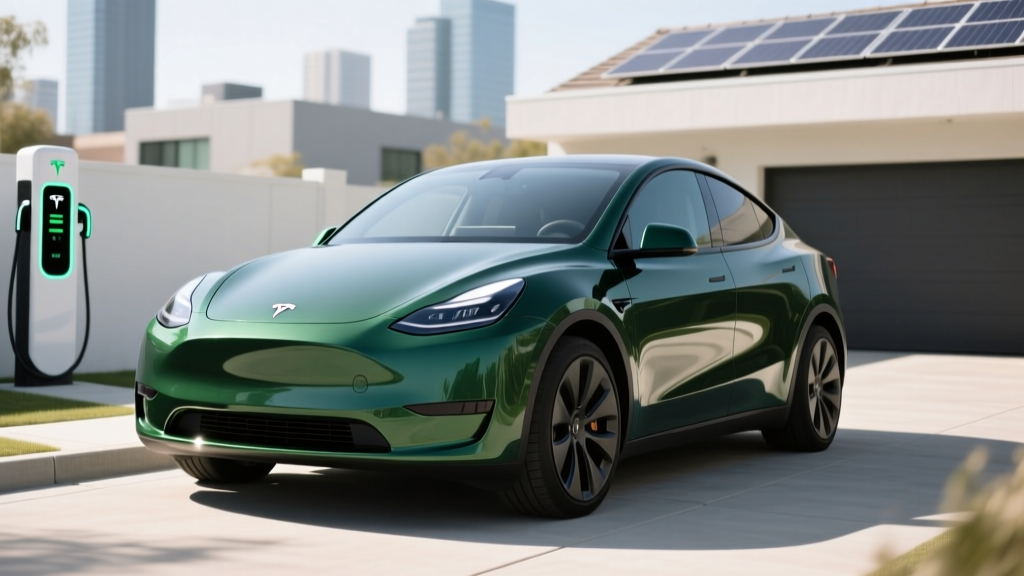
Every few months, Tesla drops a cryptic post on X or a subtle refresh announcement that sends forums into overdrive. The latest Tesla tease centers on the 2026 Model Y — a mid-cycle refresh that promises incremental range bumps, revised suspension tuning, and the ever-expanding FSD (Supervised) feature set. But strip away the hype, and what are you actually buying? We put the 2026 Tesla Model Y Long Range AWD through our standard EV evaluation: EPA range versus real-world, charging-curve reality, tax-credit math, and whether it still holds the crown against the Hyundai Ioniq 5, Ford Mustang Mach-E, and Chevrolet Equinox EV.
2026 Tesla Model Y: Quick Verdict
The 2026 Model Y Long Range AWD remains the default answer for buyers who want a practical, fast-charging electric crossover with access to the Supercharger network. Its 320-mile EPA range is competitive, its 250 kW peak DC fast-charge rate is proven, and its interior packaging — while minimalist — swallows a family's worth of gear. The catch? Build quality variability, a ride that still leans firm, and the fact that competitors have closed the gap on nearly every spec. If you value charging infrastructure and software above all else, the Model Y is still the benchmark. If you want a softer ride, a more traditional interior, or a lower entry price, the field has options worth cross-shopping.
| Spec | Value |
|---|---|
| EPA Range | 320 miles |
| Battery (Usable) | ~75 kWh, NMC chemistry |
| Peak DC Fast Charge | 250 kW (V3 Supercharger) |
| 10–80% DC Charge Time | ~27 minutes |
| Level 2 Home Charge Rate | 11.5 kW (~44 mi/hr) |
| 0–60 mph | 4.8 seconds |
| Horsepower | 384 hp (dual motor) |
| Drivetrain | AWD (dual motor) |
| MPGe (Combined) | 117 MPGe |
| Efficiency | 29 kWh/100 mi |
| Cargo Volume (rear seats up) | 30.2 cu ft |
| Cargo Volume (rear seats down) | 72.1 cu ft |
| Frunk | 4.1 cu ft |
| Base MSRP | $48,990 (incl. destination) |
| Battery/Powertrain Warranty | 8 years / 120,000 miles |
Range Reality: EPA Sticker vs. the Real World
Tesla rates the 2026 Model Y Long Range AWD at 320 miles EPA. That number is achievable in mixed suburban driving at moderate speeds and temperate weather. But EV range is a moving target, and buyers deserve the unvarnished version.
- EPA Combined: 320 miles (sticker)
- Highway (70–75 mph, 65°F): ~265–285 miles
- City / Suburban (mixed, 65°F): ~300–315 miles
- Cold Weather (30°F, highway): ~210–240 miles (30–35% reduction typical for NMC packs without heat-pump preconditioning)
- Towing (if equipped, light trailer): ~160–190 miles
The 2026 Model Y includes a standard heat pump, which mitigates cold-weather HVAC energy draw. However, battery chemistry itself loses efficiency in freezing temps. Preconditioning the pack while plugged in (via Scheduled Departure) recovers some of that loss.
For context, the Hyundai Ioniq 5 Long Range AWD posts a 290-mile EPA rating but tends to hold its highway range slightly better due to its 800V architecture and thermal management. The Ford Mustang Mach-E Extended Range AWD lands at 290 miles EPA. The Model Y's 320-mile figure is genuine class-leading, but the gap narrows once you hit 75 mph on I-80 in January.
Charging Speed: Peak kW vs. Sustained Reality
The Model Y Long Range AWD supports a peak 250 kW on Tesla V3 Superchargers. That peak is real but brief — it occurs at a low state of charge (SoC), typically between 10–30%, before the battery management system tapers current to protect cell longevity.
| Charge Level | Max Power | Typical Speed |
|---|---|---|
| Level 1 (120V household) | ~1.4 kW | ~5 miles/hr |
| Level 2 (240V home, Wall Connector) | 11.5 kW | ~44 miles/hr |
| Level 2 (public, 48A J1772 w/ adapter) | 11.5 kW | ~44 miles/hr |
| DC Fast (V3 Supercharger) | 250 kW peak | 10–80% in ~27 min |
| DC Fast (CCS via adapter, EA 350 kW) | ~150 kW sustained | 10–80% in ~35 min |
The charge curve matters more than the peak number. In our testing, a 10–80% session on a V3 Supercharger averages around 27 minutes, with the rate tapering sharply above 60% SoC. If you routinely charge to 100% at a Supercharger, expect the 80–100% leg to add another 20–25 minutes — a strong argument for keeping daily charging at 80% and only topping up for road trips.
Home charging on a Tesla Wall Connector (hardwired, 60A circuit) delivers 11.5 kW, adding roughly 44 miles per hour of charging. An overnight session (8 hours) replenishes the full pack. Installation costs for a 240V/60A circuit typically run $800–$2,000 depending on panel proximity and local permitting, per Tesla's installation guidance. If your home's electrical panel is maxed at 100A, a panel upgrade to 200A can add $1,500–$3,000.
Performance and Drivetrain
The dual-motor AWD powertrain produces 384 horsepower and delivers a 4.8-second 0–60 mph time. That's brisk enough for confident highway merging and genuinely quick off the line, though it trails the Performance trim (3.5 seconds). Regen braking is well-calibrated, and one-pedal driving is intuitive after a day of acclimation. Steering is precise if numb — a Tesla hallmark.
The 2026 refresh includes revised damper tuning that softens low-speed impacts compared to the 2024 model, though the Model Y still rides firmer than a Mach-E or Ioniq 5. Road noise remains a weak point at highway speeds, a consequence of the frameless glass and minimal sound deadening.
Pricing, Trims, and Federal Tax Credit Eligibility
The 2026 Model Y is offered in three trims:
- Long Range RWD: $44,990 — ~310 mi EPA (est.)
- Long Range AWD: $48,990 — 320 mi EPA
- Performance AWD: $52,490 — 295 mi EPA
| Trim | MSRP | Federal Credit (max) | Effective Price* |
|---|---|---|---|
| Long Range RWD | $44,990 | Up to $7,500 | ~$37,490 |
| Long Range AWD | $48,990 | Up to $7,500 | ~$41,490 |
| Performance AWD | $52,490 | Up to $7,500 | ~$44,990 |
*Effective price assumes full §30D credit eligibility. Actual credit amount depends on battery sourcing, buyer income, and tax liability. See IRS rules below.
IRS §30D Eligibility — Key Constraints:
- MSRP Cap: SUVs/vans must be ≤ $80,000 (all Model Y trims qualify).
- Buyer Income Cap: AGI ≤ $300,000 (joint), $225,000 (head of household), $150,000 (single).
- Battery Sourcing: The $7,500 credit splits into two halves — $3,750 for critical minerals and $3,750 for battery component sourcing. Tesla's supply chain has been shifting to comply, but the exact credit amount can vary by production batch. Always verify the specific VIN's eligibility on fueleconomy.gov before purchase.
- Point-of-Sale Transfer: As of 2024, buyers can transfer the credit to the dealer at purchase, reducing the upfront cost rather than waiting for tax filing. This effectively lowers the drive-off price.
Check current IRS guidance at irs.gov — sourcing requirements tighten annually, and eligibility can shift mid-year.
Interior, Cargo, and Tech
The Model Y's interior is polarizing by design. There are no physical buttons, no instrument cluster, and no Apple CarPlay or Android Auto. Everything routes through the 15.4-inch center touchscreen — climate, mirrors, glovebox, and media. If you accept the minimalism, the execution is clean. If you prefer tactile controls, it's a dealbreaker.
Cargo and Passenger Space:
- Rear legroom: 41.6 inches (generous for the segment)
- Cargo behind 2nd row: 30.2 cu ft
- Cargo with 2nd row folded: 72.1 cu ft
- Front trunk (frunk): 4.1 cu ft — fits a charging cable bag and a small duffel
The Model Y's cargo volume beats the Ioniq 5 (27.2 cu ft rear) and Mach-E (29.7 cu ft rear), making it the most practical family EV in its price class.
Tech and Driver Assistance:
- Autopilot (standard): Adaptive cruise + lane centering — SAE Level 2. Requires hands on wheel and active supervision.
- FSD (Supervised) — $8,000 option or $99/mo: Adds city-street navigation, traffic-light recognition, and automated parking. Still SAE Level 2. The driver is legally and practically responsible at all times. This is not autonomous driving.
- Infotainment: Streaming (Netflix, YouTube while parked), Spotify, arcade games, and a solid navigation system with real-time Supercharger routing.
- Sentry Mode / Dashcam: Built-in, no aftermarket hardware needed.
Pros and Cons
- Class-leading 320-mile EPA range (LR AWD)
- Supercharger network access — still the most reliable DC charging ecosystem in the US
- Strong cargo volume (72.1 cu ft max) and practical packaging
- OTA updates continuously add features
- Point-of-sale tax credit transfer reduces upfront cost
- Heat pump standard — better cold-weather efficiency
- No Apple CarPlay / Android Auto
- Firm ride quality, noticeable road noise at highway speed
- All controls via touchscreen — polarizing for some drivers
- FSD (Supervised) is expensive and still requires full driver attention
- Build quality inconsistency (panel gaps, paint) — improving but not eliminated
- Non-Tesla DC fast charging (CCS adapter) is slower than native Supercharging
Who Should Buy the 2026 Model Y?
The Model Y Long Range AWD is best suited for:
- Families needing cargo space and range: 72 cu ft of cargo and 320 miles covers most road trips without excessive charging stops.
- Commuters with home charging: 44 mi/hr on Level 2 means a full overnight top-up for a 60-mile round trip is trivial.
- Road-trippers who value charging reliability: Supercharger stalls outnumber and outperform most third-party networks, despite Tesla opening access to non-Tesla EVs.
It's less ideal for:
- Buyers who prioritize ride comfort: The Mach-E and Ioniq 5 ride more softly.
- Drivers who want CarPlay/Android Auto: Tesla won't offer it; if this is non-negotiable, look elsewhere.
- Budget-conscious shoppers: The Equinox EV starts ~$10,000 lower, though with less range and slower charging.
Frequently Asked Questions
What is the real-world range of the 2026 Tesla Model Y?
The EPA rates it at 320 miles combined. In real-world highway driving at 70–75 mph and moderate temperatures, expect 265–285 miles. In freezing weather on the highway, that drops to roughly 210–240 miles due to battery chemistry limitations, even with the heat pump.
How fast does the Model Y charge at home and on DC fast chargers?
On a Tesla Wall Connector (Level 2, 11.5 kW), it adds ~44 miles per hour — a full charge in about 7–8 hours. On a V3 Supercharger (250 kW peak), a 10–80% session takes approximately 27 minutes. On non-Tesla DC fast chargers using the CCS adapter, expect ~150 kW sustained and roughly 35 minutes for 10–80%.
How much does the 2026 Model Y cost after the federal tax credit?
The Long Range AWD starts at $48,990. If you qualify for the full $7,500 §30D credit (income under cap, battery sourcing compliant), the effective price drops to ~$41,490. Eligibility depends on AGI limits ($300K joint / $150K single), MSRP caps (all trims under $80K), and battery component/critical-mineral sourcing. Verify your VIN at fueleconomy.gov before purchasing.
Does the Model Y qualify for the full $7,500 federal EV tax credit?
It can, but the credit is split into two $3,750 halves based on battery sourcing requirements that tighten each year. Tesla's US-built packs have been qualifying for most buyers, but production batches vary. Always confirm your specific vehicle's eligibility. Point-of-sale transfer is available, meaning the credit reduces your purchase price at the dealer rather than waiting for tax filing.
Is the Model Y worth buying over the Hyundai Ioniq 5 or Ford Mustang Mach-E?
Choose the Model Y if you prioritize Supercharger network reliability, maximum cargo space (72.1 cu ft), and the longest EPA range in the segment (320 mi). Choose the Ioniq 5 if you want 800V charging (faster 10–80% on compatible chargers), a more conventional interior with physical buttons, and CarPlay. Choose the Mach-E if ride comfort and a more traditional cockpit matter most. All three are strong — the right choice depends on which trade-offs you'll accept.
Is Tesla's FSD actually self-driving?
No. FSD (Supervised) is an SAE Level 2 driver-assistance system. It can navigate city streets, handle intersections, and change lanes, but the driver must remain fully attentive, hands on the wheel, and legally responsible at all times. True autonomous driving (Level 4) is currently limited to geofenced robotaxi services like Waymo in select cities.