Decoding Tesla Tax Documents: What You Need for the §30D Credit in 2026
Buying a Tesla isn't just a vehicle decision—it's a tax-planning exercise. With the federal §30D Clean Vehicle Credit offering up to $7,500, understanding the Tesla tax documents you'll need is critical before you sign the order sheet. Whether you're eyeing the refreshed Model 3 or the high-volume Model Y, eligibility hinges on a matrix of MSRP caps, buyer income limits, battery-sourcing requirements, and the specific paperwork Tesla and the IRS require. This guide breaks down the exact documentation trail, pairs it with real-world specs for the 2026 lineup, and tells you precisely what to expect at the dealership and on your tax return.
The Core Tesla Tax Documents: IRS Forms and Dealer Paperwork
When buyers search for "Tesla tax documents," they're usually looking for the specific forms required to claim the federal EV credit. Here is the exact paper trail you'll generate:
- IRS Form 8936 (Clean Vehicle Credits): This is the primary form you file with your federal tax return to claim the credit. It requires the vehicle's VIN, the credit amount, and certification that you meet the income and use requirements.
- IRS Form 8936-A (Clean Vehicle Credit Transfer Election): If you choose the point-of-sale (POS) transfer—where the $7,500 is applied directly to your purchase price or down payment—you must complete this form at delivery. Tesla will submit this to the IRS Energy Credits Online (ECO) system.
- Time of Sale Report: Tesla is required to file this report with the IRS within 3 days of delivery. You should receive a copy. It confirms the vehicle's eligibility and your intent to transfer or claim the credit.
- Seller Report (Dealer Certification): Before you drive off, Tesla must provide a written certification that the vehicle qualifies for the credit under §30D. Keep this with your purchase agreement.
- IRS Tax Return (Form 1040): If you claim the credit on your taxes rather than at POS, you'll reconcile the credit on your 1040 using Form 8936. The credit is non-refundable, meaning it can only reduce your tax liability to zero—it won't generate a refund beyond that.
For the most current rules and forms, always cross-reference with the IRS Clean Vehicle Credits page.
2026 Tesla Model 3: Specs, Range, and Credit Eligibility
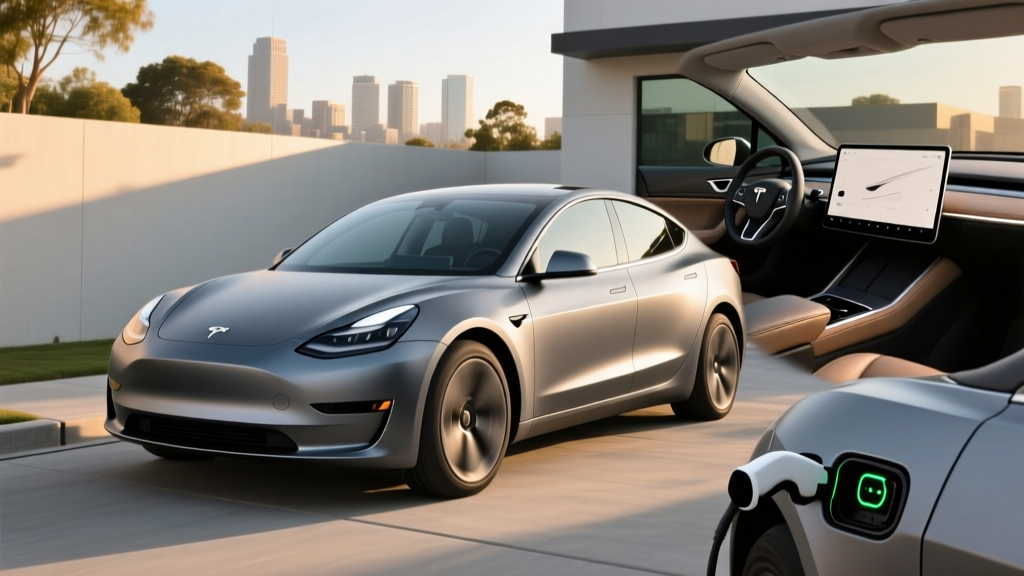
The 2026 Model 3 remains Tesla's entry point, but "entry" now means a highly refined, 363-mile-range sedan. Here is the spec breakdown buyers need:
| Attribute | Model 3 Long Range AWD (2026) | Model 3 Performance (2026) |
|---|---|---|
| EPA Range | 363 miles | 315 miles |
| Battery Capacity | ~79 kWh (NMC) | ~79 kWh (NMC) |
| Drivetrain | Dual-Motor AWD | Dual-Motor AWD |
| Horsepower | ~346 hp | ~510 hp |
| 0-60 mph | 4.2 seconds | 2.9 seconds |
| Efficiency | 132 MPGe / 25 kWh/100mi | 115 MPGe / 29 kWh/100mi |
| Max DC Fast Charge | 250 kW | 250 kW |
| 10-80% DC Charge Time | ~27 minutes | ~27 minutes |
| Level 2 Home Charge Rate | 11.5 kW (~44 mi/hr) | 11.5 kW (~44 mi/hr) |
| Base MSRP | $47,740 | $54,990 |
| Cargo Volume | 23 cu ft (trunk + frunk) | 23 cu ft (trunk + frunk) |
| Battery Warranty | 8 yr / 120,000 mi | 8 yr / 120,000 mi |
Does the Model 3 Qualify for the §30D Credit?
As of 2026, the Model 3 Long Range AWD and Performance trims may qualify for up to $7,500, but eligibility is split between two components: $3,750 for critical minerals sourcing and $3,750 for battery component manufacturing. Tesla's supply chain shifts frequently, and the fueleconomy.gov tax credit tracker is the definitive source for the current month's eligibility. The Model 3's base MSRP is well under the $55,000 sedan cap, so price is not the disqualifier—battery sourcing is the variable to watch.
2026 Tesla Model Y: The Family SUV and Credit Documentation
The Model Y is America's best-selling EV for good reason: crossover utility, Supercharger access, and strong range. The 2026 refresh (often called "Juniper") brought updated styling, a ventilated-seat interior, and a rear touchscreen. Here's what the tax-credit-seeking buyer needs to know:
| Attribute | Model Y Long Range AWD (2026) | Model Y Performance (2026) |
|---|---|---|
| EPA Range | 320 miles | 280 miles |
| Battery Capacity | ~78 kWh (NMC) | ~78 kWh (NMC) |
| Drivetrain | Dual-Motor AWD | Dual-Motor AWD |
| Horsepower | ~384 hp | ~456 hp |
| 0-60 mph | 4.8 seconds | 3.5 seconds |
| Efficiency | 122 MPGe / 28 kWh/100mi | 111 MPGe / 30 kWh/100mi |
| Max DC Fast Charge | 250 kW | 250 kW |
| 10-80% DC Charge Time | ~27 minutes | ~27 minutes |
| Level 2 Home Charge Rate | 11.5 kW (~37 mi/hr) | 11.5 kW (~37 mi/hr) |
| Base MSRP | $49,990 | $55,490 |
| Cargo Volume | 72 cu ft (rear seats folded) | 72 cu ft (rear seats folded) |
| Battery Warranty | 8 yr / 120,000 mi | 8 yr / 120,000 mi |
The SUV MSRP Cap Trap
Under §30D, SUVs have a higher MSRP cap of $80,000 (vs. $55,000 for sedans). The Model Y is classified as an SUV by the IRS, which means even fully loaded Performance trims clear the cap easily. However, the battery-sourcing requirements remain the gating factor. Always verify current eligibility on fueleconomy.gov before placing your order.
Income Limits and the Point-of-Sale Transfer
Your modified adjusted gross income (MAGI) must fall below these thresholds to claim the credit:
- $300,000 for married filing jointly
- $225,000 for head of household
- $150,000 for single filers
If you exceed these limits in either the current or prior tax year, you are ineligible—regardless of the vehicle's compliance.
The point-of-sale transfer is where Tesla tax documents get practical. At delivery, you'll elect to transfer the credit to Tesla. This reduces your out-of-pocket cost immediately. However, if your income ends up exceeding the cap when you file your taxes, you must repay the credit to the IRS. There is no clawback exception. This makes pre-purchase tax planning essential.
| Model | Base MSRP | Max §30D Credit | Effective Price (if eligible) |
|---|---|---|---|
| Model 3 Long Range AWD | $47,740 | $7,500 | $40,240 |
| Model 3 Performance | $54,990 | $7,500 | $47,490 |
| Model Y Long Range AWD | $49,990 | $7,500 | $42,490 |
| Model Y Performance | $55,490 | $7,500 | $47,990 |
Charging Speed and Home Setup: The Ownership Reality
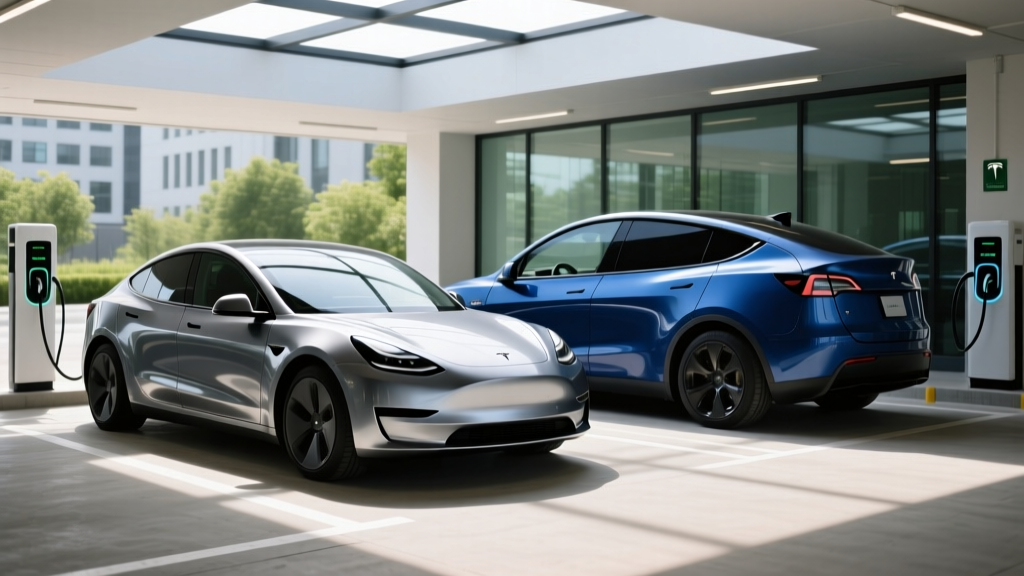
Tesla's Supercharger network remains the gold standard for DC fast charging, but understanding the charge curve is where many new owners get surprised. A 250 kW peak rate is not sustained across the entire session.
| Charging Level | Power (kW) | Miles Added per Hour | Typical Use Case |
|---|---|---|---|
| Level 1 (120V) | ~1.4 kW | ~3-5 mi/hr | Overnight trickle, emergencies |
| Level 2 (240V, 48A) | 11.5 kW | ~37-44 mi/hr | Home daily charging |
| DC Fast (Supercharger V3) | Up to 250 kW | ~1,000 mi/hr (peak) | Road trips, 10-80% in ~27 min |
The 10-80% charge takes approximately 27 minutes at a V3 Supercharger. However, from 80-100%, the charge rate tapers dramatically to protect battery health—adding that final 20% can take an additional 25+ minutes. For daily driving, setting your charge limit to 80% (or 100% only for LFP models, though the Model 3/Y Long Range use NMC) preserves long-term battery health.
Pros and Cons: The Honest Assessment
Pros
- Supercharger network access (though now opening to other brands, Tesla's integration remains seamless)
- Class-leading software and OTA update cadence
- Excellent efficiency (kWh/100mi) translates to lower charging costs
- Strong resale value relative to EV market average
- Point-of-sale credit transfer simplifies cash flow
Cons
- Battery sourcing requirements make §30D eligibility unpredictable quarter-to-quarter
- Minimal physical controls; everything routes through the touchscreen
- No Apple CarPlay or Android Auto
- Insurance premiums 15-25% higher than comparable ICE vehicles
- FSD (Supervised) is a Level 2 system—not autonomous—despite the marketing name
Who Should Buy a Tesla in 2026?
The Model 3 suits commuters and tech-forward buyers who prioritize efficiency, software, and a minimalist cabin. If your daily drive is under 80 miles round-trip and you have home Level 2 charging, the 363-mile range is overkill in the best way—you'll charge every 3-4 days.
The Model Y is the family hauler and road-trip machine. With 72 cu ft of cargo space (rear seats folded) and the ability to tow 3,500 lbs, it replaces a compact SUV while running on electricity. If you need three-across rear seating or frequent long-distance travel, the Y's Supercharger integration is unmatched.
Frequently Asked Questions
What Tesla tax documents do I need to file for the EV credit?
You'll need IRS Form 8936 (or 8936-A for point-of-sale transfer), the Time of Sale Report provided by Tesla, and your purchase agreement. If claiming on your tax return, file Form 8936 with your Form 1040.
Is the $7,500 credit guaranteed for every Tesla?
No. Eligibility depends on battery component and critical-mineral sourcing, which Tesla's supply chain may or may not satisfy in a given quarter. Always check fueleconomy.gov for the specific model and trim before ordering.
What happens if I transfer the credit at POS but my income is too high?
You'll owe the full credit amount back to the IRS when you file your tax return. There is no penalty beyond repayment, but it can create an unexpected tax bill.
Does the Model 3 qualify as a sedan or SUV for the MSRP cap?
The Model 3 is classified as a sedan, subject to the $55,000 MSRP cap. The Model Y is classified as an SUV, subject to the $80,000 cap.
Can I claim the credit if I lease a Tesla?
Leased vehicles fall under the commercial clean vehicle credit (§45W), which goes to the lessor (Tesla). Some lessors pass this savings through as a lower lease payment, but it is not your credit to claim on Form 8936.