The Tesla Lineup: Matching Models to Buyers
Tesla no longer sells to a single demographic. What began as a luxury tech-enthusiast brand has fractured into distinct product lanes — each aimed at a different slice of the EV-buying public. In 2026, the Tesla target market spans first-time EV adopters shopping the Model 3, families cross-shopping the Model Y against three-row SUVs, truck buyers eyeing the Cybertruck, and luxury/performance seekers considering the Model S and Model X. But specs, pricing shifts, and evolving tax-credit rules mean the right Tesla for you depends on hard numbers — not brand loyalty.
This guide dissects each current Tesla model against the metrics that matter: real-world range, charging speed, total cost after incentives, and the specific buyer profile each serves best.
Tesla Model 3 (2026): The Entry-Point EV Sedan
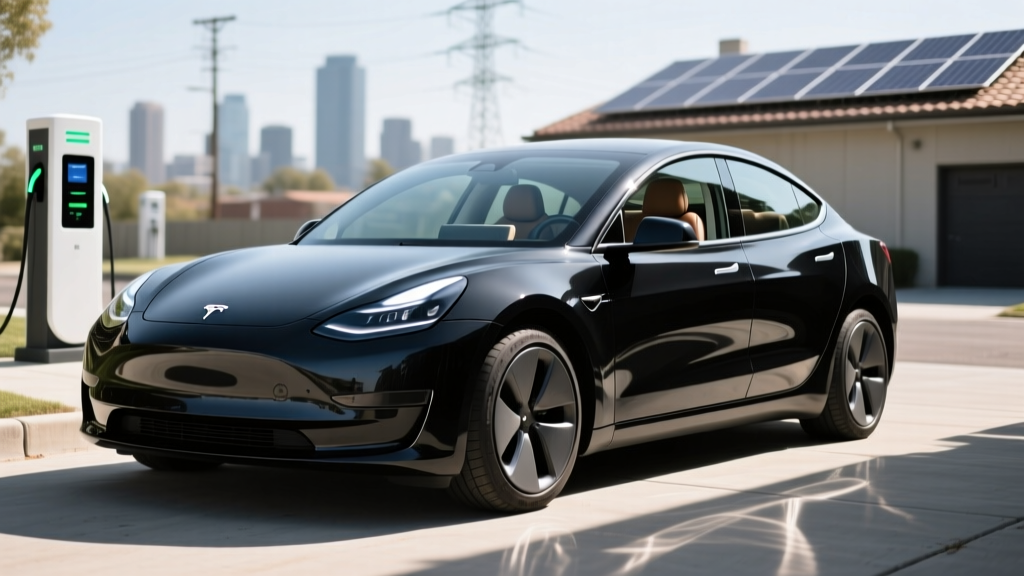
The refreshed Model 3 (internally "Highland" and its subsequent trims) remains Tesla's volume sedan and the gateway vehicle for the brand's core target market: younger professionals, urban commuters, and first-time EV buyers who want premium tech without the crossover premium.
| Attribute | Long Range RWD | Long Range AWD | Performance |
|---|---|---|---|
| EPA Range | 363 mi | 346 mi | 320 mi |
| Battery (usable) | ~75 kWh (NMC) | ~75 kWh (NMC) | ~75 kWh (NMC) |
| 0-60 mph | 5.8 sec | 4.2 sec | 2.9 sec |
| Horsepower | 271 hp | 346 hp | 510 hp |
| Drivetrain | RWD | Dual-Motor AWD | Dual-Motor AWD |
| MPGe (combined) | 132 MPGe | 125 MPGe | 115 MPGe |
| Base MSRP | $42,380 | $47,380 | $54,380 |
Charging: DC Fast and Home Level 2
| Level | Max Rate | Speed / Time |
|---|---|---|
| DC Fast Charge (peak) | 250 kW (CCS/NACS) | 10-80% in ~25 min; peak sustains to ~50% SoC then tapers |
| Level 2 (home, 48A) | 11.5 kW | ~44 mi/hr added |
| Level 1 (120V outlet) | ~1.4 kW | ~5 mi/hr — emergency use only |
The Model 3's 250 kW peak is competitive, but the charge curve tapers meaningfully above 55% State of Charge. On a road trip, plan your stops to arrive at chargers near 10% SoC and leave by 70-75% — the time from 80-100% can exceed the 10-80% time.
Space, Tech, and Daily Livability
Cargo volume sits at 23 cu ft (trunk + frunk combined). Rear legroom is 35.3 inches — adequate for adults on shorter trips but tighter than a midsize sedan. The minimalist interior centers on a 15.4-inch touchscreen controlling virtually all vehicle functions, including HVAC vent direction and mirror adjustment. Autopilot (SAE Level 2) is standard; Full Self-Driving (Supervised) remains an $8,000 option — and despite the name, requires constant driver attention.
Tax Credit and Net Cost
The Model 3 qualifies for the $7,500 federal §30D tax credit on eligible trims, subject to IRS rules: buyer AGI must not exceed $150,000 (single) or $300,000 (joint), and the vehicle MSRP must remain under the $55,000 sedan cap. The Long Range RWD at $42,380 clears this easily, bringing the effective price to approximately $34,880 before state incentives. Point-of-sale transfer is available, reducing the purchase price at the dealer. Verify current battery-sourcing and critical-mineral compliance at IRS.gov, as these requirements tighten annually.
Tesla Model Y (2026): The Family Crossover Sweet Spot
The Model Y is Tesla's best-selling vehicle globally and targets the largest addressable market in the US: compact-to-midsize crossover shoppers. Families, suburban commuters, and buyers replacing a RAV4 or CR-V land here. The 2025 "Juniper" refresh brought updated styling, improved ride quality, and a ventilated-seat option that addressed the most common complaint from prior model years.
| Attribute | Long Range RWD | Long Range AWD | Performance |
|---|---|---|---|
| EPA Range | 320 mi | 308 mi | 277 mi |
| Battery (usable) | ~75 kWh (NMC) | ~75 kWh (NMC) | ~75 kWh (NMC) |
| 0-60 mph | 6.5 sec | 4.8 sec | 3.5 sec |
| Horsepower | 295 hp | 384 hp | 456 hp |
| Drivetrain | RWD | Dual-Motor AWD | Dual-Motor AWD |
| MPGe (combined) | 123 MPGe | 117 MPGe | 111 MPGe |
| Base MSRP | $44,990 | $48,990 | $53,990 |
Charging Performance
Peak DC fast-charge rate is 250 kW, with 10-80% in approximately 27 minutes under optimal conditions (preconditioned battery, V3 Supercharger or equivalent). Level 2 home charging at 11.5 kW (48A) delivers roughly 40 miles of range per hour — a full overnight session from 20% to 100% takes about 8 hours.
Interior Space and Practicality
The Model Y's advantage over the Model 3 is cargo: 76 cu ft with the rear seats folded (30 cu ft behind the second row). An optional third row adds two small seats suitable for children under ~4'10", though legroom is severely limited at 26.5 inches. Front and rear legroom for the two-row configuration is 41.8 / 37.3 inches, competitive with the Toyota RAV4.
Pricing and Tax Credit Eligibility
The Model Y Long Range RWD at $44,990 falls under the $80,000 SUV/truck MSRP cap for §30D eligibility. All current trims qualify on price. The $7,500 credit (subject to income and sourcing rules) brings the Long Range RWD to approximately $37,490. Buyers should confirm 2026 critical-mineral and battery-component sourcing compliance — the IRS updates the eligible-vehicle list periodically, and Tesla's supply chain shifts can affect qualification mid-year.
Tesla Cybertruck (2026): The Polarizing Electric Pickup
Cybertruck targets a niche but passionate segment: truck buyers willing to trade conventional utility for attention-grabbing design and EV performance. It competes against the Ford F-150 Lightning, Rivian R1T, and Chevrolet Silverado EV. Production has scaled through 2025, and Tesla now offers three trims with meaningful availability — though wait times still stretch weeks to months depending on configuration.
| Attribute | AWD | Cyberbeast |
|---|---|---|
| EPA Range | 340 mi | 320 mi |
| Battery (usable) | ~123 kWh (NMC, estimated) | ~123 kWh (NMC, estimated) |
| 0-60 mph | 3.9 sec | 2.6 sec |
| Horsepower | 600 hp | 845 hp |
| Drivetrain | Dual-Motor AWD | Tri-Motor AWD |
| Towing Capacity | 11,000 lbs | 11,000 lbs |
| MPGe (combined) | ~67 MPGe (est.) | ~62 MPGe (est.) |
| Base MSRP | $79,990 | $99,990 |
Charging and 800V Architecture
Cybertruck uses an 800V architecture enabling peak DC charging up to 350+ kW at compatible stations, adding up to 150+ miles in roughly 15 minutes under ideal conditions. At Tesla V4 Superchargers and other high-power networks, 10-80% takes approximately 20 minutes. Level 2 home charging at 11.5 kW adds roughly 30 miles per hour — the larger battery means a full charge takes 10-12 hours.
Tax Credit Reality
The Cybertruck's MSRP (AWD at $79,990) sits just under the $80,000 truck/SUV cap. The Cyberbeast at $99,990 exceeds it and does not qualify for the federal §30D credit. Even the AWD trim's eligibility depends on the buyer meeting income thresholds ($150K single / $300K joint) and the vehicle meeting battery-sourcing requirements. Consult IRS qualified vehicle lists before committing.
Tesla Model S & Model X (2026): The Luxury Holdouts
The Model S sedan and Model X SUV occupy Tesla's premium tier, targeting luxury EV buyers who want maximum range, performance, and exclusivity. Sales volumes are low compared to Model 3/Y, and Tesla has not significantly redesigned either since the 2021 "Plaid" refresh. They compete with the Lucid Air, BMW iX, Mercedes EQS, and Rivian R1S.
| Attribute | Model S Long Range | Model S Plaid | Model X Long Range | Model X Plaid |
|---|---|---|---|---|
| EPA Range | 402 mi | 359 mi | 335 mi | 311 mi |
| Battery (usable) | ~95 kWh (NMC) | ~95 kWh (NMC) | ~95 kWh (NMC) | ~95 kWh (NMC) |
| 0-60 mph | 3.1 sec | 1.99 sec | 3.8 sec | 2.5 sec |
| Horsepower | 670 hp | 1,020 hp | 670 hp | 1,020 hp |
| Base MSRP | $79,990 | $94,990 | $84,990 | $99,990 |
The Model S Long Range remains one of the longest-range EVs sold in the US at 402 miles EPA. However, these models exceed the §30D MSRP cap ($55,000 sedans / $80,000 SUVs) and do not qualify for the federal tax credit. They also sit above most state incentive thresholds. Buyers here prioritize range, performance, and Supercharger network access over incentive optimization.
The Tesla Target Market: Who Should Buy What?
- Choose Model 3 if: You're a commuter or first-time EV buyer, drive under 50 miles daily, want the lowest entry price, and value efficiency over cargo space.
- Choose Model Y if: You have a family, need cargo versatility, want optional third-row seating for kids, and are replacing a compact SUV.
- Choose Cybertruck if: You need a truck bed and towing capacity, want standout design, can accept range compromises when towing, and your budget exceeds $80K.
- Choose Model S/X if: Maximum range (400+ mi) or extreme performance (Plaid) matters more than tax-credit savings, and you're cross-shopping Lucid, BMW, or Mercedes.
Tesla vs. Key Competitors: Is It Worth It?
Tesla's advantages in 2026 remain the Supercharger network (now open to NACS-equipped competitors but still the most reliable DC network in the US), over-the-air updates that add features post-purchase, and software integration that competitors are still catching up to. However, the competitive landscape has narrowed significantly:
- Model 3 vs. Hyundai Ioniq 6: The Ioniq 6 offers 361 miles EPA, 800V charging (10-80% in ~18 min), and a more conventional interior. Model 3 wins on Supercharger access and performance-per-dollar.
- Model Y vs. Kia EV9 / Hyundai Ioniq 5: The EV9 offers genuine three-row space; the Ioniq 5 charges faster. Model Y wins on cargo versatility and software.
- Cybertruck vs. F-150 Lightning: The Lightning offers a more conventional truck experience, a front trunk ("Mega Power Frunk"), and Pro Power Onboard. Cybertruck wins on performance and design differentiation.
- Model S vs. Lucid Air: The Air Grand Touring delivers 516 miles EPA and superior interior quality. Model S wins on Supercharger access and Plaid performance.
- Supercharger network: 6,000+ US stalls, highest reliability among DC networks
- OTA updates continuously improve vehicles post-purchase
- Best-in-class software UX and phone-as-key integration
- Strong resale value relative to legacy-brand EVs
- Extensive service-center and mobile-ranger network
- No Apple CarPlay or Android Auto
- Panel-gap and paint quality inconsistencies persist
- FSD (Supervised) remains Level 2 — not autonomous despite the name
- Service wait times can stretch weeks in high-demand metro areas
- Insurance premiums 15-30% higher than comparable non-Tesla EVs in most states
Warranty and Long-Term Ownership
All Tesla vehicles come with a 4-year / 50,000-mile basic warranty and an 8-year / 120,000-mile (Model 3/Y) or 8-year / 150,000-mile (Model S/X) battery and drive-unit warranty. The battery warranty guarantees retention of at least 70% capacity over the warranty period. Real-world degradation data from Tesla's fleet suggests most NMC packs retain 85-90% capacity at 100,000 miles with typical charging habits (avoiding sustained 100% SoC, using DC fast charging moderately).
Replacement battery costs, should degradation exceed warranty thresholds out of warranty, range from $12,000-$16,000 for Model 3/Y packs to $18,000-$22,000 for Model S/X — a figure worth factoring into 10+ year ownership plans.
Frequently Asked Questions
What is the real-world range of a Tesla in 2026?
It depends on the model and conditions. The Model 3 Long Range RWD achieves 363 miles EPA but expect 280-310 highway miles and 230-260 in freezing weather. The Model Y Long Range RWD posts 320 EPA, with real-world highway figures around 250-280. Always budget 20-30% below EPA for highway road trips, and more when towing (Cybertruck).
How fast does a Tesla charge at home and on the road?
At home on a Level 2 charger (11.5 kW / 48A), expect 30-44 miles of range per hour depending on the model — a full overnight charge. On DC fast charging, Model 3 and Model Y peak at 250 kW (10-80% in ~25-27 minutes), while the Cybertruck's 800V architecture enables 350+ kW peaks at compatible stations.
Does Tesla qualify for the federal EV tax credit?
The Model 3 and Model Y (all trims under their respective MSRP caps) qualify for the $7,500 §30D credit, provided the buyer meets income limits ($150K single / $300K joint) and the vehicle meets battery-sourcing and critical-mineral requirements. The Cybertruck AWD qualifies (MSRP under $80K cap), but the Cyberbeast does not. Model S and Model X exceed MSRP caps and are ineligible. Always verify on IRS.gov before purchasing.
Is Tesla's Autopilot or FSD actually self-driving?
No. Both Autopilot and Full Self-Driving (Supervised) are SAE Level 2 driver-assistance systems. The driver must remain attentive, keep hands on the wheel, and be prepared to take over at any moment. True self-driving (Level 4) is currently offered only by robotaxi services like Waymo in limited metro areas.
Is a Tesla worth buying vs. competitors in 2026?
For buyers who prioritize Supercharger reliability, software, and performance-per-dollar — yes, Tesla remains highly competitive. For buyers who want Apple CarPlay, more conventional interiors, faster 800V charging (Hyundai/Kia), or genuine three-row space (Kia EV9), competitors now offer compelling alternatives. Cross-shop with real test drives and compare total cost of ownership, including insurance, which runs 15-30% higher for Teslas in most US states.
What are the biggest pros and cons of owning a Tesla?
Pros: Supercharger network, OTA updates, software UX, strong resale value, performance-per-dollar. Cons: No CarPlay/Android Auto, inconsistent build quality, FSD is not autonomous, higher insurance costs, and service wait times in some markets.