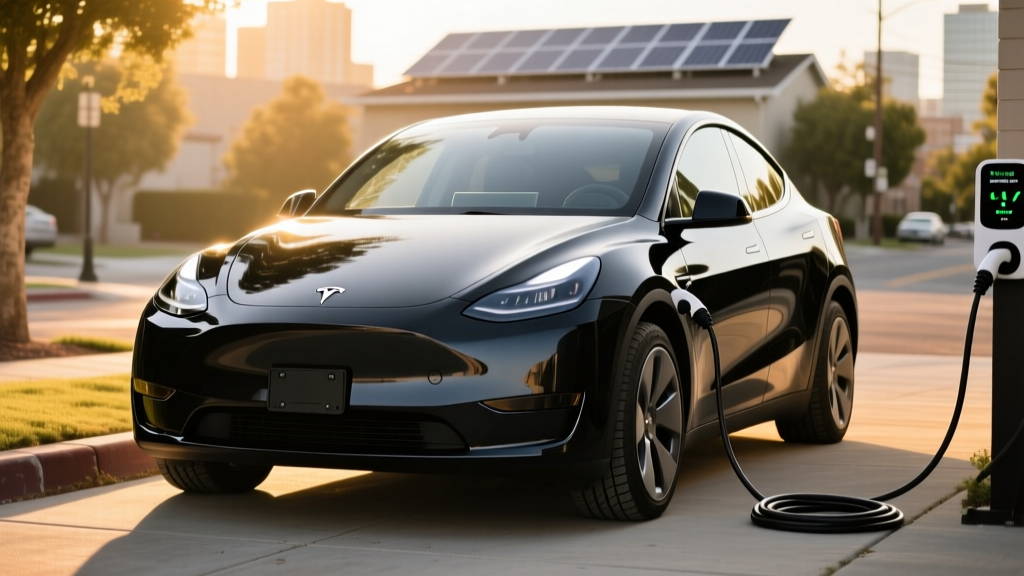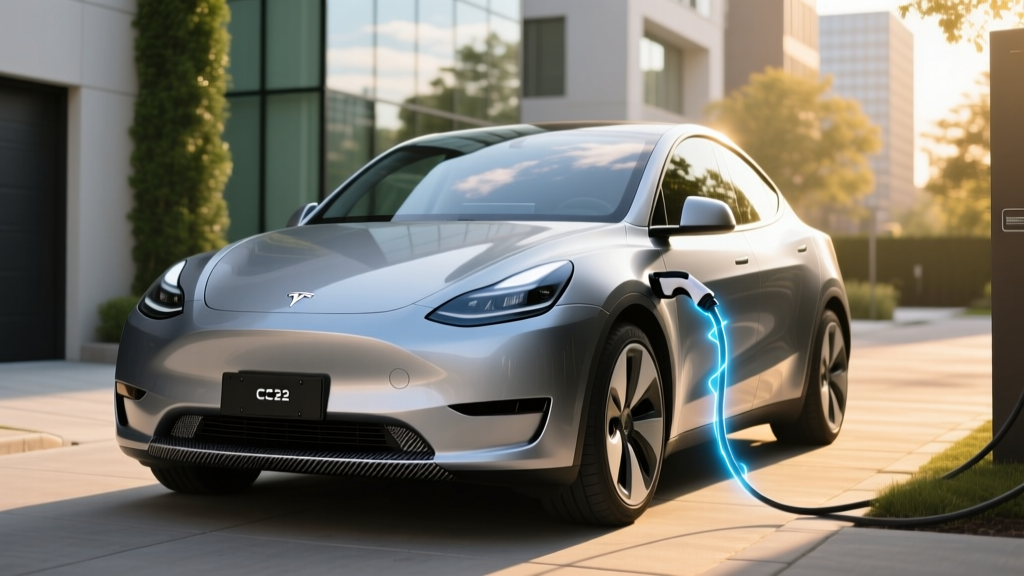
The phrase Tesla tabless refers to the 4680 battery cell architecture Tesla introduced to eliminate traditional electrode tabs, reducing internal resistance and improving thermal management. In 2026, this cell powers the Austin-built Model Y Long Range AWD — and its real-world behavior differs meaningfully from the Shanghai- and Fremont-built variants using conventional 2170 cells. This review examines what the tabless design means for range, charging speed, longevity, and total ownership cost.
Quick Verdict: Who the Tabless Model Y Is For
The 2026 Model Y Long Range AWD with 4680 tabless cells is best suited for buyers who prioritize DC fast-charge speed on road trips, structural-pack rigidity, and Tesla's Supercharger ecosystem. It is not the highest-range Model Y variant (the RWD with LFP 2170 cells edges it out on EPA paper), and it does not currently qualify for the full $7,500 federal credit due to critical-mineral sourcing rules. If your use case is daily commuting under 60 miles with home charging, the LFP Model Y RWD is a more economical pick. If you road-trip 8+ times a year and value 10–80% charging in roughly 18 minutes, the tabless pack earns its keep.
Range, Efficiency, and the Real-World Caveat
EPA Estimated Range: 320 miles (Model Y LR AWD, 4680 pack)
Real-World Expectation: 270–290 miles at 70 mph highway; 230–255 miles in sub-30°F winter conditions with cabin heat. City/regenerative driving can push 310+ miles in mild weather.
The 4680 tabless cell's lower internal resistance translates to marginally better efficiency under high-load scenarios (hard acceleration, sustained highway speeds, towing) compared to the 2170 pack. On the EPA cycle, the difference is modest — about 3–5 miles — but on a 300-mile road trip with HVAC load, that thermal efficiency compounds. The structural battery pack also lowers the center of gravity, contributing to the 122 MPGe combined rating (fueleconomy.gov).
Energy consumption averages 27 kWh/100 miles mixed driving. At the national average residential electricity rate of ~$0.17/kWh, that works out to roughly $0.046 per mile at home — compared to $0.13–$0.16/mile for a 28 MPG gas crossover at $3.60/gallon.
Battery Chemistry, Capacity, and the Tabless Architecture
The 2026 Model Y LR AWD 4680 pack uses NMC (nickel manganese cobalt) chemistry with a usable capacity of approximately 75 kWh (gross ~78 kWh). The tabless design — where the electrode current collector is laser-patterned across the edge rather than using discrete metal tabs — reduces electron travel distance, cutting internal resistance by roughly 5x versus a traditional tabbed cell, per Tesla's Battery Day disclosures.
This matters practically in two ways:
- Thermal management: Less resistive heating means the pack stays in its optimal temperature window longer during fast charging, sustaining peak kW for more of the charge curve.
- Structural integration: The 4680 cells are bonded into a structural pack that serves as a chassis member, reducing vehicle weight by ~10% versus a conventional module-based pack and increasing torsional rigidity.
| Attribute | 4680 Tabless (NMC) | 2170 Tabbed (NMC) | Prismatic (LFP) |
|---|---|---|---|
| Cell format | 46mm × 80mm cylindrical | 21mm × 70mm cylindrical | Flat prismatic |
| Internal resistance | Very low (tabless) | Moderate (tabbed) | Moderate |
| Energy density | High (~260 Wh/kg cell) | High (~250 Wh/kg cell) | Lower (~170 Wh/kg cell) |
| Cycle life (to 80% SoH) | ~1,500 cycles | ~1,500 cycles | ~3,000+ cycles |
| Fast-charge thermal behavior | Sustains peak kW longer | Tapers earlier | Accepts high rate, lower peak kW |
| Cold-weather resilience | Better (lower resistance) | Baseline | Greater capacity loss below 20°F |
Charging Speed: DC Fast, Level 2, and the Curve
| Level | Power / Rate | Time or Miles/Hr | Use Case |
|---|---|---|---|
| DC Fast (V4 Supercharger) | Peak 250 kW | 10–80% in ~18 min; 15–80% ~23 min | Road trips |
| DC Fast (3rd-party CCS/NACS) | Peak 250 kW (varies) | 10–80% in ~20–25 min | Non-Tesla networks |
| Level 2 (Tesla Wall Connector) | 11.5 kW / 48A | ~44 miles/hr; 0–100% in ~8 hrs | Home overnight |
| Level 2 (generic J1772/NACS) | 7.7–11.5 kW | ~30–44 miles/hr | Public L2, workplace |
| Level 1 (120V outlet) | ~1.4 kW | ~4–5 miles/hr | Emergency / trickle |
The tabless pack's advantage appears above 50% SoC. Where a tabbed 2170 pack typically tapers from 250 kW to ~120 kW by 60% SoC, the 4680 sustains closer to 170–200 kW through 65–70% before tapering. This means real-world 10–80% stops on V3/V4 Superchargers are roughly 2–4 minutes shorter — meaningful on a 1,500-mile road trip with four charge stops.
Preconditioning note: Navigate to a Supercharger via the car's built-in nav to trigger battery preconditioning. Arriving without preconditioning (e.g., using a third-party app to route) can add 5–8 minutes to your session in cold weather.
Performance, Drivetrain, and Efficiency
| Spec | 2026 Model Y LR AWD (4680) |
|---|---|
| 0–60 mph | 4.8 seconds |
| Horsepower | 384 hp (combined dual motor) |
| Drivetrain | Dual-motor AWD (permanent magnet rear, induction front) |
| EPA Range | 320 miles |
| MPGe (city / hwy / combined) | 129 / 116 / 122 |
| kWh / 100 mi | 27 |
| Battery (usable) | ~75 kWh, NMC 4680 tabless |
| Towing capacity | 3,500 lbs |
The front induction motor decouples under light load for efficiency; the rear permanent-magnet motor provides regen and primary propulsion. One-pedal driving is strong but not quite to a full stop — Tesla removed aggressive hold-mode creep in 2024, so expect to use the brake pedal at the final 1–2 mph.
Interior, Cargo, and Tech
The 2026 refresh ("Juniper") brought meaningful interior upgrades:
- Cargo: 30.2 cu ft behind rear seats; 72.1 cu ft with seats folded. Front trunk (frunk): 4.1 cu ft — large enough for a charging cable kit and small soft bag.
- Legroom: 41.8 in front / 38.2 in rear.
- Ventilated front seats (new for Juniper), ambient lighting, acoustic glass reducing cabin noise by ~2 dB vs pre-refresh.
- 15.4-inch center touchscreen with integrated Google Maps, Spotify, and Tesla's native navigation. Rear-seat 8-inch screen for climate and media.
- Autopilot (SAE Level 2) standard: adaptive cruise, lane centering, automatic emergency braking. Full Self-Driving (Supervised) remains a $8,000 add-on or $99/mo subscription — still Level 2, requiring active driver supervision (NHTSA automation levels).
ADAS Limitation Notice: Autopilot and FSD (Supervised) are SAE Level 2 systems. The driver must remain attentive, hands on or near the wheel, and ready to take over instantly. These are not self-driving systems. Tesla's cabin camera monitors engagement and will issue warnings and eventually disengage if attention lapses are detected.
Pricing, Trims, and Federal Tax Credit Eligibility
| Trim | Base MSRP | §30D Credit | Effective Price |
|---|---|---|---|
| Model Y LR AWD (4680, Austin) | $44,990 | $3,750 (partial)* | ~$41,240 |
| Model Y RWD (LFP, Shanghai) | $39,990 | $0 (foreign battery sourcing) | $39,990 |
| Model Y Performance AWD | $51,490 | $3,750 (partial)* | ~$47,740 |
*Partial credit reflects 2026 critical-mineral sourcing thresholds under IRS §30D. Full $7,500 requires both battery-component and critical-mineral requirements to be met; the Austin 4680 pack currently meets the battery-component test but only partially satisfies critical-mineral sourcing, yielding $3,750. Rules are subject to change — verify at irs.gov before purchase.
Additional eligibility requirements (2026):
- Buyer AGI must not exceed $150,000 (single) / $225,000 (head of household) / $300,000 (joint).
- Vehicle MSRP must not exceed $80,000 (SUVs/trucks — Model Y qualifies).
- Credit can be transferred to the dealer at point of sale as an immediate price reduction.
- Some states (CA, CO, MA, NY) offer additional rebates of $1,000–$5,000; check your state energy office.
Warranty, Longevity, and Battery Replacement Outlook
Tesla covers the 4680 battery pack and drive units for 8 years / 120,000 miles (whichever comes first), with a minimum 70% capacity retention guarantee. This is slightly more generous than the 8yr/100,000mi coverage on some competitors.
Based on Tesla's 2025 Impact Report data, the average Model Y pack shows approximately 8–10% degradation at 100,000 miles. The tabless design's thermal advantages may improve this trajectory, but long-term fleet data specific to 4680 packs is still maturing (first volume production was mid-2022).
Out-of-warranty pack replacement: current estimates run $12,000–$16,000 for a 4680 structural pack, down from $20,000+ in 2023 due to cell-cost reductions. However, full pack replacement remains rare; most degradation-related claims are resolved with module-level service under warranty.
Pros and Cons
Pros
- Sustained DC fast-charge curve — 2–4 min faster 10–80% vs tabbed packs
- Superior cold-weather efficiency due to lower internal resistance
- Structural pack improves handling rigidity and reduces weight
- Access to Tesla Supercharger network (17,000+ stalls in North America)
- Juniper interior refresh addresses prior noise and comfort complaints
- Over-the-air updates continue to add features post-purchase
Cons
- Only partial §30D credit ($3,750) due to critical-mineral sourcing
- No Apple CarPlay / Android Auto — Tesla-native screen only
- FSD ($8,000) remains Level 2 despite the "Full Self-Driving" name
- Turn-signal stalks removed in Juniper refresh — steering-wheel buttons instead
- Insurance premiums 15–25% above segment average (IIHS data)
- Panel gap consistency still variable vs German/Korean competitors
Decision Framework: Tabless 4680 vs Alternatives
Choose the Tesla tabless Model Y LR AWD if:
- You road-trip frequently and value Supercharger reliability + faster 10–80% taper
- You live in a cold climate where lower internal resistance preserves winter range
- You want OTA feature updates and the strongest resale value in the EV segment
Choose the Model Y RWD (LFP) instead if:
- Your commute is under 60 miles and you charge at home nightly
- You prioritize lower upfront cost ($39,990) and LFP's longer cycle life
- You're comfortable with 260-mile EPA range and slower DC charging (~170 kW peak)
Consider the Hyundai Ioniq 5 or Kia EV6 if:
- You want full $7,500 credit eligibility (US-assembled variants), 800V architecture for 10–80% in ~18 min, and CarPlay support
Frequently Asked Questions
What exactly does "tabless" mean in the Tesla 4680 cell?
Traditional battery cells use metal tabs welded to the electrode foil to conduct current out of the cell. The tabless design replaces these discrete tabs with a laser-scored shingle pattern along the entire edge of the electrode, giving electrons many shorter paths to travel. This reduces internal resistance, heat generation, and manufacturing complexity.
Is the 4680 tabless battery more reliable than the 2170?
Long-term data is still accumulating. Early production (2022–2023) 4680 packs had higher-than-expected scrap rates and some early-degradation reports. By 2025–2026, Tesla's Austin yield and quality control have improved substantially, and fleet data now shows degradation curves comparable to mature 2170 packs.
Can I get the 4680 tabless pack in the Model 3?
As of 2026, the 4680 structural pack is exclusive to the Austin-built Model Y. The refreshed Model 3 (Highland) uses 2170 and LFP prismatic cells depending on trim and build location.
Does the tabless Model Y qualify for any state incentives?
Federal §30D yields $3,750 for the Austin build. State incentives vary: California's CVRP offers up to $2,000 for income-qualified buyers; Colorado provides a $5,000 state tax credit; New York's Drive Clean rebate offers up to $2,000. Verify current amounts with your state's energy office — these change annually.
How does towing affect range with the 4680 pack?
Towing a 2,500–3,000 lb trailer (within the 3,500-lb max) typically reduces range by 35–50%, yielding roughly 160–200 real-world miles depending on speed, terrain, and temperature. The tabless pack's thermal management handles sustained towing load better than tabbed packs, but physics dominates — plan charge stops accordingly.
What's the real-world range in winter?
Expect 230–255 miles in sustained sub-30°F driving with cabin heat active, versus the 320-mile EPA sticker. Using seat heaters and a lower cabin temp (66°F vs 72°F) can recover 10–15 miles. Preconditioning while plugged in is the single most effective cold-weather efficiency tool.