If you've been searching for a Tesla super electric plane, you're not alone. The phrase has circulated in EV forums, YouTube thumbnails, and social media threads for years, fueled by Elon Musk's occasional comments about electric aviation. But as of 2026, Tesla does not manufacture, sell, or have an announced timeline for any electric aircraft. What Tesla does offer is a mature lineup of electric vehicles that deliver some of the best range, charging speed, and software integration on the market.
This guide separates the electric-plane myth from reality, explains where the rumor originated, and then gives you the hard specs, pricing, and real-world ownership data on the Tesla models you can actually buy today — so you can make an informed decision instead of waiting for a product that doesn't exist.
Where the 'Tesla Super Electric Plane' Idea Comes From
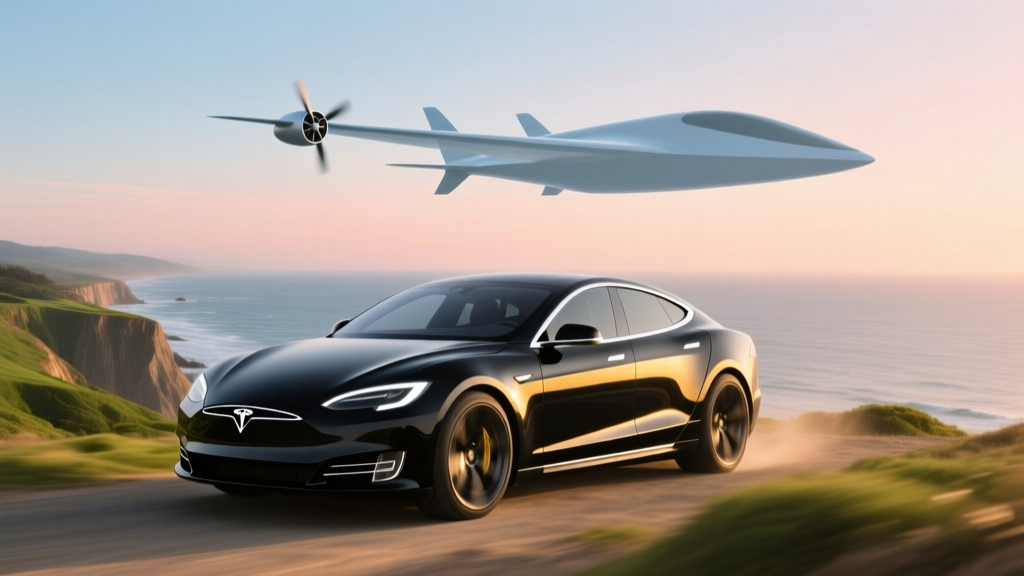
The concept of a Tesla electric plane traces back to a 2017 tweet from Elon Musk, who mentioned a "supersonic electric jet" idea as a future possibility. He revisited the topic in subsequent interviews, suggesting that battery energy density would need to roughly double before electric aviation at scale becomes viable. As of 2026, no Tesla aircraft program has been formally announced, no prototype has been publicly demonstrated, and the company's public filings and investor updates contain zero references to an aviation division.
What has happened is that Tesla's battery research, motor design, and power electronics have advanced considerably — and those same technologies power the vehicles in Tesla's current lineup. If you're interested in Tesla's engineering prowess, the place to experience it is on the ground, not in the sky.
The Tesla Vehicles You Can Actually Buy in 2026
Tesla's 2026 U.S. lineup consists of five consumer models. Here's a spec comparison to help you identify which one fits your needs:
| Spec | Model 3 | Model Y | Model S | Model X | Cybertruck |
|---|---|---|---|---|---|
| Body Style | Sedan | Crossover SUV | Luxury Sedan | Luxury SUV | Pickup Truck |
| EPA Range (mi) | 341 (LR AWD) | 320 (LR AWD) | 402 (LR) | 335 (LR) | 340 (AWD) |
| Battery (kWh usable) | ~75 (NMC) | ~75 (NMC) | ~95 (NMC) | ~95 (NMC) | ~123 (NMC) |
| Max DC Charge (kW) | 250 | 250 | 250 | 250 | 250 |
| 10–80% DC Time | ~25 min | ~25 min | ~30 min | ~30 min | ~35 min |
| Level 2 Rate (kW) | 11.5 | 11.5 | 11.5 | 11.5 | 11.5 |
| 0–60 mph (sec) | 4.2 (LR AWD) | 4.8 (LR AWD) | 3.1 (Plaid) | 2.5 (Plaid) | 3.9 (AWD) |
| Horsepower | ~346 | ~384 | ~670 (Plaid ~1,020) | ~670 (Plaid ~1,020) | ~600 (Cyberbeast ~845) |
| Drivetrain | AWD (dual-motor) | AWD (dual-motor) | AWD (dual/tri-motor) | AWD (dual/tri-motor) | AWD (tri-motor) |
| Cargo (cu ft) | 23 (trunk + frunk) | 76 (rear folded) | 28 (trunk + frunk) | 88 (rear folded) | 68 (bed + frunk) |
| Base MSRP | $42,990 | $44,990 | $79,990 | $84,990 | $79,990 |
| MPGe (combined) | 132 | 122 | 120 | 102 | 78 |
Sources: fueleconomy.gov, Tesla.com. Specs reflect 2026 model year where published. RWD trims available on Model 3 and Model Y at lower MSRPs and slightly different range figures.
Real-World Range: What the EPA Sticker Doesn't Tell You
The EPA range figure assumes a mix of city and highway driving at moderate temperatures. In practice, expect the following adjustments:
- Highway driving at 75+ mph: Subtract 10–15% from the EPA number. A Model 3 Long Range (EPA 341 mi) delivers roughly 290–310 miles on a sustained interstate trip.
- Cold weather (below 32°F): Subtract 20–30% due to battery resistance and cabin heating demands. That same Model 3 may deliver 240–270 miles in January in Minnesota.
- City / stop-and-go with regen: You may exceed the EPA figure, as regenerative braking recovers energy that ICE vehicles waste.
Tesla's heat pump (standard on all current models) mitigates cold-weather loss compared to older resistive-heater EVs, but physics still applies. Preconditioning the battery while plugged in — a feature accessible through the Tesla app — helps preserve range and enables faster DC charging in cold conditions.
Charging Speed: Supercharger Network and Home Charging
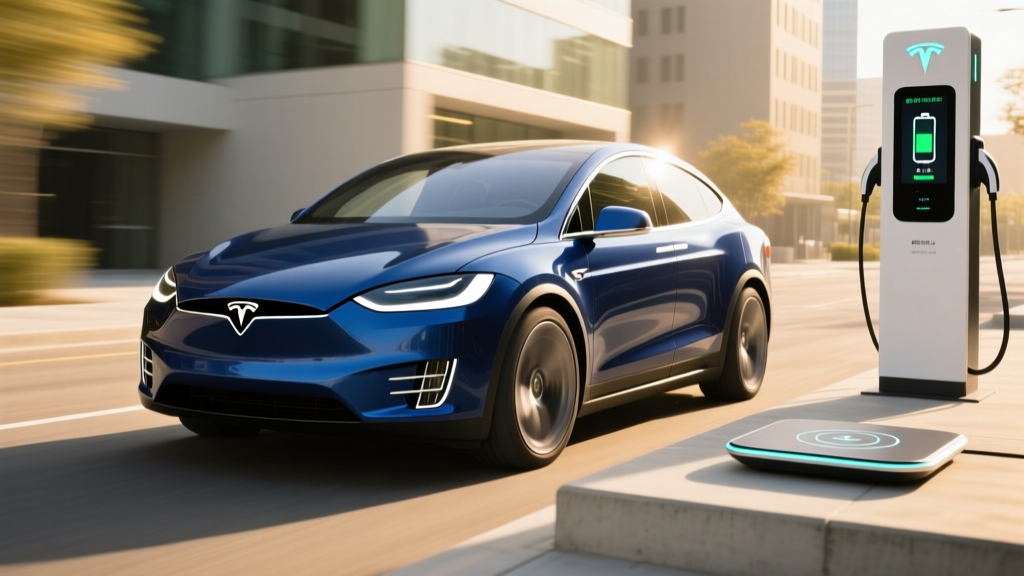
Charging speed is where Tesla retains a significant advantage over most competitors. The Tesla Supercharger network in North America now includes over 25,000 stalls, many capable of 250 kW (V3) and an increasing number at 350 kW (V4).
| Charging Level | Power (kW) | Miles Added per Hour | Typical Use Case |
|---|---|---|---|
| Level 1 (120V outlet) | ~1.4 kW | ~3–5 mi/hr | Emergency / overnight trickle |
| Level 2 (240V home) | 11.5 kW | ~37–44 mi/hr | Daily home charging |
| DC Fast (V3 Supercharger) | Up to 250 kW | ~1,000+ mi/hr (peak) | Road trips, 10–80% in ~25 min |
| DC Fast (V4 Supercharger) | Up to 350 kW | Varies by vehicle | Future-proofed; current Teslas cap at ~250 kW |
Charging curve reality: Peak 250 kW is only sustained between roughly 10–30% State of Charge (SoC). Above 50%, the rate tapers progressively. By 80%, you're typically seeing 50–80 kW. This is why Tesla (and all EV makers) quote 10–80% times rather than 0–100%. Charging from 80–100% can take nearly as long as 10–80%, so on road trips it's faster to charge to 80% and drive on.
Home charging setup: A Tesla Wall Connector installed on a 60-amp circuit delivers the full 11.5 kW (48 amps continuous). Expect a full overnight charge in 6–8 hours for most models. Installation cost ranges from $500–$1,500 depending on panel proximity and local electrician rates. Homes with older 100-amp electrical panels may need a $1,500–$3,000 panel upgrade — get a quote from a licensed electrician before committing.
As of 2025, Tesla opened its Supercharger network to non-Tesla EVs (via a built-in CCS adapter or Magic Dock at select stations), and Tesla vehicles sold in North America now ship with the NACS (North American Charging Standard) port natively, eliminating the need for a CCS-to-NACS adapter at third-party networks like Electrify America.
Pricing, Trims, and Federal Tax Credit Eligibility
| Model | Base MSRP | As-Tested Typical | §30D Credit Eligible? |
|---|---|---|---|
| Model 3 RWD | $38,990 | $40,500 | Yes (if sourcing & income rules met) |
| Model 3 Long Range AWD | $42,990 | $46,000 | Yes (if sourcing & income rules met) |
| Model Y RWD | $39,990 | $42,500 | Yes (if sourcing & income rules met) |
| Model Y Long Range AWD | $44,990 | $48,000 | Yes (if sourcing & income rules met) |
| Model S | $79,990 | $85,000+ | No (exceeds $55K sedan MSRP cap) |
| Model X | $84,990 | $92,000+ | No (exceeds $80K SUV/truck cap) |
| Cybertruck AWD | $79,990 | $90,000+ | Borderline — check current sourcing rules |
Federal tax credit rules (§30D) for 2026: The IRS offers up to $7,500 for qualifying new EVs, but eligibility depends on several factors that change frequently:
- MSRP caps: Sedans must be under $55,000; SUVs, vans, and trucks under $80,000.
- Buyer income caps: Modified AGI must not exceed $150K (single), $225K (head of household), or $300K (joint).
- Battery sourcing: A percentage of critical minerals and battery components must be sourced from the U.S. or free-trade-agreement countries. These thresholds tighten annually.
- Point-of-sale transfer: As of 2024, buyers can transfer the credit to the dealer at purchase, reducing the upfront price rather than waiting for a tax refund.
The Model 3 and Model Y have historically qualified for the full or partial credit, but battery-sourcing rules shift. Always verify current eligibility on IRS.gov or via the dealer's point-of-sale system before finalizing your purchase. This is not tax advice — consult a tax professional for your specific situation.
Tech, Driver Assistance, and What Tesla Does Best
Tesla's software remains a core differentiator. Every current model ships with:
- 15.4-inch center touchscreen (Model 3/Y) or 17-inch (Model S/X/Cybertruck) running Tesla's proprietary OS with over-the-air updates
- Tesla Autopilot (standard): Adaptive cruise control, lane centering, automatic emergency braking — this is a SAE Level 2 driver-assist system, meaning the driver must remain fully engaged and hands-on (or eyes-on, depending on trim)
- Full Self-Driving (Supervised) ($8,000 option or $99/month subscription as of 2026): Adds automatic lane changes, traffic-light recognition, and city-street navigation. Despite the name, this is still SAE Level 2 — the driver is responsible at all times. It is not Level 4 autonomous driving.
- Sentry Mode / Dashcam: Records from multiple cameras when parked, a theft-deterrent feature competitors still lack
- Phone-as-key: No fob needed; the car unlocks as you approach
Both are SAE Level 2 driver-assistance systems. The driver must monitor the road, keep hands near the wheel, and be prepared to take over instantly. Only Level 4 robotaxi services like Waymo operate without a human driver — and those are geofenced to specific cities. Do not treat FSD as a substitute for attentive driving.
Warranty and Long-Term Battery Confidence
Tesla's warranty structure is competitive with the broader EV market:
- Basic Vehicle Limited Warranty: 4 years / 50,000 miles (whichever comes first)
- Battery & Drive Unit Warranty:
- Model 3 / Model Y: 8 years / 120,000 miles (Long Range) or 100,000 miles (RWD), with a minimum 70% capacity retention guarantee
- Model S / Model X: 8 years / 150,000 miles, 70% retention
- Cybertruck: 8 years / 120,000 miles, 70% retention
Tesla uses NMC (nickel manganese cobalt) chemistry across its current lineup. NMC offers high energy density (more range per kilogram) compared to LFP (lithium iron phosphate), which Tesla uses in some international markets and previously in the U.S. Model 3 RWD. NMC batteries generally tolerate frequent 100% charging less well than LFP — Tesla recommends daily charging to 80% for NMC packs and 100% only for longer trips.
Real-world degradation data from fleet analyses (including Teslanorth.com owner surveys) suggests average capacity loss of approximately 10–12% after 150,000 miles for NMC packs. This is well within the warranty threshold and means a 341-mile Model 3 might deliver ~300 miles of range at 150K miles — still highly usable.
Who Should Buy a Tesla — And Who Shouldn't
- You want access to the largest, most reliable DC fast-charging network in North America
- You value over-the-air software updates and a tech-forward cabin
- You want strong performance (sub-5-second 0–60) without paying luxury-brand premiums (Model 3/Y)
- You take road trips and want predictable 250 kW charging with minimal adapter hassle
- You want a traditional dealership experience with in-person service (Tesla is direct-to-consumer only)
- You need a third-row SUV with minivan-level cargo space (Model X is cramped for its price)
- You prefer physical buttons and stalks (Tesla's minimalist interior, including touchscreen-only gear selection on the refreshed Model 3, frustrates some drivers)
- You want LFP battery chemistry for daily 100% charging convenience — consider the Hyundai Ioniq 5 or certain BYD models in international markets
- Class-leading Supercharger network with 250 kW stalls nationwide
- Excellent efficiency (MPGe) relative to vehicle size and performance
- OTA updates continuously add features years after purchase
- Strong resale value relative to most EV competitors
- Model 3 and Model Y qualify for federal tax credit (verify current sourcing rules)
- No physical controls — touchscreen-only for climate, mirrors, glovebox, and gear selection (Model 3 refresh)
- Service center wait times can stretch weeks in underserved areas
- FSD (Supervised) costs $8,000 and remains Level 2 — questionable value for many buyers
- Model S/X pricing eliminates them from the federal tax credit
- Panel upgrade may be required for optimal home charging
The Bottom Line on Tesla's 'Electric Plane' and What to Buy Instead
There is no Tesla super electric plane available, announced, or on a confirmed timeline. The concept remains speculative — a thought experiment Musk has floated but never committed corporate resources to publicly. Battery energy density for aviation needs to improve by roughly 2x before electric passenger aircraft become commercially viable, and that timeline stretches well into the 2030s at the earliest.
What Tesla offers right now is a proven, data-backed lineup of electric vehicles with real-world range between 240 and 400+ miles (depending on model and conditions), 250 kW fast charging, and the strongest charging infrastructure in the industry. If the "super" in your search meant exceptional performance, efficiency, and technology — the Model 3 Long Range at ~$43K before incentives, or the Model Y Long Range at ~$45K, are the practical answers.
Frequently Asked Questions
Does Tesla make an electric plane or aircraft?
No. As of 2026, Tesla has not announced, prototyped, or sold any electric aircraft. Elon Musk has discussed the concept of an electric jet in interviews, but no formal program exists. Tesla's products are limited to ground vehicles, energy storage, and solar.
What is the real-world range of a Tesla Model 3?
The EPA rates the 2026 Model 3 Long Range AWD at 341 miles. Expect roughly 290–310 miles on sustained highway driving, 240–270 miles in freezing weather, and potentially 340+ miles in mild city driving with regenerative braking.
How fast does a Tesla charge at a Supercharger?
Current Tesla models peak at 250 kW on V3 Superchargers, adding roughly 200 miles of range in 15 minutes. A 10–80% charge takes approximately 25–35 minutes depending on the model and battery temperature. Charging slows significantly above 80% due to the charge curve taper.
Does the Tesla Model Y qualify for the $7,500 federal tax credit?
The Model Y has historically qualified for the full or partial §30D credit, but eligibility depends on current-year battery-sourcing rules, your income, and the vehicle's MSRP falling under the $80,000 SUV cap. Always verify on IRS.gov or through the dealer's point-of-sale system before purchase.
Is Tesla's FSD actually self-driving?
No. Full Self-Driving (Supervised) is an SAE Level 2 driver-assistance system. The driver must remain fully attentive, monitor the road, and be prepared to take over at any time. It is not Level 4 autonomous driving. Only geofenced robotaxi services like Waymo currently operate at Level 4 without a human driver.
How long do Tesla batteries last?
Tesla warranties its NMC battery packs for 8 years / 100,000–150,000 miles (depending on model) with a minimum 70% capacity retention guarantee. Real-world fleet data suggests approximately 10–12% degradation at 150,000 miles. With proper care (daily charge to 80%, preconditioning in cold weather), Tesla batteries routinely outlast 200,000 miles with usable range.
What's the best Tesla to buy in 2026?
For most buyers, the Model 3 Long Range AWD ($42,990) or Model Y Long Range AWD ($44,990) offer the best combination of range, performance, tax-credit eligibility, and value. The Model S and X are excellent but priced out of the federal credit. The Cybertruck suits truck buyers willing to accept polarizing styling and a higher price point.