Why Are People Searching 'Tesla Suing' in 2026?
If you've typed "Tesla suing" into a search bar recently, you're not alone — and you're probably not finding a single, clean answer. The phrase maps to at least three distinct legal threads playing out in 2025–2026:
- Tesla being sued by owners and regulators over Full Self-Driving (Supervised) marketing, with the NHTSA and state DMVs scrutinizing whether "FSD" implies Level 4 autonomy when the system remains SAE Level 2.
- Tesla suing former employees and competitors — most notably its ongoing trade-secret actions against ex-engineers who joined Rivian, XPeng, and Chinese EV startups.
- Tesla suing media and analysts for defamation in specific cases, and counter-suing in Lemon Law and crash-liability disputes.
None of these lawsuits invalidate the hardware in the 2026 Model Y, which is still one of the most efficient, best-charging electric SUVs on the market. But they do matter if you're about to hand over $45,000+ expecting a self-driving car. Below, we separate the legal noise from the engineering reality, then deliver the spec-driven Model Y review you actually came for.
The FSD Lawsuit Context: What Tesla Is (and Isn't) Being Sued For
The highest-profile litigation centers on Full Self-Driving (Supervised). Despite the name, FSD is an SAE Level 2 driver-assistance system — meaning the driver must remain engaged, hands on or near the wheel, and eyes on the road at all times. It is not Level 4 robotaxi-style autonomy (that's Waymo and Zoox, in geofenced areas only).
SAE Level 2 vs. Level 4 — the legal crux: Level 2 (Tesla Autopilot, FSD Supervised, GM Super Cruise, Ford BlueCruise) provides steering and acceleration support, but the human is the driver of record. Level 4 (Waymo One) operates without a human driver in defined operational design domains. Marketing that blurs this line is what plaintiffs and regulators are challenging.
In California, the DMV's false-advertising action against Tesla (filed 2022, still winding through administrative and court proceedings into 2026) argues that the terms "Autopilot" and "Full Self-Driving" are inherently misleading. Tesla has defended the naming as clearly qualified by "(Supervised)" and owner's-manual disclosures. Meanwhile, several class-action suits filed in 2023–2025 allege FSD performance did not meet marketing promises — particularly around the $15,000 upfront purchase price that Tesla later reduced to $8,000 and eventually shifted toward a $99/month subscription model.
What this means for buyers: Treat FSD Supervised as a premium lane-keep + adaptive-cruise + navigation-assist system — excellent on divided highways, still requiring full attention on surface streets. Don't buy a Tesla expecting to nap behind the wheel.
2026 Tesla Model Y: Specs, Range, and Real-World Efficiency
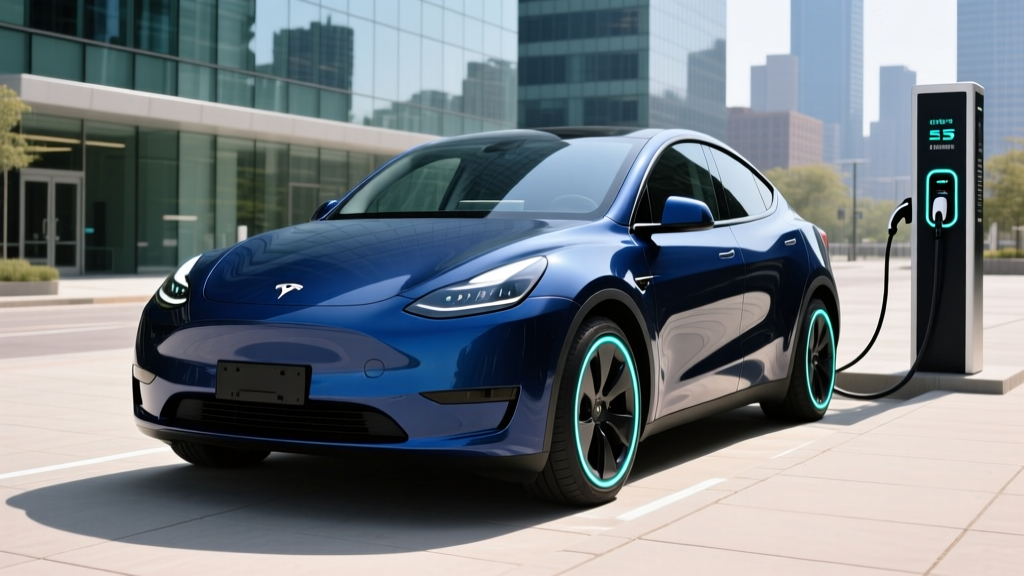
The 2026 Model Y continues on the refreshed "Juniper" platform introduced for the 2025 model year, with minor software and battery-management updates. Here are the numbers that matter:
| Spec | Long Range AWD | Performance AWD | Rear-Wheel Drive (RWD) |
|---|---|---|---|
| EPA Range | 320 mi | 293 mi | 303 mi |
| Battery (usable) | ~75 kWh (NMC) | ~75 kWh (NMC) | ~60 kWh (LFP) |
| Drivetrain | Dual-Motor AWD | Dual-Motor AWD | Single-Motor RWD |
| Horsepower | 384 hp | ~510 hp | 295 hp |
| 0–60 mph | 4.8 sec | 3.5 sec | 6.6 sec |
| MPGe (combined) | 122 MPGe | 111 MPGe | 128 MPGe |
| kWh/100 mi | 28 | 30 | 26 |
| Cargo (rear seats up) | 34 cu ft | ||
| Cargo (rear seats folded) | 72 cu ft | ||
| Rear Legroom | 40.5 in | ||
Real-World Range Reality Check: The EPA's 320-mile sticker on the Long Range AWD is achievable in mild weather with mixed city/highway driving and moderate HVAC use. Expect ~260–280 miles on sustained 75-mph highway runs (aerodynamic drag dominates above 65 mph). In freezing temperatures (below 32°F), plan for 20–30% range loss due to cabin heating and reduced battery chemistry efficiency — so roughly 220–250 miles usable. The LFP RWD variant is slightly more resilient in cold weather percentage-wise but starts from a smaller battery.
Charging Speed: DC Fast, Level 2, and the Supercharger Advantage
Charging remains Tesla's strongest ownership advantage in 2026, both because of the vehicle hardware and the Supercharger network (now open to non-Tesla EVs via NACS, but still most seamless for Tesla owners).
| Charging Level | Peak Power | Speed (miles added) | Notes |
|---|---|---|---|
| Level 1 (120V household) | ~1.4 kW | ~3–4 mi/hr | Emergency / trickle only |
| Level 2 (240V home, 48A Wall Connector) | 11.5 kW | ~44 mi/hr | Full overnight recharge in ~7–8 hr |
| DC Fast (V3 Supercharger) | 250 kW peak | 10–80% in ~22 min | Sustained ~150 kW avg 10–80% |
| DC Fast (V4 Supercharger) | Up to 250 kW (vehicle-limited) | Similar to V3 for Model Y | V4 benefits vehicles with >350 kW acceptance |
Charging-curve reality: The Model Y's 250 kW peak is just that — a peak, sustained only between roughly 5–25% state of charge. From 25–60%, expect ~150–170 kW. Above 80%, the curve tapers sharply to protect the NMC cells, dropping below 50 kW. This is why Tesla (and every other automaker) quotes 10–80% times rather than 0–100%. For road-trip planning, budget 20–25 minutes at each Supercharger stop, not the "15 minutes" marketing sometimes implies.
Preconditioning — warming the battery before a fast-charge session by navigating to a Supercharger in the nav — is automatic and critical. Skipping preconditioning in cold weather can double your 10–80% time.
Pricing, Tax Credits, and the True Cost of a 2026 Model Y
| Trim | Base MSRP | Federal §30D Credit | Effective Price (if eligible) |
|---|---|---|---|
| RWD (LFP) | $44,990 | $7,500 (point-of-sale) | ~$37,490 |
| Long Range AWD | $48,990 | $7,500 (point-of-sale) | ~$41,490 |
| Performance AWD | $53,990 | $7,500 (point-of-sale) | ~$46,490 |
Tax credit caveats — read carefully. The §30D credit is not automatic for every buyer. Per IRS rules, eligibility depends on:
- Buyer income caps: Modified AGI ≤ $150,000 (single), ≤ $225,000 (head of household), ≤ $300,000 (joint).
- MSRP cap: Vehicle base MSRP must be ≤ $80,000 for SUVs (Model Y qualifies — it's classified as an SUV).
- Battery sourcing: Critical minerals and battery components must meet phased-in domestic/free-trade-agreement sourcing thresholds. As of 2026, Tesla's US-built Model Y cells (sourced from Panasonic in Nevada and CATL LFP via approved supply chains) generally qualify, but specific build weeks can vary. Verify the VIN on fueleconomy.gov before signing.
- Point-of-sale transfer: Since Jan 1, 2024, buyers can transfer the credit to the dealer at purchase, reducing the out-of-pocket price directly — no waiting for tax refunds.
Interior, Tech, and Driver Assistance: What's Actually Good (and What Isn't)
The Juniper-refreshed Model Y interior is significantly quieter and more finished than pre-2025 versions — acoustic glass, ventilated front seats, ambient lighting, and a rear-seat touchscreen are now standard. The minimalist ethos remains: no physical instrument cluster, no stalks (turn signals are on the steering wheel), and virtually everything routes through the 15.4-inch center display.
Tech highlights:
- Tesla's infotainment remains best-in-class for responsiveness; Netflix/YouTube/YouTube streaming while parked, integrated Spotify, and an excellent phone-as-key experience.
- Over-the-air updates continue to add features — the 2026.8 software added improved adaptive regen and a revamped trip planner.
- Autopilot (standard) is competent lane-keep + traffic-aware cruise. FSD Supervised ($99/mo subscription) adds auto lane-change on nav, traffic-light/stop-sign recognition, and city-street steering assist — impressive but still Level 2, still hands-on.
FSD Supervised is NOT self-driving. It is SAE Level 2. You are liable for every driving decision. Expect occasional phantom braking, awkward construction-zone handling, and the need to take over on unmapped or poorly marked roads. Do not use it fatigued, impaired, or distracted.
Notable drawbacks: The buttonless turn signals take genuine adaptation (most owners adjust within 2–3 weeks, but rental-car-style drivers find them frustrating). Rear visibility is limited — rely on the camera. No Apple CarPlay or Android Auto, which remains a dealbreaker for some buyers. Insurance premiums on the Model Y are higher than segment average (IIHS data shows ~15–25% above comparable RAV4 Hybrid).
Pros, Cons, and Who Should Actually Buy a Model Y
Pros
- Best-in-class Supercharger network access (most reliable DC fast-charging in the US)
- Class-leading efficiency (26–30 kWh/100 mi)
- Spacious cargo area (72 cu ft folded) with flat load floor and front trunk (frunk)
- Over-the-air updates that meaningfully improve the car post-purchase
- Strong resale value relative to non-Tesla EVs
Cons
- FSD marketing continues to invite lawsuits and buyer confusion
- No Apple CarPlay / Android Auto
- Buttonless turn signals polarize drivers
- Higher insurance costs than comparable ICE and hybrid SUVs
- Ride quality on 20-inch Performance wheels is firm on rough pavement
Best for: Tech-comfortable commuters and small families who have access to home Level 2 charging and take occasional road trips on Supercharger corridors. The Long Range AWD is the sweet spot — 320 EPA miles, dual-motor traction, reasonable ride quality.
Look elsewhere if: You want true self-driving (no Level 2 system delivers this), you need CarPlay, you live in a charging desert without reliable public DC infrastructure, or you prioritize plush ride quality over efficiency.
Model Y vs. Key 2026 Competitors
The Model Y doesn't exist in a vacuum. Here's how it stacks up on the metrics buyers actually compare:
- vs. Hyundai Ioniq 5: Ioniq 5 charges faster (peak 350 kW, 10–80% in ~18 min on 800V architecture) but has slightly less range (305 mi Long Range AWD) and a smaller dealer charging network. Better ride, CarPlay standard.
- vs. Ford Mustang Mach-E: Mach-E Extended Range AWD trails on range (~290 mi EPA) and efficiency but offers a more traditional interior layout and BlueCruise hands-free highway driving (still Level 2, but eyes-off on approved roads).
- vs. Toyota RAV4 Hybrid (non-EV baseline): RAV4 Hybrid wins on upfront price (~$32k) and zero charging dependency, but loses on performance, operating cost per mile, and cargo flexibility. A PHEV RAV4 Prime is the closer comparison.
Warranty and Long-Term Battery Outlook
Tesla's warranty on the 2026 Model Y:
- Basic vehicle: 4 years / 50,000 miles
- Battery & drive unit (Long Range/Performance, NMC): 8 years / 120,000 miles, with ≥70% capacity retention guaranteed
- Battery & drive unit (RWD, LFP): 8 years / 100,000 miles, ≥70% retention
LFP chemistry in the RWD model trades energy density for longer cycle life and less degradation — real-world data from 2023–2025 Model 3 RWD owners shows ~5–7% loss over 60,000 miles, versus ~8–10% for NMC Long Range packs under similar use. Tesla does not publish official replacement costs, but out-of-warranty pack replacements historically run $12,000–$16,000 depending on configuration — a figure worth factoring into 10-year ownership math.
FAQ: Tesla Lawsuits and Model Y Ownership
Is Tesla suing anyone in 2026?
Tesla has active trade-secret lawsuits against former employees and some competitors, and periodically pursues defamation or Lemon Law counterclaims. The more buyer-relevant litigation is the reverse: owners and regulators suing Tesla over FSD marketing and crash liability.
Does the FSD lawsuit affect my Model Y warranty?
No. Current litigation does not void hardware or software warranties. If Tesla is required to modify FSD behavior or marketing as a result of settlements or rulings, changes would likely come via over-the-air update.
What is the real-world range of the 2026 Model Y Long Range?
EPA-rated 320 miles; expect 260–280 miles on highway trips, and 220–250 miles in freezing weather with cabin heat.
Does the 2026 Model Y qualify for the $7,500 federal tax credit?
Generally yes — all trims are under the $80,000 SUV MSRP cap, and Tesla's US production meets current battery-sourcing thresholds. But buyer income caps apply (§30D), and specific VIN eligibility should be verified on fueleconomy.gov before purchase.
How fast does the Model Y charge at home?
On a Tesla Wall Connector (240V, 48A), the Model Y charges at 11.5 kW, adding ~44 miles of range per hour — a full recharge overnight in about 7–8 hours.
Should I wait for a solid-state battery Model Y?
Not if you need a car in 2026. Solid-state packs are not in any Tesla production vehicle as of 2026, and commercial deployment at scale is estimated for 2028–2030 at the earliest.
Bottom Line: The Lawsuits Don't Change the Hardware
Searches for "Tesla suing" reflect real, ongoing legal battles — mostly around FSD marketing honesty and trade-secret enforcement. None of them alter the fact that the 2026 Model Y Long Range AWD is a 320-mile, 250 kW-charging, 72-cu-ft-cargo electric SUV that starts at an effective ~$41,490 after the federal credit for eligible buyers. It remains the efficiency and charging-network benchmark in its class. Buy it for the engineering, not the Autopilot branding — and verify your §30D eligibility before you sign.