The Real Cost of Owning a Tesla: Beyond the Sticker Price
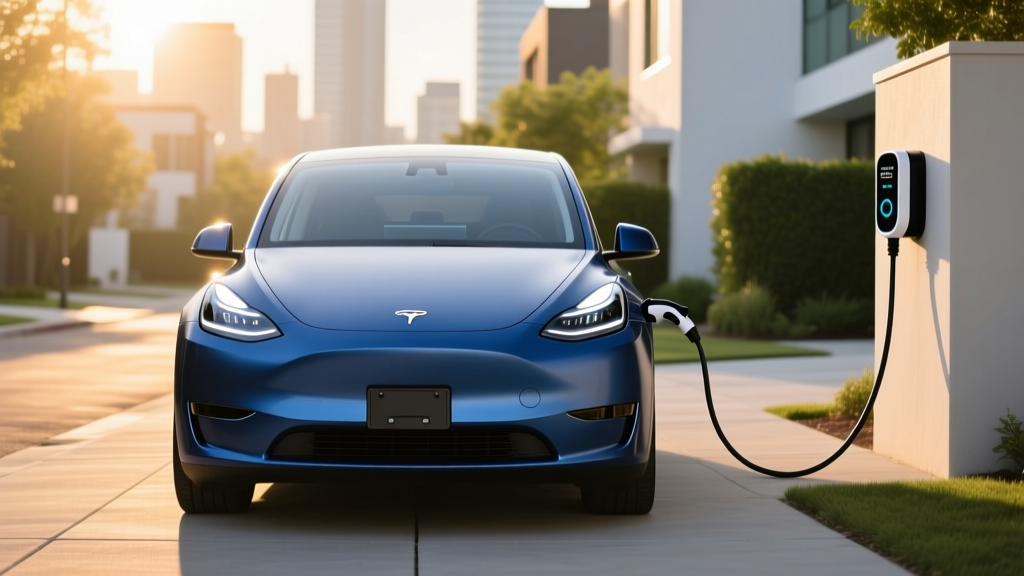
Buying a Tesla is only the beginning of the financial equation. Between Full Self-Driving subscriptions, Premium Connectivity, Supercharging session fees, and occasional idle charges, Tesla's ecosystem of recurring costs can add hundreds to your annual ownership bill. For buyers cross-shopping a Model Y or Model 3 against rivals like the Hyundai Ioniq 5 or Ford Mustang Mach-E, understanding these ongoing expenses is critical to calculating true total cost of ownership.
This guide dissects every Tesla subscription cost for 2026, then grounds those fees in the hard vehicle specs you need—EPA range, charging speed, battery chemistry, tax credit eligibility—to decide whether a Tesla still makes financial sense.
| Spec | Value |
|---|---|
| EPA Range | 320 miles |
| Battery Capacity | 78.1 kWh (usable), NMC chemistry |
| Peak DC Fast Charge | 250 kW (V3 Supercharger) |
| 10–80% DC Charge Time | ~27 minutes |
| Level 2 Home Charge Rate | 11.5 kW (~44 mi/hr) |
| 0–60 mph | 4.8 seconds |
| Horsepower | 384 hp (dual motor) |
| Drivetrain | AWD (dual motor) |
| MPGe (combined) | 111 MPGe |
| Efficiency | 28 kWh/100 mi |
| Cargo Volume | 30.2 cu ft (rear seats up), 72.1 cu ft (folded) |
| Base MSRP | $44,990 |
| Battery Warranty | 8 years / 120,000 miles |
Every Tesla Subscription Cost Itemized for 2026
Tesla layers several subscription and pay-per-use fees on top of vehicle ownership. Here is a comprehensive breakdown of what you will actually pay month to month and year to year.
Full Self-Driving (Supervised)
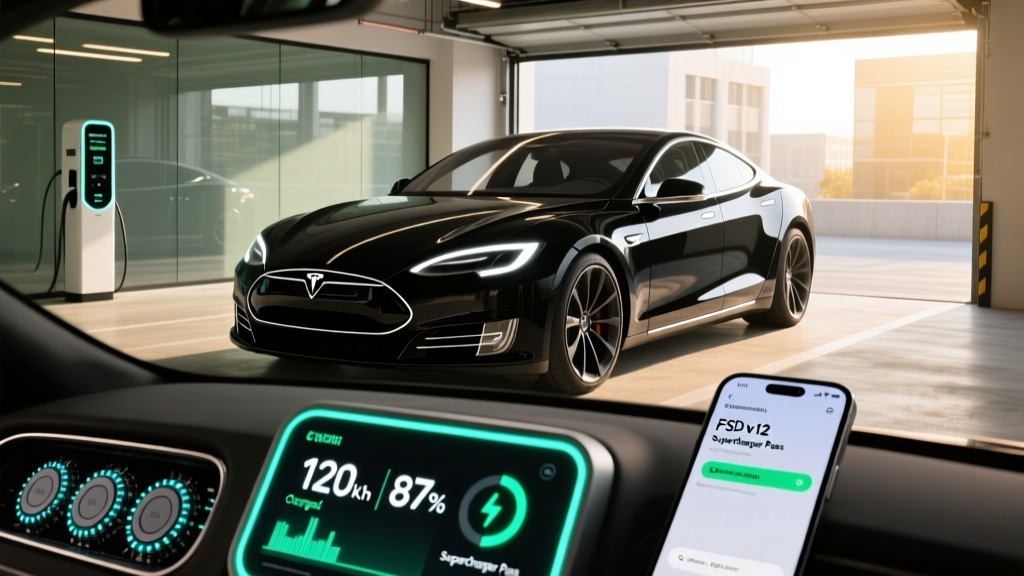
Tesla's FSD (Supervised) remains a SAE Level 2 driver-assistance system—meaning you must keep your hands on the wheel and eyes on the road at all times. It is not autonomous driving. That said, it offers automated lane changes, traffic-light recognition, and city-street navigation that many owners find valuable on long commutes.
- Monthly subscription: $99/month
- One-time purchase: $8,000
- Break-even point: ~81 months (6.75 years) of continuous subscription vs. outright purchase
If you plan to keep the vehicle more than four years and use FSD regularly, purchasing outright saves roughly $3,100 over the ownership period. If you are uncertain about the feature's value—or anticipate that Tesla may further refine capabilities—the monthly option provides flexibility without long-term commitment.
FSD (Supervised) is a Level 2 system. You are the driver at all times. You must monitor the road, keep hands on the wheel, and be prepared to take over instantly. Only robotaxi services like Waymo operate at Level 4 (no driver required). Never treat FSD as "self-driving."
Premium Connectivity
Tesla includes Standard Connectivity (basic maps and navigation) with every vehicle. Premium Connectivity adds satellite-view maps, live traffic visualization, in-car streaming (Spotify, YouTube, Netflix while parked), and a Wi-Fi hotspot.
- Monthly: $9.99/month
- Annual: $99/year (saves ~$20 vs. monthly)
Most owners who primarily use their phone for hotspot and music streaming can skip Premium Connectivity and rely on Standard Connectivity plus Bluetooth. The annual plan makes sense if you regularly use satellite maps for trip planning or want rear-seat entertainment for kids.
Supercharging Fees
Tesla ended free unlimited Supercharging for most new vehicle purchases several years ago. Unless you received a promotional referral credit or purchased a used Tesla with transferred free Supercharging, you will pay per session.
- Average Supercharger rate (2026): $0.25–$0.48 per kWh depending on location and time of day
- Typical full charge cost (10–80%): $12–$22
- Annual estimate (12,000 mi, 30% Supercharged): $280–$520
Owners who charge primarily at home on Level 2 will spend far less—roughly $0.04–$0.06 per mile depending on local electricity rates. Supercharging is a road-trip expense, not a daily one for most buyers.
Idle Fees
Tesla charges idle fees when your vehicle remains plugged into a Supercharger after reaching its charge limit. These escalate based on station occupancy:
- Standard idle fee: $0.50/minute (station below 50% full)
- High-occupancy idle fee: $1.00/minute (station at or above 50% full)
A 20-minute idle at a busy station can cost $20. Set your Tesla app to notify you when charging is complete and move the vehicle promptly.
Acceleration Boost (Model 3/Y)
This is an over-the-air performance upgrade, not a subscription, but it appears in Tesla's in-app store and can surprise buyers:
- One-time cost: ~$2,000
- Effect: Reduces 0–60 mph by roughly 0.5 seconds
Unless you regularly track the car or merge onto high-speed highways in heavy traffic, the stock 4.8-second 0–60 in the Long Range AWD is more than adequate for daily driving.
Range, Charging, and Efficiency: What the Numbers Mean in Practice
The 2026 Model Y Long Range AWD carries an EPA-estimated 320 miles of range from its 78.1 kWh (usable) NMC battery pack. But the EPA sticker is a laboratory estimate—real-world results depend heavily on driving conditions.
- EPA Estimate: 320 miles
- Highway driving (70–75 mph, 68°F): ~270–290 miles
- City/mixed driving (moderate speeds): ~300–320 miles
- Cold weather (20°F, cabin heat): ~220–260 miles (20–30% loss)
- Towing (if equipped): ~160–200 miles (40–50% loss)
Plan road trips around 250 miles of usable range in fair weather, 200 miles in winter. Preconditioning the battery before Supercharger stops recovers significant charging speed.
Charging Speed in Detail
The Model Y Long Range supports up to 250 kW on Tesla V3 Superchargers. However, peak rate is not sustained rate—the charge curve tapers significantly as the battery fills.
| Charging Level | Power (kW) | Speed | Notes |
|---|---|---|---|
| Level 1 (120V outlet) | ~1.4 kW | ~3–4 mi/hr | Emergency/trickle only; 80+ hr for full charge |
| Level 2 (240V, 48A) | 11.5 kW | ~44 mi/hr | Full charge overnight (~7–8 hours); recommended home setup |
| DC Fast (V3 Supercharger) | Up to 250 kW | 10–80% in ~27 min | Peak rate held to ~30% SoC; tapers to ~60 kW above 80% |
| DC Fast (V4 Supercharger) | Up to 250 kW* | 10–80% in ~25 min | *Model Y capped at 250 kW; newer architecture needed for higher |
The critical insight for road-trippers: the 10–80% charge takes about 27 minutes, but pushing from 80–100% adds another 25–30 minutes due to the taper. On long drives, charge to 80% and move on—it is faster to make two shorter stops than one long one.
2026 Pricing, Trims, and Federal Tax Credit Eligibility
The 2026 Model Y lineup has been streamlined. Here is the pricing landscape before incentives:
| Trim | MSRP | §30D Credit Eligible? | Est. After Credit |
|---|---|---|---|
| Long Range RWD | $42,990 | Yes (if income/sourcing met) | ~$35,490 |
| Long Range AWD | $44,990 | Yes (if income/sourcing met) | ~$37,490 |
| Performance AWD | $48,990 | Yes (if income/sourcing met) | ~$41,490 |
Under the IRS §30D Clean Vehicle Credit, eligible buyers can receive up to $7,500—structured as $3,750 for critical-mineral sourcing and $3,750 for battery-component manufacturing requirements. As of 2026, the following rules apply:
- MSRP cap: SUVs (including Model Y) must be under $80,000 — all Model Y trims qualify
- Buyer income cap: Modified AGI ≤ $300,000 (joint), $225,000 (head of household), $150,000 (single)
- Battery sourcing: Critical minerals and battery components must meet escalating domestic-content thresholds; Tesla's supply chain has adapted but confirm via the dealer at point of sale
- Point-of-sale transfer: You can transfer the credit to the dealer at purchase to reduce your out-of-pocket cost immediately, rather than waiting to claim it on your tax return
- Tax liability: The credit is non-refundable if claimed on your return; point-of-sale transfer bypasses this limitation
Important: Battery-sourcing rules tighten annually. Verify current-year eligibility on the official fueleconomy.gov tax credit lookup before purchasing, as a specific VIN may or may not qualify depending on its battery pack origin.
Who the Model Y Suits Best — and Who Should Look Elsewhere
The Model Y remains one of the most capable all-around electric crossovers on the market, but it is not universally the best choice.
- You want access to Tesla's Supercharger network (the most reliable and extensive DC fast-charging network in the US)
- You value over-the-air updates that meaningfully add features over time
- You need a practical family crossover with 30+ cu ft of cargo space and optional third-row seating
- You road-trip frequently and want the simplest long-distance EV charging experience
- You prioritize interior material quality and ride comfort (the Hyundai Ioniq 5 and BMW iX are noticeably more refined)
- You want physical buttons and a traditional instrument cluster (Tesla's all-touchscreen approach is polarizing)
- You need faster peak charging — the Ioniq 5 and Kia EV6 (800V architecture) charge 10–80% in ~18 minutes vs. the Model Y's ~27
- You want a longer battery warranty — Hyundai/Kia offer 10-year/100,000-mile battery warranties vs. Tesla's 8-year/120,000-mile
Pros, Cons, and the Bottom Line
- Best-in-class Supercharger network access
- Spacious cargo area (72.1 cu ft max) with flat load floor
- Strong efficiency (28 kWh/100 mi) keeps charging costs low
- Over-the-air updates continuously improve the vehicle
- Point-of-sale tax credit transfer reduces upfront cost
- Strong resale value relative to most EV competitors
- Subscription costs add $1,200–$1,300/year if using FSD + Premium Connectivity
- All-touchscreen interior lacks physical controls for climate, mirrors, and glovebox
- Ride quality is firm; road noise is noticeable at highway speeds
- DC fast charging (27 min 10–80%) trails 800V competitors by ~9 minutes
- FSD remains Level 2 despite the "Full Self-Driving" name — do not expect autonomy
- No Apple CarPlay or Android Auto integration
Annual Tesla Subscription Costs — The Full Picture
Here is what a typical Tesla owner might spend annually on subscriptions and usage-based fees, assuming moderate use:
| Item | Annual Cost | Optional? |
|---|---|---|
| FSD (Supervised) — monthly plan | $1,188 | Yes |
| Premium Connectivity (annual plan) | $99 | Yes |
| Supercharging (~30% of 12,000 mi) | $280–$520 | Usage-based |
| Idle fees (if incurred) | $0–$200+ | Avoidable |
| Total (with FSD) | $1,567–$2,007 | |
| Total (without FSD) | $379–$819 |
Without FSD, Tesla's recurring costs are quite manageable—roughly $30–$70/month including Supercharging. The FSD subscription is the single largest line item, and it is entirely optional. Most buyers should try the $99/month subscription for two to three months before committing to the $8,000 purchase, and should not expect the system to eliminate the need for active driving.
Frequently Asked Questions
What is the real-world range of the 2026 Tesla Model Y?
The EPA rates the Long Range AWD at 320 miles. In real-world highway driving at 70–75 mph in mild weather, expect 270–290 miles. In cold weather (below 30°F), range drops to roughly 220–260 miles due to cabin heating and battery chemistry limitations. Always plan road trips with a 20–25% buffer below the EPA number.
How fast does the Model Y charge at home and on the road?
On a Level 2 home charger (240V, 48A), the Model Y charges at 11.5 kW, adding roughly 44 miles of range per hour—a full overnight charge in about 7–8 hours. On a V3 Supercharger (250 kW peak), the 10–80% charge takes approximately 27 minutes. The charge rate tapers significantly above 80% SoC, so avoid charging past 80% on road trips unless necessary.
How much does the Model Y cost after the federal tax credit?
The 2026 Model Y Long Range AWD starts at $44,990. If you meet all IRS §30D requirements—income under $300,000 (joint filers), vehicle MSRP under $80,000, and battery-sourcing thresholds—the credit can reduce your effective cost to approximately $37,490 via point-of-sale transfer. Confirm your specific VIN's eligibility on fueleconomy.gov before purchasing.
Does the Tesla Model Y qualify for the $7,500 federal EV tax credit in 2026?
The Model Y is eligible for up to $7,500 under §30D, but eligibility depends on three factors: your income (must be below the cap), the vehicle's MSRP (under $80,000 for SUVs—Model Y qualifies), and the battery pack's critical-mineral and component sourcing meeting 2026 thresholds. Because sourcing requirements tighten each year, always verify the specific VIN on the IRS-approved list at the time of purchase.
Is the Model Y worth buying vs. the Hyundai Ioniq 5 or Ford Mustang Mach-E?
The Model Y wins on Supercharger network access, cargo space (72.1 cu ft), efficiency (111 MPGe combined), and over-the-air feature updates. The Ioniq 5 wins on charging speed (18-min 10–80% on 350 kW chargers), interior quality, and a 10-year battery warranty. The Mach-E offers a more traditional crossover feel and BlueCruise hands-free driving on approved highways. Your choice depends on whether network access (Tesla), charging speed (Hyundai/Kia), or driving feel (Ford) matters most.
Can I cancel the FSD subscription at any time?
Yes. The $99/month FSD subscription can be canceled through your Tesla account at any time. You will retain access through the end of your billing cycle. If you purchased FSD outright ($8,000), it is tied to the vehicle and transfers to the next owner if you sell—though it does not transfer to a new Tesla you purchase.
Do Tesla subscription costs increase over time?
Tesla has adjusted FSD pricing multiple times—both up and down. Premium Connectivity has remained stable at $9.99/month for several years. There is no contractual price lock, so future increases are possible. Supercharging rates fluctuate by location, time of day, and utility demand, and have trended slightly upward in many markets.
Sources: EPA fuel economy data via fueleconomy.gov; IRS Clean Vehicle Credit rules via irs.gov; Tesla specifications via tesla.com. Tax credit eligibility and vehicle specifications are subject to change—verify at time of purchase.