Quick Verdict: Tesla Subscribe in 2026
If you've searched "Tesla subscribe" lately, you're likely weighing two paths: signing up for a Tesla subscription (or lease-style access program) versus purchasing a Model 3 or Model Y outright and capturing the federal §30D tax credit. In 2026, Tesla's direct subscription offerings remain limited in the U.S. compared to third-party lease and subscription services, so the real question becomes whether monthly access to a Tesla beats the economics of buying one with incentives applied.
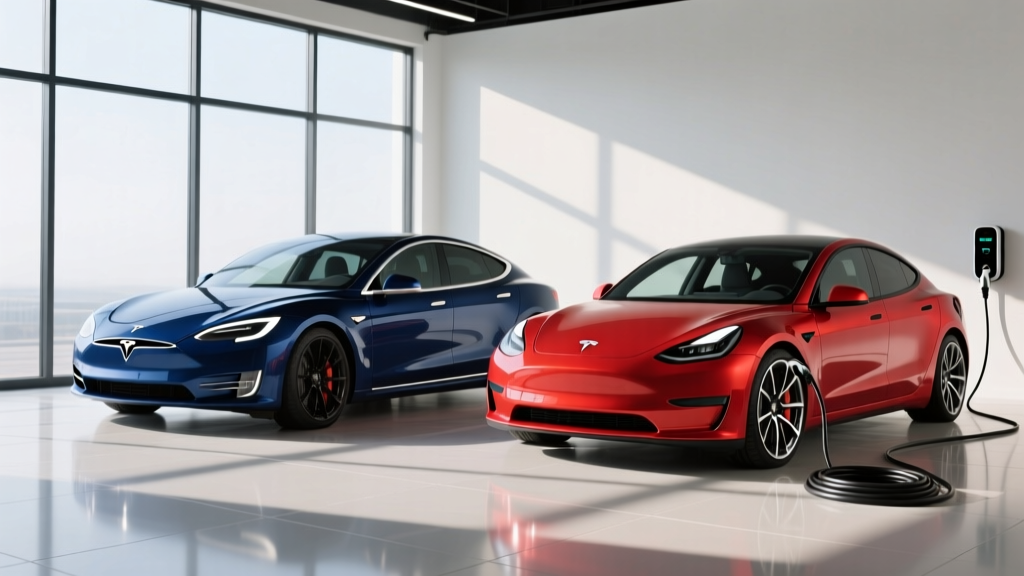
This review profiles the two most-accessible Tesla vehicles — the 2026 Model 3 Long Range AWD and the 2026 Model Y Long Range AWD — with full specs, real-world range data, charging performance, and a subscription-versus-purchase cost breakdown so you can decide which route makes financial sense.
2026 Tesla Model 3 Long Range AWD: Full Spec Profile
| Spec | 2026 Model 3 Long Range AWD |
|---|---|
| EPA Range | 363 miles |
| Battery Capacity | 79 kWh usable (NMC chemistry) |
| Drivetrain | Dual-motor AWD |
| Horsepower | 384 hp combined |
| 0–60 mph | 4.2 seconds |
| Max DC Fast Charge | 250 kW peak |
| 10–80% DC Charge Time | ~27 minutes |
| Level 2 Home Charge Rate | 11.5 kW (~44 mi/hr) |
| Efficiency | 132 MPGe combined / 25 kWh/100 mi |
| Cargo Volume | 23 cu ft (rear trunk) + 3 cu ft (frunk) |
| Rear Legroom | 35.3 inches |
| Battery Warranty | 8 years / 120,000 miles (70% retention) |
| Base MSRP | $47,740 (before destination) |
2026 Tesla Model Y Long Range AWD: Full Spec Profile
| Spec | 2026 Model Y Long Range AWD |
|---|---|
| EPA Range | 320 miles |
| Battery Capacity | 78 kWh usable (NMC chemistry) |
| Drivetrain | Dual-motor AWD |
| Horsepower | 384 hp combined |
| 0–60 mph | 4.8 seconds |
| Max DC Fast Charge | 250 kW peak |
| 10–80% DC Charge Time | ~28 minutes |
| Level 2 Home Charge Rate | 11.5 kW (~37 mi/hr) |
| Efficiency | 122 MPGe combined / 27 kWh/100 mi |
| Cargo Volume | 34 cu ft (rear seats up) + 4.1 cu ft (frunk) |
| Rear Legroom | 41.6 inches |
| Battery Warranty | 8 years / 120,000 miles (70% retention) |
| Base MSRP | $46,630 (before destination) |
Charging Speed: What Tesla Owners Actually Experience
Tesla's Supercharger network remains the gold standard for public DC fast charging, and both the Model 3 and Model Y peak at 250 kW on V3 Superchargers. However, peak rate is not sustained rate. Here's what the charge curve actually looks like:
- 10–30% SoC: Peak 250 kW — adds roughly 175 miles in 10 minutes
- 30–50% SoC: Tapers to ~180 kW — adds ~100 miles in 10 minutes
- 50–80% SoC: Further taper to ~100 kW — adds ~50 miles in 10 minutes
- Above 80%: Drops below 50 kW — charging slows dramatically to protect battery health
The 10–80% time of ~27 minutes (Model 3) assumes you arrive at the charger with a preconditioned battery — meaning the car has warmed the pack via navigation routing to a Supercharger. Without preconditioning, especially in cold weather, initial charge rates can be below 50 kW until the battery warms up.
At home on a Level 2 Wall Connector (48-amp circuit), both vehicles accept 11.5 kW, adding roughly 37–44 miles of range per hour. A full overnight charge from 20% to 80% takes about 4–5 hours. Installation of a Tesla Wall Connector typically runs $500–$1,500 depending on electrical panel proximity and whether a panel upgrade to 200 amps is needed.
Tesla Subscribe vs. Buy: The Cost Breakdown
As of 2026, Tesla does not offer a nationwide consumer subscription program directly. Instead, "Tesla subscribe" searches typically lead to one of three options:
- Tesla leasing — available in select states, typically 36-month terms with no purchase option at end of lease
- Third-party EV subscriptions — services like Autonomy, Sixt+, or Hertz My Car offering monthly Tesla access ($800–$1,400/month depending on term and mileage)
- Outright purchase with §30D tax credit — buying new and applying the federal credit at point of sale
| Cost Scenario | Model 3 LR AWD | Model Y LR AWD |
|---|---|---|
| Base MSRP (incl. destination) | $48,740 | $47,630 |
| Federal §30D Credit (if eligible) | −$7,500 | −$7,500 |
| Effective Price After Credit | $41,240 | $40,130 |
| Est. Monthly Payment (60 mo, 6% APR) | ~$797/mo | ~$776/mo |
| Third-Party Subscription (avg.) | $900–$1,300/mo | |
| Tesla Lease (36 mo, where available) | ~$550–$700/mo | ~$550–$700/mo |
Critical tax credit caveat: The §30D credit of up to $7,500 requires meeting IRS income caps ($150,000 single / $300,000 joint modified AGI), vehicle MSRP caps ($55,000 for sedans like Model 3; $80,000 for SUVs/trucks like Model Y), and battery critical-mineral and component sourcing rules that have tightened through 2026. Always verify current eligibility on IRS.gov before assuming you qualify. The credit can be transferred to the dealer at point of sale as an immediate price reduction.
Technology, Driver Assists, and Drawbacks
Both the Model 3 and Model Y come standard with Tesla's infotainment system — a 15.4-inch center touchscreen handling navigation, media, climate, and vehicle controls. There is no Apple CarPlay or Android Auto; Tesla's native interface is the only option, though Bluetooth audio streaming works seamlessly.
Driver assistance includes standard Autopilot (adaptive cruise + lane centering), which is an SAE Level 2 system requiring continuous driver supervision. Tesla's Full Self-Driving (Supervised) remains a $8,000 option or $99/month subscription — still Level 2 despite the name, and not a substitute for an attentive driver.
Pros
- Class-leading Supercharger network access (20,000+ stalls in North America)
- Excellent efficiency — among the lowest kWh/mile in their segments
- Over-the-air updates continuously add features
- Strong resale value relative to other EVs
- Spacious interiors with practical cargo capacity (especially Model Y)
- Regenerative braking enables one-pedal driving in most conditions
Cons
- No Apple CarPlay / Android Auto
- Minimalist interior lacks physical controls for climate and mirrors
- FSD (Supervised) costs extra and remains Level 2 — not autonomous
- Build quality inconsistencies still reported by some owners
- Insurance premiums run 15–30% higher than comparable gas vehicles
- Turn signal stalk removed on refreshed Model 3 — steering-wheel buttons take adjustment
Who Should Subscribe, Lease, or Buy a Tesla?
- You want to try EV ownership for 6–12 months before committing
- You relocate frequently or have uncertain long-term transportation needs
- You don't qualify for the §30D tax credit due to income limits
- You want to avoid depreciation risk on a rapidly evolving EV market
- You plan to keep the vehicle 4+ years
- You qualify for the full $7,500 federal credit and any state incentives
- You have home charging access and drive under 300 miles/day
- You want to build equity and avoid perpetual monthly payments
- Your annual mileage exceeds subscription/lease limits (typically 1,000–1,500 mi/mo caps)
Is a Tesla Worth It vs. Key Competitors?
The Model Y competes against the Hyundai Ioniq 5, Ford Mustang Mach-E, and Chevrolet Equinox EV. The Model 3 faces the Hyundai Ioniq 6 and BMW i4. Tesla's advantages remain the Supercharger network, software ecosystem, and efficiency. Competitors counter with more traditional interiors, CarPlay support, and in some cases faster peak charging speeds (the Ioniq 5 peaks at 350 kW on compatible chargers).
If charging-network reliability is your top priority, Tesla still leads. If you want a more conventional cabin experience with physical buttons and CarPlay, look at Hyundai or Ford. The pricing gap has narrowed significantly — after the §30D credit, a Model Y Long Range lands near $40,000, which is competitive with well-equipped rivals.
Frequently Asked Questions
What is the real-world range of the 2026 Tesla Model 3 and Model Y?
The Model 3 Long Range AWD delivers approximately 290–310 highway miles and 220–260 cold-weather miles versus its 363-mile EPA rating. The Model Y Long Range AWD yields roughly 260–280 highway miles and 200–230 cold-weather miles against its 320-mile EPA estimate. Preconditioning and moderate speeds help maximize range.
How fast does a Tesla charge at home and on the road?
On a Tesla Supercharger (V3), both vehicles peak at 250 kW and reach 10–80% in about 27–28 minutes with a preconditioned battery. At home on a Level 2 Wall Connector (11.5 kW), expect 37–44 miles of range added per hour, with a typical overnight session (20–80%) taking 4–5 hours.
Does the Tesla Model Y or Model 3 qualify for the federal EV tax credit?
Both can qualify for up to $7,500 under §30D if you meet income limits ($150K single / $300K joint MAGI), the vehicle MSRP is within caps ($55K sedan / $80K SUV), and the battery meets critical-mineral and component sourcing requirements. Rules tighten annually — verify on IRS.gov at time of purchase. The credit can be applied as a point-of-sale price reduction.
Is subscribing to a Tesla cheaper than buying?
Short-term (under 18 months), a subscription or lease can be cheaper upfront since you avoid the full purchase price and potential depreciation. Long-term (3+ years), buying with the §30D tax credit almost always costs less per month when you factor in equity at trade-in. Subscriptions also cap mileage and offer no ownership equity.
What are the biggest drawbacks of owning a Tesla in 2026?
The main complaints are the lack of Apple CarPlay/Android Auto, removal of physical controls (turn signal stalk, mirror buttons), higher insurance costs (15–30% above gas equivalents), and the ongoing debate over whether FSD justifies its $8,000 price. Build quality has improved but isolated panel-gap and paint issues still surface in owner forums.