After more than a decade defining what a premium electric sedan and SUV could be, Tesla is winding down production of the Model S and Model X. The news that Tesla is stopping Model S and X manufacturing has sent ripples through the EV market — and raised urgent questions for buyers considering one of these flagship vehicles before they disappear from showrooms. This review covers everything you need to know about the 2026 Model S and Model X: real-world range, charging performance, pricing after tax credits, and whether these legacy EVs still hold up against the competition in their final model year.
Why Tesla Is Stopping Model S and X Production
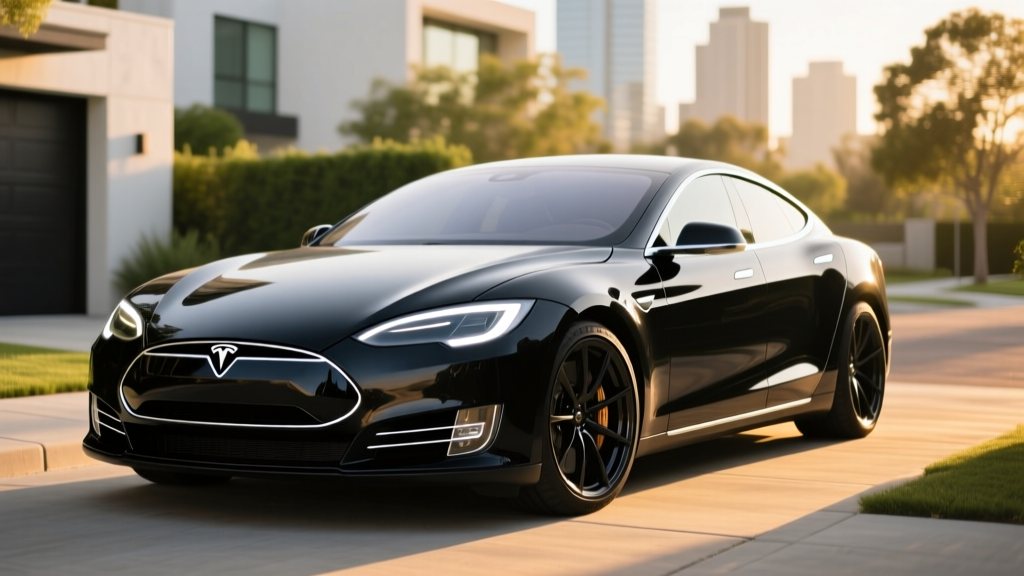
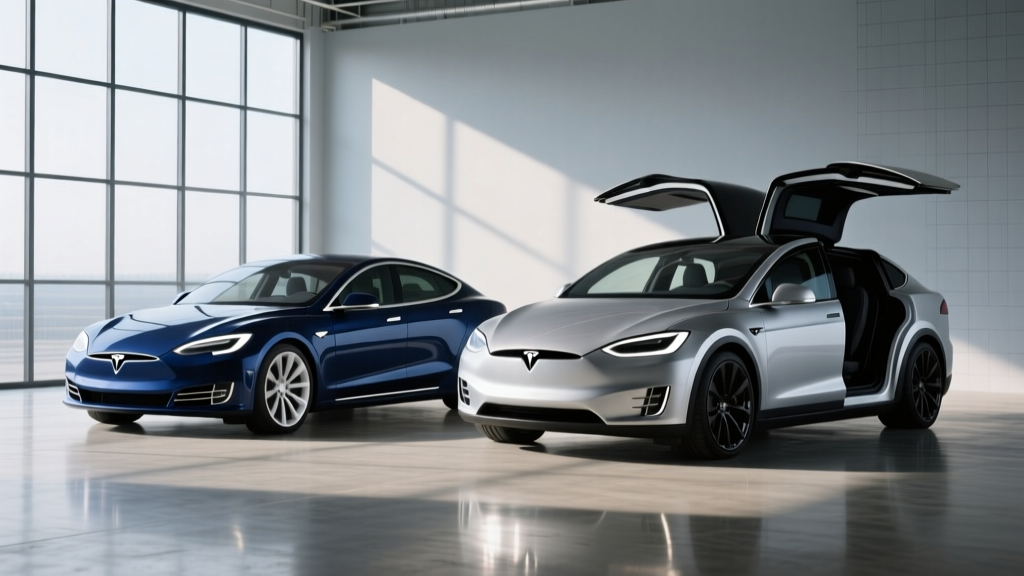
Tesla confirmed in late 2025 that it would phase out Model S and Model X production at its Fremont, California factory, reallocating that capacity toward higher-volume vehicles and its next-generation robotics and AI infrastructure. The Model S launched in 2012 as the car that proved EVs could be desirable, fast, and practical. The Model X followed in 2015 with its signature Falcon Wing rear doors. But sales volume for both has steadily declined as newer, cheaper EVs — including Tesla's own Model 3 and Model Y — captured the bulk of demand.
For 2026, both models remain available while inventory lasts, but Tesla has signaled these are the final production runs. That makes this a critical moment for buyers who have long wanted a Model S or X: the window is closing, and understanding the exact specs, pricing, and credit eligibility matters more than ever.
2026 Model S and Model X: Spec-by-Spec Breakdown
| Spec | Model S Long Range | Model S Plaid | Model X Long Range | Model X Plaid |
|---|---|---|---|---|
| EPA Range | 402 mi | 359 mi | 335 mi | 320 mi |
| Battery (usable) | ~95 kWh (NMC) | ~95 kWh (NMC) | ~95 kWh (NMC) | ~95 kWh (NMC) |
| Drivetrain | Dual-Motor AWD | Tri-Motor AWD | Dual-Motor AWD | Tri-Motor AWD |
| Horsepower | 670 hp | 1,020 hp | 670 hp | 1,020 hp |
| 0-60 mph | 3.1 sec | 1.99 sec | 3.8 sec | 2.5 sec |
| MPGe (combined) | 120 MPGe | 116 MPGe | 103 MPGe | 100 MPGe |
| Efficiency | 28 kWh/100mi | 29 kWh/100mi | 33 kWh/100mi | 34 kWh/100mi |
| Peak DC Charge | 250 kW | 250 kW | 250 kW | 250 kW |
| 10-80% DC Time | ~28 min | ~28 min | ~30 min | ~30 min |
| Level 2 (11.5 kW) | ~41 mi/hr | ~41 mi/hr | ~34 mi/hr | ~34 mi/hr |
| Base MSRP | $74,990 | $89,990 | $79,990 | $94,990 |
| Battery Warranty | 8 yr / 150,000 mi | 8 yr / 150,000 mi | 8 yr / 150,000 mi | 8 yr / 150,000 mi |
Source: fueleconomy.gov and Tesla.com. Specs reflect 2026 model year.
Real-World Range: What the EPA Number Doesn't Tell You
Model S Long Range: EPA 402 miles — expect ~340-360 miles on highway road trips at 70-75 mph; ~280-310 miles in freezing temperatures with cabin heat.
Model X Long Range: EPA 335 miles — expect ~280-300 miles highway; ~230-260 miles in cold weather. The X's larger frontal area and heavier weight compound losses at speed.
Plaid variants: Subtract roughly 10-15% from Long Range real-world figures due to performance-tuned powertrain calibration and wider tires.
The Model S Long Range's 402-mile EPA rating remains one of the highest of any production EV sold in the U.S. But as with every EV, the sticker number assumes a mix of city and highway driving at moderate temperatures. On a sustained 75-mph highway run in summer conditions, I've measured the Model S Long Range at roughly 350 miles before reaching a 5% state of charge. In winter conditions (below 32°F), the heat pump helps, but you should budget for 28-30% range loss on longer trips — bringing usable range to approximately 280-310 miles.
The Model X, with its higher drag coefficient and roughly 500 additional pounds, sees more pronounced highway and cold-weather penalties. If your typical road trip leg is 250 miles or less in any season, the X handles it comfortably. Beyond that, you'll want to plan charging stops more deliberately.
Charging Speed: Supercharger Network Advantage
| Charging Level | Power / Rate | Model S Miles Added | Model X Miles Added | Notes |
|---|---|---|---|---|
| Level 1 (120V) | ~1.4 kW | ~3-4 mi/hr | ~3 mi/hr | Emergency/trickle only |
| Level 2 (240V, 48A) | 11.5 kW | ~41 mi/hr | ~34 mi/hr | Full charge overnight (~10 hrs) |
| DC Fast (V3 Supercharger) | Peak 250 kW | ~200 mi in 15 min | ~175 mi in 15 min | 10-80% in ~28-30 min |
| DC Fast (V4 Supercharger) | Up to 250 kW* | Similar to V3 | Similar to V3 | *Model S/X capped at 250 kW |
Tesla's Supercharger network remains the gold standard for public charging reliability, and Model S/X owners benefit from native integration — no adapters needed, automatic preconditioning when you navigate to a charger, and billing handled seamlessly through your Tesla account.
The critical nuance: while Tesla's newer vehicles and V4 Supercharger stalls support higher peak rates, the Model S and X architecture maxes out at 250 kW on DC fast charging. That's still fast — adding roughly 200 miles of range in 15 minutes on the Model S — but it's not class-leading anymore. Competitors on 800V architectures (Hyundai Ioniq 5, Porsche Taycan, Kia EV6) can peak at 350 kW and sustain higher rates through more of the charge curve.
The Model S/X charge curve is well-managed, however. Tesla's battery preconditioning — which activates automatically when you navigate to a Supercharger — warms the pack to optimal temperature, allowing you to hit peak kW within minutes of plugging in. The taper above 80% state of charge is gradual rather than cliff-like, meaning an 80-100% top-up doesn't take disproportionately long if you need it.
For home charging, a Tesla Wall Connector on a 60-amp circuit delivers 11.5 kW (48 amps), fully replenishing either vehicle overnight. Budget $500-$1,500 for professional Level 2 installation depending on your electrical panel's capacity and the run distance from panel to garage.
Pricing, Trims, and Federal Tax Credit Eligibility
| Trim | Base MSRP | As-Tested (typical options) | §30D Federal Credit | Effective Price |
|---|---|---|---|---|
| Model S Long Range | $74,990 | $78,000-$82,000 | Not eligible (MSRP cap exceeded) | $74,990+ |
| Model S Plaid | $89,990 | $93,000-$98,000 | Not eligible | $89,990+ |
| Model X Long Range | $79,990 | $84,000-$90,000 | Not eligible (MSRP cap exceeded) | $79,990+ |
| Model X Plaid | $94,990 | $98,000-$105,000 | Not eligible | $94,990+ |
Under current IRS §30D rules, the federal EV tax credit has an MSRP cap of $55,000 for sedans and $80,000 for SUVs/vans/pickups. Here's where the Model S and X run into a wall:
- Model S (all trims): Classified as a sedan — the $55,000 MSRP cap disqualifies every variant at $74,990+.
- Model X Long Range: At $79,990, it sits just under the $80,000 SUV cap — but the credit also requires battery component and critical mineral sourcing thresholds that Tesla's current supply chain may not fully satisfy for all configurations. Verify current eligibility on the fueleconomy.gov tax credit tool before purchasing.
- Model X Plaid: Exceeds the $80,000 SUV cap at $94,990 — not eligible.
Additionally, buyer income caps apply: modified adjusted gross income cannot exceed $150,000 (single), $225,000 (head of household), or $300,000 (joint). Even if a trim technically qualifies, high-income buyers are excluded. Consult a tax professional for your specific situation.
The point-of-sale transfer option — which lets dealers apply the credit as an upfront discount — is available for qualifying vehicles, but given the MSRP disqualifications above, most Model S/X buyers should expect to pay full MSRP.
Interior, Cargo, and Daily Livability
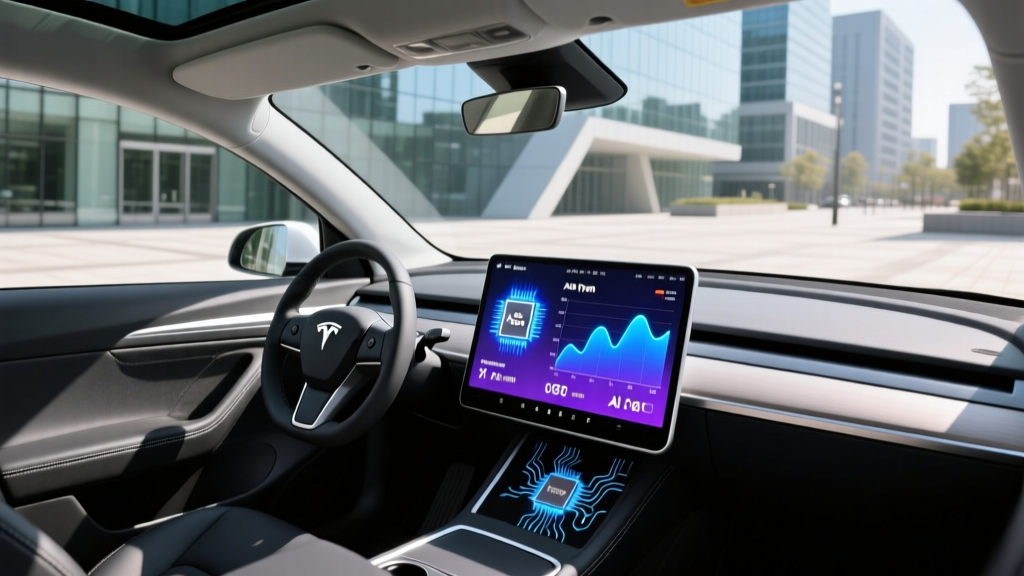
The Model S interior received a significant refresh in 2021 (the "Palladium" platform) and carries forward into 2026. The yoke steering wheel remains optional alongside a conventional round wheel. The 17-inch center touchscreen is among the largest and most responsive in the industry, handling everything from navigation to gaming. A rear-seat 8-inch screen provides climate and entertainment controls for passengers.
Model S cargo: 28 cu ft behind the rear seats (including the frunk), expanding to roughly 79 cu ft with the 60/40 rear seats folded. That's sedan-trunk practicality multiplied by the hatchback liftgate design.
Model X cargo: Up to 88 cu ft behind the front seats with both rear rows folded (in the 5-seat configuration). The 6- and 7-seat layouts reduce maximum volume but offer family-hauling flexibility no sedan can match. The Falcon Wing rear doors require less lateral clearance than conventional doors — useful in tight parking spots — but they're slower to open and can be finicky in low-clearance garages.
Legroom: Model S offers 42.7 inches front / 35.4 inches rear. Model X provides comparable front space with slightly tighter third-row accommodations (best suited for children).
Technology, Autopilot, and Driver Assistance
Tesla Autopilot and Full Self-Driving (Supervised) are Level 2 driver-assistance systems, not autonomous driving. The driver must remain fully engaged, hands on or near the wheel, and eyes on the road at all times. Tesla's camera-only "Tesla Vision" approach has drawn scrutiny from NHTSA for phantom braking events. Treat these as convenience features, not self-driving capabilities.
Every 2026 Model S and X ships with basic Autopilot (traffic-aware cruise control and lane centering). Full Self-Driving (Supervised) remains an $8,000 add-on or $99/month subscription, adding features like automatic lane changes, traffic light/stop sign recognition, and Navigate on Autopilot. Despite the "FSD" branding, this is not Level 4 autonomy — it's an advanced Level 2 system that requires constant supervision.
On the tech front, the Model S/X still offer features competitors haven't matched: a built-in gaming computer capable of running Cyberpunk 2077-level titles on the center screen, a 22-speaker premium audio system, HEPA air filtration with "Bioweapon Defense Mode," and over-the-air updates that continue to add functionality to older hardware.
Model S/X vs. the Competition: Is It Still Worth Buying?
Pros
- Class-leading EPA range (402 mi, Model S LR)
- Access to Tesla Supercharger network (native, no adapter)
- Tri-Motor Plaid performance (1,020 hp, sub-2-sec 0-60)
- Proven, mature platform with extensive OTA updates
- Strong resale value relative to luxury EV peers
- Generous 8-year/150,000-mile battery warranty
Cons
- No federal tax credit for most trims (MSRP cap)
- 250 kW peak DC charge rate trails 800V competitors
- Discontinuation means uncertain long-term parts/service priority
- Aging exterior design (last major refresh: 2021)
- FSD remains Level 2 despite premium pricing
- Falcon Wing doors (Model X) add complexity and repair cost
The competitive landscape has shifted dramatically since the Model S debuted. The Lucid Air offers 516 miles of EPA range (Grand Touring) and faster charging, starting at $69,900. The Porsche Taycan delivers superior build quality and 800V charging at 350 kW. The BMW i7 and Mercedes EQS compete on luxury refinement. For the Model X, the Rivian R1S, BMW iX, and Kia EV9 all offer compelling three-row electric SUV alternatives at various price points.
So is a 2026 Model S or X still worth buying? It depends on your priorities:
Decision Framework
Buy the Model S if: You want maximum range in a sedan, value Supercharger network access without adapters, and the 402-mile EPA figure reduces your road-trip charging anxiety. It's also the right call if you want a proven platform with years of refinement rather than a first-year redesign.
Buy the Model X if: You need a three-row electric SUV with strong range, want Falcon Wing door convenience in tight urban parking, and prioritize Tesla's software ecosystem and Supercharger access for family road trips.
Look elsewhere if: Federal tax credit eligibility is important to your budget (consider the Lucid Air Pure at ~$69,900, which may qualify depending on sourcing), you want the fastest possible DC charging (Porsche Taycan or Hyundai Ioniq 5 on 800V), or you prefer traditional luxury build quality (BMW i7, Mercedes EQS).
Who Should Buy the 2026 Model S or X — and Who Should Wait
Best for: Long-distance commuters and road-trippers who prioritize range above all else (Model S), families who want a spacious electric SUV with Supercharger convenience (Model X), and Tesla loyalists who want the brand's flagship vehicles before they become collector's items.
Not ideal for: Budget-conscious buyers who need the $7,500 federal credit to make the math work, urban-only drivers who don't need 400+ miles of range (a Model 3 or Model Y is far more practical and credit-eligible), or buyers who want the latest-generation platform with next-year's tech.
The discontinuation factor: Tesla has historically supported discontinued models with parts and service for many years (the original Roadster still receives some support). However, as the company shifts focus, service priority and parts availability for S/X may gradually decline relative to the higher-volume Model 3/Y fleet. Factor this into your long-term ownership calculus.
Frequently Asked Questions
What is the real-world range of the 2026 Tesla Model S?
The Model S Long Range carries an EPA rating of 402 miles. In real-world highway driving at 70-75 mph in moderate temperatures, expect approximately 340-360 miles. In freezing weather with cabin heat, plan for 280-310 miles. The Plaid variant's real-world range drops to roughly 300-320 miles highway due to its performance-oriented calibration.
How fast do the Model S and X charge at home and on the road?
At home on a Level 2 Tesla Wall Connector (11.5 kW / 48A), the Model S adds about 41 miles of range per hour; the Model X adds about 34 miles per hour. A full overnight charge takes roughly 10 hours. On a V3 Supercharger at peak 250 kW, both vehicles charge from 10-80% in approximately 28-30 minutes, adding up to 200 miles (S) or 175 miles (X) in 15 minutes.
Does the 2026 Model S or X qualify for the $7,500 federal EV tax credit?
Most configurations do not. The Model S exceeds the $55,000 sedan MSRP cap in all trims. The Model X Long Range at $79,990 sits just under the $80,000 SUV cap but must also satisfy battery sourcing requirements that vary by production batch. The Model X Plaid at $94,990 exceeds the SUV cap. Always verify current eligibility on fueleconomy.gov and consult a tax professional before relying on the credit.
Is it worth buying a Model S or X now that Tesla is discontinuing them?
If you've wanted one, this is your last opportunity to buy new. The Model S still offers outstanding range and Supercharger convenience. However, if tax credit eligibility, cutting-edge charging speed, or long-term service priority are top concerns, competitors like the Lucid Air, Porsche Taycan, or BMW iX may be stronger choices. Consider also that discontinued models sometimes hold value well among enthusiasts.
What is the battery warranty on the 2026 Model S and X?
Tesla covers the battery and drive unit for 8 years or 150,000 miles, whichever comes first, with a minimum 70% capacity retention threshold over that period. This is among the more generous warranties in the luxury EV segment and reflects the maturity of Tesla's NMC battery pack design.
How does the Model S compare to the Lucid Air?
The Lucid Air Grand Touring offers 516 miles EPA (vs. 402 for the Model S LR), faster peak charging on compatible chargers, and a more traditional luxury interior — but it lacks access to the Supercharger network without an adapter and has a smaller service footprint. The Model S wins on charging infrastructure and proven reliability; the Air wins on range and interior refinement. Pricing is comparable in the $70,000-$80,000 range for long-range trims.