Has Tesla Stock Ever Split? The Quick Answer
Yes — Tesla stock has split twice in its public history. The first was a 5-for-1 split in August 2020, and the second was a 3-for-1 split in August 2022. Combined, one pre-2020 share would be 15 shares today. But if you're researching Tesla's stock splits, you're likely also evaluating Tesla as a company — and possibly as your next EV purchase. This guide connects the financial dots to the product dots: what Tesla's market trajectory means for the vehicles you can actually buy in 2026, and whether a Model Y or Model 3 still delivers the best value in its class.
Tesla Stock Split Timeline
| Date | Split Ratio | Pre-Split Price (approx.) | Post-Split Price (approx.) |
|---|---|---|---|
| August 31, 2020 | 5-for-1 | $2,213 | $442 |
| August 25, 2022 | 3-for-1 | $900 | $300 |
Stock splits don't change market capitalization or company fundamentals — they simply divide existing shares into more units at a proportionally lower price, making individual shares more accessible to retail investors. Tesla's splits were designed to do exactly that: broaden ownership among the same retail audience that buys its cars.
Why Tesla Stock Splits Matter to EV Buyers
At first glance, stock splits and car shopping occupy different universes. But Tesla is unusual among automakers in how tightly its financial narrative and product strategy intertwine. Consider:
- Capital allocation: Tesla's stock price influences its ability to raise capital cheaply for Gigafactory expansion, which in turn affects production volume and vehicle pricing.
- Brand confidence: Buyers committing $40,000–$60,000 to a vehicle want assurance the company will be around to honor warranties and maintain Supercharger infrastructure for the next decade.
- Resale value: Tesla's brand strength, partly reflected in its stock performance, has historically supported stronger EV resale values compared to legacy-brand electric models.
- Price wars: Tesla's willingness to cut vehicle prices (as it did aggressively in 2023–2024) was partly enabled by strong margins and stock performance — a direct benefit to buyers but a headwind for shareholders.
Understanding Tesla as a financial entity helps you understand its pricing strategy, which is the single most volatile variable in EV shopping today.
2026 Tesla Model Y: The Volume Seller, Reviewed
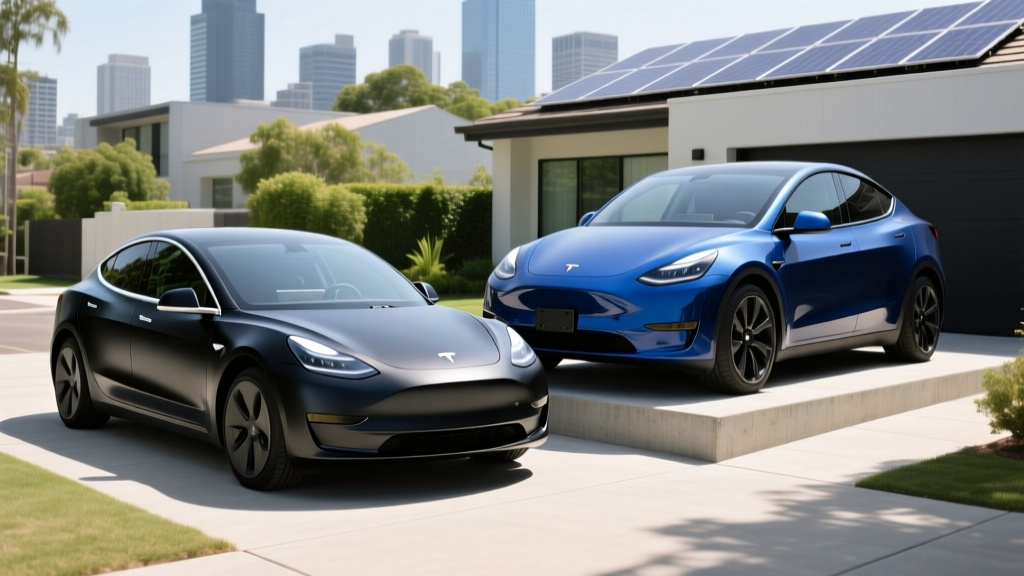
The refreshed Model Y (internally dubbed "Juniper") launched in early 2025 and carries into the 2026 model year with meaningful updates to range, interior quality, and ride comfort. It remains the best-selling EV globally and Tesla's most important product.
2026 Tesla Model Y Key Specifications
| Spec | Long Range AWD | Performance AWD |
|---|---|---|
| EPA Range | 327 miles | 298 miles |
| Battery (usable) | ~78 kWh (NMC) | ~78 kWh (NMC) |
| Drivetrain | Dual-motor AWD | Dual-motor AWD |
| Horsepower | 384 hp | 510 hp |
| 0–60 mph | 4.8 sec | 3.5 sec |
| Max DC Fast Charge | 250 kW | 250 kW |
| 10–80% DC Time | ~25 min | ~25 min |
| Level 2 Rate | 11.5 kW (~37 mi/hr) | 11.5 kW (~37 mi/hr) |
| MPGe (combined) | 122 MPGe | 111 MPGe |
| Efficiency | 28 kWh/100mi | 30 kWh/100mi |
| Cargo (rear seats up) | 30.2 cu ft | 30.2 cu ft |
| Cargo (rear seats down) | 72.1 cu ft | 72.1 cu ft |
| Rear Legroom | 41.6 in | 41.6 in |
| Base MSRP | $48,990 | $54,990 |
| Battery Warranty | 8 yr / 120,000 mi | 8 yr / 120,000 mi |
Real-World Range: What to Actually Expect
EPA sticker: 327 miles (Long Range AWD)
Real-world highway (70–75 mph, moderate temps): ~260–280 miles. The Model Y's efficiency is strong, but sustained highway speeds consume roughly 15–20% more energy than the EPA combined cycle suggests.
Cold weather (below 32°F): Expect 220–250 miles. Lithium-ion batteries lose efficiency in cold temperatures, and cabin heating is a significant energy draw. The Juniper refresh includes a standard heat pump, which mitigates this loss compared to older resistance-heater EVs, but a 20–30% range reduction in sub-freezing conditions is normal physics, not a defect.
City/regenerative driving: You can approach or slightly exceed the EPA number in stop-and-go traffic where regen braking recovers energy.
Charging: Supercharger Network Advantage
Tesla's Supercharger network remains the most reliable DC fast-charging ecosystem in North America. With the adoption of the NACS connector as the industry standard, non-Tesla EVs now access Superchargers via adapters — but Tesla owners still enjoy the most seamless plug-and-charge experience.
2026 Model Y Charging Speeds
| Level | Power | Miles Added per Hour | Use Case |
|---|---|---|---|
| Level 1 (120V) | ~1.4 kW | ~4–5 mi/hr | Overnight trickle, emergencies |
| Level 2 (240V, 48A) | 11.5 kW | ~37 mi/hr | Home daily charging, full overnight refill |
| DC Fast (V3 Supercharger) | Up to 250 kW | ~180 mi in 15 min | Road trips, rapid top-ups |
| DC Fast (V4 Supercharger) | Up to 250 kW* | Similar to V3 | Newer stations, better cable management |
*The Model Y Juniper architecture caps at 250 kW. V4 posts can deliver more to future architectures.
Charging curve reality: The 250 kW peak only holds between roughly 10–30% State of Charge (SoC). Above 50%, the rate tapers to ~100 kW, and above 80% it drops to ~40 kW. This is why the 10–80% metric (~25 minutes) is far more useful than peak kW numbers in marketing materials. Plan your road-trip stops around the 10–80% window for optimal time efficiency.
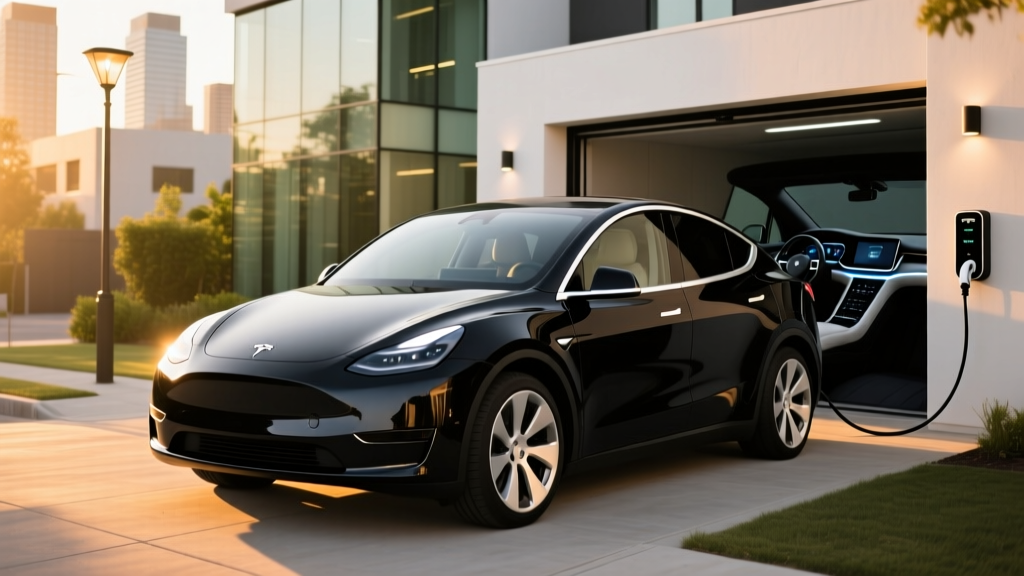
Home charging note: A Level 2 home install with a Tesla Wall Connector (or any J3400/NACS-compatible unit) on a 60A circuit delivers the full 11.5 kW (48A continuous). Expect a professional installation to cost $800–$2,000 depending on panel proximity and local permitting, unless your panel needs a 200A upgrade ($2,000–$4,000 additional).
Tax Credits, Pricing, and Total Cost
Tesla's pricing has fluctuated significantly since 2022. As of the 2026 model year, the Model Y Long Range AWD starts at $48,990 (including destination), and the Performance trim at $54,990.
2026 Model Y Pricing with Federal Tax Credit
| Trim | MSRP | §30D Credit | Effective Price | Income Cap |
|---|---|---|---|---|
| Long Range AWD | $48,990 | Up to $7,500 | ~$41,490 | $150K single / $300K joint |
| Performance AWD | $54,990 | Up to $7,500 | ~$47,490 | $150K single / $300K joint |
Source: IRS §30D Clean Vehicle Credit. Eligibility requires meeting critical-mineral and battery-component sourcing thresholds, which shift annually. Both trims fall under the $80,000 SUV MSRP cap. The point-of-sale transfer option allows the credit to reduce your purchase price directly at the dealer rather than waiting for tax filing. Verify current eligibility at fueleconomy.gov before purchasing, as battery-sourcing rules can change model eligibility mid-year.
5-year ownership economics: According to EPA efficiency data, the Model Y Long Range at 28 kWh/100mi costs roughly $4.20 per 100 miles to fuel at the national average electricity rate of ~$0.15/kWh. A comparable gas SUV at 25 MPG and $3.40/gallon costs $13.60 per 100 miles. Over 60,000 miles, that's a fuel savings of approximately $5,640 — before factoring in reduced maintenance (no oil changes, minimal brake wear from regen, no transmission fluid).
Standout Tech and Notable Drawbacks
What the Juniper refresh does well:
- Ride quality: Retuned suspension and acoustic glass dramatically reduce road noise compared to pre-2025 Model Y. This was the single biggest complaint from owners, and Tesla addressed it.
- Interior materials: Ventilated front seats, ambient lighting, and improved soft-touch surfaces close the gap with premium competitors like the BMW iX and Genesis Electrified GV70.
- Infotainment: The 15.4-inch touchscreen remains fast and responsive. The rear-seat 8-inch screen (added in the refresh) handles climate and entertainment for passengers.
- Autopilot/FSD (Supervised): Tesla's vision-only driver-assist system continues to improve. FSD Supervised handles complex urban scenarios impressively — but this remains a SAE Level 2 system requiring full driver attention. It is not self-driving.
Where it falls short:
- No physical stalks: Turn signals are now steering-wheel buttons (following the Cybertruck). Many drivers find this unintuitive, especially in roundabouts.
- Minimalist to a fault: No instrument cluster, no physical climate controls. Everything routes through the center screen.
- Insurance costs: Tesla insurance premiums remain 20–40% higher than segment averages due to repair costs and parts pricing. Get a quote before committing.
- Towing: Rated at 3,500 lbs — adequate for a small trailer but far below the Ford F-150 Lightning or Rivian R1S.
Important: Autopilot and FSD Are NOT Self-Driving
Tesla's Autopilot and Full Self-Driving (Supervised) are SAE Level 2 driver-assistance systems. They can steer, accelerate, and brake within their operational design, but the driver must remain fully engaged, monitor the road, and be prepared to take over instantly. No consumer Tesla vehicle is autonomous. Only Level 4 services like Waymo operate without a human driver — and those are limited to specific geofenced areas. Treat FSD as an advanced cruise control, not a chauffeur.
How the Model Y Stacks Up Against Competitors
The midsize electric SUV segment is crowded in 2026. Here's how the Model Y Long Range compares to its three most cross-shopped rivals:
| Spec | Tesla Model Y LR | Hyundai Ioniq 5 Limited | Ford Mustang Mach-E ER AWD | BMW iX xDrive50 |
|---|---|---|---|---|
| EPA Range | 327 mi | 305 mi | 312 mi | 324 mi |
| Battery | ~78 kWh NMC | 84 kWh NMC | 91 kWh NMC | 111.5 kWh NMC |
| Max DC Charge | 250 kW | 240 kW | 150 kW | 200 kW |
| 10–80% Time | ~25 min | ~18 min | ~38 min | ~31 min |
| 0–60 mph | 4.8 sec | 5.1 sec | 4.8 sec | 4.4 sec |
| Base MSRP | $48,990 | $54,200 | $51,995 | $87,250 |
| Supercharger Access | Native | Adapter needed | Adapter needed | Adapter needed |
Key takeaway: The Ioniq 5 charges faster (18 vs. 25 minutes, 10–80%), thanks to its 800V architecture. The Mach-E charges noticeably slower. The BMW iX is a luxury step up but costs nearly double. The Model Y's advantage remains the Supercharger network and overall efficiency (fewer kWh consumed per mile).
Pros
- Best-in-class Supercharger network access (native NACS)
- Excellent energy efficiency (28 kWh/100mi)
- Strong real-world range (260–280 mi highway)
- Improved ride quality and cabin quietness (Juniper)
- Over-the-air updates continue adding features post-purchase
- Strong resale value relative to EV segment
Cons
- No physical turn-signal stalks or instrument cluster
- Insurance premiums 20–40% above segment average
- FSD costs $8,000 extra and remains Level 2 (not autonomous)
- Charging speed (250 kW peak) trails Ioniq 5's 800V system
- Limited towing (3,500 lbs)
- Service center availability varies by region
Who Should Buy the 2026 Model Y?
The Model Y Long Range AWD is the default answer for most EV shoppers who need a practical family vehicle. It's the right pick if:
- You road-trip regularly: The Supercharger network removes the planning anxiety that still plagues CCS-only EVs on long routes.
- You can charge at home: 37 miles of range per hour on Level 2 means most owners wake up to a full battery every morning, making the 327-mile EPA range a comfortable weekly buffer.
- You value efficiency over flash: The Model Y uses fewer kWh per mile than almost any competitor, reducing both charging costs and grid strain.
- You want strong resale: Tesla's brand and Supercharger ecosystem support better long-term value retention than most EV competitors.
Look elsewhere if: You need 3-row seating (Kia EV9), maximum DC charging speed (Ioniq 5), or a luxury interior badge (BMW iX, Mercedes EQE SUV).
Has Tesla stock ever split, and will it split again?
Tesla has completed two stock splits: 5-for-1 in August 2020 and 3-for-1 in August 2022. Future splits are possible if the share price rises to levels where retail accessibility becomes a priority again, but Tesla has not announced any plans as of early 2026.
Does the 2026 Model Y qualify for the $7,500 federal tax credit?
The Model Y qualifies for up to $7,500 under IRS §30D, provided the buyer meets income caps ($150,000 single / $300,000 joint modified AGI) and the vehicle meets critical-mineral and battery-component sourcing requirements. These sourcing thresholds tighten annually. The point-of-sale transfer option lets you apply the credit directly at purchase. Always verify current eligibility on fueleconomy.gov before purchasing.
What is the real-world highway range of the Model Y Long Range?
Expect 260–280 miles at highway speeds (70–75 mph) in moderate temperatures. In cold weather (below 32°F), plan for 220–250 miles. City driving with regenerative braking can approach or slightly exceed the 327-mile EPA estimate.
How does Tesla's charging speed compare to competitors?
The Model Y peaks at 250 kW and charges 10–80% in about 25 minutes. The Hyundai Ioniq 5 (800V architecture) is faster at ~18 minutes. However, Tesla's Supercharger network delivers more consistent real-world charging reliability than third-party networks, which still suffer from downtime and connector issues at many stations.
Is FSD worth the $8,000 upgrade?
For most buyers, no. FSD Supervised is an impressive SAE Level 2 system, but it still requires constant driver supervision. Basic Autopilot (included) handles highway lane-keeping and adaptive cruise competently. Unless you commute in heavy stop-and-go traffic daily and value the reduced mental load, the $8,000 is better spent on home charging installation or simply saved.
What's the battery warranty on the 2026 Model Y?
Tesla covers the battery and drive unit for 8 years or 120,000 miles (whichever comes first), with a guaranteed minimum 70% capacity retention over that period. Real-world data from high-mileage Tesla owners suggests NMC batteries in the Model Y typically retain 85–90% capacity at 100,000 miles with normal charging habits (avoiding frequent 100% charges and deep discharges).