Search forums and social media long enough and you'll encounter a recurring question: is Tesla not making cars anymore? The rumor tends to resurface every time Tesla pivots headlines toward Optimus robots, energy storage, or robotaxi announcements. The short answer is no — Tesla is very much still manufacturing and selling passenger vehicles in 2026. What has changed is the composition of the lineup, the cadence of refreshes, and the competitive landscape around it.
Below, we break down every vehicle Tesla currently produces for the U.S. market, with hard numbers on range, charging speed, pricing, and federal tax-credit eligibility. If you've been sitting on a purchase decision because of the noise, this is the spec-driven reality check you need.
Why the "Tesla Stopped Making Cars" Rumor Won't Die
Tesla's corporate narrative has broadened well beyond automobiles. The company's energy division (Megapack, Powerwall) now generates significant revenue, CEO Elon Musk spends considerable time on xAI and SpaceX, and Tesla has repeatedly delayed next-generation vehicle programs in favor of robotaxi development timelines. Headlines about "Robotaxi Day" events and Optimus humanoid demos create an impression that the car business is secondary.
But the manufacturing data tells a different story. Tesla's Fremont factory, Gigafactory Texas, Gigafactory Shanghai, and Gigafactory Berlin continue to produce hundreds of thousands of vehicles per quarter. The Model Y remained one of the best-selling vehicles globally through 2025, and the refreshed Model 3 Highland continues to sell steadily in 2026. What Tesla has not done is expand its passenger vehicle lineup with new nameplates — the core four (Model 3, Model Y, Model S, Model X) remain the offerings, which can create the illusion of stagnation.
The 2026 Tesla Lineup: What's Actually for Sale
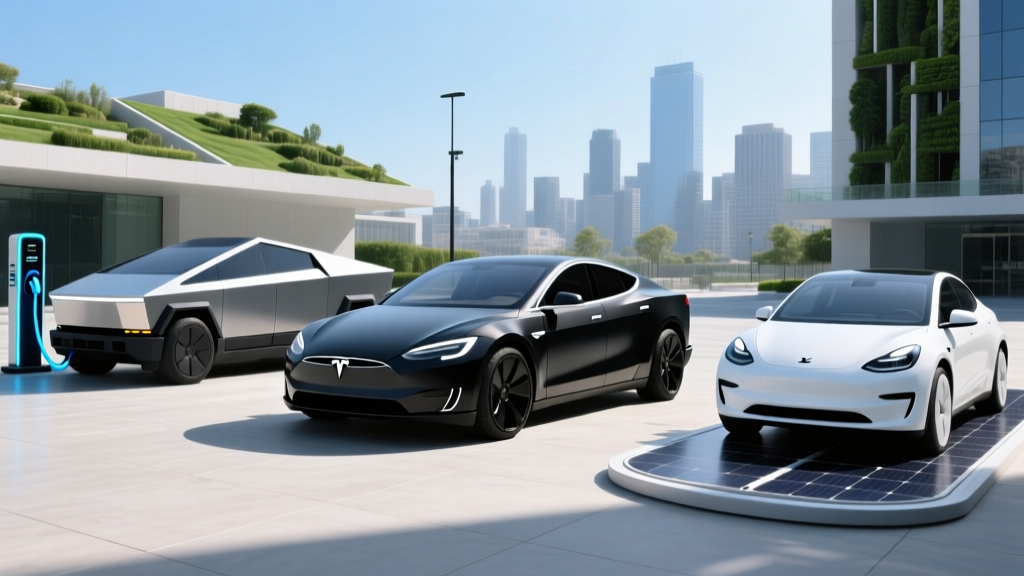
As of early 2026, Tesla sells four passenger vehicles in the United States. The Cybertruck is also in production but occupies a niche truck segment we cover separately. Here's the current lineup at a glance:
| Model | Body Style | Starting MSRP | EPA Range (max) | Drivetrain |
|---|---|---|---|---|
| Model 3 | Sedan | $38,990 | 363 mi | RWD / AWD |
| Model Y | Crossover SUV | $44,990 | 320 mi | AWD |
| Model S | Luxury Sedan | $79,990 | 402 mi | AWD |
| Model X | Luxury SUV | $84,990 | 335 mi | AWD |
Every model is orderable today through Tesla's website with delivery windows typically spanning 2–6 weeks depending on configuration and region. No model has been discontinued.
2026 Tesla Model 3: The Volume Seller, Refreshed
The current Model 3 (internally called "Highland") received a significant refresh that carried into 2026 with updated suspension tuning, improved cabin materials, ventilated front seats, and a rear touchscreen for passengers. It remains Tesla's most affordable offering and the entry point for most buyers.
Range, Battery, and Efficiency
EPA Estimated Range: 363 miles (Long Range AWD) / 341 miles (RWD)
Real-World Expectation: Plan for approximately 290–320 miles on highway road trips at 70–75 mph. In freezing temperatures (below 32°F), expect a 20–30% reduction, bringing usable range to roughly 220–260 miles. City driving with regenerative braking recovers range closer to the EPA sticker.
The Model 3 Long Range AWD uses an 82 kWh (usable) NMC (nickel manganese cobalt) battery pack. The base RWD model uses a 60 kWh LFP (lithium iron phosphate) pack. LFP chemistry offers a longer cycle life and can be charged to 100% daily without degradation concerns, but it sacrifices some energy density and cold-weather performance compared to NMC.
Efficiency on the Long Range AWD is rated at 130 MPGe combined, or approximately 26 kWh per 100 miles — among the best in the segment thanks to Tesla's low drag coefficient (0.219 Cd) and efficient heat pump.
Charging Speed
| Charging Level | Max Rate | Speed / Time |
|---|---|---|
| Level 1 (120V household) | ~1.4 kW | ~4–5 miles per hour |
| Level 2 (240V home/public) | 11.5 kW | ~44 miles per hour |
| DC Fast Charge (Supercharger) | 250 kW peak | 10–80% in ~25 minutes |
On a V3 Supercharger (250 kW), the Model 3 Long Range peaks near 250 kW at low state of charge but tapers significantly above 60%. The charge curve is not flat — sustained average from 10–80% is closer to 140–160 kW. On a 350 kW CCS station with a NACS-to-CCS adapter (included with new vehicles), speeds are similar but depend on the station's power delivery. Home Level 2 charging on a Tesla Wall Connector or equivalent 48-amp circuit adds roughly 44 miles of range per hour, easily replenishing a full day's driving overnight.
Performance
The Model 3 Long Range AWD produces 346 horsepower and hits 0–60 mph in 4.2 seconds. The Performance trim (450 hp) does it in 2.9 seconds. Both versions feature dual-motor all-wheel drive with precise torque vectoring. The RWD base model runs 271 hp and 0–60 in 5.8 seconds — adequate for commuting but noticeably less urgent than the dual-motor variants.
Pricing and Federal Tax Credit
| Trim | MSRP | Est. After §30D Credit |
|---|---|---|
| Model 3 RWD | $38,990 | ~$31,490* |
| Model 3 Long Range AWD | $45,240 | ~$37,740* |
| Model 3 Performance | $52,990 | ~$45,490* |
*Federal tax credit estimates assume buyer eligibility under IRS §30D rules. The Model 3 qualifies for up to $7,500, which can be transferred to the dealer at point of sale as a price reduction. Eligibility requires: modified adjusted gross income below $150,000 (single) / $300,000 (joint), vehicle MSRP under $55,000 (sedan cap), and compliance with battery critical-mineral and component sourcing requirements. Sourcing rules tighten annually — verify current-year eligibility on fueleconomy.gov before ordering.
Cargo, Interior, and Tech
The Model 3 offers 23 cu ft of trunk space plus a small frunk adequate for a charging cable bag. Rear legroom measures 35.3 inches — sufficient for adults on shorter trips but tight for tall passengers on long drives. The 15.4-inch center touchscreen handles all infotainment, navigation, and vehicle controls. Tesla's Autopilot (SAE Level 2 driver assistance) is standard; Full Self-Driving (Supervised) remains a $8,000 add-on or $99/month subscription and still requires active driver engagement at all times.
Warranty
Tesla covers the Model 3 battery and drive unit for 8 years or 100,000 miles (whichever comes first) with a minimum 70% capacity retention threshold. The Long Range and Performance models carry an 8-year/120,000-mile battery warranty. The basic vehicle limited warranty is 4 years or 50,000 miles.
2026 Tesla Model Y: The Best-Selling EV, Updated
The Model Y received its "Juniper" refresh for the 2025 model year, bringing a redesigned front fascia, full-width light bar, updated interior with ambient lighting, rear entertainment screen, and improved ride quality via revised suspension damping. The 2026 model year carries forward these changes with minor software and trim updates.
Range, Battery, and Efficiency
EPA Estimated Range: 320 miles (Long Range AWD)
Real-World Expectation: Highway cruising at 75 mph yields approximately 260–285 miles. Cold weather (sub-freezing) drops this to 200–240 miles. The Model Y's taller, less aerodynamic profile (0.23 Cd) means it loses efficiency faster at highway speeds than the Model 3.
The Model Y Long Range AWD uses a 78.1 kWh (usable) NMC battery pack. Efficiency is rated at 122 MPGe combined, or roughly 28 kWh per 100 miles. Tesla has not reintroduced a standard-range RWD Model Y for 2026 in the U.S. market — all configurations are dual-motor AWD.
Charging Speed
| Charging Level | Max Rate | Speed / Time |
|---|---|---|
| Level 1 (120V) | ~1.4 kW | ~3–4 miles per hour |
| Level 2 (240V) | 11.5 kW | ~37 miles per hour |
| DC Fast Charge | 250 kW peak | 10–80% in ~27 minutes |
Charging performance mirrors the Model 3, though the Model Y's slightly larger consumption means fewer miles added per minute at the same kW rate. On a road trip, plan charging stops around the 200–230 mile mark to maintain a buffer and avoid the steep charge-curve taper above 80%.
Performance and Capability
The Model Y Long Range AWD produces 384 horsepower and reaches 0–60 mph in 4.8 seconds. The Performance variant (estimated 456 hp) drops that to 3.5 seconds. Towing capacity is rated at 3,500 pounds — adequate for a small utility trailer or a pair of jet skis, but not a large camper. According to NHTSA, the Model Y has earned a 5-Star Overall Safety Rating.
Pricing and Tax Credit
| Trim | MSRP | Est. After §30D Credit |
|---|---|---|
| Model Y Long Range AWD | $44,990 | ~$37,490* |
| Model Y Performance | $51,490 | ~$43,990* |
*The Model Y is classified as an SUV for tax-credit purposes, meaning the MSRP cap is $80,000 (vs. $55,000 for sedans). All current trims fall well under this cap. Same income and battery-sourcing rules apply as the Model 3. Verify eligibility at fueleconomy.gov.
Cargo, Interior, and Family Practicality
The Model Y offers 30.2 cu ft behind the second row and up to 72.1 cu ft with the rear seats folded — competitive with midsize gas crossovers. Rear legroom measures 41.6 inches, making it genuinely comfortable for adults. An optional third row exists but is best suited for small children. The Juniper refresh improved cabin noise levels substantially, and the ventilated seats are a welcome addition for hot-climate buyers.
Warranty
Identical to the Model 3 Long Range: 8 years or 120,000 miles for the battery and drive unit (70% minimum retention), 4 years or 50,000 miles for the basic vehicle.
2026 Tesla Model S and Model X: The Flagships Hold On
The Model S sedan and Model X SUV continue in production at Fremont, though sales volumes are a fraction of the 3/Y. Both received meaningful updates in 2023–2024 (new powertrain, yoke option, rear screen, updated interior) and carry into 2026 without major changes.
Model S Key Specs
- EPA Range: 402 miles (Long Range) / 396 miles (Plaid)
- Battery: ~100 kWh usable, NMC
- 0–60 mph: 3.1 sec (Long Range) / 1.99 sec (Plaid)
- Horsepower: 670 hp (Long Range) / 1,020 hp (Plaid)
- DC Fast Charge: 250 kW peak, 10–80% in ~30 minutes
- Efficiency: 124 MPGe combined
- Cargo: 28 cu ft trunk + frunk
- MSRP: $79,990 (Long Range) / $94,990 (Plaid)
- Tax Credit: Eligible for up to $7,500 under §30D (MSRP under $55,000 sedan cap — not eligible due to price exceeding the cap)
Model X Key Specs
- EPA Range: 335 miles (Long Range) / 320 miles (Plaid)
- Battery: ~100 kWh usable, NMC
- 0–60 mph: 3.8 sec (Long Range) / 2.5 sec (Plaid)
- Horsepower: 670 hp (Long Range) / 1,020 hp (Plaid)
- DC Fast Charge: 250 kW peak, 10–80% in ~32 minutes
- Efficiency: 109 MPGe combined
- Cargo: Up to 81.5 cu ft (seats folded), falcon-wing rear doors
- Towing: 5,000 lbs
- MSRP: $84,990 (Long Range) / $99,990 (Plaid)
- Tax Credit: Eligible — MSRP under the $80,000 SUV cap applies only to Long Range; Plaid exceeds it
Note: The Model S exceeds the $55,000 sedan MSRP cap and does not qualify for the federal credit. The Model X Long Range at $84,990 exceeds the $80,000 SUV cap and also does not qualify. Always check the latest IRS guidance for updates.
Tesla vs. Key Competitors: Is It Still Worth Buying?
The competitive landscape has shifted dramatically since Tesla dominated unchallenged. Here's how the 2026 Tesla lineup stacks up against its most direct rivals:
Where Tesla Still Wins
- Supercharger Network: Over 20,000 stalls in North America, consistently the most reliable DC fast-charging network. Now opening to other brands via NACS, but Tesla owners still benefit from seamless plug-and-charge integration.
- Efficiency: Tesla's kWh-per-mile figures remain class-leading. The Model 3's 26 kWh/100 mi beats most rivals by 10–15%.
- Software & OTA: Over-the-air updates continue to add features years after purchase — a Tesla advantage that legacy automakers are still catching up to.
- Price-to-Range Ratio: The Model 3 Long Range at ~$37,740 (after credit) for 363 miles of range is difficult to match.
Where Competitors Challenge
- Interior Quality: Hyundai Ioniq 6, BMW i4, and even the refreshed Polestar 2 offer more premium materials and conventional control layouts that some buyers prefer.
- Charging Architecture: Hyundai/Kia's 800V E-GMP platform charges at up to 350 kW and achieves 10–80% in ~18 minutes — noticeably faster than Tesla's 250 kW peak.
- Ride Comfort: The Model Y's Juniper refresh improved things, but competitors like the Genesis GV60 and BMW iX still deliver superior ride refinement.
- Service Access: Tesla's service center network remains stretched thin in some regions, leading to mobile-ranger wait times that frustrate owners.
Who Should Buy a Tesla in 2026 — and Who Should Look Elsewhere
Buy a Tesla Model 3 if: You want the best price-per-mile-of-range in the EV market, you commute 30–80 miles daily with home charging access, and you value Supercharger road-trip convenience above all.
Buy a Tesla Model Y if: You need a family crossover with strong cargo space, AWD for inclement weather, and you want an EV that can handle 300-mile road trips with a single 25-minute charge stop.
Buy a Model S/X if: You want flagship performance (Plaid acceleration is genuinely supercar-rivaling), you need 400+ miles of range, and you're not price-sensitive at the $80,000+ level.
Look elsewhere if: You prioritize traditional luxury interior appointments (consider BMW i5, Genesis Electrified G80), you need 800V ultra-fast charging (Hyundai Ioniq 5/6), or you want a non-Tesla ecosystem with physical buttons and conventional dealer service.
Frequently Asked Questions
Is Tesla not making cars anymore?
Yes, Tesla is still making cars. In 2026, Tesla produces and sells the Model 3, Model Y, Model S, Model X, and Cybertruck. The company's manufacturing output remains in the hundreds of thousands of vehicles per quarter across its global factories. The confusion stems from Tesla's expanding focus on energy products, AI, and robotics.
What is the cheapest Tesla you can buy in 2026?
The Model 3 RWD starts at $38,990 MSRP. If you qualify for the full $7,500 federal tax credit under IRS §30D (income caps, battery sourcing, and MSRP requirements all apply), the effective price drops to approximately $31,490. The credit can be applied at point of sale as an immediate price reduction.
How fast does a Tesla charge at home?
On a Level 2 home charger (240V, 48 amps), the Model 3 gains approximately 44 miles of range per hour (11.5 kW). A full overnight charge (8–10 hours) easily replenishes the battery from near-empty. Level 1 (standard 120V outlet) adds only 4–5 miles per hour and is best used as a trickle-charge supplement.
Does the Tesla Model Y qualify for the $7,500 tax credit?
Yes, the Model Y qualifies for up to $7,500 under §30D as of early 2026, provided the buyer meets income thresholds (under $150,000 single / $300,000 joint MAGI) and the vehicle's battery meets critical-mineral and component sourcing requirements. The SUV MSRP cap is $80,000, which all Model Y trims fall under. Verify current eligibility on fueleconomy.gov, as sourcing rules evolve annually.
What's the real-world range of a Tesla Model 3 Long Range?
The EPA rates it at 363 miles. In real-world highway driving at 70–75 mph, expect 290–320 miles. In cold weather (below freezing), plan for 220–260 miles due to battery chemistry limitations and cabin heating demands. Preconditioning the battery while plugged in helps recover some efficiency.
Is Tesla's Autopilot self-driving?
No. Tesla Autopilot and Full Self-Driving (Supervised) are SAE Level 2 driver-assistance systems. They can manage steering, acceleration, and braking on highways and some city streets, but the driver must remain fully attentive and ready to take over at all times. No consumer Tesla vehicle is capable of autonomous (Level 4 or 5) driving. For context, only purpose-built robotaxi services like Waymo operate at Level 4 in geofenced areas.
How long does a Tesla battery last?
Tesla warranties its battery packs for 8 years / 100,000–120,000 miles (depending on model and trim) with a minimum 70% capacity retention guarantee. Real-world data from high-mileage owners suggests NMC packs degrade approximately 10–15% over the first 100,000 miles, with degradation slowing significantly after the initial break-in period. LFP packs (Model 3 RWD) show even slower degradation curves but start with lower total capacity.
Tesla is not stopping car production — but the company's identity is clearly broadening beyond automobiles. For buyers in 2026, the relevant question isn't whether Tesla still makes cars (it does, and they remain competitive), but whether a Tesla is the best car for your specific needs in an increasingly crowded EV market. The Model 3 and Model Y continue to offer compelling value, range, and charging infrastructure. The Model S and X serve a diminishing but real luxury-performance niche. Use the specs above to decide on data, not headlines.