The Tesla Steering Wheel Peeling Problem: What Owners Need to Know
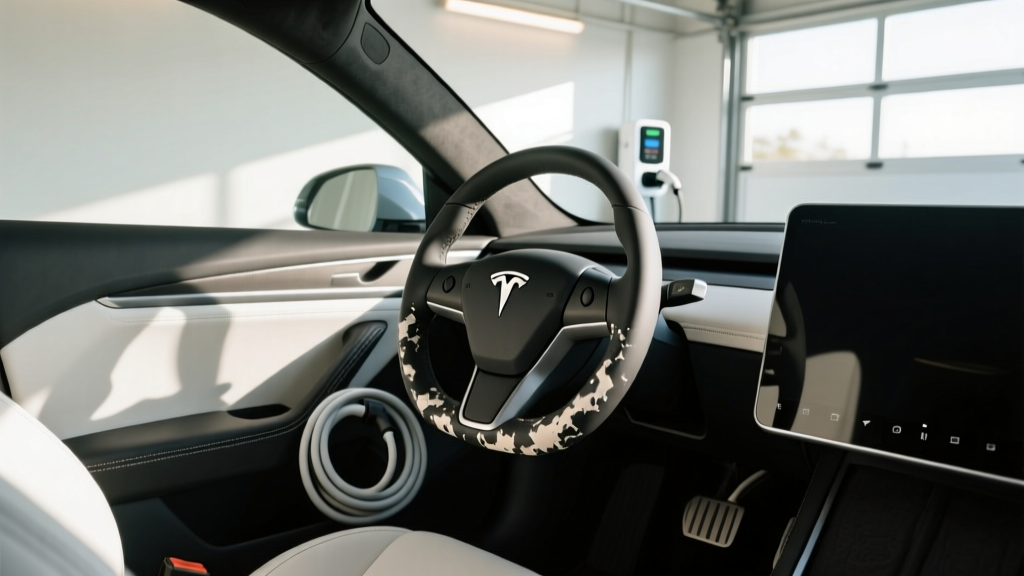
Search any Tesla owner forum and you will find hundreds of threads about the same issue: synthetic leather on the steering wheel bubbling, cracking, or peeling away after just one to three years of normal use. It affects Model 3 and Model Y owners disproportionately, though some Model S and Model X drivers have reported similar degradation. For a vehicle with a starting price north of $38,000, a deteriorating steering wheel feels like a quality failure that should be covered — but getting Tesla to honor it under warranty is not always straightforward.
This guide breaks down exactly what Tesla's warranty covers regarding steering wheel peeling, how to file a successful claim, what it costs to fix out of pocket, and whether this issue should influence your next EV purchase decision. We also provide a full 2026 spec review of the current Model 3 and Model Y so you can evaluate these vehicles holistically.
Is Steering Wheel Peeling Covered Under Tesla's Warranty?
Tesla's New Vehicle Limited Warranty covers defects in materials and workmanship for 4 years or 50,000 miles, whichever comes first. In theory, a steering wheel that peels under normal use within that window qualifies as a materials defect. In practice, coverage depends heavily on how the service center classifies the damage.
What the Warranty Documents Actually Say
According to Tesla's official warranty documentation, the New Vehicle Limited Warranty does not cover "damage or surface corrosion caused by road salt, chemicals, tree sap, bird droppings, or other environmental contaminants" or "normal wear and tear." The ambiguity is the problem: Tesla does not publish a definitive list of what constitutes normal wear on interior surfaces, leaving individual service centers to interpret peeling on a case-by-case basis.
When Owners Have Successfully Claimed Coverage
Owners have had the best success getting warranty replacements when:
- The vehicle is within the 4-year/50,000-mile New Vehicle Limited Warranty window
- The peeling appears on the top grip area (where hands rarely rub) rather than the 9-and-3 o'clock positions
- There are no visible signs of chemical damage, abrasion from jewelry, or excessive wear patterns
- The owner has documentation (photos over time) showing the peeling developed without obvious cause
- The vehicle is a Model 3 or Model Y from the 2018–2022 production window, when this issue was most prevalent
When Claims Get Denied
Expect pushback if your vehicle is outside the 4-year/50,000-mile window, if the service center attributes damage to hand sanitizer use (which surged during 2020–2022 and contains alcohol that breaks down synthetic leather), or if the steering wheel shows generalized wear consistent with high mileage.
How to File a Steering Wheel Peeling Warranty Claim
If your Tesla's steering wheel is deteriorating, follow these steps to maximize your chances of a covered repair:
- Document the damage. Take clear, well-lit photos of the peeling from multiple angles. If you have older photos showing the wheel in good condition, save them as a timeline.
- Open a service request via the Tesla app. Describe the issue as "steering wheel material delamination/peeling under normal use" — avoid words like "wear" or "damage" that could be used to classify it as cosmetic.
- Request a mobile service or service center appointment. Mobile technicians can sometimes assess and order the replacement part on the spot.
- Be present during the inspection. Politely explain that you have not used harsh chemicals on the wheel, that you do not wear rings while driving, and that the peeling appeared spontaneously.
- If denied, escalate. You can request a second opinion at a different service center, contact Tesla's customer support executive escalation team, or file a complaint with your state's attorney general consumer protection division.
Out-of-Pocket Replacement Cost
If your warranty claim is denied or your vehicle is outside the coverage window, a steering wheel replacement at a Tesla Service Center typically costs between $350 and $600 including parts and labor. Third-party upholstery shops can rewrap the wheel in genuine leather or Alcantara for $200–$400, often with better material quality than the OEM synthetic leather.
2026 Tesla Model 3: Full EV Specs & Ownership Review
The steering wheel issue exists within the broader ownership experience of Tesla's most affordable sedan. Here is a complete spec breakdown for the current-generation Model 3 (Highland refresh and subsequent updates).
| Specification | Model 3 RWD | Model 3 Long Range AWD |
|---|---|---|
| EPA Range | 363 miles | 341 miles |
| Battery (usable) | ~60 kWh (LFP) | ~75 kWh (NMC) |
| Max DC Fast Charge | 170 kW | 250 kW |
| 10–80% DC Charge | ~25 min | ~22 min |
| Level 2 Home Charging | 11.5 kW (~44 mi/hr) | 11.5 kW (~44 mi/hr) |
| 0–60 mph | 5.8 sec | 4.2 sec |
| Horsepower | 271 hp | 346 hp |
| Drivetrain | RWD (single motor) | AWD (dual motor) |
| MPGe (combined) | 132 MPGe | 125 MPGe |
| Efficiency | 25 kWh/100 mi | 27 kWh/100 mi |
| Cargo Volume | 23 cu ft (trunk + frunk) | 23 cu ft (trunk + frunk) |
| Rear Legroom | 35.2 in | 35.2 in |
| Base MSRP | $38,990 | $45,990 |
Model 3 Battery Chemistry: LFP vs NMC
The base RWD Model 3 uses a lithium iron phosphate (LFP) battery, while the Long Range AWD uses nickel manganese cobalt (NMC). LFP offers longer cycle life and can be charged to 100% daily without accelerating degradation — a significant advantage for commuters who need maximum range every morning. The trade-off is lower energy density (hence the smaller pack) and slower DC fast charging. NMC delivers more range per kilogram and faster charging but Tesla recommends daily charging to 80% for longevity, with 100% reserved for road trips.
2026 Tesla Model Y: Specs & Steering Wheel Context
The Model Y shares its platform with the Model 3 and has been the subject of the same steering wheel peeling complaints. As Tesla's best-selling vehicle, the volume of reports is simply higher.
| Specification | Model Y Long Range AWD | Model Y Performance |
|---|---|---|
| EPA Range | 320 miles | 298 miles |
| Battery (usable) | ~75 kWh (NMC) | ~75 kWh (NMC) |
| Max DC Fast Charge | 250 kW | 250 kW |
| 10–80% DC Charge | ~24 min | ~24 min |
| 0–60 mph | 4.8 sec | 3.5 sec |
| Horsepower | 384 hp | 456 hp |
| Cargo Volume | 76 cu ft (seats folded) | 76 cu ft (seats folded) |
| MPGe (combined) | 117 MPGe | 111 MPGe |
| Base MSRP | $44,990 | $48,990 |
Source: fueleconomy.gov — Tesla Model Y
Tesla Warranty Coverage: Full Breakdown
Understanding the warranty tiers is essential for evaluating whether steering wheel peeling — or any other issue — will be covered.
| Warranty Type | Coverage | What It Includes |
|---|---|---|
| New Vehicle Limited | 4 years / 50,000 mi | Most vehicle components, infotainment, interior trim (steering wheel included — if classified as defect) |
| Battery & Drive Unit | 8 years / 100,000–120,000 mi | Traction battery (min 70% retention), drive motor(s), power electronics. Does NOT cover interior. |
| Restraint System | 5 years / 60,000 mi | Seatbelts, airbags |
| Corrosion Perforation | 12 years / unlimited mi | Body panel rust-through only (not surface corrosion) |
The steering wheel falls under the New Vehicle Limited Warranty. Once you exceed 4 years or 50,000 miles, you are paying out of pocket regardless of the cause. This is a shorter coverage window than some buyers realize — and it is one reason the steering wheel peeling complaints generate so much frustration from owners who are just barely outside the window.
Federal Tax Credit: Does Tesla Qualify in 2026?
The IRS §30D Clean Vehicle Credit offers up to $7,500 for qualifying new EVs, but eligibility depends on a matrix of rules that change frequently.
- MSRP Cap: Sedans (Model 3) must be ≤$55,000; SUVs/trucks (Model Y) must be ≤$80,000
- Buyer Income Cap: Modified AGI ≤$150,000 (single), ≤$225,000 (head of household), ≤$300,000 (joint)
- Battery Sourcing: Critical minerals and battery components must meet escalating domestic-content thresholds — check current-year IRS guidance, as these thresholds tighten annually
- Point-of-Sale Transfer: You can transfer the credit to the dealer at purchase to reduce the sale price directly (rather than waiting for tax filing)
- Final Assembly: Vehicle must undergo final assembly in North America — Tesla's Fremont and Austin plants qualify
Always verify current eligibility on irs.gov and consult a tax professional. Battery-sourcing rules have disqualified some previously eligible configurations.
| Model | Base MSRP | Est. After $7,500 Credit |
|---|---|---|
| Model 3 RWD | $38,990 | ~$31,490* |
| Model 3 Long Range AWD | $45,990 | ~$38,490* |
| Model Y Long Range AWD | $44,990 | ~$37,490* |
| Model Y Performance | $48,990 | ~$41,490* |
*Assumes full $7,500 credit eligibility. Your actual credit may be $3,750 or $0 depending on battery-sourcing compliance and income. Verify before purchasing.
Pros, Cons & Competitor Comparison
- Class-leading efficiency (25 kWh/100 mi on RWD)
- Extensive Supercharger network (NACS, now opening to other brands)
- Over-the-air updates continuously add features
- Strong resale value relative to most EVs
- LFP battery on RWD allows daily 100% charging
- Minimal maintenance costs (no oil, fewer brake replacements with regen)
- Steering wheel peeling is a recurring quality issue
- No physical instrument cluster — all info on center screen
- Turn signals on steering wheel (not stalk) in refreshed Model 3/Y
- Service center wait times can be weeks in some markets
- FSD (Supervised) remains SAE Level 2 — not autonomous driving
- Rear seat comfort and headroom trail competitors like Hyundai Ioniq 6
Key Competitors to Cross-Shop
If the steering wheel quality issue and interior material durability concern you, the Hyundai Ioniq 6 (EPA 361 mi, starting ~$37,500) and BMW i4 eDrive40 (EPA 307 mi, starting ~$52,200) offer more conventional interiors with traditional build quality. The Chevrolet Equinox EV (EPA 319 mi, starting ~$33,600) undercuts on price. None, however, match Tesla's Supercharger access or OTA update cadence.
Who Should Buy a Tesla (and Who Shouldn't)
- You want the lowest cost-per-mile EV with the best public charging network
- You primarily commute and can charge at home (Level 2 overnight is ideal)
- You value OTA feature updates and a minimalist tech-forward cabin
- You live in a region with reliable Tesla Service Center coverage
- Interior material quality and traditional build are high priorities
- You want physical buttons, a head-up display, or a driver instrument cluster
- You need a hands-free Level 2 system like GM Super Cruise (Tesla's Autopilot/FSD requires hands-on-wheel engagement)
- Your nearest Tesla service center is more than 60 miles away
Frequently Asked Questions
Does Tesla cover steering wheel peeling under warranty?
It can, if the vehicle is within the 4-year/50,000-mile New Vehicle Limited Warranty and the service center classifies the peeling as a materials defect rather than cosmetic wear. Outcomes vary by location and technician assessment. Owners who document the issue early and avoid mentioning potential causes like hand sanitizer tend to have better results.
How much does it cost to replace a Tesla steering wheel out of warranty?
Expect $350–$600 at a Tesla Service Center for an OEM replacement. Third-party leather rewraps cost $200–$400 and often use higher-quality materials that are less prone to peeling.
What is the real-world range of the Tesla Model 3?
The EPA rates the Model 3 RWD at 363 miles and the Long Range AWD at 341 miles. Real-world highway driving at 75 mph yields roughly 280–310 miles (RWD) or 270–295 miles (Long Range). In freezing temperatures, reduce those figures by 20–30%.
How fast does the Model 3 charge at home and on the road?
On a DC fast charger, the RWD peaks at 170 kW (10–80% in ~25 minutes) and the Long Range at 250 kW (10–80% in ~22 minutes). At home on a Level 2 charger (11.5 kW / 48A circuit), both add approximately 44 miles of range per hour — a full overnight session easily replenishes a day's driving.
Does the Tesla Model 3 or Model Y qualify for the $7,500 federal tax credit?
Both can qualify under IRS §30D, subject to MSRP caps ($55,000 for sedans, $80,000 for SUVs), buyer income limits, and battery-sourcing requirements that tighten annually. Always verify current eligibility on irs.gov before purchasing, as configurations that qualified in prior years may not qualify now.
Is the Tesla Model 3 still worth buying vs. competitors in 2026?
Yes, if efficiency, Supercharger access, and software updates are your top priorities. The Model 3 remains one of the most energy-efficient EVs on the market at 25 kWh/100 mi. However, if interior build quality — including the steering wheel peeling issue — is a dealbreaker, the Hyundai Ioniq 6, BMW i4, and Chevrolet Equinox EV are strong alternatives worth test-driving.
Can I prevent my Tesla steering wheel from peeling?
Minimize exposure to alcohol-based hand sanitizers, avoid wearing rings while driving, park in shade or use a windshield sun shade to reduce UV exposure, and condition the synthetic leather with a water-based protectant every few months. Some owners preemptively have the wheel wrapped in genuine leather or Alcantara by a third-party shop.