If you have been browsing Tesla forums or EV Reddit threads in 2026, you have probably seen the phrase Tesla Steam pop up and wondered whether it refers to a new model, a software update, or a misunderstood feature. It is not a standalone vehicle. In current Tesla nomenclature, “Steam” refers to the Steam Wash / Steam Sanitize cabin feature introduced via OTA updates on refreshed Model Y (Juniper) and Model 3 Highland platforms — a climate-system function that uses the heat-pump and HVAC hardware to run a high-temperature cabin sanitation cycle. Because search interest in “Tesla Steam” keeps climbing, this review profiles the 2026 vehicles that support it and explains what buyers actually get: range, charging, pricing, and tax-credit reality.
What 'Tesla Steam' Actually Is in 2026
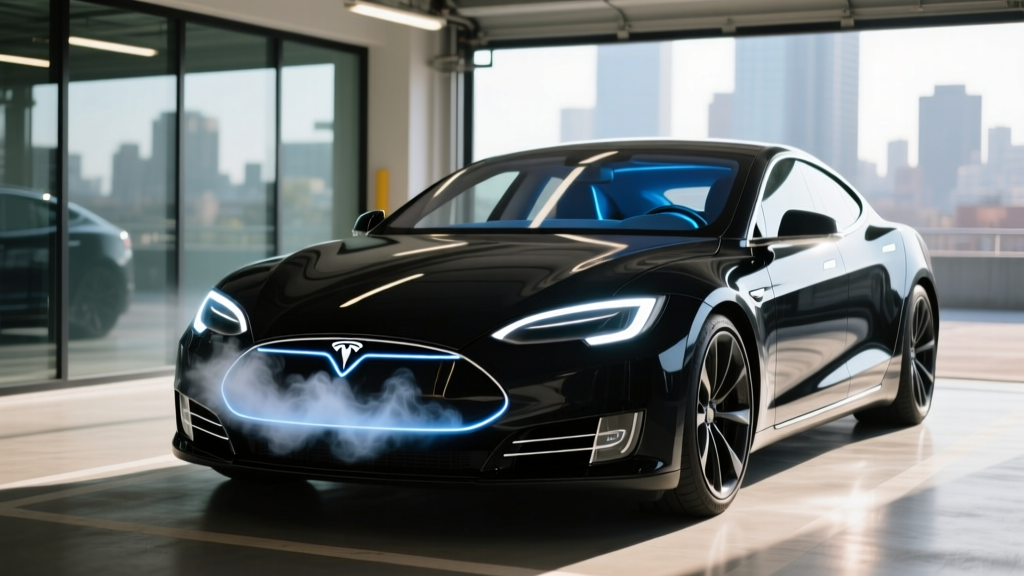
Tesla Steam is a cabin-care routine accessible from the Climate menu on vehicles running software version 2025.44 and newer on the Highland Model 3 and Juniper Model Y architectures. The cycle runs the heat pump at elevated temperatures to push warm, dry air through the HVAC ducts and HEPA/bio-weapon-defense filters, reducing mold, mildew, and odor buildup that plagues EVs with aggressive cabin preconditioning. It is not a drivetrain mode, not a performance setting, and not a new trim. Think of it as Tesla’s answer to the “EV cabin smell” complaint that has lingered since early Model 3 builds.
The feature only matters if you are buying one of the supported platforms, so the rest of this review focuses on the two vehicles where Tesla Steam is available in 2026: the Model 3 Long Range AWD and the Model Y Long Range AWD.
2026 Model 3 Long Range AWD: Specs at a Glance
| Spec | Value |
|---|---|
| EPA-estimated range | 363 miles |
| Battery (usable) | ~79 kWh, NMC chemistry |
| Drivetrain | Dual-motor AWD |
| Horsepower | ~346 hp combined |
| 0–60 mph | 4.2 seconds |
| MPGe (combined) | 134 MPGe |
| Efficiency | 25 kWh/100 mi |
| Max DC fast-charge rate | 250 kW (peak) |
| 10–80% DC time | ~25 minutes |
| Level 2 home rate | 11.5 kW (~44 mi/hr) |
| Cargo volume | 23 cu ft trunk + 3 cu ft frunk |
| Rear legroom | 34.9 in |
| Battery warranty | 8 yr / 120,000 mi, ≥70% retention |
| Base MSRP | $47,740 (before destination) |
2026 Model Y Long Range AWD: Specs at a Glance
| Spec | Value |
|---|---|
| EPA-estimated range | 320 miles |
| Battery (usable) | ~78 kWh, NMC chemistry |
| Drivetrain | Dual-motor AWD |
| Horsepower | ~384 hp combined |
| 0–60 mph | 4.8 seconds |
| MPGe (combined) | 122 MPGe |
| Efficiency | 28 kWh/100 mi |
| Max DC fast-charge rate | 250 kW (peak) |
| 10–80% DC time | ~27 minutes |
| Level 2 home rate | 11.5 kW (~37 mi/hr) |
| Cargo volume (behind 2nd row) | 30 cu ft; 72 cu ft folded |
| Rear legroom | 41.6 in |
| Battery warranty | 8 yr / 120,000 mi, ≥70% retention |
| Base MSRP | $48,630 (before destination) |
Real-World Range: EPA Sticker vs What You Will Actually See
Model 3 LR EPA: 363 mi. Expect ~305–325 mi on mixed highway driving at 70 mph, and ~250–275 mi in sub-32°F winter conditions. Model Y LR EPA: 320 mi. Expect ~270–290 mi highway, ~220–240 mi in freezing weather. Cold range loss of 20–30% is typical for NMC packs without constant preconditioning.
Tesla’s NMC packs on both models are thermally managed via the same octovalve heat-pump architecture that enables Tesla Steam. That hardware is excellent at preserving range in cold weather when preconditioning is active, but if you cold-soak the car overnight and skip preconditioning, expect the lower end of the range estimates above. Highway efficiency also drops noticeably above 75 mph; at 80 mph sustained, plan for roughly 10–12% less range than the EPA sticker.
Source: fueleconomy.gov — 2026 Model 3 Long Range.
Charging Speed: DC Fast, Level 2, and the 80% Taper
Both vehicles peak at 250 kW on V3 Superchargers, but peak is not sustained. The charge curve holds roughly 200–250 kW from 10% to about 40% state of charge, then tapers progressively. By 80% SoC you are typically pulling 70–90 kW, which is why the 10–80% time lands around 25–27 minutes rather than the ~18 minutes a flat 250 kW rate would imply. Above 80%, charging slows sharply — a 90% charge can add another 15 minutes.
On a home Level 2 wall connector at 48 amps / 11.5 kW, the Model 3 regains about 44 miles of range per hour and the Model Y about 37 miles per hour. An overnight 8-hour session adds roughly 300+ miles on the sedan — enough for almost any commuter. Note that achieving these rates requires a 60-amp dedicated circuit; budget $800–$1,800 for electrician installation depending on panel proximity and local permitting.
Pricing, Trims, and Federal Tax Credit Eligibility
As of early 2026, both the Model 3 Long Range and Model Y Long Range are priced under the IRS §30D MSRP cap of $55,000 for sedans and $80,000 for SUVs/vans/pickups. However, qualifying for the full $7,500 federal tax credit is not automatic. Eligibility depends on three moving targets:
- Buyer income caps: Modified AGI ≤ $150,000 single, ≤ $300,000 joint, ≤ $225,000 head of household.
- MSRP caps: Both trims clear these in base form; adding FSD or premium packages can push sedan builds close to the $55,000 ceiling.
- Battery sourcing & critical minerals: A portion of the credit phases out each year based on where battery components and critical minerals are sourced. Tesla’s increasing North American and allied-nation supply chain helps, but always verify current-year eligibility on the official fueleconomy.gov tax credit lookup before purchasing.
Under the point-of-sale transfer rules finalized for 2024 and continuing into 2026, eligible buyers can apply the credit as an instant discount at delivery rather than waiting to claim it on their tax return. Confirm with your tax professional — §30D rules are subject to annual revision.
Tech, Driver Assists, and the Steam Feature Itself
The 2026 Model 3 Highland and Model Y Juniper share Tesla’s current-generation infotainment: a 15.4-inch center touchscreen, ventilated front seats, acoustic glass, ambient lighting, and the HEPA filtration system that Tesla Steam cycles through. Autopilot (SAE Level 2) is standard and includes adaptive cruise, lane centering, and automatic emergency braking. Full Self-Driving (Supervised) remains a paid add-on and is still Level 2 — meaning the driver must remain attentive and hands-on at all times. It is not autonomous driving.
The Steam feature itself runs a roughly 30-minute cycle that owners typically trigger after extended cabin use in humid climates, or when storing the vehicle for weeks. It is a niche but genuinely useful addition for allergy sufferers and rideshare drivers who need cabin turnover between passengers.
Who Should Buy (and Who Should Pass)
Choose the Model 3 Long Range if you are a commuter or two-person household prioritizing efficiency (134 MPGe) and maximum range (363 mi EPA) at the lowest price point.
Choose the Model Y Long Range if you need cargo space (30/72 cu ft), rear-seat legroom (41.6 in), or the availability of an optional third row for young children.
Look elsewhere if you want 350+ kW charging (Hyundai Ioniq 5, Kia EV6), a traditional instrument cluster, or physical buttons for climate and mirrors.
Pros and Cons
- Class-leading Supercharger network reliability
- Strong real-world efficiency (25–28 kWh/100 mi)
- Steam Sanitize feature addresses long-standing cabin-odor complaints
- OTA updates continue adding features years after purchase
- Point-of-sale tax-credit transfer reduces upfront cost
- 250 kW peak DC rate now trails 800V rivals at 350 kW chargers
- Minimal physical controls — mirrors, glovebox, and wipers all screen-driven
- Insurance premiums run 15–25% above segment average
- FSD (Supervised) cost is hard to justify at Level 2 capability
- Model Y Juniper refresh pricing has crept upward vs 2024
Frequently Asked Questions
What is Tesla Steam?
Tesla Steam is a cabin-sanitization cycle available on 2025+ Highland Model 3 and Juniper Model Y vehicles. It uses the heat-pump HVAC system to run a high-temperature air cycle through the cabin ducts, reducing mold and odor.
Does Tesla Steam affect range or battery life?
Minimally. A 30-minute Steam cycle draws roughly 1–2 kWh from the pack — the equivalent of 4–8 miles of range. It does not meaningfully impact long-term battery degradation.
How fast do the supported Teslas charge at home?
At 11.5 kW on a 48-amp Level 2 wall connector, the Model 3 gains ~44 miles of range per hour and the Model Y ~37 miles per hour.
Do these vehicles qualify for the $7,500 federal tax credit in 2026?
Both base trims fall under IRS §30D MSRP caps, but buyer income limits and battery-sourcing requirements apply. Always verify eligibility on irs.gov and confirm with a tax professional before purchase.
Is Tesla Steam available on older Model 3 or Model Y vehicles?
No. The feature requires the updated heat-pump and HVAC hardware introduced with the Highland and Juniper refreshes. Pre-2024 Model 3 and pre-2025 Model Y vehicles do not support it via OTA alone.
Should I buy a Tesla for the Steam feature?
No — buy for the range, charging network, and efficiency. Steam is a nice quality-of-life addition for cabin hygiene, not a primary purchase reason.