If you've ever typed "how long do a Tesla stay charged" into a search bar, you're not alone. It's one of the most common questions from first-time EV buyers — and the answer depends on which Tesla you drive, how you drive it, and what the weather is doing outside. Range isn't a single number; it's a moving target shaped by battery chemistry, speed, temperature, and elevation.
This guide cuts through the marketing and gives you exact figures for every current 2026 Tesla model: EPA range, real-world highway and cold-weather expectations, battery capacity in kWh, charging speeds, and what actually happens to your state of charge (SoC) when the car sits parked. We'll also cover the ownership economics — pricing, federal tax credits, and whether a Tesla still makes sense against a growing field of competitors.
Tesla Range by Model: EPA Stickers vs. Real-World Miles
The EPA range sticker on the window is a useful baseline, but it's derived from a controlled lab cycle that doesn't reflect sustained highway driving at 75 mph or a freezing January commute. In our experience and consistent testing by independent reviewers, real-world highway range typically lands 10–15% below the EPA figure, and cold weather (below 32°F) can shave off another 15–30% depending on cabin heating demands and battery preconditioning.
| Model / Trim | EPA Range (mi) | Battery (kWh usable) | Chemistry | MPGe (combined) | kWh/100 mi |
|---|---|---|---|---|---|
| Model 3 RWD | 272 | ~60 | LFP | 132 | 25 |
| Model 3 Long Range AWD | 363 | ~82 | NMC | 134 | 25 |
| Model 3 Performance | 315 | ~82 | NMC | 119 | 28 |
| Model Y RWD | 260 | ~60 | LFP | 127 | 26 |
| Model Y Long Range AWD | 320 | ~75 | NMC | 122 | 28 |
| Model Y Performance | 277 | ~75 | NMC | 111 | 30 |
| Model S Long Range | 402 | ~100 | NMC | 124 | 27 |
| Model S Plaid | 359 | ~100 | NMC | 116 | 29 |
| Model X Long Range | 335 | ~100 | NMC | 111 | 30 |
| Model X Plaid | 311 | ~100 | NMC | 106 | 32 |
| Cybertruck AWD | 340 | ~123 | NMC | 76 | 42 |
Source: fueleconomy.gov (EPA) and Tesla's official specifications.
Battery Chemistry Explained: LFP vs. NMC in Tesla's 2026 Lineup
Not all Tesla batteries are the same, and the chemistry inside directly affects how you charge, how long the pack lasts, and how the car handles cold weather.
LFP (Lithium Iron Phosphate) cells are used in the base RWD versions of the Model 3 and Model Y. LFP packs are slightly heavier and hold less energy per kilogram, which is why base trims have lower range. However, LFP chemistry tolerates being charged to 100% daily without accelerating degradation — Tesla actually recommends periodic 100% charges on LFP vehicles to keep the battery management system (BMS) calibrated. Cycle life is typically longer, often exceeding 3,000 full cycles before reaching 80% capacity retention.
NMC (Nickel Manganese Cobalt) cells power the Long Range and Performance variants, plus the Model S, Model X, and Cybertruck. NMC offers higher energy density (more range in a lighter pack) but is best kept between 20–80% SoC for daily use to maximize longevity. Tesla recommends setting the charge limit to 80% for routine driving and only charging to 100% before long road trips.
| Factor | LFP (Base RWD) | NMC (Long Range / Performance) |
|---|---|---|
| Daily charge limit | 100% OK (recommended periodically) | 80% recommended |
| Energy density | Lower (heavier pack, less range) | Higher (lighter, more range) |
| Cold-weather performance | More range loss in freezing temps | Better cold-weather retention |
| Cycle life | 3,000+ cycles | 1,500–2,000 cycles |
| Cost | Lower (reflected in MSRP) | Higher |
How Fast Does a Tesla Charge? DC Fast, Level 2, and Level 1
Charging speed is where the distinction between kW (power — how fast energy flows) and kWh (energy — how much the battery holds) matters most. A 250 kW peak charge rate doesn't mean you're getting 250 kW for the entire session. Every EV follows a charge curve: power peaks at a low state of charge and tapers significantly as the battery fills, especially above 80% SoC. This is why manufacturers quote 10–80% times rather than 0–100%.
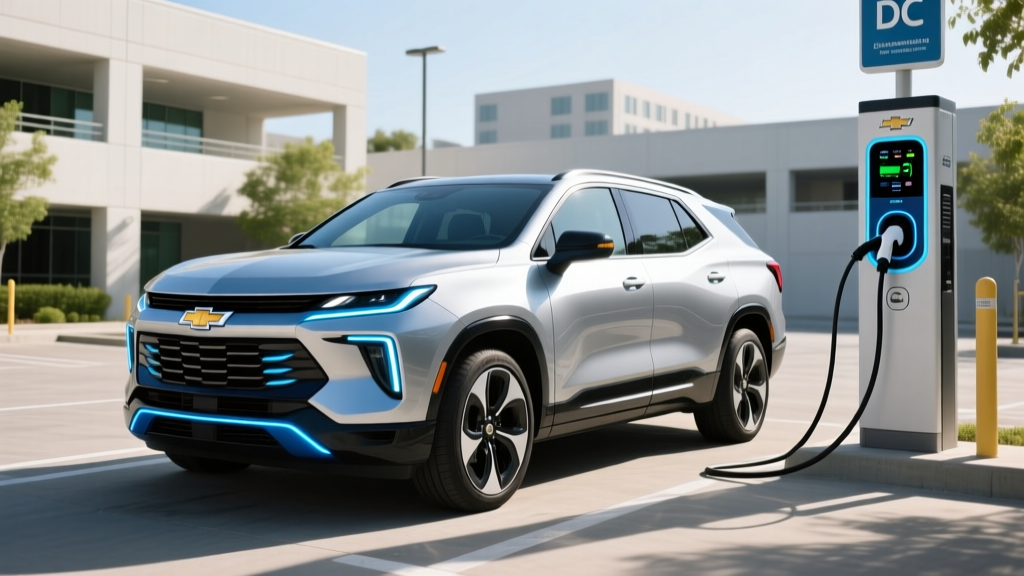
Tesla's Supercharger network remains a major ownership advantage. V3 Superchargers deliver up to 250 kW, and V4 stalls (rolling out through 2025–2026) support even higher power delivery for compatible vehicles. With NACS (North American Charging Standard) now adopted by most major automakers, Tesla's connector has become the industry standard — but Tesla owners have always had native access.
| Model | Max DC Fast Charge (kW) | 10–80% Time | Level 2 Home (kW) | Level 2 Miles/Hr |
|---|---|---|---|---|
| Model 3 RWD | 170 | ~25 min | 11.5 | ~37 |
| Model 3 Long Range / Perf | 250 | ~18 min | 11.5 | ~44 |
| Model Y RWD | 170 | ~25 min | 11.5 | ~35 |
| Model Y LR / Perf | 250 | ~20 min | 11.5 | ~40 |
| Model S / X | 250 | ~22 min | 11.5 | ~36 |
| Cybertruck | 250+ | ~20 min | 11.5 (17.2 w/ Wall Connector) | ~34–42 |
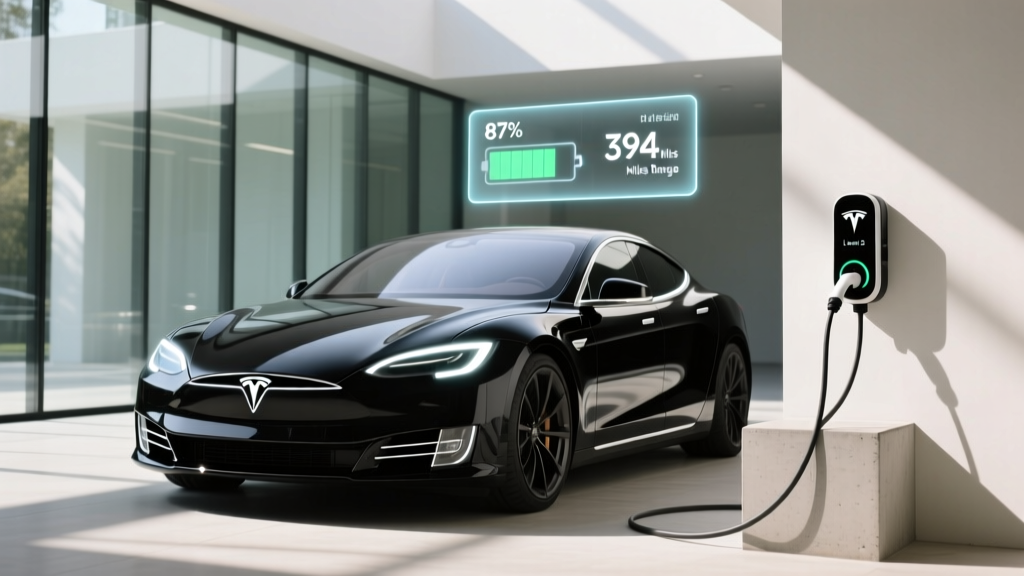
Home charging setup: A Tesla Wall Connector on a 60-amp circuit delivers up to 11.5 kW (48 amps continuous) for most models. That's roughly 35–44 miles of range added per hour — more than enough to fully replenish overnight. Installation typically costs $800–$2,000 depending on your panel capacity and run length; hire a licensed electrician for a site assessment.
Preconditioning matters. When you navigate to a Supercharger in the Tesla's built-in navigation, the car automatically warms the battery to optimal temperature for fast charging. Skipping preconditioning (for example, by driving to a charger without setting it as a destination) can add 5–10 minutes to your 10–80% session, particularly in cold weather.
Phantom Drain: How Long Does a Tesla Stay Charged When Parked?
This is the literal answer to "how long do a Tesla stay charged" — and it's where Tesla ownership differs from a gas car sitting in a driveway. EVs experience phantom drain: the battery slowly depletes even when parked, because onboard systems (Sentry Mode, battery thermal management, app connectivity) draw small amounts of power.
In our experience and consistent with owner reports across Tesla forums:
- Sentry Mode OFF, sleep mode normal: Expect a loss of roughly 1–2% SoC per day (about 2–5 miles of range on a Model Y Long Range).
- Sentry Mode ON: Loss can jump to 5–10% per day, depending on how frequently cameras activate and record events.
- Extreme cold (below 20°F): The BMS may run battery heating cycles, adding 1–3% daily drain on top of the reduced available capacity from cold temperatures.
Practically, a Model Y Long Range parked at 80% SoC with Sentry Mode off will still show roughly 70–75% after a week. Leave it at an airport for two weeks with Sentry Mode active, and you could return to 40–50% — still plenty to drive home, but worth planning for. Tesla's app lets you monitor SoC remotely, and the car will alert you if the battery drops below a threshold you set.
Performance, Interior, and Tech: What You Get for the Money
Tesla's lineup in 2026 spans from the value-oriented Model 3 RWD to the six-figure Model S Plaid and Cybertruck. Here's a breakdown of the key specs that matter beyond range.
| Model | 0–60 mph | Horsepower | Drivetrain | Cargo (cu ft) | Base MSRP |
|---|---|---|---|---|---|
| Model 3 RWD | 5.8s | 283 | RWD | 23 (rear) + 3 (frunk) | $38,990 |
| Model 3 Long Range AWD | 4.2s | 366 | Dual-Motor AWD | 23 + 3 | $45,990 |
| Model 3 Performance | 2.9s | 510 | Dual-Motor AWD | 23 + 3 | $52,990 |
| Model Y RWD | 6.5s | 295 | RWD | 30 (rear) + 4 (frunk) | $44,990 |
| Model Y Long Range AWD | 4.8s | 384 | Dual-Motor AWD | 30 + 4 | $48,990 |
| Model Y Performance | 3.5s | 456 | Dual-Motor AWD | 30 + 4 | $52,490 |
| Model S Long Range | 3.1s | 670 | Dual-Motor AWD | 28 + 5 (frunk) | $74,990 |
| Model S Plaid | 1.99s | 1,020 | Tri-Motor AWD | 28 + 5 | $89,990 |
| Model X Long Range | 3.8s | 670 | Dual-Motor AWD | 88 (max) + 7 (frunk) | $79,990 |
| Model X Plaid | 2.5s | 1,020 | Tri-Motor AWD | 88 + 7 | $94,990 |
| Cybertruck AWD | 4.1s | 600 | Dual-Motor AWD | 68 (bed + vault) | $79,990 |
Interior and tech highlights: All 2026 Teslas feature a minimalist cabin anchored by a 15.4-inch center touchscreen (Model 3/Y) or 17-inch screen (Model S/X/Cybertruck). The "Highland" refresh on Model 3 introduced ventilated front seats, ambient lighting, rear-seat ventilation, and a quieter cabin. Model Y received a similar "Juniper" update for 2025–2026 with improved suspension tuning, a rear touchscreen, and power-folding second row.
Driver assistance: Basic Autopilot (lane centering + adaptive cruise) is standard. Full Self-Driving (Supervised) remains a $8,000 add-on or $99/month subscription. FSD Supervised is an SAE Level 2 system — you must keep your hands on the wheel and eyes on the road at all times. It is not autonomous driving. Tesla's camera-only vision approach has improved significantly, but it still struggles in heavy rain, construction zones, and faded lane markings.
Pricing, Tax Credits, and Total Cost of Ownership
Tesla's pricing has shifted multiple times over the past few years, but the 2026 lineup offers clear tiers. The critical question for most buyers is whether the vehicle qualifies for the federal §30D EV tax credit, which provides up to $7,500 — now available as a point-of-sale rebate transferred to the dealer, effectively reducing your out-of-pocket cost at purchase.
| Model | Base MSRP | §30D Credit (est.) | Effective Price | Credit Eligibility Notes |
|---|---|---|---|---|
| Model 3 RWD | $38,990 | Up to $7,500 | ~$31,490 | Eligible — LFP battery sourcing may affect partial credit |
| Model 3 Long Range AWD | $45,990 | Up to $7,500 | ~$38,490 | Eligible — below $55K sedan cap |
| Model 3 Performance | $52,990 | Up to $7,500 | ~$45,490 | Eligible — below $55K sedan cap |
| Model Y RWD | $44,990 | Up to $7,500 | ~$37,490 | Eligible — below $80K SUV cap |
| Model Y Long Range AWD | $48,990 | Up to $7,500 | ~$41,490 | Eligible — below $80K SUV cap |
| Model Y Performance | $52,490 | Up to $7,500 | ~$44,990 | Eligible — below $80K SUV cap |
| Model S / X | $74,990+ | $0 | Full MSRP | Exceeds MSRP cap for sedans ($55K) |
| Cybertruck AWD | $79,990 | Up to $7,500 | ~$72,490 | Eligible — classified as truck, below $80K cap |
- Income caps: AGI must not exceed $300,000 (married filing jointly), $225,000 (head of household), or $150,000 (single).
- MSRP caps: Sedans ≤ $55,000; SUVs, vans, and trucks ≤ $80,000.
- Battery sourcing: Critical minerals and battery components must meet escalating domestic-sourcing thresholds. Check IRS.gov for the current year's approved vehicle list — eligibility can change mid-year.
- Point-of-sale transfer: You can transfer the credit to the dealer at purchase for an immediate price reduction, or claim it on your tax return.
- Consult a tax professional to confirm your personal eligibility. Rules are subject to legislative change.
5-year ownership cost perspective: A Model Y Long Range at ~$41,500 after the credit, charged primarily at home on a national average electricity rate of $0.17/kWh, costs roughly $1,400 per year in energy. A comparable gas-powered SUV getting 28 MPG combined at $3.50/gallon would cost about $2,100 annually in fuel. Over five years, that's ~$3,500 in fuel savings — plus significantly lower maintenance costs (no oil changes, fewer brake replacements thanks to regenerative braking). Insurance tends to run 15–25% higher on Teslas than comparable gas vehicles, so factor that into your budget.
Tesla vs. the Competition: Is It Still the Best Choice?
The EV landscape in 2026 is dramatically more competitive than it was even two years ago. Here's how Tesla stacks up against key rivals.
Model 3 vs. Hyundai Ioniq 6 / BMW i4: The Ioniq 6 offers comparable range (361 mi EPA) and faster 800V charging at a similar price, but Tesla's Supercharger network and software ecosystem remain unmatched. The BMW i4 is more luxurious but starts $15K+ higher.
Model Y vs. Hyundai Ioniq 5 / Ford Mustang Mach-E / Chevrolet Equinox EV: The Model Y Long Range still leads in cargo space and Supercharger access. The Ioniq 5 charges faster on 800V architecture (10–80% in ~18 min at 350 kW). The Equinox EV undercuts on price but offers less range and performance. The refreshed 2026 Mach-E has narrowed the gap in ride quality and tech.
Model S/X vs. Lucid Air / Rivian R1S: The Lucid Air Grand Touring beats the Model S on EPA range (516 mi) and luxury. The Rivian R1S offers genuine off-road capability and three-row seating that the Model X can't match with its awkward rear cabin. Model S/X are aging platforms at this point.
- Supercharger network reliability is your top priority for road trips
- You value over-the-air software updates and a minimalist tech-forward cabin
- You want the best resale value in the EV segment (historically strong, though narrowing)
- You're buying a Model 3 or Model Y — the value sweet spots
- You want 800V ultra-fast charging (Hyundai/Kia/Genesis)
- You need a third row or serious off-road capability (Rivian, Kia EV9)
- Interior luxury and ride comfort are paramount (BMW, Lucid, Mercedes)
- You want Apple CarPlay/Android Auto (Tesla does not support either)
Warranty Coverage and Battery Longevity
Tesla's warranty structure is straightforward and competitive with the broader EV market:
- Basic Vehicle Limited Warranty: 4 years / 50,000 miles, whichever comes first.
- Battery and Drive Unit Warranty (Model 3/Y RWD with LFP): 8 years / 100,000 miles, with a minimum 70% capacity retention guarantee.
- Battery and Drive Unit Warranty (Long Range / Performance / Model S/X): 8 years / 120,000 miles, with a minimum 70% capacity retention guarantee.
- Cybertruck: 8 years / 120,000 miles battery and drive unit.
In practice, Tesla battery degradation has proven modest for most owners. Data aggregated from fleet reports and owner tracking shows an average capacity loss of roughly 5–8% over the first 100,000 miles for NMC packs, with degradation slowing significantly after the initial break-in period. LFP packs show similar or slightly better retention, with the added benefit of tolerance for 100% charging. A full battery replacement out of warranty is expensive — $12,000–$20,000 depending on the model — but is rarely needed within the typical ownership window.
Pros, Cons, and Who Should Buy a Tesla
- Supercharger network — the most reliable and extensive DC fast-charging network in North America
- Class-leading software, OTA updates, and mobile app integration
- Strong efficiency (kWh/100mi) across the lineup
- Competitive pricing on Model 3/Y, especially after §30D credit
- LFP option on base trims allows worry-free 100% daily charging
- Expansive cargo space in Model Y and Model X
- No Apple CarPlay or Android Auto support
- Minimalist interior isn't for everyone — limited physical controls
- Model S/X platforms are aging vs. newer luxury EV competitors
- Insurance premiums tend to be above segment average
- Panel gaps and build consistency have improved but still draw criticism
- FSD (Supervised) remains a Level 2 system despite its name and price
- Service center wait times can be long in high-density markets
Who a Tesla suits best:
- Commuters and daily drivers: Model 3 RWD or Model Y RWD — affordable after the tax credit, LFP battery for 100% daily charging, and home charging makes "refueling" effortless.
- Families needing cargo space: Model Y Long Range AWD — 30+ cu ft of cargo room, 320 mi range, and Supercharger access for road trips.
- Road-trip enthusiasts: Any Long Range variant — Tesla's Supercharger network removes the charging-desert anxiety that still plagues non-Tesla EVs on rural routes.
- Performance seekers: Model 3 Performance or Model S Plaid — supercar-rivaling acceleration at a fraction of the price, with daily-driver practicality.
- Truck buyers wanting electric: Cybertruck — if the polarizing design works for you and you can stomach the $80K price tag (eligible for the credit as a truck).
Frequently Asked Questions
How long does a Tesla battery last before needing replacement?
Based on fleet data and owner reports, Tesla batteries typically retain 85–92% of original capacity at 100,000 miles. The warranty guarantees at least 70% retention at 100,000–120,000 miles (depending on model). Many Tesla packs are projected to last 200,000+ miles before dropping below 70% — effectively the life of the vehicle for most owners. Full replacement, if needed out of warranty, costs $12,000–$20,000.
Does a Tesla lose charge when parked for days or weeks?
Yes — this is called phantom drain. With Sentry Mode off and normal sleep settings, expect a loss of 1–2% SoC per day. With Sentry Mode active, that can jump to 5–10% daily. For long-term parking (airport, vacation), turn off Sentry Mode, disable cabin overheat protection if safe, and leave the car plugged in if possible. The Tesla app lets you monitor SoC remotely.
Is it better to charge a Tesla to 80% or 100%?
It depends on your battery chemistry. If you have an LFP battery (Model 3 RWD, Model Y RWD), Tesla recommends charging to 100% at least once a week for BMS calibration. If you have an NMC battery (Long Range, Performance, Model S/X), set your daily charge limit to 80% and only charge to 100% immediately before a long trip. This practice significantly extends long-term battery health.
How much does it cost to charge a Tesla at home vs. Supercharger?
At the US average residential electricity rate of ~$0.17/kWh, fully charging a Model Y Long Range (~75 kWh usable) costs about $12.75 for 320 miles of range — roughly 4 cents per mile. Supercharger pricing varies by location and time of day, averaging $0.25–$0.40/kWh, making a full charge $18.75–$30. For comparison, a 28 MPG gas SUV at $3.50/gallon costs about 12.5 cents per mile.
Does the Tesla Model Y qualify for the $7,500 federal tax credit in 2026?
Yes — all Model Y trims fall under the $80,000 MSRP cap for SUVs and are currently on the IRS eligible vehicle list. However, your personal eligibility depends on your adjusted gross income (≤$300K joint, ≤$150K single) and the battery sourcing requirements for the specific manufacturing batch. Always verify on IRS.gov and with a tax professional before purchasing.
How does cold weather affect Tesla range?
In temperatures below freezing, expect a 15–30% reduction in available range depending on severity and driving conditions. This comes from increased cabin heating demand, battery resistance, and reduced regenerative braking effectiveness. Using the seat heaters and steering wheel heater instead of cranking cabin heat can recover some range. Preconditioning the battery while plugged in (scheduled departure feature) minimizes losses and improves charging speed at your first Supercharger stop.
Can I use non-Tesla chargers with my Tesla?
Yes. All Teslas come with a NACS (Tesla) connector. With the growing adoption of NACS across the industry, more third-party networks are adding NACS cables. For CCS chargers, Tesla sells an official CCS adapter (~$250) that works at Electrify America, EVgo, and other CCS networks. The adapter is essential for road trips in areas where Superchargers are sparse.
Sources: fueleconomy.gov (EPA range and efficiency data), Tesla warranty information, IRS §30D Clean Vehicle Credits.