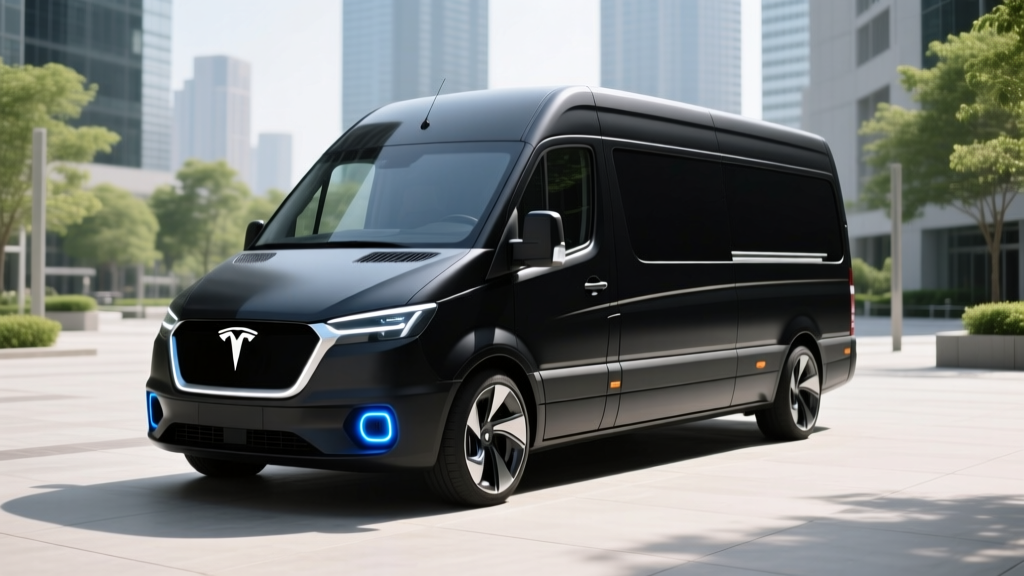
If you've searched for a "Tesla Sprinter van," you're not alone. The idea of a Tesla-badged full-size electric cargo or passenger van — one that rivals the Mercedes-Benz Sprinter in utility while delivering Tesla's Supercharger access and software ecosystem — is one of the most requested vehicles in the EV community. As of early 2026, however, Tesla has not officially announced, teased, or confirmed a Sprinter-class van.
What does exist is a growing segment of electric commercial vans from other manufacturers, plus persistent speculation that Tesla's next-generation platform could eventually spawn a larger utility vehicle. This guide separates confirmed fact from rumor, gives you the specs of the closest electric vans you can buy today, and explains what a Tesla electric van would need to deliver to compete.
Why the Tesla Sprinter Van Rumor Won't Die
Several factors keep the Tesla electric van speculation alive:
- The commercial EV van market is booming. The Ford E-Transit, Mercedes eSprinter, Rivian EDV (built for Amazon), and BrightDrop Zevo have proven that fleet operators will buy electric vans when the numbers work. Tesla sees a market it doesn't serve.
- Tesla's platform modularity. The structural battery pack and integrated drive units used in the Cybertruck and next-gen vehicles could theoretically scale to a van-sized platform.
- Elon Musk's historical comments. Musk mentioned a "Tesla Van" concept as early as 2017, describing it as a potential future product after the Semi and Roadster. No timeline was ever given.
- The Cybertruck's polarizing reception. With Cybertruck sales below initial projections, analysts have speculated Tesla might redirect engineering resources toward a higher-volume commercial vehicle.
Despite these signals, Tesla's product roadmap for 2026 remains focused on next-generation affordable models, the Semi ramp-up, and the Optimus robot program. A full-size van does not appear on any confirmed timeline.
Speculative Tesla Van Specs: What the Platform Could Deliver
Based on Tesla's current powertrain architecture, battery chemistry options, and the competitive landscape, here's what a plausible Tesla Sprinter-class van might offer if it reached production. These figures are analyst estimates, not manufacturer specifications.
| Attribute | Estimated Spec |
|---|---|
| Battery Capacity | ~100–120 kWh usable (LFP or NMC) |
| EPA Est. Range | ~200–250 miles (unloaded) |
| Max DC Fast Charge | ~250 kW (V3 Supercharger) |
| 10–80% DC Charge Time | ~30–40 minutes (est.) |
| Level 2 Home Charging | ~11.5 kW / ~25 mi/hr |
| Drivetrain | RWD or Dual-Motor AWD |
| Horsepower | ~300–450 hp (config dependent) |
| 0–60 mph | ~5.5–7.0 seconds (unloaded) |
| Cargo Volume | ~250–530 cu ft (depending on wheelbase/roof) |
| Payload Capacity | ~2,500–3,500 lbs (est.) |
| Starting MSRP | ~$55,000–$70,000 (est.) |
Electric Vans You Can Actually Buy in 2026
Since the Tesla Sprinter van remains speculative, here are the electric commercial vans currently available in the US market with confirmed EPA data and pricing.
| Spec | Ford E-Transit | Mercedes eSprinter | BrightDrop Zevo 600 |
|---|---|---|---|
| Battery | 68 kWh (NMC) | 113 kWh (NMC) | 165 kWh (NMC) |
| EPA Range | 126 mi (low roof cargo) | ~200 mi (high roof) | ~272 mi |
| Max DC Charge | 115 kW | 115 kW | 120 kW |
| 10–80% DC Time | ~45 min | ~42 min | ~55 min |
| Horsepower | 266 hp | 201 hp | ~300 hp |
| Cargo Volume | 246.7–487.3 cu ft | up to 532 cu ft | up to 615 cu ft |
| Starting MSRP | ~$48,000 | ~$74,000 | ~$65,000 (fleet) |
| Warranty | 8 yr / 100,000 mi (battery) | 8 yr / 100,000 mi | 8 yr / 100,000 mi |
Sources: EPA / fueleconomy.gov — Ford E-Transit, Mercedes-Benz Vans USA.
Charging Realities for Electric Commercial Vans
Charging speed is the single biggest operational concern for electric van buyers. Unlike passenger EVs, commercial vans often run fixed routes and can't afford 45-minute charging detours mid-shift. Here's how the current market stacks up:
DC Fast Charging (Level 3)
Most current electric vans peak between 115–120 kW on DC fast chargers — well below the 250 kW that Tesla's V3 Superchargers can deliver. This is a key advantage a Tesla van would bring: access to the Supercharger network (the largest and most reliable in North America) at speeds that could cut charging downtime by 30–40% compared to competitors.
Depot / Home Level 2 Charging
For fleet operators, overnight depot charging on Level 2 (240V) is the primary refueling strategy. At 11.5 kW, a van with a 100 kWh battery needs roughly 9–10 hours for a full charge — workable for overnight fleet rotation but tight for multi-shift operations.
| Level | Power | Miles Added per Hour | Use Case |
|---|---|---|---|
| Level 1 (120V) | ~1.4 kW | ~2–3 mi/hr | Emergency top-off only |
| Level 2 (240V) | 7.7–11.5 kW | ~16–25 mi/hr | Overnight depot / home |
| DC Fast (CCS/NACS) | 115–250 kW | ~150–300 mi/hr | Mid-route / opportunity charging |
Charge curve reality: No van sustains peak kW for the entire session. Expect charge rates to taper significantly above 80% State of Charge (SoC) to protect battery health. A "115 kW" van may average only 65–75 kW over a full 10–80% session.
Federal Tax Credits for Electric Vans: §30D and §45W Explained
Electric van buyers need to understand two separate federal incentive programs, as the rules differ substantially between personal and commercial purchases.
§30D Clean Vehicle Credit (Personal Use)
If you're buying an electric van for personal use (e.g., a camper conversion or large family hauler), the IRS §30D credit applies with these constraints:
- MSRP cap: Vans classified as SUVs/pickups/vans qualify up to $80,000 MSRP
- Income cap: $150,000 single / $225,000 head of household / $300,000 joint
- Battery sourcing: Critical minerals and battery component requirements phase in annually through 2029
- Maximum credit: Up to $7,500, split between critical minerals ($3,750) and battery components ($3,750)
- Point-of-sale transfer: Eligible buyers can transfer the credit to the dealer for an immediate price reduction
§45W Commercial Clean Vehicle Credit (Fleet/Business)
Fleet operators and businesses purchasing electric vans typically qualify under §45W instead:
- Maximum credit: $7,500 for vehicles under 14,000 lbs GVWR; $40,000 for heavier vehicles
- No income cap — applies to businesses and tax-exempt organizations
- No MSRP cap
- Cannot be combined with §30D on the same vehicle
For the Ford E-Transit (~$48,000 MSRP), many fleet buyers can capture the full $7,500 under §45W, bringing the effective price to ~$40,500 before state incentives. Always consult a tax professional to confirm eligibility for your specific situation.
What a Tesla Van Would Need to Win
If Tesla enters the electric van market, it would need to address the specific pain points fleet operators and van-life builders face with current offerings:
✅ Pros a Tesla Van Could Offer
- Supercharger network access (17,000+ stalls in North America)
- 250 kW DC fast charging — 30–40% faster than competitors
- Over-the-air updates and fleet management software
- Integrated Autopilot / FSD (Supervised) for highway route assist
- Lower operating cost per mile (Tesla's efficiency advantage)
- Strong residual value brand reputation
❌ Challenges Tesla Would Face
- No existing commercial van dealer/service network
- Tesla's service centers already strained with current models
- Van buyers need upfitting partnerships (shelving, refrigeration)
- Fleet sales require dedicated B2B support infrastructure
- Cargo van configurations require different engineering priorities
- Tesla's build-quality reputation concerns for commercial duty
The Camper Van / Van-Life Angle
A significant portion of "Tesla Sprinter van" searches come from the van-life and camper conversion community. These buyers want a high-roof, long-wheelbase electric van with 200+ miles of range that can serve as both daily driver and adventure platform.
The current reality is harsh: no electric van on the US market today delivers the combination of range, interior volume, and off-grid capability that a diesel Sprinter provides. The Mercedes eSprinter comes closest with ~200 miles of range and 532 cu ft of cargo space, but at $74,000+ MSRP, it's a premium proposition before conversion costs.
A Tesla van with 250 miles of range, Supercharger access for road trips, and Vehicle-to-Load (V2L) capability to power appliances would be transformative for this market. But again — this vehicle does not exist as of 2026.
Frequently Asked Questions
Does Tesla make a Sprinter van?
No. As of early 2026, Tesla has not announced, produced, or opened pre-orders for any full-size cargo or passenger van. Tesla's current lineup consists of the Model S, Model 3, Model X, Model Y, and Cybertruck.
What is the best electric van to buy in 2026?
For fleet operators with routes under 120 miles, the Ford E-Transit offers the best value at ~$48,000 before credits. For longer routes, the BrightDrop Zevo 600 (~272 miles EPA) or Mercedes eSprinter (~200 miles) are the leading options. Your choice depends on route length, payload needs, and charging infrastructure.
How much would a Tesla van cost?
There is no official pricing because the vehicle doesn't exist. Industry analysts estimate a Tesla electric van would start between $55,000–$70,000 to compete with the Mercedes eSprinter while undercutting it on price-per-mile of range. This is speculative.
Can I convert a Tesla into a camper van?
Some owners have converted Model X vehicles for light camping, but the lack of a flat load floor, limited interior height, and no V2L capability in most Tesla models make them poor camper platforms compared to a Sprinter-class van.
Will Tesla ever make a commercial van?
Tesla has never confirmed a van program. Elon Musk mentioned the concept in 2017 but provided no timeline. Given Tesla's current focus on affordable models, the Semi, and AI/robotics, a van is unlikely before 2028 at the earliest. Follow Tesla's official blog for any announcements.
Do electric vans qualify for the federal tax credit?
Yes, under either §30D (personal use, income/MSRP caps apply) or §45W (commercial/fleet use, no income or MSRP caps). The Ford E-Transit and Mercedes eSprinter may qualify for up to $7,500 depending on battery sourcing compliance and buyer eligibility. Check current rules at IRS.gov.
Bottom Line: Wait or Buy Now?
If you need an electric van for business or personal use today, the Ford E-Transit, Mercedes eSprinter, and BrightDrop Zevo are proven, available options with established service networks and confirmed federal tax credit eligibility. Don't wait for a Tesla van that has no announced timeline.
If you're a fleet operator planning 3–5 years out, it's worth monitoring Tesla's product announcements — a Tesla van with Supercharger access and 250 kW charging would genuinely reshape the segment. But "worth monitoring" is not the same as "worth delaying a purchase for."
For the van-life community dreaming of an electric adventure rig: the honest answer is that the electric van market hasn't caught up to your vision yet. Diesel Sprinters, despite their emissions, remain the practical choice for long-range, off-grid camper builds in 2026. Watch this space — it will change, just not this year.