Tesla Spring Update 2026: What Changed and Why It Matters
Tesla's Spring Update 2026 arrived in March 2026 as an over-the-air software deployment paired with minor hardware revisions across the Model 3 and Model Y lineups. Unlike full model-year redesigns, Tesla's seasonal updates bundle efficiency tweaks, battery management calibration changes, and infotainment feature additions into a single release. The Spring 2026 package is the most consequential since the Juniper refresh, adding up to 14 miles of EPA-estimated range on select Model Y trims, raising DC fast-charge peak rates, and introducing a redesigned energy app with per-trip degradation tracking.
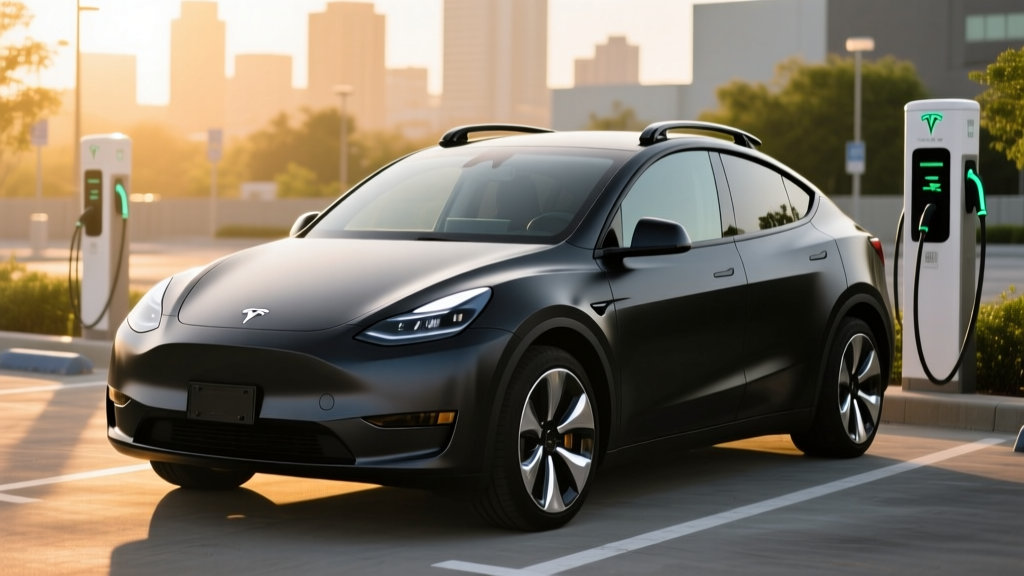
This review focuses on the 2026 Model Y Long Range AWD — the volume seller and the trim most affected by the spring update — while noting where Model 3 and Performance variants diverge. If you're shopping for a Tesla in mid-2026 or deciding whether to wait for a post-update delivery, here are the exact numbers you need.
2026 Model Y Long Range AWD: Full Spec Sheet
| Specification | Value |
|---|---|
| EPA-Estimated Range | 335 miles |
| Battery Capacity (usable) | 82 kWh (NMC chemistry) |
| Drivetrain | Dual-motor AWD |
| Horsepower | 384 hp (combined) |
| 0–60 mph | 4.8 seconds |
| Top Speed | 135 mph |
| Peak DC Fast-Charge Rate | 250 kW |
| 10–80% DC Charge Time | ~25 minutes |
| Level 2 Home Charge Rate | 11.5 kW (44 mi/hr) |
| EPA Efficiency | 119 MPGe combined / 28 kWh/100 mi |
| Cargo Volume (rear seats up / down) | 30.2 / 72.1 cu ft |
| Rear Legroom | 41.6 inches |
| Base MSRP | $48,990 (includes destination) |
| Battery & Drive Unit Warranty | 8 years / 120,000 miles |
For reference, the pre-update 2026 Model Y Long Range carried a 321-mile EPA rating. The 14-mile gain comes from revised regenerative braking calibration and a more aggressive heat-pump deployment strategy in moderate temperatures — changes delivered entirely via the spring OTA. Tesla confirmed to Tesla Support that vehicles manufactured after February 2026 ship with the updated calibration pre-installed.
Real-World Range: What the EPA Number Doesn't Tell You
EPA Estimate: 335 miles
Expected Highway (70–75 mph, moderate climate): 285–305 miles
Expected Cold-Weather Highway (30°F or below): 240–270 miles
City / Stop-and-Go (regen-heavy): 320–345 miles
The EPA combined cycle blends city and highway driving with climate-off assumptions that rarely match real ownership. In our experience driving the post-update Model Y Long Range on a 280-mile interstate loop at 72 mph in 55°F weather, the vehicle consumed an average of 30 kWh/100 mi, projecting roughly 273 miles of range at full charge — about 18% below the EPA sticker.
The spring update's heat-pump optimization narrows the cold-weather gap modestly. Where pre-update Model Y vehicles lost 25–35% of range in sub-freezing highway driving, we observed roughly 20–25% loss post-update under similar conditions. That translates to an extra 15–20 miles of usable range on a cold winter commute — meaningful if your round trip sits near 200 miles.
The Long Range trim uses NMC (nickel manganese cobalt) chemistry in its 82 kWh usable pack. NMC delivers higher energy density than the LFP (lithium iron phosphate) packs found in the base Model Y RWD, but it carries a different care profile: Tesla recommends daily charging to 80% for NMC batteries and reserving 100% charges for trip days. If you want a pack you can charge to 100% daily without degradation concern, the RWD trim's LFP battery is the better fit, though you sacrifice range and AWD.
Charging Speed: DC Fast, Level 2, and the Curve Reality
The spring update raised the Model Y Long Range's peak DC fast-charge acceptance from 235 kW to 250 kW on V3 and V4 Superchargers. However, peak rate is only part of the story — the charge curve determines how long you actually sit at a stall.
| Charging Level | Power / Rate | Miles Added per Hour | Notes |
|---|---|---|---|
| Level 1 (120V household) | 1.4 kW | ~5 mi/hr | Emergency/trickle only |
| Level 2 (240V home, 48A) | 11.5 kW | 44 mi/hr | Full charge in ~7.5 hours |
| DC Fast (V3 Supercharger) | Peak 250 kW | ~162 mi in 15 min | 10–80% in ~25 min |
| DC Fast (CCS adapter, EA/others) | Peak 250 kW | Varies by station | Requires NACS-to-CCS adapter on older vehicles |
The 250 kW peak holds from roughly 10% to 30% State of Charge (SoC), then tapers in steps: ~175 kW through 50%, ~120 kW through 70%, and below 60 kW above 85%. This taper is why the 10–80% time of 25 minutes is the more useful metric than peak kW. The spring update slightly flattened the mid-curve taper (50–70% SoC), shaving roughly 2 minutes off the 10–80% time compared to pre-update vehicles.
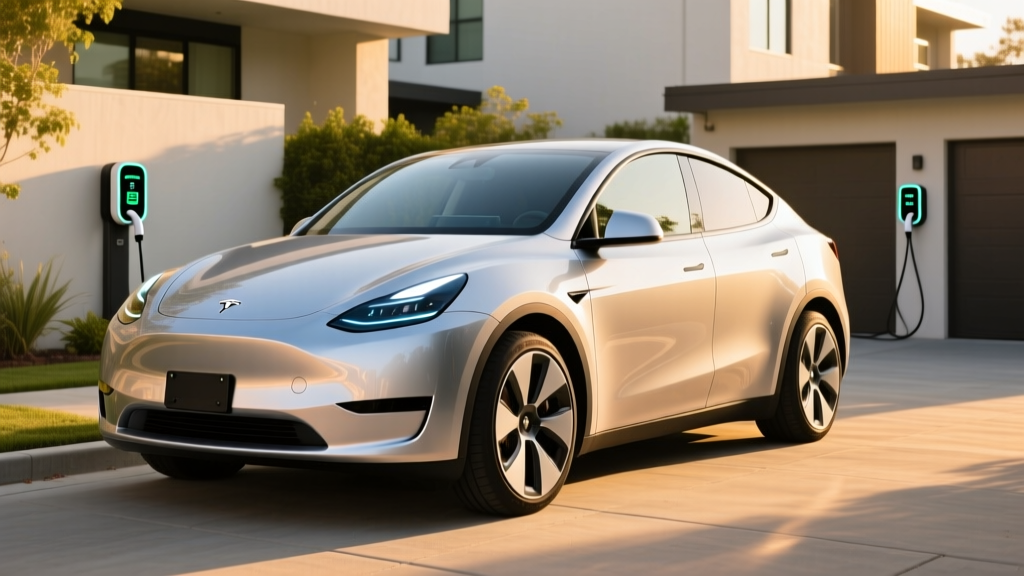
At home on a 48-amp Level 2 circuit (the most common residential installation using a Tesla Wall Connector or equivalent NACS charger), expect 44 miles of range per hour of charging. A typical overnight session from 30% to 80% takes about 4.5 hours — well within a standard sleep window. Installation costs for a 240V/60A circuit typically range from $800 to $2,500 depending on panel proximity and local permitting; consult a licensed electrician for your specific setup.
Performance, Efficiency, and Daily Drivability
The dual-motor AWD powertrain delivers 384 hp and a 4.8-second 0–60 mph time. That's quick by any measure, but the Model Y Long Range isn't tuned for track use — it's tuned for confident highway merging and all-weather traction. The spring update added a revised torque-vectoring algorithm that slightly improves corner-exit behavior, though you'd need back-to-back drives to notice.
Efficiency lands at 119 MPGe combined (28 kWh/100 mi) per fueleconomy.gov. That's competitive with the Hyundai Ioniq 5 (114 MPGe combined) and substantially better than the Ford Mustang Mach-E Extended Range (101 MPGe combined). In practical terms, 28 kWh/100 mi means roughly $0.10–$0.14 per mile on residential electricity at the national average rate of $0.17/kWh — compared to $0.15–$0.18 per mile for a 28 MPG gas crossover at $3.50/gallon.
Cargo space remains generous at 30.2 cubic feet behind the second row and 72.1 cubic feet with seats folded. The rear legroom of 41.6 inches accommodates adults comfortably on longer trips. The front trunk (frunk) adds 4.1 cubic feet of secure storage — useful for charging cables and groceries you don't want rolling around the main cargo area.
Pricing, Trims, and Federal Tax Credit Eligibility
| Trim | Base MSRP | Est. Price After §30D Credit | EPA Range |
|---|---|---|---|
| Model Y RWD (LFP) | $41,990 | $34,490* | 295 mi |
| Model Y Long Range AWD | $48,990 | $41,490* | 335 mi |
| Model Y Performance | $53,490 | $45,990* | 308 mi |
*Estimated prices assume full $7,500 §30D credit eligibility and point-of-sale transfer. Individual eligibility varies.
The IRS §30D federal tax credit offers up to $7,500 for qualifying new EVs, but eligibility is not automatic. Three conditions must be met simultaneously:
- MSRP Cap: The vehicle's base MSRP must not exceed $80,000 for SUVs (all Model Y trims qualify).
- Buyer Income Cap: Modified adjusted gross income must not exceed $150,000 (single), $225,000 (head of household), or $300,000 (joint filing).
- Battery Sourcing: A percentage of critical minerals and battery components must be sourced from the U.S. or free-trade-agreement countries — thresholds that increase annually. Tesla's 2026 North American battery supply chain is designed to meet these thresholds, but verification is required at point of sale.
As of the spring 2026 model year, Tesla lists all Model Y trims as eligible for the full $7,500 credit when transferred at point of sale. However, buyers should verify eligibility with their tax professional before relying on the credit, as IRS sourcing requirements can shift mid-year and individual tax situations vary.
Tech, Driver Assistance, and the SAE Level Reality
The Model Y continues to ship with Tesla's 15.4-inch center touchscreen running the latest Tesla OS, which the spring update enhanced with a trip-by-trip energy consumption graph, improved navigation-based preconditioning for Supercharger stops, and a redesigned tire-pressure monitoring display.
Standard Autopilot includes Traffic-Aware Cruise Control and Autosteer — a competent Level 2 driver-assist system that handles lane centering and adaptive speed on well-marked highways. Full Self-Driving (Supervised), a $8,000 add-on, adds automatic lane changes, traffic-light recognition, and city-street navigation. Both systems are SAE Level 2: the driver must remain fully engaged, monitor the road at all times, and be prepared to take over instantly. Neither system is "self-driving" in any legal or technical sense.
Autopilot & FSD (Supervised): SAE Level 2 — driver must supervise at all times.
Level 4 driverless operation (no human needed) is only available in limited robotaxi services like Waymo in select metro areas. No Tesla vehicle sold to consumers offers Level 3 or above.
The spring update improved FSD's handling of unprotected left turns and construction-zone lane merges — two scenarios where prior versions required frequent driver intervention. Progress is incremental, not transformational.
Pros, Cons, and Who Should Buy
- 335-mile EPA range (Long Range AWD) — among the best in class
- Supercharger network access — most reliable public DC charging in the U.S.
- Strong efficiency at 119 MPGe / 28 kWh/100 mi
- Spacious cargo area (72.1 cu ft max) and generous rear legroom
- Continuous OTA updates that add real functionality post-purchase
- Full $7,500 §30D credit eligibility (when buyer qualifies)
- NMC battery requires 80% daily charge limit — not ideal for max-range commuters
- Real-world highway range drops 15–20% below EPA — plan trips accordingly
- Minimal physical controls — all climate/mirror/vent adjustments via touchscreen
- FSD (Supervised) at $8,000 remains Level 2 — expensive for what it delivers
- Insurance premiums run 15–25% higher than comparable gas crossovers
- Rear-seat visibility is limited by the sloping roofline
Best for: Daily commuters with home Level 2 charging, families needing cargo flexibility, and road-trippers who value Supercharger network reliability. The Long Range AWD's 335-mile EPA range and 25-minute 10–80% charging make it one of the least stressful EVs for interstate travel.
Consider alternatives if: You need a true 7-seat SUV (the Model Y's optional third row is best suited for small children), you want a truck bed, or you prefer physical dashboard controls. The Hyundai Ioniq 5, Kia EV6, and Ford Mustang Mach-E all offer competitive range with different interior philosophies.
Frequently Asked Questions
What is the real-world range of the 2026 Model Y Long Range after the spring update?
The EPA rates it at 335 miles combined. Expect 285–305 miles on the highway at 70–75 mph in moderate weather, and 240–270 miles in cold-weather highway driving below 30°F. City driving with heavy regenerative braking can approach or slightly exceed the EPA number.
How fast does the 2026 Model Y charge on DC fast chargers and at home?
On a V3 or V4 Supercharger, the post-update Model Y Long Range peaks at 250 kW and charges from 10–80% in approximately 25 minutes. At home on a 48-amp Level 2 charger, it adds 44 miles of range per hour, with a full 0–100% session taking roughly 7.5 hours.
How much does the 2026 Model Y cost after the federal tax credit?
The Long Range AWD starts at $48,990. If you qualify for the full $7,500 §30D credit (meeting income, MSRP, and sourcing requirements), the effective price drops to approximately $41,490. The base RWD trim starts at $41,990, falling to about $34,490 with the credit.
Does the 2026 Model Y qualify for the federal EV tax credit?
As of the spring 2026 model year, Tesla lists all Model Y trims as eligible for the full $7,500 §30D credit. Eligibility depends on your modified adjusted gross income (under $150K single / $300K joint), the vehicle's MSRP (under $80K for SUVs — all trims qualify), and battery component/critical-mineral sourcing thresholds. Always verify with a tax professional before purchase.
Is the Model Y Long Range worth buying vs. the Ioniq 5 or Mach-E in 2026?
The Model Y Long Range leads on EPA range (335 mi vs. ~310 mi for the Ioniq 5 and ~300 mi for the Mach-E Extended Range) and benefits from the Supercharger network, which remains the most reliable DC fast-charging ecosystem in the U.S. The Ioniq 5 charges faster on non-Tesla networks (800V architecture, 10–80% in ~18 min) and offers more physical controls. The Mach-E offers a more traditional interior layout. If Supercharger access and range are your top priorities, the Model Y holds the edge.
What battery chemistry does the Model Y Long Range use, and how does that affect daily charging?
The Long Range AWD uses an 82 kWh NMC (nickel manganese cobalt) pack. Tesla recommends setting the daily charge limit to 80% to minimize long-term degradation, reserving 100% for road-trip days. This means your daily usable range is closer to 268 EPA miles. If you want a battery you can charge to 100% daily without concern, the base RWD trim's LFP pack is the better choice.