Tesla's Footprint in South Korea: What Buyers Need to Know in 2026
South Korea has become one of Tesla's most important markets outside North America and China. With over 70,000 Teslas registered on Korean roads and a Supercharger network that now spans from Seoul to Jeju, the question for prospective buyers isn't whether Tesla has a presence — it's whether a Tesla makes sense in the Korean EV ecosystem dominated by Hyundai, Kia, and Genesis.
This guide breaks down every Tesla model sold in South Korea for the 2026 model year with the exact numbers that matter: EPA and Korean-certified range, battery chemistry, DC fast-charge speeds, real-world highway expectations, pricing in both USD and KRW, and how Korea's EV subsidies interact with Tesla's cost of entry.
2026 Tesla Model Lineup Available in South Korea
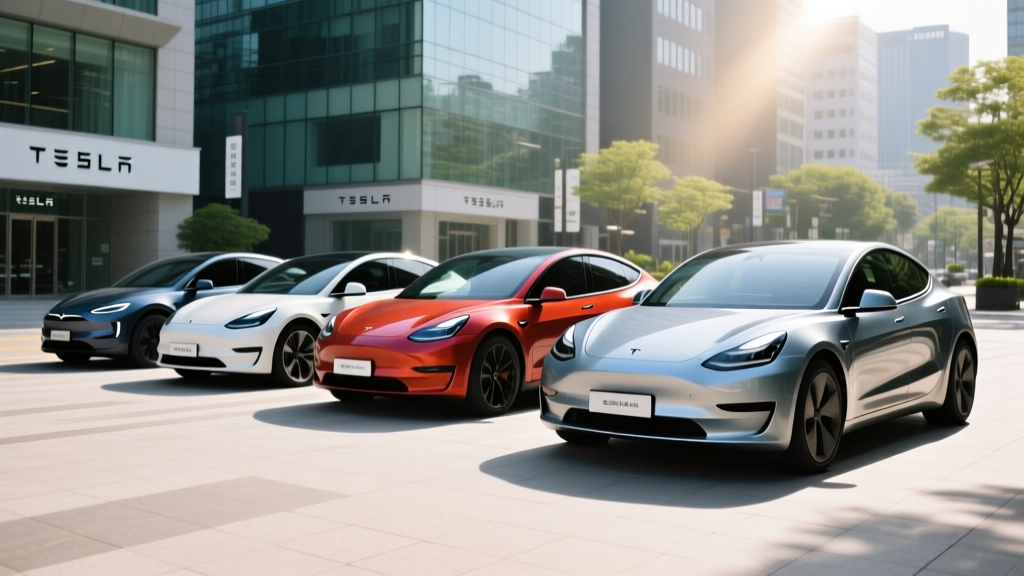
Tesla currently sells three models in South Korea: the Model 3 (sedan), the Model Y (compact SUV), and the Model S (flagship sedan, limited availability). The Cybertruck and Model X are not officially sold in the Korean market as of 2026 due to homologation and size-classification barriers.
| Spec | Model 3 RWD | Model 3 Long Range AWD | Model Y RWD | Model Y Long Range AWD | Model S |
|---|---|---|---|---|---|
| EPA Range | 272 mi | 363 mi | 260 mi | 330 mi | 402 mi |
| Battery (usable) | ~57.5 kWh (LFP) | ~75 kWh (NMC) | ~57.5 kWh (LFP) | ~75 kWh (NMC) | ~95 kWh (NMC) |
| Peak DC Charge | 170 kW | 250 kW | 170 kW | 250 kW | 250 kW |
| 10–80% DCFC Time | ~32 min | ~27 min | ~32 min | ~27 min | ~30 min |
| Level 2 Rate | 11 kW (44 mi/hr) | 11 kW (44 mi/hr) | 11 kW (44 mi/hr) | 11 kW (44 mi/hr) | 11.5 kW (41 mi/hr) |
| 0–60 mph | 5.8 sec | 4.2 sec | 6.6 sec | 4.8 sec | 3.1 sec (Plaid: 1.99) |
| Drivetrain | RWD | Dual-Motor AWD | RWD | Dual-Motor AWD | Dual-Motor AWD |
| Horsepower | 283 hp | 346 hp | 295 hp | 384 hp | 670 hp |
| EPA Efficiency | 142 MPGe (25 kWh/100mi) | 132 MPGe (26 kWh/100mi) | 138 MPGe (26 kWh/100mi) | 122 MPGe (28 kWh/100mi) | 124 MPGe (27 kWh/100mi) |
| Cargo Volume | 23 cu ft (trunk+frunk) | 23 cu ft | 72 cu ft (rear seats folded) | 72 cu ft | 28 cu ft |
| Warranty (Battery) | 8 yr / 100,000 mi | 8 yr / 120,000 mi | 8 yr / 100,000 mi | 8 yr / 120,000 mi | 8 yr / 150,000 mi |
| Base MSRP (USD) | $38,990 | $47,740 | $44,990 | $49,990 | $79,990 |
Real-World Range: What Korean Drivers Actually Experience
EPA estimates are measured under moderate conditions. In South Korea, your actual range will vary based on season, terrain, and driving style.
Model 3 Long Range AWD (EPA 363 mi): Expect ~290–310 mi on Korean highways at 100–110 km/h. In Seoul winter (–5°C to 0°C), range drops to ~240–270 mi due to cabin heating and battery resistance.
Model Y Long Range AWD (EPA 330 mi): Real-world highway: ~260–285 mi. Winter city driving: ~220–250 mi.
Model 3 RWD / Model Y RWD (LFP battery): LFP chemistry is more resilient to cold degradation than NMC — expect ~10–12% winter loss vs. 18–25% for Long Range models. EPA 272/260 mi translates to ~220–240 mi in mixed winter driving.
South Korea's mountainous terrain — particularly the Gyeongbu Expressway corridor between Seoul and Busan — adds elevation-related energy consumption that EPA testing doesn't fully capture. On the 325-km Seoul–Busan route, plan for one DC fast-charge stop at a Supercharger or EVgo-equivalent Korean network regardless of trim.
Korea's Ministry of Environment publishes its own certified range figures that often differ from EPA by 5–10%. The Model 3 Long Range is rated at approximately 438 km (272 mi) under Korea's test cycle, which tends to be more conservative than EPA for highway-heavy routes but more generous for city-only driving.
Charging Infrastructure: Superchargers and Korean Networks
Tesla operates over 80 Supercharger stations across South Korea as of 2026, with V3 (250 kW peak) and newer V4 cabinets deployed at major highway rest areas (휴게소) and urban shopping centers. The network covers all major expressways including Gyeongbu, Jungbu, Honam, and Yeongdong.
| Charging Method | Power (kW) | Miles Added per Hour | Typical Use Case |
|---|---|---|---|
| Level 1 (120V / Korean 220V outlet) | ~1.4–2.0 kW | 3–5 mi/hr | Emergency / overnight trickle |
| Level 2 Home Wall Connector (240V/220V) | 11–11.5 kW | 38–44 mi/hr | Daily home charging — full charge in 7–9 hrs |
| Tesla Supercharger V3 | Up to 250 kW peak | ~170 mi in 15 min (LR) | Road trips; 10–80% in ~27 min |
| Tesla Supercharger V4 | Up to 250+ kW | Similar to V3 for current vehicles | Newer stations with CCS adapter support |
| Korean Public DCFC (CCS, via adapter) | 50–100 kW typical | 30–65 mi/hr | Backup network; slower than Supercharger |
Charge-curve reality check: The 250 kW peak on Long Range models is sustained only between roughly 10–30% State of Charge. Above 50%, the rate tapers to ~120 kW; above 80%, it drops below 50 kW. The published 10–80% time of ~27 minutes reflects this taper. If you only charge to 60% (common for daily driving preservation), your stop drops to roughly 15–17 minutes.
LFP battery note: Tesla recommends charging LFP-equipped RWD models to 100% at least weekly, unlike NMC Long Range models where 80% daily is recommended. This means the RWD's smaller battery is less of a practical limitation than the raw kWh figure suggests — you get full use of all 57.5 kWh daily.
For non-Supercharger public charging in Korea, Tesla provides a CCS adapter (included with newer deliveries). Networks like Environmental Corporation's chargers, CharJi, and SK Signet-operated stations are accessible, though speeds and connector availability vary by location.
Pricing, Korean Subsidies, and Total Cost of Entry
Tesla's Korean pricing is set in KRW and fluctuates with exchange rates and periodic Tesla price adjustments. As of early 2026, approximate pricing translates as follows:
| Model / Trim | Approx. Price (KRW) | Approx. USD | Korean National Subsidy | Local Subsidy (Seoul) | Est. Net Price (KRW) |
|---|---|---|---|---|---|
| Model 3 RWD | ~52,990,000 ₩ | ~$38,990 | Up to 5,300,000 ₩ | Up to 2,000,000 ₩ | ~45,690,000 ₩ (~$33,600) |
| Model 3 Long Range | ~63,990,000 ₩ | ~$47,740 | Up to 5,300,000 ₩ | Up to 2,000,000 ₩ | ~56,690,000 ₩ (~$41,700) |
| Model Y RWD | ~56,990,000 ₩ | ~$44,990 | Up to 5,300,000 ₩ | Up to 2,000,000 ₩ | ~49,690,000 ₩ (~$36,500) |
| Model Y Long Range | ~65,990,000 ₩ | ~$49,990 | Up to 5,300,000 ₩ | Up to 2,000,000 ₩ | ~58,690,000 ₩ (~$43,100) |
| Model S | ~110,000,000+ ₩ | ~$79,990+ | None (price cap exceeded) | None | ~110,000,000+ ₩ |
Critical subsidy details for Korean buyers:
- National subsidy cap: South Korea's EV purchase subsidy is capped at vehicles priced below 85,000,000 ₩ (full subsidy) with partial subsidies up to ~95,000,000 ₩. The Model S exceeds this threshold and receives no national subsidy.
- Battery-sourcing factor: Korea's subsidy calculation includes a battery-density and sourcing multiplier. Tesla's LFP batteries (sourced from CATL in China) receive a slightly lower multiplier than Korean-made NMC batteries from LG Energy Solution and SK On, reducing the national subsidy by roughly 10–15% compared to equivalent Hyundai/Kia models.
- Local subsidies vary: Seoul offers up to 2,000,000 ₩; Busan up to 3,500,000 ₩; some rural provinces offer up to 6,000,000 ₩ to encourage EV adoption. Check your local government's EV portal for current figures.
- US federal tax credit (§30D): This applies only to US taxpayers purchasing vehicles delivered in the United States. Korean residents purchasing Teslas in Korea do not qualify for the US $7,500 credit. The IRS §30D rules are jurisdiction-specific.
Tesla vs. Hyundai Ioniq 5 and Kia EV6: The Korean Market Showdown
Any Korean Tesla buyer is cross-shopping against the Hyundai Ioniq 5 and Kia EV6 — both built on the E-GMP platform with 800V architecture and manufactured domestically. Here's how the core competitors stack up:
| Attribute | Tesla Model Y LR AWD | Hyundai Ioniq 5 LR AWD | Kia EV6 LR AWD |
|---|---|---|---|
| EPA Range | 330 mi | 290 mi | 282 mi |
| Battery | 75 kWh (NMC) | 77.4 kWh (NMC) | 77.4 kWh (NMC) |
| Peak DCFC | 250 kW | 350 kW (800V) | 350 kW (800V) |
| 10–80% DCFC | ~27 min | ~18 min | ~18 min |
| 0–60 mph | 4.8 sec | 5.1 sec | 4.5 sec |
| Cargo (rear folded) | 72 cu ft | 59.3 cu ft | 50.2 cu ft |
| Korean Subsidy Eligibility | Partial (LFP multiplier issue on RWD) | Full (domestic battery) | Full (domestic battery) |
| ADAS | Autopilot (SAE Level 2) | HDA 2 (SAE Level 2) | HDA 2 (SAE Level 2) |
| Base Price (KRW) | ~56,990,000 ₩ | ~54,900,000 ₩ | ~55,600,000 ₩ |
Tesla's Autopilot and optional FSD (Supervised) are SAE Level 2 driver-assistance systems. The driver must remain fully attentive with hands on or near the wheel at all times. These are not self-driving systems. Only Level 4 services like Waymo (currently unavailable in Korea) operate without a driver in the loop.
Where Tesla wins: Range per kWh efficiency (Tesla's thermal management remains class-leading), Supercharger network exclusivity and reliability, cargo volume, and over-the-air software updates that add features post-purchase. The Tesla app ecosystem and mobile service model also reduce dealership friction.
Where Hyundai/Kia win: DC fast-charge speed (800V architecture charges 10–80% roughly 9 minutes faster), full Korean subsidy eligibility, domestic service-center density, and more traditional interior layouts with physical buttons and a dedicated instrument cluster — areas where Tesla's minimalist approach draws polarized reactions.
Ownership Experience: Service, Warranty, and Long-Term Costs
Tesla's warranty in South Korea mirrors its global coverage:
- Basic Vehicle Warranty: 4 years / 80,000 km (50,000 mi)
- Battery & Drive Unit Warranty (RWD/LFP): 8 years / 160,000 km (100,000 mi), minimum 70% capacity retention
- Battery & Drive Unit Warranty (Long Range/NMC): 8 years / 192,000 km (120,000 mi), minimum 70% capacity retention
Tesla operates service centers in Seoul (multiple locations), Busan, and Daegu, supplemented by a robust mobile ranger service that handles roughly 70% of non-collision repairs at the owner's home or office. Body repair remains a pain point — Tesla-certified collision centers are limited, and parts lead times for body panels can stretch 3–6 weeks, a notable drawback compared to Hyundai's ubiquitous Korean service network.
Five-year estimated cost of ownership for a Model Y Long Range in Seoul (assuming 15,000 km/year, home Level 2 charging at Korean residential electricity rates of ~140 ₩/kWh):
- Electricity: ~4,200,000 ₩ over 5 years
- Equivalent gasoline (Sonata-class): ~11,500,000 ₩ over 5 years
- Insurance: Tesla premiums in Korea run 20–35% higher than comparable Hyundai/Kia EVs due to repair-cost actuarial data
- Maintenance: Minimal — no oil changes, brake pad life extended by regen braking. Expect ~500,000 ₩ over 5 years (cabin filter, wiper fluid, tire rotation)
Who Should Buy a Tesla in South Korea?
Choose Tesla if:
- You prioritize maximum EPA range per dollar and drive long highway routes frequently
- You want access to the Supercharger network for inter-city travel (Seoul–Busan, Seoul–Gangneung)
- You value OTA software updates and the Tesla app ecosystem
- You need maximum cargo volume (Model Y: 72 cu ft) for family gear or equipment
- You're comfortable with a minimalist interior and touchscreen-centric controls
Choose Hyundai Ioniq 5 / Kia EV6 if:
- Fastest possible DC charging is your priority (18 min vs 27 min, 10–80%)
- Maximum Korean subsidy eligibility matters (domestic battery sourcing advantage)
- You prefer physical buttons, a traditional instrument cluster, and a heads-up display
- Service-center proximity and quick body-repair turnaround are important to you
- You want 800V architecture for future-proofing on next-gen 350+ kW chargers
Best use cases for Tesla in Korea: The Model 3 Long Range is the sweet spot for Seoul-based commuters who take regular highway trips to Daejeon, Gwangju, or Busan. The Model Y Long Range suits families needing cargo flexibility and enough range for weekend trips to Gangwon-do ski resorts. The RWD trims are the value play for city-dominant drivers who can charge at home nightly and don't need AWD traction.
Pros and Cons at a Glance
- Best-in-class energy efficiency (kWh/100mi)
- Supercharger network reliability across all Korean expressways
- OTA updates continuously add features post-purchase
- Class-leading cargo volume in Model Y
- LFP battery allows daily 100% charging (RWD trims)
- Strong resale value in Korean used-EV market
- Minimal maintenance costs vs. ICE and some competitors
- Slower DCFC than 800V Hyundai/Kia competitors (27 vs 18 min)
- Reduced Korean subsidy due to LFP battery sourcing (RWD trims)
- Insurance premiums 20–35% higher than domestic EVs
- Limited Tesla-certified body repair shops outside Seoul metro
- No physical instrument cluster or heads-up display
- Model S priced out of all Korean EV subsidies
- FSD (Supervised) features partially limited in Korea due to regulatory mapping restrictions
Frequently Asked Questions
What is the real-world range of a Tesla in South Korea?
For the most popular model — the Model Y Long Range AWD — the EPA rates it at 330 miles (531 km). In real-world Korean driving, expect 260–285 mi (418–459 km) on highways at posted speeds, and 220–250 mi (354–402 km) during Seoul winters when temperatures drop below freezing. The LFP-equipped RWD models lose less range in cold weather (10–12% vs. 18–25% for NMC) but start with a smaller battery.
How fast does a Tesla charge on Korean Superchargers?
At a V3 Supercharger (250 kW peak), Long Range models charge from 10–80% in approximately 27 minutes. RWD/LFP models peak at 170 kW and take about 32 minutes for the same session. At home on a Tesla Wall Connector (Level 2, 11 kW), a full charge takes 7–9 hours — easily covering overnight replenishment. Korean public CCS chargers (via adapter) typically deliver 50–100 kW, making them suitable backup but slower than Superchargers.
How much does a Tesla actually cost after Korean subsidies?
A Model 3 RWD starts around 52,990,000 ₩ and drops to approximately 45,690,000 ₩ (~$33,600) after the maximum national subsidy (5,300,000 ₩) and Seoul local subsidy (2,000,000 ₩). The Model Y Long Range nets to roughly 58,690,000 ₩ (~$43,100) with the same incentives. The Model S exceeds Korea's subsidy price cap and receives no government assistance. Note: the US federal §30D tax credit does not apply to vehicles purchased and delivered in South Korea.
Is a Tesla worth buying over a Hyundai Ioniq 5 or Kia EV6 in Korea?
It depends on priorities. Tesla wins on range efficiency, Supercharger network access, cargo space (Model Y), and software. Hyundai/Kia win on DC charging speed (800V, ~9 min faster per session), full Korean subsidy eligibility, domestic service density, and traditional interior ergonomics. If you drive 50+ km daily on expressways and take regular inter-city trips, Tesla's range and Supercharger advantages compound. If you mostly drive in-city and value the fastest possible public charging, the Ioniq 5 or EV6 has a meaningful edge.
Does Tesla's Full Self-Driving work in South Korea?
FSD (Supervised) is available for purchase in Korea but operates as an SAE Level 2 driver-assist system — not autonomous driving. Some FSD features are limited in Korea due to regulatory differences and mapping coverage. Basic Autopilot (adaptive cruise, lane-keeping) works well on Korean expressways. The driver must remain fully engaged at all times. South Korea's autonomous-driving regulations are evolving, and Level 3/4 services remain in testing phases only.
What is Tesla's battery warranty in South Korea?
All Tesla models sold in Korea include an 8-year battery and drive-unit warranty. For RWD models (LFP battery), coverage extends to 160,000 km (100,000 mi) with a minimum 70% capacity retention guarantee. Long Range and Model S (NMC battery) receive 192,000 km (120,000 mi) and 240,000 km (150,000 mi) respectively, also at 70% minimum retention. If battery degradation exceeds this threshold within the warranty period, Tesla will repair or replace the battery pack at no cost.