The Real Cost of a Tesla Solar Roof in 2026
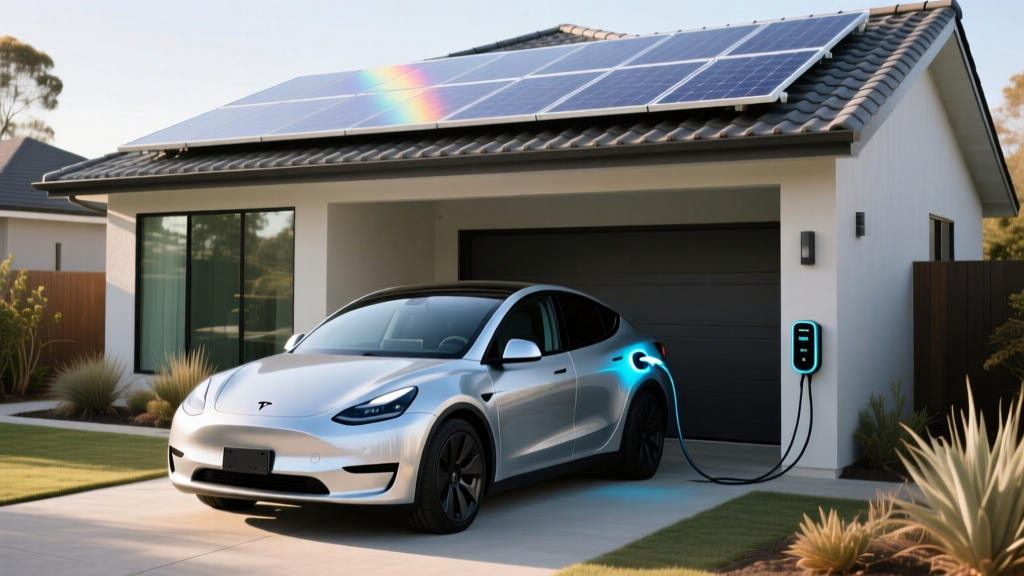
If you own an electric vehicle and are exploring ways to reduce your charging costs, you've likely searched for the cost for Tesla roof systems. The Tesla Solar Roof is a premium solar product that replaces traditional roofing materials with integrated solar tiles, and it's particularly appealing to EV owners who want to charge their vehicles with self-generated electricity. But the price tag is substantial, and the economics depend heavily on your energy consumption, local utility rates, and available incentives.
This guide breaks down the 2026 Tesla Solar Roof pricing structure, installation considerations, and whether it makes financial sense for EV owners who want to power their home charging setup with solar energy.
Understanding Tesla Solar Roof Pricing Structure
The Tesla Solar Roof is not a simple add-on solar panel system—it's a complete roof replacement with integrated photovoltaic tiles. This fundamental difference drives its higher cost compared to conventional solar panel installations.
| Component | Cost Range | Notes |
|---|---|---|
| Solar Roof Tiles (per sq ft) | $35-$55 | Varies by roof complexity |
| Typical 2,000 sq ft Home | $70,000-$110,000 | Before incentives |
| Powerwall 3 (per unit) | $12,000-$15,000 | 13.5 kWh capacity each |
| Installation & Permitting | $15,000-$25,000 | Includes old roof removal |
| Federal Solar Tax Credit (30%) | -$21,000 to -$33,000 | Applied to total system cost |
| Net Cost After Credit | $49,000-$82,000 | Varies by system size |
The cost per watt for a Tesla Solar Roof typically ranges from $4.50 to $6.50, which is significantly higher than conventional solar panel systems that average $2.50 to $3.50 per watt according to the U.S. Department of Energy. However, the Tesla system includes a new roof, which partially offsets the comparison if your existing roof needs replacement anyway.
Tesla Solar Roof vs. Traditional Solar Panels
For EV owners specifically evaluating the cost for Tesla roof systems, it's critical to understand what you're actually paying for versus a standard solar panel installation.
Tesla Solar Roof Advantages
- Aesthetic integration—solar tiles look like premium roofing
- Includes complete roof replacement (25-year warranty)
- Seamless Powerwall and EV charger integration
- Tesla app monitoring for solar, battery, and vehicle charging
- Higher home resale value in premium markets
Traditional Solar Panel Advantages
- 40-60% lower cost per watt installed
- Faster installation (1-2 days vs. 1-3 weeks)
- Higher efficiency panels (22-24% vs. ~20% for tiles)
- Can be installed on existing roofs in good condition
- More installer options and competitive pricing
For a typical 10 kW system, traditional solar panels cost approximately $25,000-$35,000 before incentives, compared to $50,000-$70,000 for an equivalent Tesla Solar Roof system. If your roof is relatively new and in good condition, conventional panels deliver the same electricity generation at a fraction of the cost.
Solar Roof Economics for EV Home Charging
The financial case for a Tesla Solar Roof strengthens considerably when you factor in EV charging costs. Home charging is already the most economical way to power an electric vehicle, but solar-generated electricity can reduce your marginal charging cost to near zero after the system pays for itself.
EV Charging Cost Comparison (Annual, 12,000 miles)
Grid Electricity ($0.16/kWh average): $576/year for an EV averaging 3.5 miles/kWh
Public DC Fast Charging ($0.40/kWh): $1,371/year
Solar-Generated (after system payback): ~$0 marginal cost
Gasoline Vehicle (30 MPG, $3.50/gallon): $1,400/year
An average EV owner driving 12,000 miles annually consumes approximately 3,400 kWh for charging. Combined with typical household electricity usage of 10,500 kWh, you're looking at roughly 14,000 kWh annually—a system size that typically requires 10-14 kW of solar capacity depending on your location's solar irradiance.
The payback period for a Tesla Solar Roof used primarily for EV charging and home power typically ranges from 12-18 years, depending on local electricity rates, available state incentives, and net metering policies. This is longer than the 7-10 year payback for conventional solar panels, but the Tesla system also provides a new roof with transferable warranty value.
Powerwall Integration and EV Charging Strategy
Most Tesla Solar Roof installations include at least one Powerwall battery, which is essential for maximizing self-consumption of solar energy and providing backup power during outages.
| Specification | Value |
|---|---|
| Energy Capacity | 13.5 kWh |
| Continuous Power Output | 11.5 kW |
| Peak Power Output | 15 kW |
| Round-Trip Efficiency | ~90% |
| Warranty | 10 years, unlimited cycles |
| Stackability | Up to 10 units |
For EV charging, a single Powerwall can provide approximately 40-50 miles of range (depending on vehicle efficiency) before requiring grid supplementation. Most EV owners configure their Tesla Wall Connector to charge during peak solar production hours (10 AM - 3 PM) when the system generates excess energy, or use the Powerwall to enable evening charging after sunset.
The Tesla app allows you to set charging priorities—ensuring your EV charges only when solar production exceeds home consumption, or drawing from the Powerwall during time-of-use peak rate periods to avoid expensive grid electricity.
Federal and State Solar Incentives (2026)
The federal residential clean energy credit provides a 30% tax credit for solar roof installations through 2032, with no cap on system cost. This credit applies to both the solar tiles and Powerwall batteries, significantly improving the economics.
- Federal Tax Credit: 30% of total installed cost (no maximum)
- State Incentives: Vary widely—some states offer additional credits, rebates, or property tax exemptions
- Net Metering: Available in most states, allowing you to sell excess solar generation back to the grid
- SRECs: Solar Renewable Energy Credits provide additional income in certain markets
Important caveat: The federal tax credit is non-refundable, meaning you must have sufficient tax liability to claim it. Unlike the EV tax credit under §30D, there are no income caps or MSRP limits for the solar credit, but you should consult a tax professional to confirm eligibility.
Installation Timeline and Considerations
Tesla Solar Roof installations are more complex than traditional solar panel systems and require significantly longer timelines.
Installation Realities
- Permitting and design phase: 2-4 months
- Old roof removal: 1-2 days
- Solar tile installation: 5-15 days depending on complexity
- Electrical work and Powerwall: 2-3 days
- Utility interconnection approval: 2-6 weeks
Factors That Increase Cost
- Multi-story homes and steep roof pitches
- Complex roof designs (many angles, dormers, skylights)
- Electrical panel upgrades (200A+ recommended)
- HOA approval requirements
- Local permitting fees and inspections
Unlike the EV charging setup guides we typically cover, a Tesla Solar Roof is a major construction project requiring coordination between Tesla's installation crews, local building departments, and your utility company. Expect the entire process from contract signing to system activation to take 4-8 months in most markets.
Is the Tesla Solar Roof Worth It for EV Owners?
Choose Tesla Solar Roof If:
- Your existing roof needs replacement within 2-3 years
- You prioritize aesthetics and want integrated solar
- You live in a high-electricity-rate state (CA, HI, Northeast)
- You plan to stay in your home 15+ years
- You value the Tesla ecosystem integration (vehicle + solar + battery)
Choose Traditional Solar Panels If:
- Your roof is in good condition with 10+ years of life remaining
- You want faster payback (7-10 years vs. 12-18 years)
- Cost efficiency is your primary concern
- You need the system installed quickly
- You want to maximize energy production per dollar invested
For most EV owners, the math favors conventional solar panels unless your roof genuinely needs replacement. A $30,000 solar panel system delivers the same charging cost savings as a $65,000 Tesla Solar Roof, with the only difference being aesthetics and integrated roofing.
However, if you're already budgeting for a premium roof replacement and want the cleanest possible integration with your Tesla vehicle and home energy system, the Solar Roof provides a compelling—albeit expensive—solution that eliminates visible solar panels while generating clean electricity for decades.
Frequently Asked Questions
How long does a Tesla Solar Roof last?
Tesla provides a 25-year warranty on the solar tiles for power output and a 25-year warranty on the roofing materials. The tiles are rated to withstand hail up to 1.75 inches at 110 mph and carry a Class A fire rating. Real-world longevity data is still limited, as the product launched in 2019, but Tesla claims the tiles are three times stronger than standard roofing materials.
Can I charge my EV entirely on solar power?
Yes, but it requires proper system sizing and strategic charging behavior. A 10-14 kW system typically generates enough daily energy for both home use and EV charging in sunny climates. You'll need to charge during peak solar hours or use Powerwall storage to shift solar energy to evening charging. During winter or extended cloudy periods, grid supplementation is usually necessary.
Does the Tesla Solar Roof work with non-Tesla EVs?
Absolutely. The Tesla Solar Roof and Powerwall system generates standard AC electricity that works with any EV charger. You can use the Tesla Wall Connector (with adapter for non-Tesla vehicles) or any Level 2 charger from ChargePoint, Enel X, or other manufacturers. The solar system doesn't care what vehicle you're charging.
What happens during a power outage?
With Powerwall integration, your Solar Roof system provides backup power during grid outages. The system automatically disconnects from the grid (required for safety) and powers your home from stored battery energy plus ongoing solar generation. A single Powerwall can run essential loads for 12-24 hours, and you can stack multiple units for extended backup duration.
How does the Tesla Solar Roof compare to Tesla's standard solar panels?
Tesla also offers conventional solar panels mounted on existing roofs at significantly lower cost ($2.50-$3.50 per watt vs. $4.50-$6.50 for Solar Roof tiles). The standard panels are more cost-effective if your roof doesn't need replacement, but they lack the integrated aesthetic of the Solar Roof tiles. Both systems work identically with Powerwall and EV charging.
Are there financing options available?
Tesla offers both cash purchase and loan options through partner lenders. Solar loans typically range from 5-20 years with interest rates from 4-9% depending on creditworthiness. Monthly loan payments are often comparable to or slightly higher than your previous electricity bill, with the advantage that payments end once the loan is paid off while electricity costs would continue indefinitely.