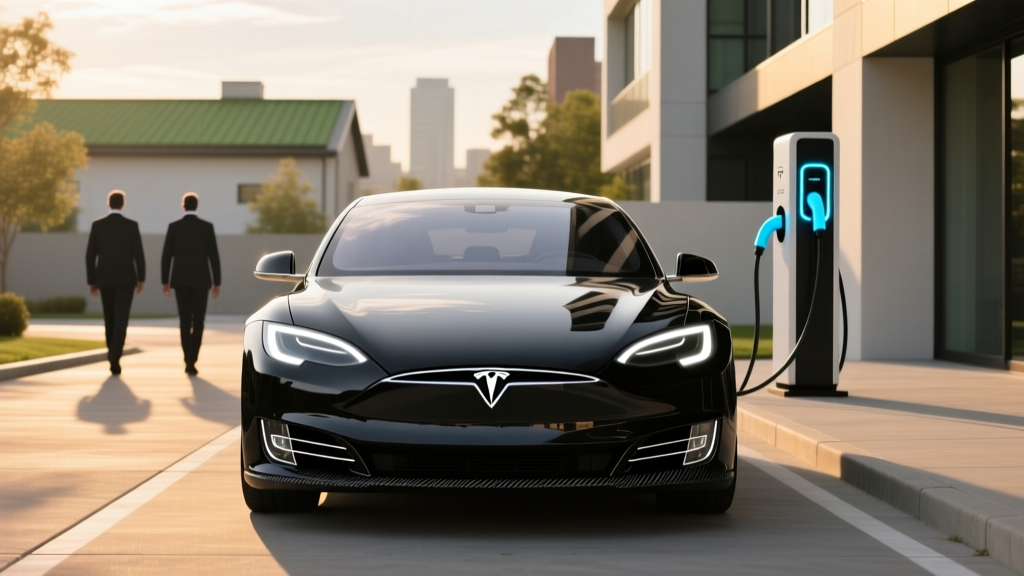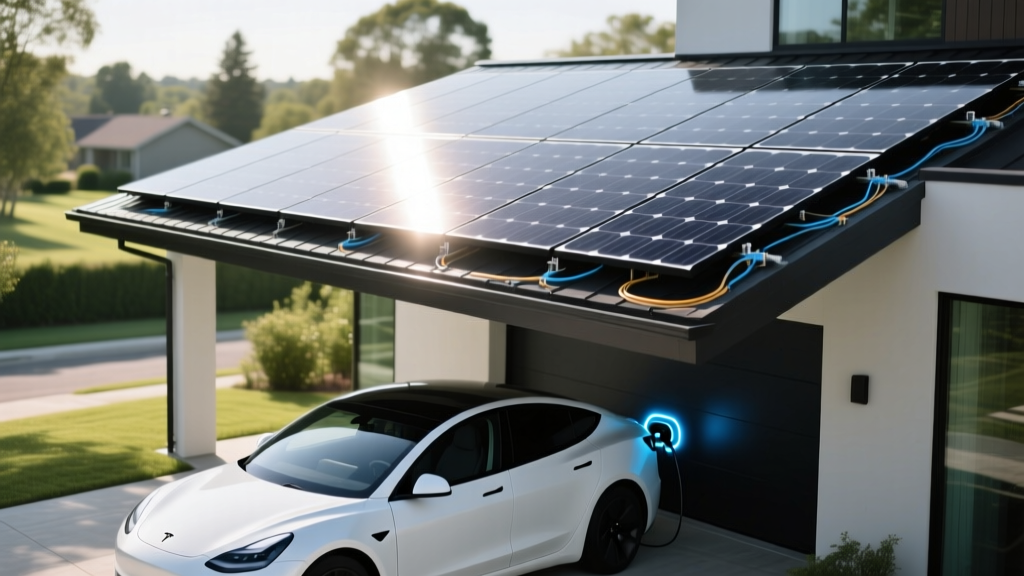
When homeowners ask how much will Tesla roof cost, they're usually reacting to a headline-grabbing estimate or a neighbor's installation. The Tesla Solar Roof isn't a conventional solar panel system bolted onto existing shingles — it's a full roof replacement where the shingles themselves generate electricity. That distinction drives both its appeal and its price, which in 2026 typically lands between $35,000 and $75,000 before incentives for an average-sized home, depending on system size, roof complexity, and local labor rates.
Because AutoEdgeView focuses on electric and smart vehicles, this review frames the Tesla Solar Roof through the lens most relevant to our readers: EV owners evaluating whether a Solar Roof makes financial sense as a home-charging energy source. If you drive 12,000+ electric miles per year, your roof isn't just shelter — it's a fuel station. We'll cover the real costs, the energy math, the federal tax credit mechanics, and whether competing solar-plus-storage setups deliver more value per dollar.
Tesla Solar Roof — 2026 Key Specs at a Glance
| Product | Tesla Solar Roof (integrated glass tiles) |
| Typical System Size | 8 kW – 16 kW (varies by roof area & sun exposure) |
| Average Installed Cost (before incentives) | $35,000 – $75,000+ |
| Cost per Watt (installed) | ~$2.50 – $4.50/W (highly variable by roof pitch & complexity) |
| Powerwall 3 (paired storage) | ~$12,000 – $16,000 installed (13.5 kWh usable, 11.5 kW continuous) |
| Federal Tax Credit (ITC) | 30% of total system cost (roof + Powerwall) under IRC §25D |
| Tile Warranty | 25 years (weatherization & power) |
| Powerwall Warranty | 10 years (unlimited cycles, ≥70% capacity retention) |
| Estimated Annual Production | ~10,000 – 20,000 kWh (location & system size dependent) |
| Best For | EV owners needing a new roof + solar in one project |
Breaking Down the Real Cost of a Tesla Solar Roof
The headline number — how much will Tesla roof cost — depends on five variables that most online calculators gloss over:
- Roof square footage: Tesla prices per square foot of total roof area, not just the solar-active tiles. Non-solar (architectural) tiles cover shaded or north-facing sections at lower cost, but they still add up.
- System size in kW: A 10 kW system on a simple ranch-style roof costs dramatically less than a 16 kW system on a multi-gable Victorian. Roof complexity (pitch, valleys, dormers, skylights) drives labor hours.
- Powerwall pairing: In many jurisdictions, Tesla requires at least one Powerwall 3 with new Solar Roof installations. At $12,000–$16,000 installed, this is a significant adder — but it also unlocks backup power and time-of-use optimization for EV charging.
- Existing roof tear-off: If your current roof needs removal (most do before a Solar Roof install), demolition and disposal add $2,000–$6,000 depending on layers and local dump fees.
- Permitting and utility interconnection: Typically $500–$2,000, varying wildly by municipality and utility company.
2026 Cost Ranges by Home Size
| Home Size | Typical System kW | Pre-Credit Cost | After 30% ITC |
|---|---|---|---|
| 1,200–1,500 sq ft | 8–10 kW | $35,000 – $48,000 | $24,500 – $33,600 |
| 1,800–2,200 sq ft | 10–13 kW | $45,000 – $62,000 | $31,500 – $43,400 |
| 2,500–3,500 sq ft | 13–16+ kW | $58,000 – $75,000+ | $40,600 – $52,500+ |
Note: These ranges assume a single Powerwall 3 is included. Homes with higher energy demand or frequent outages may need two Powerwalls, adding $12,000–$16,000 per unit.
Federal Tax Credit: What EV Owners Actually Qualify For
The Tesla Solar Roof and Powerwall qualify under IRC §25D (the Residential Clean Energy Credit), not the §30D vehicle credit that applies to EV purchases. This is a critical distinction many buyers miss.
§25D Solar Tax Credit Eligibility Checklist
- Credit rate: 30% of total installed system cost (roof tiles + Powerwall + labor + permitting) through 2032
- No dollar cap: Unlike the EV §30D credit (capped at $7,500), the §25D residential credit has no maximum dollar limit — 30% of a $70,000 system = $21,000 credit
- No income cap: Unlike the EV credit (which phases out above $150K single / $300K joint AGI), §25D has no income restriction
- Must own the home: Rental properties don't qualify (but a home office portion may)
- Must be installed at your US residence: Primary or secondary home qualifies
- Non-refundable: The credit can reduce your tax liability to zero but won't generate a refund — excess doesn't carry forward under current rules
- Source: IRS Residential Clean Energy Credit
EV owner math: If you spend $55,000 on a Solar Roof + Powerwall, the 30% ITC returns $16,500 at tax time. That brings your net cost to $38,500. Compare this against a conventional roof replacement ($12,000–$18,000 for asphalt shingles) plus a rack-mounted solar array ($18,000–$28,000 for 10–13 kW). The combined traditional approach: $30,000–$46,000 before credits — often less than the Tesla Solar Roof even after the ITC.
Energy Production: Can a Tesla Solar Roof Actually Fuel Your EV?
The question most relevant to our readers: will a Tesla Solar Roof produce enough surplus energy to cover your EV's annual charging needs?
A typical 10 kW Tesla Solar Roof in a sunbelt state (Arizona, Texas, Southern California) produces approximately 14,000–16,000 kWh per year. The same system in the Pacific Northwest or New England might yield 9,000–11,000 kWh. For reference, the EPA rates the 2026 Tesla Model Y Long Range at roughly 28 kWh per 100 miles. Driving 12,000 miles annually requires about 3,360 kWh of electricity.
Real-World Energy Math for EV Owners
Scenario: 10 kW Solar Roof in Denver, CO (good solar resource, ~5.5 peak sun hours)
Annual production: ~13,500 kWh
Home baseload: ~8,000 kWh/year (HVAC, appliances, lighting)
EV charging (Model Y, 12K mi/yr): ~3,360 kWh/year
Net surplus/deficit: ~2,140 kWh surplus → effectively free EV fueling with possible net-metering credits
Caveat: Winter production drops 40-60% in northern states. Without a Powerwall or net metering, you'll buy grid power in December–February and sell surplus in June–August.
The pairing with Powerwall 3 becomes critical for EV owners on time-of-use (TOU) rates. Charge the Powerwall midday when solar peaks, then charge your EV overnight from stored energy at effectively zero marginal cost — avoiding peak utility rates that can hit $0.35–$0.55/kWh in California and the Northeast.
Tesla Solar Roof vs. Conventional Solar Panels: Honest Comparison
This is where the cost conversation gets real. The Tesla Solar Roof is an aesthetic and integration product — it replaces your roof entirely while generating power. Conventional rack-mounted panels (like REC, Qcells, or Canadian Solar) bolt onto your existing roof at a fraction of the cost.
| Factor | Tesla Solar Roof | Conventional Panels + New Roof |
|---|---|---|
| Total cost (10 kW, avg home) | $45,000 – $60,000 | $30,000 – $42,000 |
| Aesthetics | Flush, integrated — looks like a premium roof | Visible panels on roof surface |
| Efficiency (panel-level) | ~18–20% (comparable to mid-tier panels) | 20–23% (premium monocrystalline) |
| Install timeline | 1–3 weeks (full roof replacement) | 1–3 days (panels only) |
| Wait time (2026) | 3–9 months from order to install | 2–8 weeks typical |
| HOA approval | Easier (looks like a normal roof) | Can face restrictions in some communities |
| Best scenario | Roof needs full replacement anyway | Roof has 10+ years of life remaining |
The bottom line: If your roof is in good shape and you just want solar energy, conventional panels win on cost per watt by a wide margin. The Tesla Solar Roof makes the most financial sense when your existing roof is at end-of-life (15–20+ years old) and you'd be paying for a full replacement regardless. In that case, the incremental cost of the Solar Roof over a premium architectural shingle roof narrows considerably.
Installation Timeline, Warranty, and Long-Term Ownership
Tesla's Solar Roof installation involves a complete tear-off of your existing roofing material, deck inspection and repair, installation of a waterproof underlayment, and then placement of both active (solar) and inactive (architectural) glass tiles. The physical install typically takes 5–15 business days depending on roof size and complexity, but the total project timeline from contract signing to permission-to-operate (PTO) from your utility often stretches 4–9 months in 2026.
Delays come from:
- Permitting backlog (especially in California, New York, and Florida)
- Utility interconnection agreement approval
- Tesla's own scheduling and crew availability
- Weather delays for tear-off work
Warranty Coverage Breakdown
| Component | Coverage | Details |
|---|---|---|
| Glass tiles (weatherization) | 25 years | Covers leaks, wind uplift (up to 130 mph), hail (ANSI FM 4473 Class 3) |
| Power output guarantee | 25 years | ≥95% of nameplate at Year 1, degrading ≤0.5%/yr thereafter |
| Powerwall 3 battery | 10 years | Unlimited cycles, ≥70% round-trip efficiency retention |
| Inverter / Power Electronics | 12.5 years | Integrated into Powerwall 3 (no separate string inverter) |
For EV owners, the Powerwall 3's integrated bidirectional inverter is a notable advantage: it handles DC-to-AC conversion for both solar and battery without a separate wall-mounted inverter, simplifying the system and reducing failure points.
Who Should (and Shouldn't) Buy a Tesla Solar Roof?
Decision Framework: Is the Tesla Solar Roof Right for You?
Choose the Tesla Solar Roof if:
- Your existing roof needs full replacement within 1–2 years
- You live in an HOA that restricts visible solar panels
- Aesthetics are a priority (historic district, luxury home, architectural consistency)
- You want a single vendor for roof + solar + battery + EV charging ecosystem
- You're in a state with strong net metering or TOU rates that reward battery storage
Choose conventional solar panels + a separate roof if:
- Your current roof has 10+ years of useful life
- Cost per watt is your primary concern
- You want the highest-efficiency panels available (22%+ monocrystalline)
- You need the system installed quickly (weeks, not months)
- You want competitive installer quotes (Tesla is sole-source for Solar Roof)
For the EV-commuter household driving a Model Y, Ioniq 5, or F-150 Lightning 10,000–15,000 miles per year, the Solar Roof + Powerwall combo effectively eliminates your "fuel" bill while providing backup power during outages. The payback period typically runs 10–16 years depending on local electricity rates, net metering policies, and sun exposure — after which you're generating free electricity for the remaining life of the system.
For the apartment dweller or low-mileage EV owner (under 6,000 miles/year), the math rarely justifies the premium. A Level 2 home charger on a standard utility rate, combined with occasional DC fast charging, costs most drivers $400–$800/year in electricity — far less than the annualized cost of a Solar Roof.
Pros
- Premium aesthetics — looks like a high-end roof, not an add-on
- Single-vendor ecosystem (roof + solar + Powerwall + Wall Connector)
- 25-year tile warranty with Class 3 hail rating
- No MSRP or income cap on the 30% federal tax credit (§25D)
- Powerwall 3 enables TOU arbitrage and backup for EV charging
- Class 3 hail and 130-mph wind resistance
Cons
- Significant cost premium over conventional panels + new roof
- Long wait times: 4–9 months from order to PTO in many markets
- Lower panel efficiency than top-tier monocrystalline modules
- Sole-source: no competitive bidding on the solar-roof portion
- Installation quality varies by region and crew
- Powerwall adds $12K–$16K, often mandatory
Frequently Asked Questions
How much will Tesla roof cost for a 2,000 sq ft house?
For a typical 2,000 sq ft home with a 10–13 kW system and one Powerwall 3, expect $45,000–$62,000 before incentives. After the 30% federal ITC, net cost drops to roughly $31,500–$43,400. Complex rooflines (multiple gables, steep pitch, skylights) push costs toward the high end.
Does the Tesla Solar Roof qualify for the $7,500 EV tax credit?
No. The Solar Roof qualifies under IRC §25D (Residential Clean Energy Credit), which provides a 30% credit with no dollar cap and no income limit. The $7,500 EV credit (§30D) applies only to vehicle purchases. You can claim both credits in the same year if you buy an EV and install a Solar Roof — they're separate provisions. See IRS.gov §25D guidance for details.
Can a Tesla Solar Roof power my house and charge my EV?
Yes, in most cases. A 10–13 kW system produces 10,000–16,000 kWh annually (location dependent), which covers a typical home's baseload (8,000–10,000 kWh) plus an EV's annual charging needs (3,000–4,500 kWh for 10K–15K miles). With Powerwall storage, you can charge your EV overnight from stored solar even after sunset.
How long does installation take?
Physical installation: 5–15 business days. Total project timeline from contract to utility permission-to-operate: typically 4–9 months in 2026, driven by permitting, utility interconnection approval, and Tesla's scheduling backlog.
Is the Tesla Solar Roof worth it vs. regular solar panels?
It depends on your roof's condition. If you need a full roof replacement anyway, the Solar Roof's incremental cost over premium shingles + conventional panels narrows, and the aesthetic/integration benefits justify the premium for many buyers. If your roof is relatively new (under 10 years old), conventional rack-mounted panels deliver more watts per dollar by a wide margin — typically 30–50% less total cost for the same energy output.
What happens if a Tesla Solar Roof tile breaks?
Individual tiles are replaceable by Tesla service crews. The 25-year warranty covers weatherization defects, and the glass tiles carry an ANSI FM 4473 Class 3 hail rating (withstands 1.75" hail at 120 mph). In practice, tile failures are uncommon, but replacement turnaround times vary by region — some owners report 2–6 week waits for service visits.
Sources: IRS Residential Clean Energy Credit (§25D), fueleconomy.gov for EV efficiency data, Tesla Solar Roof product specifications (tesla.com/solarroof). Pricing reflects 2026 market estimates and may vary by installer, region, and system configuration. Consult a licensed tax professional for credit eligibility.