Tesla's over-the-air (OTA) update system remains one of the most significant differentiators in the EV market. Unlike legacy automakers that require dealer visits for firmware patches, Tesla pushes software improvements directly to vehicles — sometimes adding meaningful range, faster charging curves, or new driver-assist capabilities months after purchase. For 2026, Tesla software versions have reached a pivotal point: the infotainment stack is more mature, FSD (Supervised) operates at a higher SAE Level 2 competency, and vehicle-level optimizations continue to refine efficiency. This guide breaks down what current Tesla software versions mean for real-world ownership across the Model 3, Model Y, Model S, and Model X lineup.
Tesla Software Version Naming and How Updates Work
Tesla software versions follow a year.branch.patch naming convention (e.g., 2026.8.3). The first number is the release year, the second is the major branch, and the third is the patch level. Vehicles receive these updates via Wi-Fi or cellular connection, and owners can choose between "Standard" and "Advanced" update preferences in the Software menu. Advanced delivers updates sooner but may include less-tested features.
In 2026, Tesla has consolidated its software branches more aggressively than in prior years. Rather than maintaining separate branches for FSD-equipped and non-FSD vehicles, most builds now share a common base with FSD modules layered on top. This means even base-model owners without FSD benefit from UI improvements, navigation enhancements, and thermal-management tweaks that arrive in the same branch.
What Tesla Software Versions Mean for Range and Efficiency
Software updates can and do alter real-world range. Thermal management logic, regenerative braking calibration, and heat-pump optimization are all software-controlled. In late-2025 and early-2026 releases, Tesla refined the heat-pump algorithm in Model Y and Model 3 Highland/Juniper vehicles, reducing cold-weather energy consumption by an estimated 3-5% based on owner-reported data.
Model 3 Long Range AWD: EPA 341 mi — expect ~290-310 mi highway at 70 mph; ~240-260 mi in sub-30°F weather.
Model Y Long Range AWD: EPA 320 mi — expect ~270-290 mi highway; ~230-250 mi in cold conditions.
Model S Long Range: EPA 402 mi — expect ~340-360 mi highway; ~300-320 mi in winter.
Model X Long Range: EPA 335 mi — expect ~280-300 mi highway; ~240-260 mi in cold weather.
Software versions from 2025.44+ improved cold-soak preconditioning routines, partially recovering 1-2% of the typical winter range penalty. Source: fueleconomy.gov
| Model | EPA Range | Battery (kWh / Chemistry) | MPGe (Combined) | kWh/100 mi |
|---|---|---|---|---|
| Model 3 LR AWD | 341 mi | ~79 kWh / NMC | 132 MPGe | 25 |
| Model 3 RWD | 272 mi | ~60 kWh / LFP | 132 MPGe | 25 |
| Model Y LR AWD | 320 mi | ~79 kWh / NMC | 122 MPGe | 28 |
| Model S LR | 402 mi | ~100 kWh / NMC | 124 MPGe | 27 |
| Model X LR | 335 mi | ~100 kWh / NMC | 109 MPGe | 31 |
Charging Speed and Software-Driven Optimizations
Charging performance is heavily influenced by software. Battery preconditioning for DC fast charging — the process of warming the pack to its optimal temperature window before arrival at a charger — has seen iterative improvements in 2026 software versions. Tesla now initiates preconditioning earlier and more aggressively when navigating to a Supercharger, which translates to faster initial charge ramp-up, especially in cool weather.
| Model | Max DC Fast Charge (kW) | 10-80% Time | Level 2 Home Rate (kW) | Miles per Hour (Level 2) |
|---|---|---|---|---|
| Model 3 LR AWD | 250 kW | ~25 min | 11.5 kW | ~44 mi/hr |
| Model 3 RWD | 170 kW | ~30 min | 11.5 kW | ~44 mi/hr |
| Model Y LR AWD | 250 kW | ~27 min | 11.5 kW | ~40 mi/hr |
| Model S LR | 250 kW | ~30 min | 11.5 kW | ~34 mi/hr |
| Model X LR | 250 kW | ~32 min | 11.5 kW | ~30 mi/hr |
Understanding the charge curve: Peak kW is not sustained kW. A Model 3 Long Range hitting 250 kW at 10% SoC will taper to ~150 kW by 50% and ~80 kW by 70%. Software versions in 2026 have slightly widened the high-power window, holding above 200 kW for roughly 2-3 minutes longer than 2024 firmware. The 10-80% time is the practical metric — ignore peak-kW marketing claims.
FSD (Supervised) and Autopilot in 2026 Software Versions
Tesla Autopilot and FSD (Supervised) are SAE Level 2 driver-assistance systems. The driver must remain fully engaged, hands on or near the wheel, and eyes on the road at all times. These are NOT self-driving systems. Only Level 4 services like Waymo operate without a human driver. Source: SAE International J3016
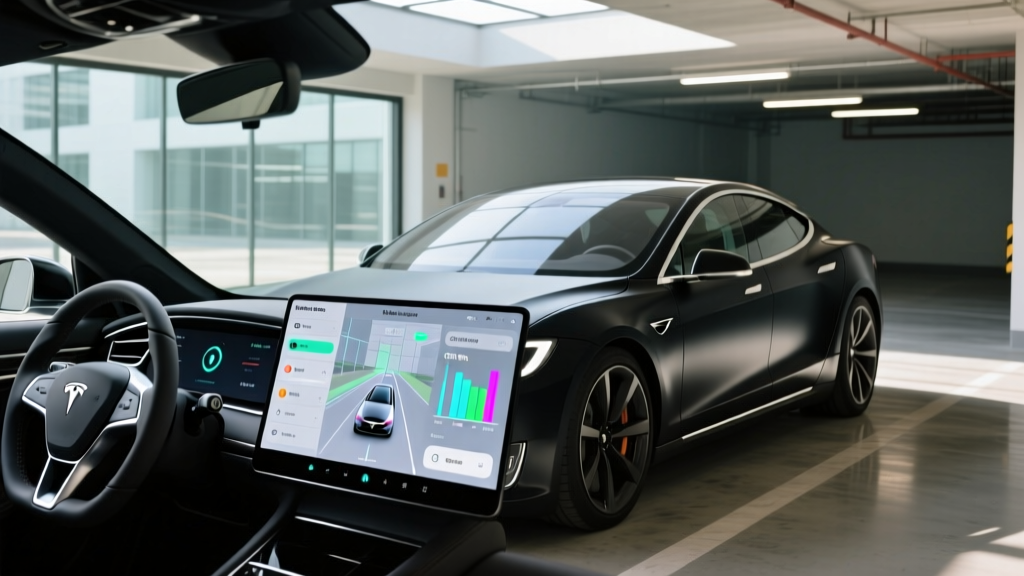
The 2026 FSD (Supervised) stack operates on Tesla's end-to-end neural network architecture, which replaced the earlier rules-based + perception module approach. In practical terms, this means smoother lane changes, more natural speed management in construction zones, and better handling of unprotected left turns. However, limitations remain:
- Does not navigate in heavy snow, fog, or conditions where lane markings are obscured
- Does not eliminate the need for driver attention — cabin camera monitors engagement
- Does not handle all construction zones or temporary traffic patterns reliably
- Does not replace the driver in emergency situations — reaction-time expectations remain on the human
- Performance varies by region and road type; rural roads with poor markings see degraded performance
Standard Autopilot (included with every Tesla) handles adaptive cruise control and lane-keeping on highways competently. The $8,000 FSD (Supervised) upgrade adds city-street navigation, traffic-light and stop-sign recognition, and autosteer on mapped roads. For 2026, Tesla has also introduced a monthly FSD subscription at $99/month, which now includes the full feature set rather than a limited tier.
Pricing, Tax Credits, and Ownership Cost
| Model / Trim | Base MSRP | Federal Credit (§30D) | Effective Price |
|---|---|---|---|
| Model 3 RWD | $38,990 | $7,500 (if eligible) | ~$31,490 |
| Model 3 LR AWD | $45,240 | $7,500 (if eligible) | ~$37,740 |
| Model Y LR AWD | $44,990 | $7,500 (if eligible) | ~$37,490 |
| Model S LR | $79,990 | $0 (exceeds MSRP cap) | $79,990 |
| Model X LR | $84,990 | $0 (exceeds MSRP cap) | $84,990 |
§30D Federal Tax Credit Rules (2026): The $7,500 credit under IRS §30D applies only if ALL of the following are met:
- MSRP Cap: Sedans (Model 3) must be under $55,000; SUVs/trucks (Model Y) under $80,000
- Income Cap: Buyer AGI must not exceed $150,000 (single) / $300,000 (joint) / $225,000 (head of household)
- Battery Sourcing: Critical minerals and battery components must meet escalating North American/free-trade-partner thresholds — Tesla's Austin and Fremont-built vehicles have largely met these, but verify at purchase
- Point-of-Sale Transfer: Eligible buyers can apply the credit as a down-payment reduction at purchase, rather than waiting for tax filing
Model S and Model X exceed the MSRP cap entirely and do not qualify. Always verify eligibility with a tax professional and the IRS Clean Vehicle Provisions page before purchase.
Tesla Software Versions: Standout Features and Notable Drawbacks
- OTA updates add genuine value post-purchase — range, charging, and features improve over time
- Supercharger network remains the most reliable DC fast-charging ecosystem in North America
- Industry-leading software integration — navigation, media, climate, and vehicle controls in one responsive interface
- FSD (Supervised) monthly subscription ($99/mo) lowers the barrier versus the $8,000 outright purchase
- Heat-pump standard on all models improves cold-weather efficiency vs. resistive heating
- Over-the-air diagnostics reduce dealer visits for firmware-related issues
- No Apple CarPlay or Android Auto — Tesla's proprietary infotainment is the only option
- FSD remains Level 2; the "supervised" label requires constant driver attention despite marketing language
- Build quality inconsistency persists — panel gaps, interior rattles reported at higher rates than legacy luxury brands
- Service center wait times remain long in many metro areas for body and mechanical work
- LFP battery in Model 3 RWD has lower energy density and less cold-weather performance vs NMC
- No HUD (heads-up display) available on any model
Cargo, Passenger Space, and Warranty Coverage
| Model | Cargo (rear seats up / folded) | Rear Legroom | Battery Warranty | Powertrain Warranty |
|---|---|---|---|---|
| Model 3 | 23 cu ft / 64 cu ft (incl. frunk) | 35.2 in | 8 yr / 120,000 mi (LR) or 100,000 mi (RWD) | 8 yr / 120,000 mi |
| Model Y | 34 cu ft / 76 cu ft (incl. frunk) | 41.6 in | 8 yr / 120,000 mi | 8 yr / 120,000 mi |
| Model S | 28 cu ft / 79 cu ft (incl. frunk) | 35.4 in | 8 yr / 150,000 mi | 8 yr / 150,000 mi |
| Model X | 15 cu ft / 92 cu ft (incl. frunk, 5-seat) | 38.4 in | 8 yr / 150,000 mi | 8 yr / 150,000 mi |
Tesla's battery warranty guarantees a minimum 70% capacity retention over the warranty period. In practice, NMC packs in the Long Range models typically show 5-8% degradation over the first 50,000 miles, then plateau. LFP packs in the Model 3 RWD degrade more slowly in terms of cycle life but are more sensitive to cold-weather range loss. Source: Tesla Battery Warranty
Who Should Buy a Tesla in 2026?
- You value OTA software updates that add features and efficiency improvements post-purchase
- You want access to the Supercharger network without adapters (NACS native)
- You prioritize tech-forward infotainment and are comfortable without CarPlay/Android Auto
- You commute in moderate climates where LFP range loss is manageable (Model 3 RWD)
- You want the most mature Level 2 driver-assist system available for the price (with FSD subscription)
- Build quality and dealership service experience are top priorities (consider Hyundai Ioniq 5, BMW i4)
- You need Apple CarPlay integration (nearly every competitor offers it)
- You tow frequently — Model Y can tow 3,500 lbs, but the Ford F-150 Lightning or Rivian R1S are superior for heavy towing
- You live in an area with limited Tesla Service Center coverage
Frequently Asked Questions
What is the real-world range of a Tesla in 2026?
EPA estimates are a starting point. A Model 3 Long Range rated at 341 miles EPA typically delivers 290-310 miles on the highway at 70 mph in moderate temperatures. In sub-30°F weather, expect a 20-25% reduction, bringing real-world range to roughly 240-260 miles. City driving with regenerative braking recovers more energy, often exceeding the EPA combined figure in stop-and-go traffic.
How fast does a Tesla charge at home and on DC fast chargers?
On a Level 2 home charger (11.5 kW / 48-amp), a Model 3 Long Range adds roughly 44 miles of range per hour, fully charging from 10-100% in about 7 hours. On a V3 Supercharger (250 kW peak), the 10-80% charge takes approximately 25 minutes. Remember: kW is the charge rate (power), kWh is battery capacity (energy) — they are not interchangeable.
Does the Tesla Model 3 or Model Y qualify for the $7,500 federal tax credit?
Both the Model 3 and Model Y can qualify for the full $7,500 §30D credit, but only if the buyer meets income caps ($150K single / $300K joint), the vehicle MSRP is under the threshold ($55K sedans / $80K SUVs), and battery-sourcing requirements are met at time of purchase. The credit can be transferred at point of sale as a down-payment reduction. Model S and Model X do not qualify due to MSRP caps. Always verify current rules at irs.gov.
Is FSD (Supervised) worth the cost?
At $99/month, the FSD subscription is a low-risk way to evaluate the system. It excels on well-mapped suburban and highway routes but requires constant driver attention and struggles in adverse weather or unmapped construction zones. It is a convenience feature, not a replacement for driving. If your commute is mostly highway with clear lane markings, FSD reduces fatigue meaningfully. In dense urban environments with complex intersections, expect frequent disengagements.
How do Tesla software versions affect long-term ownership?
OTA updates are Tesla's strongest ownership advantage. Vehicles purchased in 2024 have received range-extending thermal management updates, new UI features, and improved charging preconditioning — all without a service visit. However, software-driven recalls (like those issued via OTA for NHTSA compliance) also happen, and some owners report that new software branches occasionally introduce UI bugs that take one or two patch cycles to resolve. Running the "Standard" update preference gives Tesla more time to stabilize builds before they reach your vehicle.
What are the biggest pros and cons of Tesla ownership in 2026?
Pros include the Supercharger network, OTA updates, strong efficiency (low kWh/100mi), responsive software, and competitive pricing after tax credits. Cons include no CarPlay/Android Auto, build-quality variance, long service-center wait times for physical repairs, and the ongoing requirement to supervise FSD despite its advanced capabilities. The total cost of ownership is compelling for Model 3 and Model Y when the federal credit applies, with electricity costs averaging $0.04-$0.05 per mile (home charging) versus $0.12-$0.15 per mile for a comparable gas sedan.