Why Tesla Software Updates Matter to Your Ownership Experience
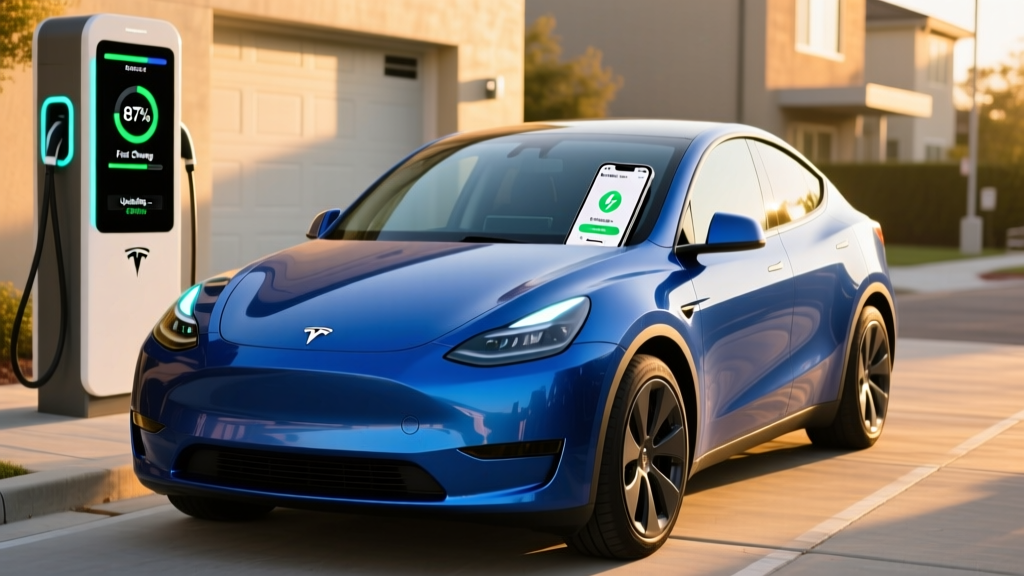
If you own a Tesla—or are considering one—you will encounter over-the-air (OTA) software updates regularly. Unlike traditional automakers that require dealership visits for firmware patches, Tesla pushes updates directly to your vehicle via Wi-Fi or cellular connection. These updates can add features, improve range efficiency, refine regenerative braking behavior, and enhance Autopilot performance.
But the practical question every owner asks: how long does a Tesla software update take? The answer depends on the update size, your connection type, and the vehicle's current state.
How Long Does a Tesla Software Update Take? The Real Numbers
Tesla software updates happen in two distinct phases, and understanding both is critical for planning your day:
Phase 1: Download
- Over Wi-Fi (home network): 15–45 minutes for minor updates; 1–3 hours for major version overhauls (e.g., moving from 2025.44.x to 2026.2.x). Tesla strongly recommends Wi-Fi for downloads, as cellular downloads are throttled and can take many hours or fail entirely on large packages.
- Over cellular (LTE/5G): Minor patches may take 30–90 minutes. Major updates may not initiate at all without Wi-Fi, or may take 4+ hours with intermittent progress.
Phase 2: Installation
- Minor updates (bug fixes, small UI tweaks): 15–25 minutes of installation time after download completes.
- Major updates (new FSD Supervised stack, UI overhaul, powertrain recalibration): 25–45 minutes of installation. During this phase, the vehicle is completely unusable—doors may not lock/unlock via the app, climate control is off, and the touchscreen is blank or shows a progress bar.
What Affects Update Speed?
Several variables influence how long your Tesla software update takes:
- Wi-Fi signal strength at your parking spot: A weak signal in a garage can double download times. Consider a Wi-Fi extender or mesh node near where you park.
- Update package size: FSD Supervised model updates are among the largest, often exceeding 2–3 GB.
- Vehicle state: The car must be parked, not charging (in most cases), and have sufficient battery (typically above 20% SoC) to begin installation.
- Tesla's phased rollout: Tesla doesn't push updates to all vehicles simultaneously. You may wait days or weeks after an update is announced before your car receives it. Newer hardware (HW4/AI4) vehicles often receive updates first.
2026 Tesla Model Y: Full EV Review & Specifications
With the software update question answered, let's examine the vehicle itself. The 2026 Tesla Model Y received a significant refresh (internally dubbed "Juniper") that brought a redesigned interior, improved ride quality, a front light bar, ventilated seats, and ambient lighting. Here is the complete breakdown buyers need.
| Spec | Long Range AWD | Performance (if available) |
|---|---|---|
| EPA Range | 320 miles | ~295 miles (est.) |
| Battery Capacity | ~78 kWh usable (NMC) | ~78 kWh usable (NMC) |
| Battery Chemistry | NMC (Nickel Manganese Cobalt) | NMC |
| Drivetrain | Dual-Motor AWD | Dual-Motor AWD |
| Horsepower | ~384 hp | ~456 hp (est.) |
| 0-60 mph | 4.8 seconds | 3.5 seconds |
| Max DC Fast Charge | 250 kW peak | 250 kW peak |
| 10-80% DCFC Time | ~27 minutes | ~27 minutes |
| Level 2 Home Charge Rate | 11.5 kW (~44 mi/hr) | 11.5 kW (~44 mi/hr) |
| Efficiency | 117 MPGe / 29 kWh/100mi | ~111 MPGe (est.) |
| Base MSRP | $44,990 | $51,490 (est.) |
| Cargo Volume | 30.2 cu ft (rear up) / 72.1 cu ft (rear folded) | Same |
| Rear Legroom | 40.5 inches | 40.5 inches |
| Battery Warranty | 8 years / 120,000 miles | 8 years / 120,000 miles |
Real-World Range: What the EPA Sticker Doesn't Tell You
The 2026 Model Y Long Range AWD carries an EPA-estimated 320 miles of range—a solid figure for a dual-motor crossover. But EPA testing uses a specific drive cycle that doesn't always mirror real-world driving.
City/suburban driving (moderate speeds, regen-heavy): 310–330 miles — close to or slightly above EPA.
Highway driving (70-80 mph sustained): 250–280 miles — aerodynamic drag reduces efficiency significantly at speed.
Cold weather (below 32°F / 0°C): 220–260 miles — battery chemistry slows, cabin heating draws power. Preconditioning while plugged in recovers ~10-15 miles.
Worst case (highway + cold + elevation gain): Plan for ~200 miles between charges on winter road trips.
The Model Y's NMC battery offers higher energy density than LFP chemistry, contributing to its strong range figure. However, NMC cells benefit from not being held at 100% SoC daily—Tesla recommends a daily charge limit of 80% for NMC batteries, which effectively gives you ~256 miles of usable daily range. Reserve 100% for road trips.
Charging Speed: DC Fast Charging and Home Level 2
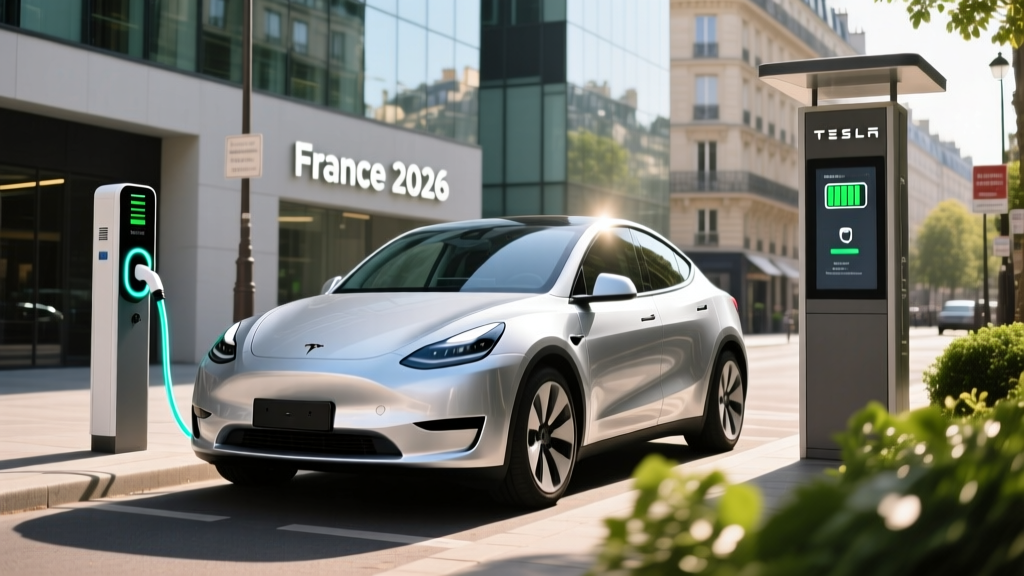
Charging speed remains one of the Model Y's strong suits, thanks to Tesla's Supercharger network and the vehicle's capable onboard architecture.
| Charging Level | Power (kW) | Speed (miles added/hr) | Notes |
|---|---|---|---|
| Level 1 (120V household) | ~1.4 kW | ~3–5 mi/hr | Emergency/trickle only |
| Level 2 (240V, 48A Wall Connector) | 11.5 kW | ~44 mi/hr | Full overnight charge in ~7 hrs |
| Level 2 (240V, 32A mobile connector) | 7.7 kW | ~30 mi/hr | Standard NEMA 14-50 outlet |
| DC Fast (Tesla Supercharger V3/V4) | 250 kW peak | ~1,000+ mi/hr (peak) | 10-80% in ~27 min |
| DC Fast (CCS adapter, non-Tesla) | ~170 kW peak | ~650 mi/hr (peak) | Requires CCS adapter; varies by station |
Understanding the Charge Curve
The 250 kW peak rate is not sustained for the entire session. The Model Y's charge curve looks approximately like this:
- 10–30% SoC: Peaks near 250 kW (if battery is preconditioned)
- 30–55% SoC: Steps down to ~175–200 kW
- 55–80% SoC: Tapers to ~100–125 kW
- Above 80%: Drops sharply below 50 kW — Tesla throttles charging to protect battery longevity
This is why the 10-80% metric (~27 minutes) is the standard measure. Charging from 80-100% can add another 25–35 minutes. On road trips, plan stops around the 10-80% window for maximum efficiency. Per Tesla's official charging guide, preconditioning the battery via navigation routing to a Supercharger is essential for hitting peak rates.
Pricing, Trims, and Federal Tax Credit Eligibility
The 2026 Model Y lineup is streamlined, and pricing has shifted due to Tesla's aggressive cost reductions and the evolving federal incentive landscape.
| Trim | MSRP (before destination) | Est. After §30D Credit | Credit Eligible? |
|---|---|---|---|
| Long Range AWD | $44,990 | ~$37,490 (if eligible) | Potentially — see rules below |
| Performance | $51,490 (est.) | ~$43,990 (if eligible) | Potentially — under $80K MSRP cap |
Federal Tax Credit (§30D) — Key Rules for 2026
- MSRP cap: SUVs/crossovers must be under $80,000. Both Model Y trims qualify on price.
- Buyer income cap: Modified adjusted gross income (MAGI) must not exceed $150,000 (single), $225,000 (head of household), or $300,000 (joint filers).
- Battery sourcing requirements: A percentage of critical minerals and battery components must be sourced from the U.S. or free-trade-agreement partners. Tesla's supply chain has been evolving, and eligibility can change mid-year. Check the latest list at fueleconomy.gov.
- Point-of-sale transfer: As of 2024+, you can transfer the credit to the dealer at purchase, reducing your out-of-pocket cost immediately rather than waiting for tax filing. Tesla supports this at delivery.
- Consult a tax professional: Credit rules are subject to change and individual circumstances vary. See IRS.gov §30D guidance for the latest.
Interior, Cargo, and Daily Practicality
The 2026 Juniper refresh addressed the Model Y's most common complaints—ride harshness and interior spartanism. The updated model features:
- Ventilated front seats (finally) and heated rear seats standard
- Ambient lighting strip across the dash and door panels
- Redesigned center console with improved storage
- Front light bar and updated rear taillight signature
- Improved suspension tuning — noticeably softer over rough pavement compared to pre-2025 models
- Rear touchscreen for rear-seat passengers (climate, entertainment)
Cargo space remains a Model Y strength: 30.2 cubic feet behind the second row and 72.1 cubic feet with seats folded flat. The front trunk (frunk) adds approximately 4.1 cubic feet—useful for charging cables or a small bag. Total interior passenger volume provides comfortable seating for four adults, with the middle rear position best reserved for shorter trips due to the floor hump from the structural battery pack.
Rear legroom measures 40.5 inches—competitive with the Hyundai Ioniq 5 (39.4 in) and slightly less than the Ford Mustang Mach-E (38.9 in rear). Headroom is generous thanks to the full glass roof, though that same roof contributes to cabin heat in summer (Tesla includes a UV-reflective tint, but many owners add an aftermarket sunshade).
Standout Technology and Driver Assistance
Tesla's software-first approach is the brand's defining characteristic. The 2026 Model Y ships with:
- 15.4-inch center touchscreen running Tesla's latest UI — controls virtually all vehicle functions (no physical buttons for climate, mirrors, or glovebox)
- Autopilot (standard): Adaptive cruise control + lane-keeping assist — this is SAE Level 2 driver assistance, not self-driving. You must keep hands on the wheel and eyes on the road at all times.
- FSD Supervised ($8,000 option or $99/month): Adds automated city-street navigation, stop-sign/light recognition, and lane changes. Still SAE Level 2 — the driver is fully responsible. FSD behavior varies significantly by geography and road complexity.
- Over-the-air updates: As detailed above, expect regular software improvements throughout ownership.
- Sentry Mode / Dashcam: Uses the vehicle's camera suite for security recording while parked—requires a USB drive or glovebox SSD.
- Dog Mode, Camp Mode, Theater: Climate and entertainment features that leverage the large battery for extended stationary use.
Pros, Cons, and Who Should Buy the 2026 Model Y
Pros
- Class-leading Supercharger network access (17,000+ stalls in North America)
- Excellent efficiency: 29 kWh/100mi is among the best in the segment
- Regular OTA updates add features years after purchase
- Strong cargo capacity and practicality for a crossover
- 250 kW DC fast charging with extensive route planning integration
- Competitive pricing after potential tax credit
- Best-in-class software and mobile app experience
Cons
- No Apple CarPlay or Android Auto — Tesla's ecosystem only
- All vehicle controls via touchscreen can be distracting while driving
- FSD Supervised remains an expensive option with inconsistent real-world performance
- Insurance costs tend to be higher than comparable crossovers (Tesla-specific repair costs)
- NMC battery requires 80% daily charge limit discipline (vs. LFP's 100% tolerance)
- Minimal physical buttons — steep learning curve for new EV adopters
- Glass roof contributes to summer cabin heat without aftermarket shade
Who This EV Suits Best
Buy the Model Y if you are: A tech-forward commuter or small family who values software integration, frequent OTA improvements, and access to the most reliable DC fast-charging network in North America. It excels for suburban daily driving with regular road-trip capability.
Look elsewhere if you: Need Apple CarPlay, prefer physical controls, want a true 300+ mile real-world highway range without compromise, or need a third-row seat (consider the Kia EV9 or Tesla Model X).
How the Model Y Stacks Up Against Key Competitors
The electric crossover segment is crowded in 2026. Here is how the Model Y Long Range compares on the metrics that matter:
| Metric | Tesla Model Y LR | Hyundai Ioniq 5 LR AWD | Ford Mustang Mach-E ER AWD |
|---|---|---|---|
| EPA Range | 320 mi | 290 mi | 290 mi |
| Peak DCFC | 250 kW | 350 kW | 150 kW |
| 10-80% Time | ~27 min | ~18 min | ~36 min |
| Base MSRP (AWD) | $44,990 | $49,950 | $48,995 |
| Apple CarPlay | No | Yes | Yes |
| NACS Native | Yes | Yes (2025+) | Yes (2025+) |
The Ioniq 5 charges faster (800V architecture), but the Model Y wins on range, pricing, and charging-network access. The Mach-E offers a more traditional interior layout but trails on charging speed and efficiency.
Frequently Asked Questions
How long does a Tesla software update take from start to finish?
Minor updates typically take 30–60 minutes total (download + installation) on home Wi-Fi. Major version updates can take 1.5–3.5 hours. The installation phase alone is 15–45 minutes, during which the vehicle is completely inoperable.
Can I drive my Tesla while it's downloading an update?
Yes—downloads happen in the background while you drive. However, installation requires the vehicle to be parked. You'll get a prompt to schedule installation once the download completes.
Does the Model Y qualify for the $7,500 federal EV tax credit in 2026?
It potentially qualifies, but eligibility depends on three factors: (1) your income must be under IRS MAGI caps ($150K single / $300K joint), (2) the MSRP must be under $80,000 (both trims qualify), and (3) the battery must meet critical-mineral and component sourcing thresholds, which can change. Check fueleconomy.gov for the current status before purchasing.
What is the real-world highway range of the 2026 Model Y?
Expect approximately 250–280 miles at sustained highway speeds (70-80 mph) in moderate temperatures. In cold weather (below freezing), highway range can drop to 220–250 miles. The EPA sticker reads 320 miles, but that includes city driving and mild conditions.
Is it worth buying a Model Y over the Hyundai Ioniq 5 or Ford Mach-E?
Choose the Model Y if you prioritize Supercharger network reliability, software/OTA updates, and the lowest price in the segment. Choose the Ioniq 5 if faster DC charging (18-min 10-80%) and Apple CarPlay matter to you. Choose the Mach-E if you prefer a more traditional cockpit with physical controls and BlueCruise hands-free driving on mapped highways.
What is the battery warranty on the 2026 Model Y?
Tesla covers the battery and drive unit for 8 years or 120,000 miles (whichever comes first), with a guaranteed minimum 70% capacity retention over that period. This is competitive with Hyundai's 10-year/100,000-mile battery warranty, though Tesla's mileage limit is more generous for high-mileage drivers.
Why hasn't my Tesla received the latest software update yet?
Tesla rolls out updates in phases, typically starting with newer hardware revisions, employees, and specific VIN ranges. It can take days to weeks after an announcement for your vehicle to receive the download. Ensure your car is regularly connected to Wi-Fi and that "Software Update Preference" is set to "Advanced" in settings for earlier access.
Sources: EPA fueleconomy.gov, Tesla Model Y specifications, IRS Clean Vehicle Credits, NHTSA. Pricing and tax credit rules reflect 2026 model year data and are subject to change. Verify eligibility before purchase.