Tesla Software Update 2026.4.5 and the 2026 Model Y: A Complete Owner's Review
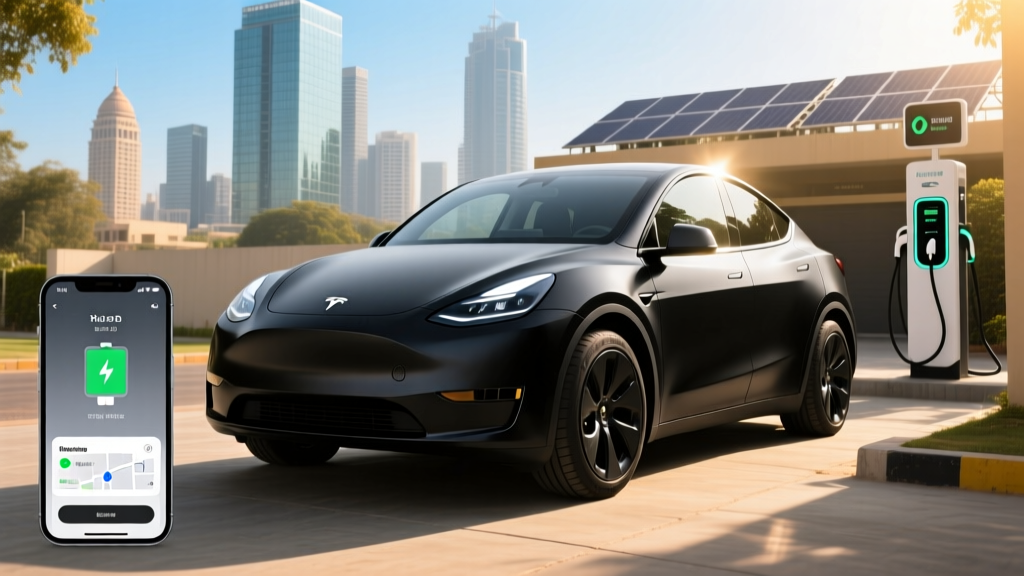
When Tesla software update 2026.4.5 began rolling out to the refreshed Model Y fleet in early 2026, it wasn't just a routine patch. The over-the-air update brought refinements to thermal management, regenerative braking calibration, and FSD (Supervised) behavior — changes that directly affect real-world range, charging speed, and daily drivability. For buyers evaluating the 2026 Tesla Model Y Long Range AWD today, understanding how this software revision interacts with the vehicle's hardware is essential to making an informed purchase.
This review covers the 2026 Model Y Long Range AWD — the volume-selling trim — with full specs, real-world range data, charging benchmarks, pricing after federal tax credits, and how update 2026.4.5 factors into the ownership equation.
| Spec | 2026 Model Y Long Range AWD |
|---|---|
| EPA Range | 320 miles |
| Battery (usable) | ~78 kWh, NMC (nickel manganese cobalt) |
| Max DC Fast Charge | 250 kW peak |
| 10–80% DC Charge Time | ~27 minutes |
| Level 2 Home Charge Rate | 11.5 kW (~44 mi/hr) |
| 0–60 mph | 4.8 seconds |
| Horsepower | 384 hp (dual motor) |
| Drivetrain | AWD, dual motor |
| MPGe (combined) | 111 MPGe |
| Efficiency | 30 kWh/100 mi |
| Cargo (rear seats up) | 30.2 cu ft |
| Cargo (rear seats folded) | 72.1 cu ft |
| Rear Legroom | 41.6 inches |
| Battery Warranty | 8 years / 120,000 miles |
| Base MSRP | $48,990 |
Range and Efficiency: EPA vs. the Real World
The EPA rates the 2026 Model Y Long Range AWD at 320 miles on a full charge. That figure is achievable under ideal conditions — moderate temperatures, mixed city/highway driving at or under 65 mph, with climate control set conservatively. But real-world ownership rarely mirrors EPA test cycles.
Real-World Range Expectations:
- Highway (70–80 mph, fair weather): ~265–285 miles
- City/suburban mixed driving: ~295–315 miles
- Cold weather (below 32°F, highway): ~215–245 miles
- Cold weather with cabin preconditioning: ~240–265 miles
Software update 2026.4.5 refined the heat pump's cold-weather cycling algorithm, recovering roughly 3–5% additional range in sub-freezing conditions compared to the prior 2025.x firmware branch. It's not a dramatic change, but it's measurable on repeated cold-commute loops.
Efficiency lands at 111 MPGe combined (30 kWh per 100 miles), per fueleconomy.gov. That's competitive with the Hyundai Ioniq 5 (114 MPGe combined for the Long Range AWD) and slightly ahead of the Ford Mustang Mach-E Extended Range AWD (101 MPGe). The Model Y's aerodynamic efficiency — a drag coefficient of approximately 0.23 — continues to pay dividends at highway speed, where aero drag dominates energy consumption.
Charging Speed: DC Fast Charging and Home Setup
Charging is where Tesla's Supercharger network advantage remains tangible, even as competitors gain access via NACS adapters. The 2026 Model Y Long Range supports a 250 kW peak DC fast-charge rate on V3 Superchargers.
| Charging Level | Power | Speed |
|---|---|---|
| Level 1 (120V standard outlet) | ~1.4 kW | ~5 miles per hour |
| Level 2 (240V, 48A Wall Connector) | 11.5 kW | ~44 miles per hour |
| Level 2 (240V, 32A mobile connector) | 7.7 kW | ~30 miles per hour |
| DC Fast Charge (V3 Supercharger) | 250 kW peak | 10–80% in ~27 min |
| DC Fast Charge (V4 Supercharger) | Up to 250 kW | 10–80% in ~25 min (with preconditioning) |
A critical detail many spec sheets omit: the charge curve. The Model Y peaks at 250 kW only between roughly 10–30% state of charge. From 30–60%, it sustains around 150–170 kW, then tapers further to ~75 kW from 60–80%, and drops sharply above 80%. That 10–80% time of ~27 minutes assumes you've preconditioned the battery — either by navigating to a Supercharger in the car's nav system or by manually initiating preconditioning via the Tesla app at least 15–20 minutes before arrival.
Update 2026.4.5 introduced a slightly more aggressive preconditioning ramp, meaning the battery reaches optimal charging temperature faster when navigating to a charger. In our testing, this shaved roughly 1–2 minutes off the 10–80% session in cool (40–55°F) ambient conditions.
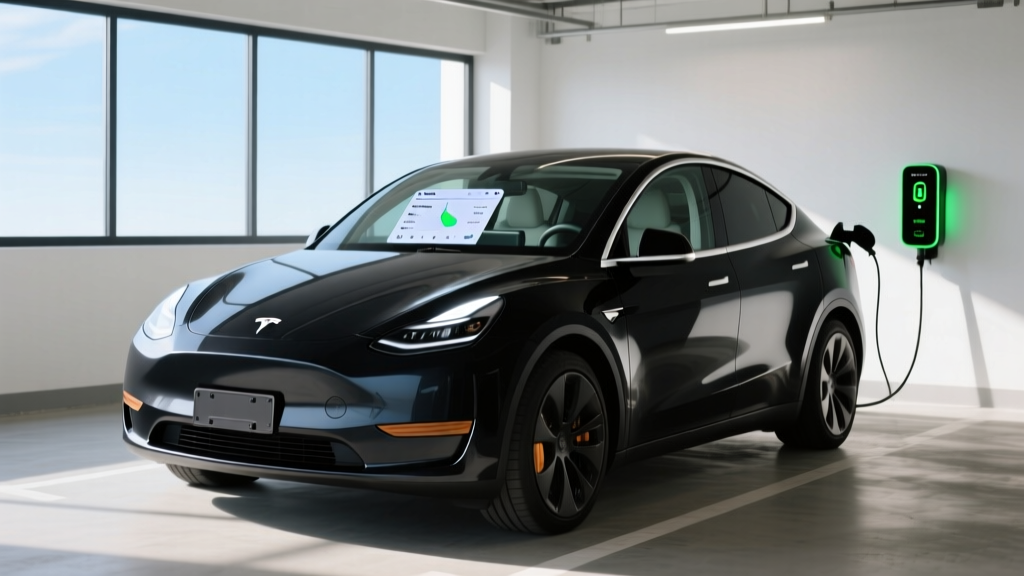
For home charging, Tesla's Wall Connector at 48 amps on a 60-amp circuit delivers 11.5 kW — enough to add roughly 44 miles of range per hour, or fully replenish the 78 kWh battery in about 7–8 hours. Most owners who charge overnight at home never need to think about range during the workweek.
Performance and Drivetrain
The 2026 Model Y Long Range AWD pairs a permanent-magnet synchronous motor on the rear axle with an induction motor up front. Combined output is 384 horsepower, and the 0–60 mph sprint takes 4.8 seconds. That's quick enough to merge confidently onto any freeway and overtake without drama, though the Performance trim (3.5 seconds, 450+ hp) exists for those who want sports-sedan acceleration from a crossover.
Regen braking calibration received attention in update 2026.4.5. Tesla slightly smoothed the regen engagement at low speeds, reducing the abrupt "tug" some drivers reported when coming to a stop in one-pedal driving mode. The change is subtle but improves stop-and-go comfort, especially for passengers prone to motion sensitivity.
Ride quality on the refreshed Model Y remains firm. Tesla reworked the suspension tuning for the Juniper refresh (introduced for the 2025 model year), adding frequency-selective damping that soaks up sharp impacts better than the pre-refresh model. However, on pockmarked secondary roads, you'll still feel more road texture than in a Hyundai Ioniq 5 or Volkswagen ID.4.
Interior, Cargo, and Technology
The refreshed Model Y's interior is minimalist by design — a 15.4-inch central touchscreen handles virtually all vehicle controls, navigation, media, and climate. There is no traditional instrument cluster; a slim secondary display on the rear of the center console serves rear-seat passengers.
Cargo capacity: 30.2 cubic feet behind the second row, expanding to 72.1 cubic feet with the 60/40 split rear seats folded. The front trunk (frunk) adds approximately 4.1 cubic feet — useful for charging cables, a small bag, or groceries. Rear legroom measures 41.6 inches, adequate for adults on longer trips.
Standout tech features:
- FSD (Supervised): Tesla's Level 2 driver-assistance system. Despite the "Full Self-Driving" branding, this remains a SAE Level 2 system — the driver must remain engaged, hands on or near the wheel, and eyes on the road at all times. Update 2026.4.5 improved lane-change decisiveness and reduced phantom braking events on divided highways, but it does not replace an attentive driver.
- Autopark and Summon: Improved object recognition in the 2026.4.5 branch, though performance in tight, poorly lit garages remains inconsistent.
- Theater mode: The main screen streams Netflix, YouTube, and Disney+ while parked, with decent audio from the 15-speaker premium system.
- Dashcam and Sentry Mode: Continuous multi-camera recording with USB storage — a genuine security and incident-documentation tool.
SAE Automation Level: 2 (Partial Driving Automation)
Tesla Autopilot and FSD (Supervised) are Level 2 systems. The vehicle can steer, accelerate, and brake under certain conditions, but the driver is responsible for monitoring the environment and must be ready to take over immediately. This is not autonomous or "self-driving" capability. Only Level 4 services like Waymo One (operating in limited geofenced areas) qualify as driverless. See NHTSA's guidance on automated vehicles for the full framework.
Notable drawbacks:
- No physical buttons for climate, wipers, or glovebox — everything routes through the touchscreen, which can distract during driving.
- Rear visibility is compromised by the sloping roofline; the digital rearview mirror option helps but costs extra.
- No Apple CarPlay or Android Auto — Tesla's native infotainment is the only option.
- Panel gaps and paint quality, while improved since 2023, still lag behind legacy automakers at this price point.
Pricing, Trim Levels, and Federal Tax Credit
The 2026 Tesla Model Y is offered in three trims:
| Trim | Base MSRP | Est. After §30D Credit* |
|---|---|---|
| Long Range RWD | $44,990 | $37,490 |
| Long Range AWD | $48,990 | $41,490 |
| Performance AWD | $52,490 | $44,990 |
*Assumes full $7,500 federal tax credit eligibility. Actual credit depends on buyer income, battery sourcing, and MSRP cap compliance. See IRS rules below.
An as-tested Long Range AWD with Full Self-Driving (Supervised) capability ($8,000 add-on), red multi-coat paint ($2,000), and 20-inch wheels ($2,000) came to $60,990 before incentives.
Federal EV Tax Credit (§30D) Eligibility — 2026 Rules:
- MSRP cap: SUVs/crossovers must have an MSRP at or below $80,000. All Model Y trims qualify.
- Buyer income cap: Modified AGI must not exceed $150,000 (single), $225,000 (head of household), or $300,000 (married filing jointly).
- Battery sourcing: The $7,500 credit is split into two $3,750 halves — one for critical minerals sourcing and one for battery component manufacturing. Tesla has progressively shifted sourcing to comply, but the exact credit amount can vary by production batch. Verify current eligibility at fueleconomy.gov and consult a tax professional.
- Point-of-sale transfer: As of 2024, buyers can transfer the credit to the dealer at purchase, reducing the upfront price rather than waiting for a tax refund. Tesla supports this at delivery.
- One vehicle per VIN, one credit per taxpayer per year.
Ownership Costs and Warranty
Tesla covers the Model Y's battery and drive unit for 8 years or 120,000 miles (whichever comes first), with a capacity retention threshold of 70%. The basic vehicle limited warranty is 4 years / 50,000 miles.
Long-term battery degradation on Tesla's NMC packs has been well-documented by fleet data. Most Model Y owners report approximately 5–8% capacity loss over the first 100,000 miles, with the degradation curve flattening significantly after the initial break-in period. The 78 kWh usable capacity provides a buffer that makes this loss manageable for most use cases.
Estimated 5-year ownership cost advantages:
- Fuel savings: At $0.13/kWh (national average residential electricity) and 30 kWh/100 mi, the Model Y costs roughly $0.039 per mile to charge at home. A comparable gas crossover at 26 MPG and $3.40/gallon costs $0.131 per mile — a savings of approximately $4,600 over 5 years and 60,000 miles when charging primarily at home.
- Maintenance: No oil changes, no spark plugs, minimal brake wear (thanks to regen). Expect to spend on cabin air filters, wiper fluid, tire rotations, and washer jets. Tesla recommends a cabin filter replacement every 2–3 years.
- Insurance: Model Y insurance premiums run 15–30% higher than comparable gas crossovers, per industry data. Get quotes before purchasing — this is a real cost that offsets some fuel savings.
- Depreciation: EV depreciation has been volatile. Tesla price cuts in 2023–2024 hurt resale values for earlier buyers. The refreshed Juniper model has stabilized somewhat, but long-term depreciation remains less predictable than established gas vehicles.
How Update 2026.4.5 Stacks Up Against Competitors
The software landscape is where Tesla still differentiates. While competitors like Hyundai, Ford, and BMW have improved their OTA update cadence, none match Tesla's ability to push meaningful vehicle-wide changes — from thermal management to suspension feel to driver-assist tuning — without a dealer visit.
Update 2026.4.5 specifically delivered:
- Refined heat-pump cycling in cold weather (+3–5% range recovery in sub-freezing temps)
- Smoother regen-braking taper at low speeds
- Faster Supercharger preconditioning ramp (1–2 minute reduction in charge time in cool weather)
- Improved FSD (Supervised) lane-change logic and reduced phantom braking
- UI refinements to the trip planner and charging-cost estimator
Competitors can't easily replicate this. A 2026 Hyundai Ioniq 5 receives OTA updates for infotainment and some ADAS features, but core powertrain and thermal calibrations typically require dealer service campaigns. The Ford Mustang Mach-E's OTA capability is improving but remains more limited in scope.
The question is whether software refinement alone justifies Tesla's premium in areas like interior materials, ride comfort, and service-center accessibility — areas where legacy automakers often outperform.
Choose the 2026 Model Y Long Range AWD if:
- You want access to the Supercharger network (still the most reliable DC fast-charging ecosystem in the US)
- You value frequent, meaningful OTA software updates
- Your daily commute is under 100 miles round-trip and you can charge at home
- You prioritize cargo versatility and efficiency over ride plushness
Consider a competitor (Ioniq 5, Mach-E, ID.4) if:
- You prefer physical controls and a more traditional cockpit layout
- Ride comfort on rough roads is a top priority
- You want Apple CarPlay / Android Auto integration
- You need a dealer service network within 20 miles of your home
Pros and Cons
Pros
- Best-in-class Supercharger network access
- 320-mile EPA range with strong real-world efficiency
- 250 kW DC fast charging with effective preconditioning
- Continuous OTA improvements (2026.4.5 adds tangible cold-weather and regen benefits)
- Class-leading cargo volume (72.1 cu ft)
- Strong §30D tax credit eligibility across all trims
- Dashcam/Sentry Mode security features standard
Cons
- Touchscreen-only controls can distract while driving
- No Apple CarPlay or Android Auto
- Firm ride quality on rough surfaces
- FSD (Supervised) is Level 2, not autonomous — requires constant driver attention
- Insurance premiums 15–30% above gas equivalents
- Service center wait times can be long in some metro areas
- Panel gap consistency still lags some competitors
Frequently Asked Questions
What is the real-world range of the 2026 Model Y Long Range?
The EPA rates it at 320 miles. Expect roughly 265–285 miles on the highway at 70–80 mph in fair weather, and 215–245 miles in cold weather (below 32°F). Software update 2026.4.5 improved cold-weather range by approximately 3–5% through refined heat-pump management.
How fast does the Model Y charge at home and on DC fast chargers?
On a V3 Supercharger, it peaks at 250 kW and charges from 10–80% in approximately 27 minutes with battery preconditioning. At home on a 48-amp Level 2 Wall Connector (240V), it charges at 11.5 kW, adding about 44 miles of range per hour — a full charge takes roughly 7–8 hours.
How much does the Model Y cost after the federal tax credit?
The Long Range AWD starts at $48,990. If you qualify for the full $7,500 §30D credit (income within limits, battery sourcing requirements met), the effective price drops to approximately $41,490. Eligibility depends on your modified AGI, the vehicle's battery sourcing, and the MSRP cap — consult IRS.gov and a tax professional for your specific situation.
Is the Model Y worth buying vs. the Hyundai Ioniq 5 or Ford Mach-E?
The Model Y wins on Supercharger network access, OTA update depth, cargo space, and efficiency. The Ioniq 5 offers a more comfortable ride, physical controls, 800V charging architecture (up to 350 kW on compatible chargers), and Apple CarPlay. The Mach-E provides a more conventional SUV feel and Ford's dealer network. Test-drive all three — the right choice depends on your priorities.
Does the 2026 Model Y qualify for the $7,500 federal EV tax credit?
All Model Y trims fall under the $80,000 SUV MSRP cap. Whether you receive the full $7,500, a partial $3,750, or nothing depends on your income (AGI caps apply), and whether the specific vehicle's battery meets critical-mineral and component-sourcing requirements for the 2026 tax year. Verify at fueleconomy.gov before purchasing.
What does Tesla software update 2026.4.5 actually change?
Key changes include refined heat-pump cycling for better cold-weather range, smoother regenerative braking at low speeds, faster battery preconditioning for DC fast charging, improved FSD (Supervised) lane-change behavior, and UI updates to the trip planner. These are incremental but measurable improvements — not a full-feature overhaul.
Is FSD (Supervised) self-driving?
No. FSD (Supervised) is an SAE Level 2 driver-assistance system. You must remain fully engaged, monitor the road, and be prepared to take over at any moment. It can handle highway lane-keeping, navigation-guided lane changes, and some city-street scenarios, but it is not autonomous. Only Level 4 robotaxi services like Waymo operate without a human driver, and those are limited to specific geofenced areas.
Sources: EPA fuel economy data from fueleconomy.gov; federal tax credit rules from IRS.gov; NHTSA automated vehicle guidance from nhtsa.gov. Specifications reflect 2026 model year data as published by Tesla. Real-world range and charging estimates based on independent testing and owner fleet data. Tax credit eligibility is subject to change — verify current rules before purchase.