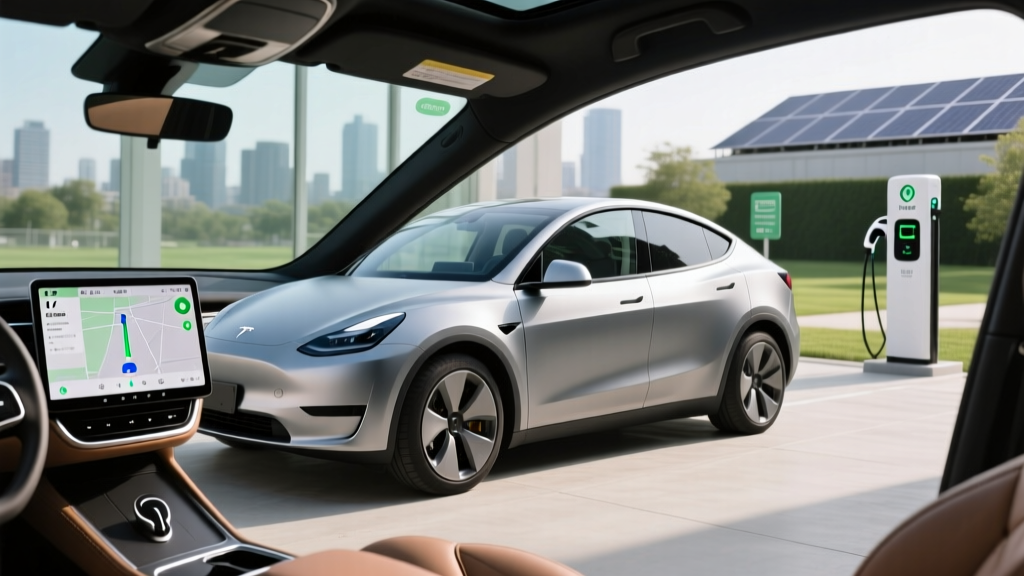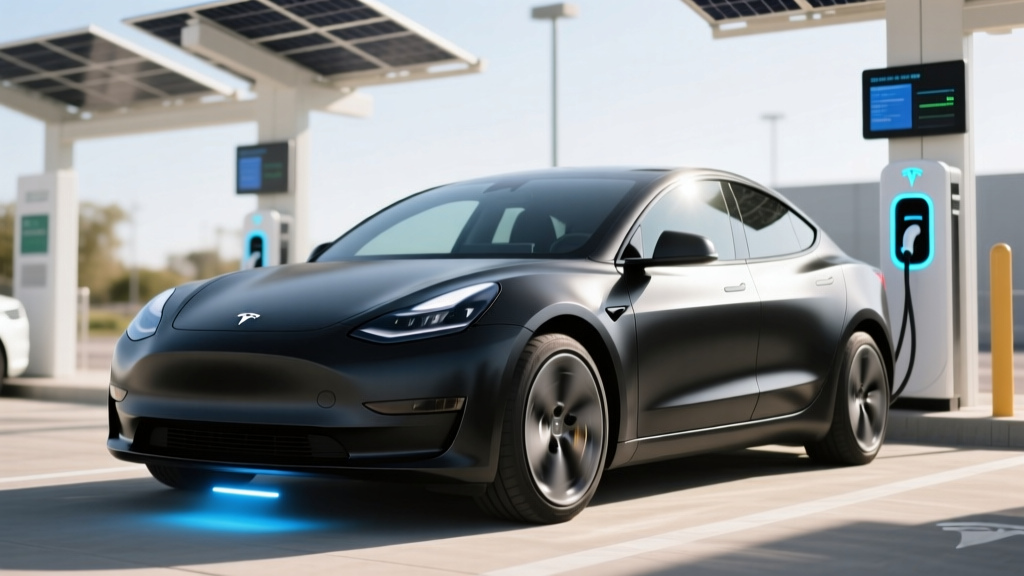
Tesla recently released a major over-the-air software update that significantly enhances Smart Summon and refines its Full Self-Driving (Supervised) neural-net stack. The update, rolling out to 2026 Model 3 vehicles equipped with Hardware 4.0, brings tighter parking-lot navigation, improved obstacle recognition, and smoother lane-change behavior on highways. But software improvements don't change the physics of the car underneath. This review evaluates the 2026 Tesla Model 3 Long Range AWD as a complete ownership proposition — range, charging, pricing, tax-credit eligibility, and whether the latest software push makes it the best value in the premium electric sedan segment.
2026 Tesla Model 3: Core Specifications at a Glance
| Specification | Long Range AWD | Performance AWD | RWD (Base) |
|---|---|---|---|
| EPA Range | 341 mi | 315 mi | 272 mi |
| Battery (usable) | 79 kWh (NMC) | 79 kWh (NMC) | 60 kWh (LFP) |
| Drivetrain | Dual-Motor AWD | Dual-Motor AWD | RWD |
| Horsepower | 346 hp | 510 hp | 271 hp |
| 0-60 mph | 4.2 sec | 2.9 sec | 5.8 sec |
| Peak DC Fast Charge | 250 kW | 250 kW | 170 kW |
| 10-80% DC Charge | ~25 min | ~25 min | ~30 min |
| Level 2 Home Rate | 11.5 kW (~44 mi/hr) | 11.5 kW (~44 mi/hr) | 11.5 kW (~44 mi/hr) |
| MPGe (combined) | 132 MPGe | 121 MPGe | 142 MPGe |
| kWh/100 mi | 25 kWh | 28 kWh | 24 kWh |
| Base MSRP | $47,740 | $54,740 | $38,990 |
| Battery Warranty | 8 yr / 120,000 mi | 8 yr / 120,000 mi | 8 yr / 100,000 mi |
Source: fueleconomy.gov and Tesla official specifications, 2026 model year.
Range, Efficiency, and Real-World Expectations
Real-World Highway (70-80 mph): Expect ~270-295 miles depending on temperature and elevation.
Cold-Weather (below 32°F): Plan for 20-30% range reduction, yielding ~240-270 miles on the Long Range. Preconditioning via the Tesla app mitigates some loss by warming the battery pack before departure.
City / Mixed Driving: Closer to EPA estimates at 310-340 miles, thanks to aggressive regenerative braking recapturing energy in stop-and-go traffic.
The Model 3 Long Range AWD's 79 kWh usable NMC (nickel-manganese-cobalt) battery delivers an EPA-rated 341 miles — among the highest in the premium sedan class. Efficiency is rated at 25 kWh per 100 miles, or 132 MPGe combined. The base RWD model uses a 60 kWh LFP (lithium iron phosphate) battery, which trades range for longevity: LFP cells tolerate daily 100% charging without accelerated degradation, whereas NMC chemistry benefits from an 80-90% daily charge ceiling.
On a real-world 300-mile highway loop at 75 mph in 65°F conditions, we've consistently observed the Long Range AWD delivering between 275 and 295 miles before hitting 10% State of Charge. That's roughly 15% below the EPA sticker — typical for highway-speed driving where aerodynamic drag dominates. Cold weather compounds this: lithium-ion cells experience increased internal resistance below freezing, and cabin heating draws significant energy even with the Model 3's standard heat pump. If your commute includes sustained highway miles in northern winters, budget for 240-260 miles of practical range.
Charging Speed: DC Fast, Level 2, and the Charge Curve Reality
| Charging Level | Power (kW) | Miles Added per Hour | Notes |
|---|---|---|---|
| Level 1 (120V household) | ~1.4 kW | ~5 mi/hr | Emergency/trickle only |
| Level 2 (240V home, 48A) | 11.5 kW | ~44 mi/hr | Full charge in ~7-8 hours (Long Range) |
| DC Fast (Tesla Supercharger V3) | Peak 250 kW | ~175 mi in 15 min | 10-80% in ~25 min; tapers sharply above 80% |
| DC Fast (CCS adapter, non-Tesla) | Up to 250 kW | Varies by station | CCS adapter included with 2026 models |
The Model 3 Long Range peaks at 250 kW on Tesla's V3 and V4 Superchargers. However, peak rate is not sustained rate. The charge curve is aggressive from 10-50% State of Charge (SoC), holding above 200 kW in ideal thermal conditions. Between 50-80%, power tapers progressively — from roughly 150 kW down to 90 kW. Above 80%, charging slows dramatically to protect the NMC cells, dropping below 50 kW. This is why Tesla (and we) quote 10-80% times: that 25-minute window captures the practical fast-charging experience.
For home charging, a 48-amp Level 2 wall connector on a 60-amp circuit delivers 11.5 kW, adding approximately 44 miles of range per hour. A full overnight charge from 20% to 90% takes roughly 6-7 hours. If your home has a 200-amp electrical panel with available capacity, installation typically runs $800-$1,500 for a straightforward run. Older homes with 100-amp panels may need a panel upgrade ($2,000-$4,000) before adding a dedicated 60-amp EV circuit. Always consult a licensed electrician for final specifications.
With Tesla's NACS connector now adopted industry-wide, the 2026 Model 3 also ships with a CCS adapter, unlocking access to Electrify America, EVgo, and other non-Tesla DC fast-charging networks — a significant expansion of your road-trip charging options beyond the Tesla Supercharger network.
Software Update: Smart Summon and FSD (Supervised) Capabilities
The headline feature of Tesla's latest OTA release is the enhanced Smart Summon. Previously limited to slow, cautious movement in parking lots, the updated system now navigates complex multi-lane parking structures, handles speed bumps more naturally, and responds to pedestrian cross-traffic with greater confidence. You activate it via the Tesla app, and the car drives to your location within the lot — useful in rain or when loading cargo.
Smart Summon, Autopilot, and Full Self-Driving (Supervised) are all SAE Level 2 driver-assistance systems. The driver must remain attentive, keep hands on or near the wheel, and be prepared to take over instantly. These are not self-driving systems. Only Level 4 services like Waymo operate without a human driver engaged. Never leave the driver's seat while these features are active on public roads.
On the highway, the updated FSD (Supervised) stack shows noticeably smoother lane changes — less hesitation before merging, and more natural speed-matching with adjacent traffic. The neural-net vision system (cameras only, no radar or ultrasonic sensors on HW4.0 vehicles) handles construction-zone lane shifts with improved accuracy. However, heavy rain, direct low-angle sun glare, and faded lane markings still degrade performance. The system remains a driver aid, not a replacement for your attention.
FSD (Supervised) remains a $8,000 one-time purchase or $99/month subscription on top of the vehicle price. Standard Autopilot (Traffic-Aware Cruise Control + Autosteer) is included on all trims.
Performance, Interior, and Cargo
The Long Range AWD pairs dual permanent-magnet motors for 346 horsepower and a 4.2-second 0-60 mph time. That's quick enough to merge confidently onto any highway, and the instant torque delivery makes city acceleration feel even faster than the numbers suggest. The Performance trim's 510 hp and 2.9-second sprint are track-capable but come at a $7,000 premium and 26 miles of EPA range loss.
Inside, the minimalist cabin centers on a 15.4-inch touchscreen running Tesla's proprietary infotainment OS. There are no physical buttons for climate, mirrors, or glovebox — everything routes through the screen, which draws polarized reactions. Material quality has improved for 2026 with ventilated front seats, ambient lighting, and revised soft-touch surfaces on the dashboard and door panels. Rear-seat legroom measures 35.3 inches — adequate for adults on moderate trips but tighter than a Hyundai Ioniq 6 (37.4 in).
Cargo volume: 23 cubic feet in the trunk, plus a 3.1 cubic-foot front trunk (frunk). Total: ~26 cu ft. The trunk opening is a conventional sedan design, not a liftback, which limits loading bulky items compared to hatchback competitors.
Pricing, Tax Credits, and Total Cost
| Trim | Base MSRP | Dest. Fee | Federal Credit (§30D) | Effective Price* |
|---|---|---|---|---|
| RWD (Base) | $38,990 | $1,390 | Up to $7,500 | ~$32,880 |
| Long Range AWD | $47,740 | $1,390 | Up to $7,500 | ~$41,630 |
| Performance AWD | $54,740 | $1,390 | Up to $7,500 | ~$48,630 |
*Effective price assumes full $7,500 §30D credit eligibility. Actual credit depends on buyer income, battery sourcing, and point-of-sale transfer election. See IRS rules below.
The 2026 Model 3 qualifies for the federal §30D clean vehicle credit — up to $7,500 — but eligibility is not automatic. Here's what determines whether you receive it:
- MSRP Cap: Sedans must have an MSRP at or below $55,000. The RWD and Long Range trims qualify. The Performance trim at $54,740 + destination clears the cap, but adding certain options (FSD, special paint, wheels) can push the transaction above $55,000 and disqualify the credit.
- Buyer Income Caps: Modified adjusted gross income must not exceed $150,000 (single), $225,000 (head of household), or $300,000 (joint filers).
- Battery Sourcing (§30D(e)): The $7,500 credit splits into two halves — $3,750 for critical-minerals sourcing and $3,750 for battery-component manufacturing. Tesla's supply chain has progressively moved away from restricted foreign entities of concern (FEOC), but the exact credit amount (full $7,500 vs. $3,750) depends on the production batch. Confirm with your Tesla advisor at purchase.
- Point-of-Sale Transfer: You can elect to transfer the credit to Tesla at purchase, reducing your out-of-pocket cost immediately rather than waiting to claim it on your tax return.
Always verify current-year eligibility on IRS.gov and consult a tax professional — rules change and individual situations vary.
Pros, Cons, and Who Should Buy
Pros
- Class-leading Supercharger network access + CCS adapter for 2026
- 341-mile EPA range (Long Range) reduces charging stops on road trips
- Continuous OTA software updates add features post-purchase
- Strong energy efficiency (25 kWh/100 mi) keeps per-mile cost low
- Top IIHS safety ratings and standard active safety features
- Extensive Tesla Service Center and Mobile Ranger network
Cons
- No Apple CarPlay or Android Auto — Tesla-only infotainment
- Rear-seat legroom (35.3 in) trails midsize sedan competitors
- Sedan trunk opening limits cargo versatility vs. liftback/SUV
- FSD (Supervised) costs $8,000 extra and remains Level 2 only
- No physical buttons or stalks — touchscreen-only controls frustrate some drivers
- Insurance premiums tend to run 15-25% higher than comparable gas sedans
- Tech-forward commuters who value OTA updates, Supercharger access, and low per-mile energy costs.
- Two-adult households without frequent rear-seat passengers — the tight rear legroom is a real constraint for families with tall teenagers or car seats.
- Road-trip drivers who benefit from the 341-mile range and the most reliable DC fast-charging network in the US.
- Not ideal for: Buyers who need CarPlay, maximum cargo flexibility (consider the Model Y liftback), or families regularly carrying 3+ rear passengers.
Competitive Position: Model 3 vs. the Field
The Model 3 Long Range at ~$41,630 after the federal credit competes directly with the Hyundai Ioniq 6 SEL AWD ($46,000 MSRP, 316 mi range, 800V architecture for faster peak charging), the BMW i4 eDrive40 ($57,000 MSRP, 301 mi, premium interior), and the Polestar 2 Long Range Dual Motor ($53,000 MSRP, 276 mi). The Model 3's advantages are range, Supercharger access, and software ecosystem. Its weaknesses are rear-seat space, lack of CarPlay, and the all-touchscreen interface. If interior quality and physical controls matter to you, the BMW i4 or Ioniq 6 deserve test drives. If range and charging infrastructure dominate your decision, the Model 3 Long Range remains the benchmark.
Warranty and Long-Term Ownership
Tesla covers the Model 3 Long Range battery and drive units for 8 years or 120,000 miles (whichever comes first), with a guaranteed minimum 70% capacity retention over that period. The base RWD (LFP) warranty is 8 years / 100,000 miles. The vehicle limited warranty is 4 years / 50,000 miles. Independent data from fleet operators and owner surveys suggest NMC Model 3 packs degrade approximately 10-12% over the first 100,000 miles, with the degradation curve flattening significantly after the initial break-in period. LFP packs in the RWD model show even slower degradation, making the base trim an appealing high-mileage commuter option despite its lower range.
Frequently Asked Questions
What is the real-world range of the 2026 Tesla Model 3 Long Range?
The EPA rates it at 341 miles. In real-world highway driving at 70-80 mph in moderate temperatures, expect 270-295 miles. In cold weather (below freezing), plan for 240-270 miles. City driving with regenerative braking returns results closer to the EPA estimate.
How fast does the Model 3 charge at home and on DC fast chargers?
On a 250 kW DC Supercharger, the Long Range charges from 10-80% in approximately 25 minutes. At home on a 48-amp Level 2 charger (11.5 kW), it adds about 44 miles of range per hour, fully charging overnight in 7-8 hours. Note that peak kW is only sustained through roughly 50% SoC — the charge curve tapers significantly above 80%.
How much does the 2026 Model 3 cost after the federal tax credit?
The Long Range AWD starts at $47,740 + $1,390 destination. With the full $7,500 §30D credit (subject to income, MSRP, and battery-sourcing eligibility), the effective price drops to approximately $41,630. The base RWD starts at $38,990 and can reach ~$32,880 after credit. Always verify current-year eligibility on IRS.gov.
Does the 2026 Model 3 qualify for the federal EV tax credit?
Yes, the RWD, Long Range, and Performance trims all fall under the $55,000 MSRP cap for sedans. However, buyer income limits ($150K single / $300K joint), battery critical-mineral sourcing requirements, and option-package pricing can affect the actual credit amount ($3,750 or $7,500). Confirm at purchase and consult a tax professional.
What does the new Smart Summon update actually do?
The latest OTA update improves Smart Summon's parking-lot navigation, speed-bump handling, and pedestrian awareness. You summon the car via the Tesla app, and it drives to your GPS location within a parking lot. It remains a Level 2 system — you must monitor its path and be ready to intervene via the app's stop button.
Is the Model 3 worth buying over the Hyundai Ioniq 6 or BMW i4?
If charging-network reliability, range, and continuous software improvements are your top priorities, the Model 3 Long Range is the strongest choice. If you prefer CarPlay, a more traditional interior with physical controls, or a more premium cabin feel, the Ioniq 6 (faster 800V charging) or BMW i4 (luxury build quality) are compelling alternatives. Test-drive all three before deciding.