Quick Verdict: Smart Summon Is a Convenience Feature, Not a Robotaxi
Tesla Smart Summon — the feature that lets your car navigate a parking lot to meet you via the Tesla app — remains one of the most talked-about conveniences in the EV world. In 2026, it's available exclusively on vehicles equipped with Tesla's Full Self-Driving (Supervised) software package. If you're shopping for a Tesla specifically to get Smart Summon, you need to understand which models support it, what it actually costs (hardware + FSD software), and the very real limitations that come with a Level 2 driver-assistance system operating in unstructured environments.
This guide covers every current Tesla model eligible for Smart Summon, pairs each with its real-world range, charging, and pricing data, and helps you decide whether the feature justifies the FSD premium — or whether a competing EV's simpler remote-park feature does the job at lower cost.
Tesla Smart Summon operates under SAE Level 2 automation. Despite the "Full Self-Driving" branding, the driver must maintain visual supervision at all times via the Tesla app, keep their thumb on the phone screen, and be prepared to intervene instantly. The vehicle is not autonomous. Only Level 4 services like Waymo operate without a human supervisor.
Which Tesla Models Support Smart Summon in 2026?
Smart Summon requires Tesla's FSD (Supervised) software, which costs $8,000 as a one-time purchase or $99/month as of early 2026. It is not available on base Autopilot. Every current-production Tesla can be equipped with FSD, making them all Smart Summon–eligible:
- Model 3 (Highland refresh, 2024–present)
- Model Y (Juniper refresh, 2025–present)
- Model S (2021+ refresh, ongoing)
- Model X (2021+ refresh, ongoing)
- Cybertruck (2024–present)
Tesla's vision-only hardware suite (HW4/AI4 cameras) powers Smart Summon. Vehicles built before mid-2022 with older HW3 cameras may experience reduced functionality or require hardware upgrades — confirm with Tesla before purchasing a used model specifically for this feature.
Model-by-Model Breakdown: Range, Charging, and Smart Summon Cost
Below is a consolidated spec table for every Smart Summon–eligible Tesla you can buy new in 2026. All prices reflect base MSRP before destination fees and before any federal tax credit adjustment.
| Spec | Model 3 LR AWD | Model Y LR AWD | Model S LR | Model X LR | Cybertruck AWD |
|---|---|---|---|---|---|
| EPA Range | 363 mi | 320 mi | 402 mi | 335 mi | 340 mi |
| Battery (usable) | ~75 kWh, NMC | ~75 kWh, NMC | ~95 kWh, NMC | ~95 kWh, NMC | ~123 kWh, NMC |
| Peak DC Charge | 250 kW | 250 kW | 250 kW | 250 kW | 250 kW (NACS) |
| 10–80% DC Time | ~25 min | ~27 min | ~30 min | ~32 min | ~35 min |
| Level 2 Home (kW) | 11.5 kW / ~44 mi/hr | 11.5 kW / ~40 mi/hr | 11.5 kW / ~40 mi/hr | 11.5 kW / ~36 mi/hr | 11.5 kW / ~30 mi/hr |
| 0–60 mph | 4.2 sec | 4.8 sec | 3.1 sec | 3.8 sec | 4.1 sec |
| Horsepower | 346 hp | 384 hp | 670 hp | 670 hp | 600 hp |
| Drivetrain | Dual-motor AWD | Dual-motor AWD | Dual-motor AWD | Dual-motor AWD | Dual-motor AWD |
| MPGe (combined) | 134 MPGe | 122 MPGe | 120 MPGe | 104 MPGe | 76 MPGe |
| Cargo (rear seats up) | 23 cu ft + 3.1 frunk | 30 cu ft + 4.1 frunk | 28 cu ft + 5.3 frunk | 37 cu ft + 6.4 frunk | 34 cu ft + bed |
| Base MSRP | $47,740 | $49,990 | $79,990 | $84,990 | $79,990 |
| + FSD (one-time) | $55,740 | $57,990 | $87,990 | $92,990 | $87,990 |
Sources: fueleconomy.gov, Tesla.com spec pages. Prices exclude $1,390 destination fee. FSD pricing current as of Q1 2026.
Real-World Range: What the EPA Sticker Doesn't Tell You
EPA estimates assume mixed driving at moderate temperatures. Here's what to expect in practice:
- Highway (75 mph, 70°F): Expect 85–90% of EPA — a Model 3 LR delivers ~310–325 miles.
- Cold weather (30°F, highway): Plan for 65–75% of EPA — the same Model 3 drops to ~240–270 miles due to battery heating demand and cabin HVAC load.
- City / stop-and-go: Can exceed EPA by 5–10% thanks to regenerative braking recapturing energy.
All current Teslas use NMC (nickel manganese cobalt) battery chemistry, which offers high energy density but is more sensitive to sustained high state-of-charge storage. Tesla recommends daily charging to 80–90% for NMC packs and 100% only before long trips. This contrasts with LFP (lithium iron phosphate) packs used in the base Model 3 RWD, which tolerate 100% daily charging — but the RWD variant has lower range (272 mi EPA) and is less ideal for Smart Summon use cases like large parking facilities where you want maximum range buffer.
Charging Speed: DC Fast, Level 2, and the Curve Reality
| Charging Level | Power (kW) | Miles Added/Hour | Notes |
|---|---|---|---|
| Level 1 (120V) | ~1.4 kW | 3–5 mi/hr | Emergency/trickle only |
| Level 2 (240V, 48A) | 11.5 kW | 30–44 mi/hr | Full overnight charge in 7–9 hrs |
| DC Fast (Supercharger V3/V4) | Peak 250 kW | Up to 1,000 mi/hr (peak) | 10–80% in ~25–35 min; tapers above 80% |
Charge curve reality: Tesla's 250 kW peak is sustained only between roughly 10–45% state of charge. From 45–80%, the rate progressively tapers to ~60–80 kW. Charging from 80–100% on DC is painfully slow (under 20 kW) — Tesla's battery management system protects the NMC cells. For road trips, plan stops at 10–80% for the fastest throughput. The Tesla Supercharger network remains the most reliable public DC network in the U.S., with over 25,000 V3/V4 stalls nationwide as of 2026.
Smart Summon: How It Actually Works and Where It Falls Short
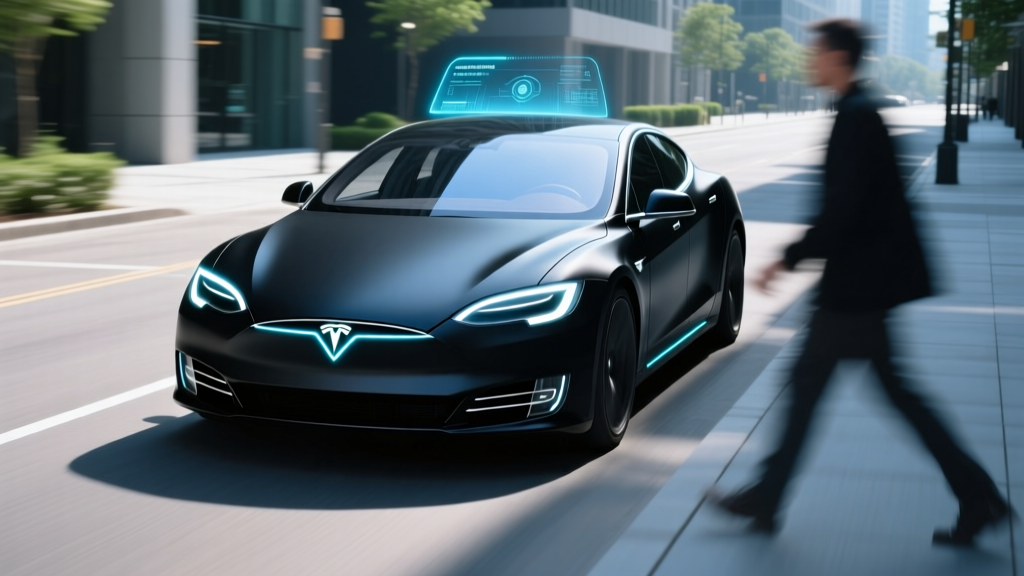
Smart Summon uses the vehicle's surround cameras and neural network to navigate parking lots at low speed (typically under 15 mph). You activate it from the Tesla app, set a pin or choose "come to me," and the car plots a path around obstacles, pedestrians, and curbs. Key operational details:
- Maximum distance: ~150 feet (45 meters) from your phone to the vehicle.
- Supervision requirement: Your thumb must stay on the app's "summon" button. Release it, and the car stops immediately.
- Environment: Designed for private parking lots and driveways. Not intended for public roads, crosswalks with traffic signals, or multi-story garages with tight ramps.
- Failure modes: Can hesitate at complex intersections, stop for phantom obstacles, struggle with painted lines that lack physical curbs, and occasionally misread shopping-cart corrals as impassable barriers.
- Drive on public roads or navigate traffic.
- Operate without your phone connected and your thumb on the screen.
- Handle all weather conditions — heavy rain, snow-covered lanes, or fog can disable camera-based perception.
- Replace a human driver. You are legally responsible for the vehicle's movements at all times.
Federal Tax Credit: Does a Tesla With FSD Qualify?
Under IRS §30D rules for 2026, Tesla vehicles face a complex eligibility picture:
- MSRP Cap: Sedans (Model 3, Model S) must be under $55,000. SUVs/trucks (Model Y, Model X, Cybertruck) must be under $80,000. FSD purchase price does NOT count toward the MSRP cap — only the vehicle's base + options MSRP matters.
- Buyer Income Cap: Modified AGI must not exceed $150,000 (single), $225,000 (head of household), or $300,000 (joint).
- Battery Sourcing: Critical minerals and battery components must meet phased-in domestic-content thresholds. As of 2026, most Teslas built at Fremont or Austin with CATL or Panasonic cells have varying compliance — Tesla's website shows a credit-eligibility indicator at checkout.
- Point-of-Sale Transfer: You can transfer the credit to the dealer (Tesla) at purchase, reducing your out-of-pocket cost immediately, provided you attest to income eligibility.
| Model | MSRP | + FSD | Under MSRP Cap? | Est. After $7,500 Credit |
|---|---|---|---|---|
| Model 3 LR AWD | $47,740 | $55,740 | ✅ Yes (sedan cap $55K) | ~$48,240 |
| Model Y LR AWD | $49,990 | $57,990 | ✅ Yes (SUV cap $80K) | ~$50,490 |
| Model S LR | $79,990 | $87,990 | ❌ No (over $55K sedan cap) | $87,990 (no credit) |
| Model X LR | $84,990 | $92,990 | ❌ No (over $80K SUV cap) | $92,990 (no credit) |
| Cybertruck AWD | $79,990 | $87,990 | ⚠️ Borderline (truck cap $80K) | Verify at checkout |
Tax credit eligibility depends on buyer income, battery sourcing compliance, and MSRP classification. Always verify on IRS.gov and consult a tax professional.
Pros and Cons of Choosing a Tesla for Smart Summon
- Most advanced parking-lot navigation of any consumer EV feature
- Supercharger network reliability (best-in-class public DC charging)
- Over-the-air updates continuously improve Summon behavior
- Strong resale value relative to EV market average
- Heat pump standard — excellent cold-weather efficiency
- Model 3 and Model Y qualify for $7,500 credit (with caveats)
- $8,000 FSD premium required just for Smart Summon access
- Level 2 only — not autonomous, requires constant thumb-on-screen supervision
- Inconsistent in complex lots (shopping carts, painted lines, construction cones)
- No ultrasonic sensors (removed in 2022) — vision-only can misjudge distances
- Model S, Model X, and Cybertruck exceed MSRP caps — no federal credit
- Insurance premiums 15–25% higher than comparable non-Tesla EVs
Is It Worth Buying a Tesla Just for Smart Summon?
- You frequently park in large, sprawling lots (airports, malls, campuses) and value the car coming to you.
- You already want a Tesla for its Supercharger network and software ecosystem — FSD/Summon is a bonus.
- You're a tech-enthusiast who enjoys beta-style features and OTA improvement cycles.
- You just want remote parking in tight spaces — Hyundai's Remote Smart Parking Assist (on Ioniq 5/6) and BMW's Parking Assistant do this without an $8K software add-on.
- You need guaranteed autonomous operation — wait for Level 4 robotaxi services (Waymo) in your city.
- Budget is a priority — the $8,000 FSD cost could cover years of public charging.
Warranty, Ownership, and Long-Term Considerations
Every Tesla includes the following warranty coverage:
- Basic Vehicle: 4 years / 50,000 miles
- Battery & Drive Unit: 8 years / 120,000 miles (Model 3/Y) or 8 years / 150,000 miles (Model S/X/Cybertruck), with a guaranteed minimum 70% capacity retention over the warranty period.
Tesla does not currently offer a separate FSD software warranty or refund policy. If you purchase FSD outright, it transfers with the vehicle on resale but has uncertain long-term value as Tesla periodically adjusts pricing and feature bundling. The $99/month subscription offers flexibility if you only want Smart Summon for a specific period (e.g., winter months when walking across icy lots is hazardous).
Frequently Asked Questions
What is the real-world range of a Tesla with Smart Summon?
The feature itself doesn't affect range, but the vehicles that support it do. A Model 3 Long Range delivers ~310–325 real-world highway miles (vs. 363 EPA) in fair weather, dropping to ~240–270 miles in 30°F conditions. The Model Y LR averages ~275–290 highway miles in mild weather.
How fast does a Tesla charge at home and on the road?
On a Level 2 home charger (11.5 kW), expect 30–44 miles of range per hour of charging — a full overnight session adds 200+ miles. On a Tesla Supercharger (250 kW peak), you'll go from 10–80% in roughly 25–35 minutes depending on the model, with the charge rate tapering significantly above 80% SoC.
How much does a Tesla with Smart Summon actually cost after tax credits?
The most affordable option is the Model 3 LR AWD with FSD at ~$55,740 MSRP. If you qualify for the full $7,500 federal credit (income under limits, battery sourcing compliant), your effective cost drops to approximately $48,240. The Model Y with FSD lands around $50,490 after credit. Model S, X, and most Cybertrucks do not qualify due to MSRP caps.
Is Tesla Smart Summon worth buying vs. key competitors?
Smart Summon offers the most ambitious parking-lot navigation of any consumer feature, but it costs $8,000 extra and requires constant supervision. Hyundai, BMW, and Mercedes offer simpler remote-park features (straight-line in/out) at no additional cost on many models. If your use case is pulling out of a tight garage space, competitors suffice. If you want the car to navigate a complex lot to reach you, Tesla remains the only option.
What are the biggest pros and cons?
Pros: unique lot-navigation capability, best-in-class charging network, continuous OTA improvements, strong resale. Cons: $8K FSD premium, Level 2 supervision required, vision-only system struggles with certain obstacles, higher insurance costs, and several models ineligible for the federal tax credit.
Does every Tesla qualify for the $7,500 federal EV tax credit?
No. Under IRS §30D, the Model 3 and Model Y generally qualify (under the $55K sedan / $80K SUV MSRP caps), but the buyer must meet income limits ($150K single / $300K joint) and the vehicle's battery must meet critical-mineral and component sourcing thresholds. Model S, Model X, and Cybertruck typically exceed MSRP caps and do not qualify. Always verify current eligibility on IRS.gov before purchasing.