Tesla Signature Model S: The Executive EV Sedan Benchmark
The Tesla Model S has anchored the premium electric sedan segment since its 2012 debut, and the current-generation refresh — including the top-tier Signature trim — continues to set the bar for range, charging infrastructure access, and over-the-air evolution. For 2026, the Model S lineup includes the dual-motor Long Range and the tri-motor Plaid, with the Signature package layering premium materials, enhanced Autopilot hardware, and exclusive interior appointments on top of the Long Range powertrain. This review breaks down the exact numbers buyers need: real-world range versus EPA estimates, charging-curve behavior, total cost after incentives, and how it stacks up against the Lucid Air, Mercedes EQS, and BMW i7.
| Spec | Value |
|---|---|
| EPA Range | 402 miles |
| Battery (usable) | ~100 kWh, NMC (nickel-manganese-cobalt) |
| Drivetrain | Dual-motor AWD |
| Horsepower | 670 hp |
| 0–60 mph | 3.1 seconds |
| Top Speed | 155 mph |
| Peak DC Fast Charge | 250 kW |
| 10–80% DC Charge | ~28 minutes |
| Level 2 Home Charge | 11.5 kW (~44 mi/hr) |
| MPGe (combined) | 120 MPGe |
| Efficiency | 28 kWh/100 mi |
| Cargo Volume | 28 cu ft (rear) + 3.1 cu ft (frunk) |
| Rear Legroom | 35.4 inches |
| Battery Warranty | 8 years / 150,000 miles (70% retention) |
| Base MSRP (Long Range) | $74,990 |
| Signature Package Add | ~$7,000–$9,000 |
Real-World Range: What the 402-Mile EPA Sticker Actually Means
EPA Estimate: 402 miles
Real-World Highway (70 mph, mild weather): ~330–350 miles
Real-World Cold Weather (30°F, mixed driving): ~270–300 miles
City / Commuter Driving (regen-heavy): ~370–390 miles
The 402-mile EPA figure, as published on fueleconomy.gov, positions the Model S Long Range among the longest-range production EVs available. However, EPA range tests weight city driving heavily, where regenerative braking recaptures energy. Sustained highway driving at 70–80 mph cuts range by roughly 13–18%, based on independent testing by Edmunds and Car and Driver. At a steady 75 mph in 65°F conditions, expect approximately 330–350 miles before the battery buffer engages.
Cold weather compounds this loss. At 30°F, lithium-ion internal resistance increases and cabin heating draws significant energy — even with the Model S's standard heat pump. Plan for 270–300 miles in freezing conditions, or roughly a 25–30% reduction from the sticker. Tesla's preconditioning feature, which warms the battery while the car is still plugged in, mitigates some of this loss if used consistently.
The NMC battery chemistry in the Model S prioritizes energy density over the cycle-life longevity of LFP (lithium iron phosphate). For buyers who frequently charge to 100%, Tesla recommends setting the daily charge limit to 80–90% and only charging fully for long trips — this practice meaningfully slows long-term degradation.
Charging Speed: 250 kW Peak, but Watch the Curve
| Charging Level | Power | Speed (approx.) | Notes |
|---|---|---|---|
| Level 1 (120V) | ~1.4 kW | ~5 mi/hr | Emergency/trickle only |
| Level 2 (240V, 48A) | 11.5 kW | ~44 mi/hr | Full charge in ~9 hrs |
| DC Fast (Tesla Supercharger V3) | 250 kW peak | ~200 mi in 15 min | 10–80% in ~28 min |
| DC Fast (CCS via adapter) | Up to 250 kW | Varies by station | Compatible with Electrify America, EVgo |
The Model S supports a peak DC fast-charge rate of 250 kW on Tesla's V3 and V4 Superchargers. In practice, this peak is sustained only between roughly 10–30% state of charge. By 50% SoC, the rate tapers to approximately 150 kW, and above 80%, it drops below 60 kW as the battery management system protects cell longevity. A 10–80% session takes approximately 28 minutes under optimal conditions (battery preconditioned, warm ambient temperature).
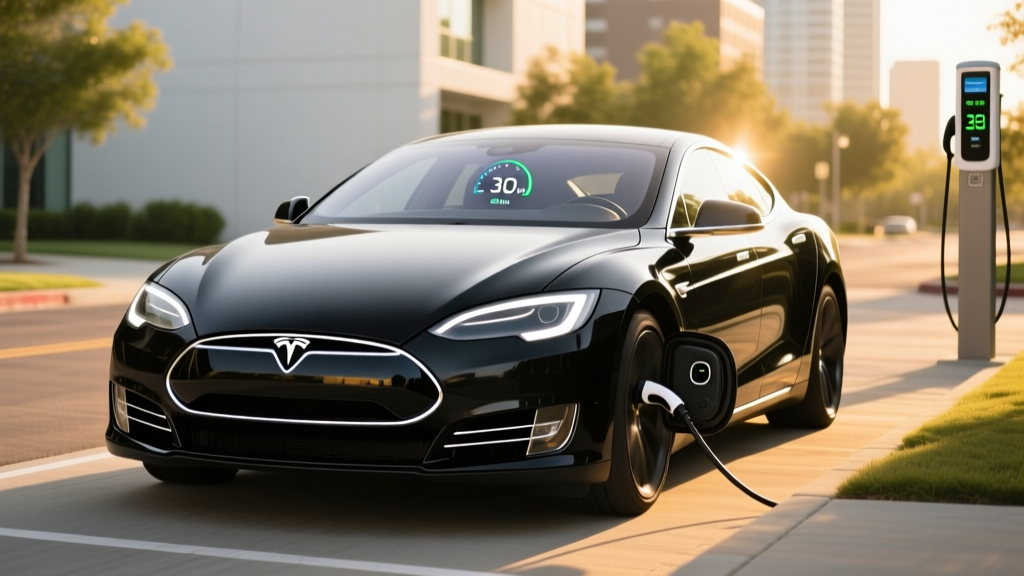
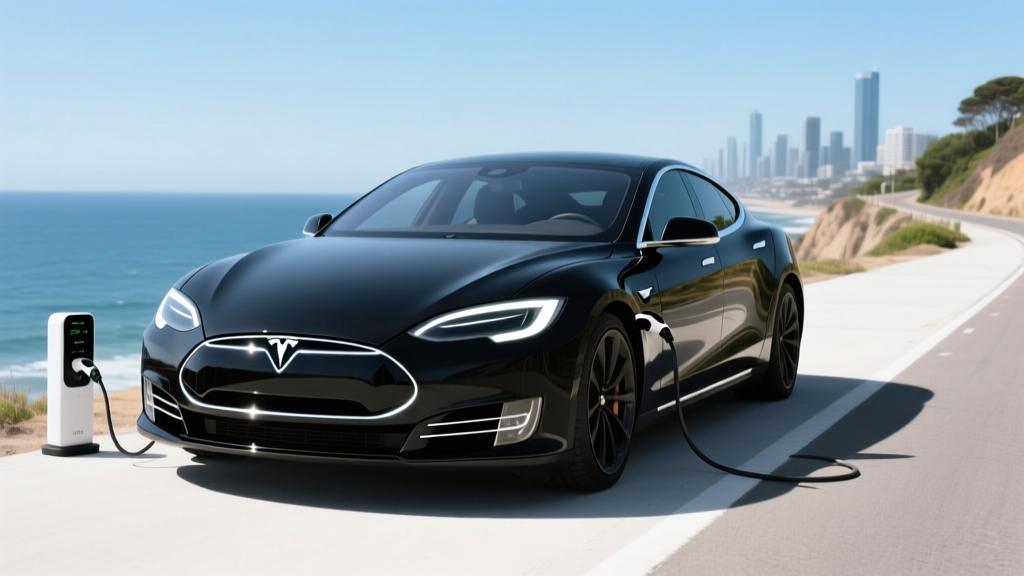
For home charging, the onboard charger accepts up to 11.5 kW on a 240V / 48A circuit. This translates to roughly 44 miles of range per hour of charging, meaning a depleted battery reaches full in approximately 9 hours. Most owners who install a Tesla Wall Connector on a NEMA 14-50 or hardwired 60A circuit wake up to a full battery every morning — the single biggest convenience advantage of EV ownership.
Tesla's Supercharger network, now exceeding 6,000 stations and 60,000+ connectors in North America, remains the most reliable public charging infrastructure. With the CCS adapter (included with recent Model S deliveries), owners can also access Electrify America, EVgo, and ChargePoint DC fast chargers, though reliability and actual delivered speeds on third-party networks remain inconsistent.
Performance, Efficiency, and the Signature Package Difference
The dual-motor Long Range Model S produces 670 horsepower and rockets to 60 mph in 3.1 seconds — figures that would have defined a supercar a decade ago. The instant torque delivery characteristic of electric motors makes the acceleration feel even more urgent than the numbers suggest. The adaptive air suspension adjusts ride height automatically, lowering at highway speeds for aerodynamic efficiency and raising for speed bumps or rough roads.
Efficiency is rated at 120 MPGe combined (28 kWh per 100 miles) by the EPA. For context, this means a full 100 kWh charge — roughly $14–$18 depending on local electricity rates — delivers over 350 real-world miles. Compare that to a BMW 5 Series averaging 28 MPG combined at $3.50/gallon, and the per-mile fuel cost drops from approximately $0.125 to $0.04–$0.05.
The Signature package adds premium leather upholstery with ventilated front seats, a rear-seat entertainment screen, enhanced ambient lighting, premium audio tuning, and exclusive wheel options. It does not change the powertrain, range, or charging performance. Buyers should view it as a luxury trim upgrade rather than a performance differentiator.
On the tech front, the 17-inch center touchscreen runs Tesla's latest software with navigation, streaming, gaming, and vehicle controls. The driver-assist suite includes standard Autopilot (Traffic-Aware Cruise Control and Autosteer), which is an SAE Level 2 system — meaning the driver must remain fully attentive with hands on the wheel. Full Self-Driving (Supervised) capability is available as a $8,000 add-on or $99/month subscription, adding automated lane changes, traffic light recognition, and Navigate on Autopilot. Despite the "FSD" name, this remains a Level 2 system requiring continuous driver supervision. It is not autonomous driving.
Pricing, Tax Credit Eligibility, and Total Cost
| Trim / Config | MSRP | §30D Federal Credit | Effective Price |
|---|---|---|---|
| Model S Long Range | $74,990 | Up to $7,500 (see rules) | ~$67,490 |
| Model S Long Range + Signature Pkg | ~$82,990 | Up to $7,500 (see rules) | ~$75,490 |
| Model S Plaid (tri-motor) | $89,990 | Up to $7,500 (see rules) | ~$82,490 |
The base Model S Long Range starts at $74,990 before destination fees. Adding the Signature package pushes the price to approximately $82,990. The tri-motor Plaid, with 1,020 hp and a 396-mile EPA range, starts at $89,990.
Federal tax credit eligibility is not guaranteed. Under IRS §30D rules, the Model S must meet several criteria:
- MSRP Cap: Sedans must have an MSRP at or below $55,000 to qualify. The Model S, at $74,990+, exceeds this cap and does not qualify for the new-vehicle §30D credit.
- Buyer Income Limits: AGI must not exceed $150,000 (single), $225,000 (head of household), or $300,000 (joint).
- Battery Sourcing: Critical minerals and battery components must meet phased-in domestic-content thresholds.
Because the Model S exceeds the $55,000 sedan MSRP cap, it is ineligible for the $7,500 new clean vehicle credit. Buyers should not factor this credit into their purchase decision for any Model S trim. However, some states offer their own rebates or incentives that may apply — check your state's energy office or department of revenue for current programs. The point-of-sale transfer provision does not override the MSRP cap.
Leasing may offer a workaround: under §45W (commercial clean vehicle credit), the leasing company may receive the credit and pass savings through as a reduced lease payment. Tesla's lease terms vary, and the credit pass-through is not guaranteed — confirm with Tesla finance before committing.
Interior Space, Cargo, and Daily Practicality
The Model S offers 28 cubic feet of rear cargo space — substantially more than a traditional sedan thanks to its liftback/hatchback design — plus a 3.1-cubic-foot front trunk (frunk). Total storage with rear seats folded reaches approximately 64.9 cubic feet, enough for luggage for four on a week-long road trip or a full grocery haul.
Rear-seat legroom measures 35.4 inches, adequate for adults on long drives but tighter than the Lucid Air's generous 37.8 inches. Headroom is good thanks to the flat floor and absence of a transmission tunnel. The Signature package's ventilated seats and premium leather meaningfully improve long-distance comfort, particularly in warm climates.
The Model S is rated to tow up to 3,500 pounds with the optional tow package — sufficient for a small utility trailer or a pair of jet skis, but not a large camper. This is a niche capability for the segment.
Warranty and Long-Term Battery Durability
Tesla covers the Model S battery and drive unit for 8 years or 150,000 miles, whichever comes first, with a guaranteed minimum 70% battery capacity retention. The basic vehicle limited warranty covers 4 years or 50,000 miles.
NMC battery degradation data from Tesla's annual impact report and third-party fleet studies (notably by Recurrent Auto) shows the Model S battery typically retains approximately 88–92% capacity after 100,000 miles. Degradation is steepest in the first 20,000–30,000 miles (roughly 3–5% loss), then flattens into a slow linear decline. Owners who follow the 80% daily charge limit recommendation and avoid frequent DC fast charging tend to see better long-term retention.
A full battery replacement out of warranty currently costs approximately $15,000–$22,000 depending on the pack configuration. While this is a significant expense, the 150,000-mile warranty threshold and observed degradation curves suggest most owners will not face this cost during typical ownership periods.
Pros, Cons, and Who Should Buy the Model S Signature
Pros
- 402-mile EPA range — among the longest of any production EV
- Supercharger network access — most reliable public charging in North America
- 670 hp dual-motor AWD with 3.1s 0–60 — effortless highway passing power
- Over-the-air updates continuously add features and refinements
- Liftback cargo design with 28 cu ft + frunk — highly practical for the class
- Heat pump standard — better cold-weather efficiency than resistive heating
Cons
- Ineligible for $7,500 federal tax credit (exceeds $55K sedan MSRP cap)
- 250 kW peak charge rate trails Hyundai Ioniq 5 / Kia EV6 (350 kW on 800V)
- Rear-seat legroom (35.4") trails Lucid Air and Mercedes EQS
- Minimalist interior lacks physical controls — climate, mirrors, glovebox all on-screen
- No Apple CarPlay or Android Auto integration
- FSD (Supervised) is expensive and remains Level 2 — not autonomous
Best for: Tech-forward professionals and road-trip enthusiasts who prioritize range, Supercharger network reliability, and acceleration. The Signature trim appeals to buyers who want premium materials without stepping to the Plaid's six-figure territory. The Model S is an outstanding commuter and cross-country cruiser, particularly in regions with robust Supercharger coverage.
Consider alternatives if: You need maximum rear-seat space (Lucid Air), traditional luxury appointments and dealer service (Mercedes EQS, BMW i7), or you require federal tax credit eligibility (consider the Tesla Model 3, which falls under the MSRP cap).
Frequently Asked Questions
What is the real-world range of the Tesla Model S Signature?
The EPA rates the Model S Long Range at 402 miles. In real-world highway driving at 70–75 mph, expect 330–350 miles. In freezing temperatures (around 30°F), range drops to approximately 270–300 miles. City driving with heavy regenerative braking can approach the EPA figure.
How fast does the Model S charge at home and on the road?
On a Level 2 home charger (11.5 kW), the Model S adds approximately 44 miles of range per hour, with a full charge taking about 9 hours. On a Tesla V3 Supercharger, it peaks at 250 kW and charges from 10–80% in roughly 28 minutes. Note that peak rate is sustained only at low states of charge — the curve tapers significantly above 50%.
Does the Tesla Model S qualify for the $7,500 federal EV tax credit?
No. Under IRS §30D rules, new sedans must have an MSRP at or below $55,000 to qualify. The Model S starts at $74,990 and exceeds this cap across all trims. Some state-level incentives may still apply — check your state energy office. Leasing may allow the lessor to claim the commercial credit (§45W) and pass savings through.
Is the Model S Signature worth buying over the Lucid Air or Mercedes EQS?
The Model S wins on Supercharger network access, real-world range, and software features. The Lucid Air Grand Touring offers 516 miles of EPA range and more rear-seat space but has less mature public charging compatibility. The Mercedes EQS provides a more traditional luxury experience with dealer service but delivers less range (350 miles EPA) at a higher starting price. Choose the Model S if charging infrastructure and tech integration are your priorities.
What is the biggest drawback of the Model S in 2026?
The most common owner complaints center on the lack of physical controls (nearly everything is screen-based), absence of Apple CarPlay/Android Auto, and the fact that the 250 kW peak charge rate — while adequate — is now outpaced by 800V competitors like the Hyundai Ioniq 5 and Porsche Taycan, which can charge faster at compatible stations. The tax credit ineligibility also stings at this price point.
How long will the Model S battery last before needing replacement?
Tesla's battery warranty guarantees 70% capacity retention for 8 years or 150,000 miles. Fleet data suggests the NMC pack retains roughly 88–92% capacity at 100,000 miles with normal use. Many Model S vehicles from 2015–2018 are still on their original packs with acceptable degradation at 150,000+ miles. Out-of-warranty replacement costs $15,000–$22,000 if needed.