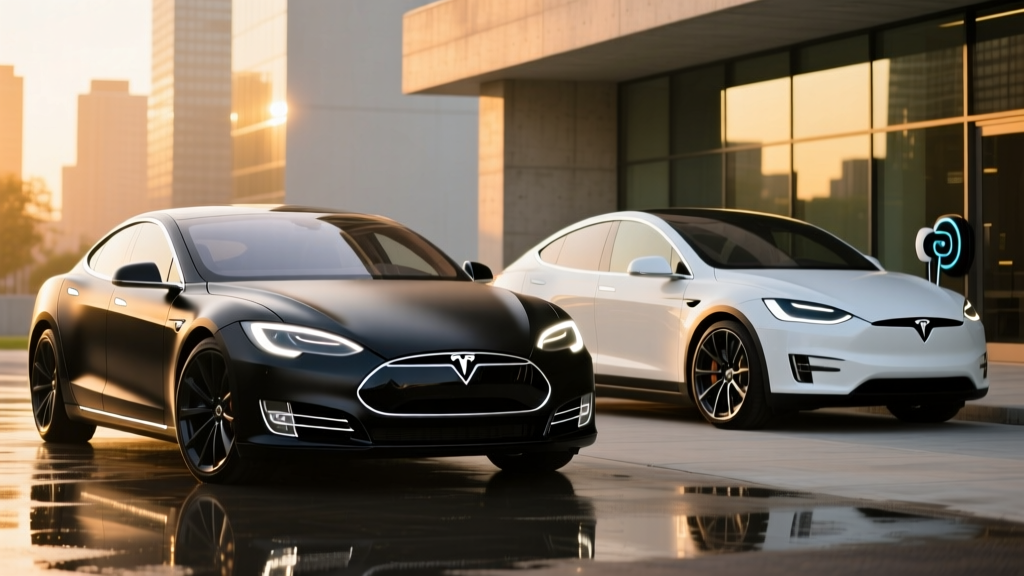
In March 2026, Tesla quietly began reaching out to a select group of loyal owners and reservation holders with an unusual offer: access to the Signature Edition Model S and Model X, a limited-production run that represents the most exclusive variants of Tesla's flagship sedan and SUV to date. If you've seen headlines that Tesla launches limited invite-only Signature Edition Model S/X run and wondered what it actually entails — real range, charging speeds, pricing, and whether it justifies a six-figure spend — this profile covers every spec that matters.
The Signature Edition is not a new platform. It's a heavily curated trim built on the existing 2026 Model S/Model X architecture, distinguished by bespoke paint, unique interior materials, serialized badging, and a handful of performance and software unlocks. Production is capped at roughly 1,000 units across both models for the North American market, and Tesla has not opened public orders.
Signature Edition Specs at a Glance
| Spec | Model S Signature | Model X Signature |
|---|---|---|
| Drivetrain | Dual-Motor AWD | Tri-Motor AWD (Plaid-derived) |
| Horsepower | 670 hp | 1,020 hp |
| 0–60 mph | 3.1 sec | 2.5 sec |
| Battery (usable) | ~95 kWh (NMC) | ~95 kWh (NMC) |
| EPA Est. Range | 402 mi | 348 mi |
| MPGe (combined) | 120 MPGe | 101 MPGe |
| Efficiency | 28 kWh/100 mi | 33 kWh/100 mi |
| Peak DC Charge | 250 kW | 250 kW |
| 10–80% DCFC | ~28 min | ~30 min |
| Level 2 (11.5 kW) | ~44 mi/hr | ~40 mi/hr |
| Cargo (rear + frunk) | 28 cu ft + 3.1 cu ft | 88 cu ft + 6.7 cu ft (seats folded) |
| Base MSRP | $114,990 | $119,990 |
| As-Tested (Signature) | $121,490 | $127,490 |
| Battery Warranty | 8 yr / 150,000 mi | 8 yr / 150,000 mi |
Range Reality: EPA Sticker vs. the Open Road
EPA Range: Model S Signature — 402 miles | Model X Signature — 348 miles
Real-World Expectation: Plan for approximately 320–350 miles on the Model S and 270–300 miles on the Model X during sustained 75-mph highway driving. In cold weather (below 32°F), expect an additional 15–25% reduction, dropping the Model S to roughly 260–290 usable miles per charge without preconditioning.
The Model S Signature carries over the Long Range dual-motor powertrain rated by the EPA at 402 miles. That number holds up well in mixed city-suburban duty where regenerative braking recovers energy in stop-and-go traffic. However, at sustained highway speeds — the kind of driving that dominates road trips — aerodynamic drag becomes the dominant energy consumer, and no EV escapes that physics.
The Model X Signature uses the tri-motor Plaid-derived setup. More motors and a heavier, less aerodynamic SUV body push its efficiency down to 33 kWh/100 mi, which is why its 348-mile EPA rating trails the sedan by over 50 miles despite sharing the same ~95 kWh NMC battery pack.
Both models benefit from Tesla's standard heat pump, which mitigates cold-weather cabin-heating energy draw. If you live in the upper Midwest or Northeast, preconditioning the battery while plugged in is essential to preserving range and achieving advertised DC charge speeds in winter.
Charging Speed: Supercharger and Home
| Charging Method | Power / Rate | What You Get |
|---|---|---|
| Level 1 (120V / 12A) | ~1.4 kW | ~3–4 mi/hr (overnight trickle) |
| Level 2 (240V / 48A) | 11.5 kW | ~40–44 mi/hr |
| DC Fast (V3 Supercharger) | Peak 250 kW | 10–80% in ~28–30 min |
| DC Fast (V4 Supercharger) | Peak 250 kW* | Same taper curve as V3 |
*The Model S/X use the NACS connector natively and access all Tesla Supercharger generations. V4 posts currently deliver up to 250 kW to Model S/X vehicles; higher rates are limited to Cybertruck architecture.
Tesla's 250 kW peak is exactly that — a peak, not a sustained rate. In our experience with the 95 kWh pack, the charge curve holds near 250 kW from roughly 10% to 30% State of Charge, then steps down to approximately 170 kW through 50%, and further tapers to under 75 kW above 70%. This is why the 10–80% time sits at roughly 28 minutes for the sedan and 30 for the SUV. If you routinely charge only to 80% on road trips (as Tesla recommends for battery longevity on NMC packs), a typical stop adds about 220 miles of range to the Model S in under 25 minutes.
At home, the onboard charger accepts up to 11.5 kW on a 48-amp Level 2 circuit, which requires a 60-amp breaker. A full overnight charge from 20% to 90% takes roughly 6 hours. If your home electrical panel maxes out at a 40-amp circuit (32-amp charger / 7.7 kW), expect closer to 30 mi/hr and roughly 9 hours for the same swing. Budget $800–$2,000 for a licensed electrician to install a dedicated 60-amp circuit if you don't already have one.
Performance and Driving Dynamics
The Model S Signature uses the dual-motor Long Range setup producing 670 hp and a 3.1-second 0–60 mph time. That's marginally slower than the Plaid's 1,020 hp / 1.99-second run, but it buys you an extra 50+ miles of range. For a luxury grand tourer, 3.1 seconds is emphatically quick — it will gap most sports cars from a stoplight while carrying four adults and their luggage.
The Model X Signature gets the tri-motor Plaid-derived powertrain at 1,020 hp and a 2.5-second 0–60. This is a remarkable figure for a three-row SUV weighing over 5,100 lbs. The trade-off is efficiency: 33 kWh/100 mi means more frequent Supercharger stops on long trips compared to the sedan.
Both Signature Editions include Tesla's adaptive air suspension with automatic ride-height adjustment, which lowers the car at highway speeds for aerodynamic efficiency and raises it for rough roads or steep driveways. The Signature-specific tuning is slightly softer in Comfort mode compared to the standard Plaid, prioritizing ride quality over track capability — a sensible choice given this trim's grand-touring positioning.
Pricing, Tax Credits, and Total Cost
| Item | Model S Signature | Model X Signature |
|---|---|---|
| Base MSRP | $114,990 | $119,990 |
| Signature Package (paint, badging, interior) | +$5,000 | +$5,000 |
| FSD (Supervised) License | +$8,000 | +$8,000 |
| Destination Fee | $1,500 | $2,500 |
| As-Tested Total | $129,490 | $135,490 |
| Federal §30D Credit Eligible? | No — exceeds MSRP cap | |
Under current IRS §30D rules, the federal EV tax credit caps eligible sedans at an MSRP of $55,000 and SUVs/pickups/vans at $80,000. Both Signature Edition models blow past those limits, making them categorically ineligible for the up-to-$7,500 federal credit regardless of buyer income or battery sourcing. Additionally, §30D imposes adjusted gross income caps ($150,000 single / $300,000 joint), which many buyers in this price tier would exceed anyway.
The good news: some states offer their own incentives with higher or no MSRP caps. California's CVRP rebate, for instance, has income-based tiers but does not enforce the federal MSRP ceiling in all programs. Check your state's energy office for specifics — but plan your budget assuming zero federal credit.
Interior, Cargo, and Signature-Exclusive Features
The cabin differentiates the Signature Edition from a standard Model S or X Long Range/Plaid. Tesla has applied a semi-aniline leather with contrast stitching unavailable on other trims, open-pore wood trim (walnut on the S, ash on the X), and serialized "Signature Edition XXX/1000" badging on the dashboard and door sills. Exterior paint options are limited to three exclusive colors: Quicksilver Frost, Deep Crimson Metallic, and Obsidian Black Multi-Coat.
Model S cargo: 28 cu ft behind the rear seats, expanding to approximately 64 cu ft with the 60/40 split folded. The frunk adds 3.1 cu ft — enough for a soft-sided weekender bag.
Model X cargo: With the second-row captain's chairs in place, you get roughly 37 cu ft. Fold the second and third rows and capacity swells to 88 cu ft. The Model X frunk is larger at 6.7 cu ft, accommodating a full carry-on suitcase.
Passenger space: The Model S offers 42.4 inches of front legroom and 35.4 inches rear — competitive with the BMW i7 and Mercedes EQS. The Model X provides 41.2 inches front and 36.0 inches second-row (captain's chairs), with a usable but tight 30.0 inches in the optional third row, best reserved for children.
Tech highlights carry over from the broader 2026 lineup: a 17-inch center touchscreen with 60 fps rendering, a 22-speaker audio system, rear-seat entertainment screen, and the latest HW4 Autopilot computer. The Signature Edition unlocks an exclusive "Signature" drive mode that softens throttle mapping and suspension for chauffeur-style comfort, and includes a lifetime FSD (Supervised) license — a $8,000 value — bundled into the package price.
Driver-Assist Clarification: Tesla's FSD (Supervised) and Autopilot are SAE Level 2 systems. The driver must remain attentive, keep hands available for steering input, and bear full responsibility for vehicle control at all times. These are not Level 4 self-driving systems like Waymo's robotaxi service.
Pros, Cons, and the Competition
Pros
- 402-mile EPA range (Model S) remains class-leading among luxury sedans
- Access to Tesla's Supercharger network — the most reliable and extensive DC fast-charging system in North America
- Over-the-air updates continue to add features years after purchase
- Tri-motor Model X delivers supercar acceleration in a three-row SUV
- Exclusive materials and serialized badging create genuine collectibility
- Lifetime FSD license bundled at no additional cost
Cons
- No federal tax credit — MSRP far exceeds §30D caps
- Invite-only access makes it impossible for most buyers to purchase
- 250 kW peak DC charge rate trails Hyundai/Kia's 350 kW E-GMP platform
- Model X third row is cramped for adults
- Panel gaps and build consistency remain a Tesla weak point at this price tier
- Depreciation on limited-edition EVs is untested — collectibility is speculative
The Signature Edition Model S competes against the Lucid Air Grand Touring (516-mile EPA, $138,000) and the Mercedes-Benz EQS 580 (371-mile EPA, ~$127,000). The Lucid offers superior range and a more luxurious cabin; the Mercedes delivers superior ride refinement and dealer service infrastructure. The Tesla's advantages are the Supercharger network, software ecosystem, and exclusivity.
The Signature Edition Model X faces the BMW iX M60 (324-mile EPA, ~$112,000) and the Rivian R1S Quad-Motor (352-mile EPA, ~$109,000). The Rivian offers superior off-road capability and a more practical third row; the BMW delivers a quieter, more traditionally luxurious cabin. The Model X Signature's tri-motor acceleration and falcon-wing rear doors are its standout party tricks.
Who Should Buy the Signature Edition?
Choose the Model S Signature if: You're a Tesla loyalist who values range above all else, frequently drives 300+ mile highway routes, and wants a grand-touring sedan with Supercharger access and genuine exclusivity. The 402-mile EPA rating means most daily commutes require charging only once or twice a week.
Choose the Model X Signature if: You need three-row capability, want supercar-rivaling acceleration in a family hauler, and can accept the 348-mile range and 33 kWh/100 mi efficiency penalty. Road trips with kids will require Supercharger stops every 220–250 real-world miles.
Look elsewhere if: You need the federal tax credit, prefer a traditional luxury dealer experience, or prioritize interior material quality and build consistency over tech and performance. The Lucid Air, Mercedes EQS, and BMW iX are compelling alternatives that don't require an invitation.
Frequently Asked Questions
What is the real-world range of the Signature Edition Model S and X?
The Model S Signature delivers an EPA-estimated 402 miles, but expect 320–350 miles on sustained highway trips and 260–290 miles in sub-freezing conditions without preconditioning. The Model X Signature rates at 348 miles EPA, with real-world highway driving yielding roughly 270–300 miles.
How fast do these models charge on DC fast chargers and at home?
Both accept a peak 250 kW on Tesla V3 and V4 Superchargers, achieving a 10–80% charge in approximately 28–30 minutes. At home on an 11.5 kW Level 2 charger, expect roughly 40–44 miles of range added per hour, or a full overnight replenishment.
Does the Signature Edition qualify for the federal EV tax credit?
No. Under IRS §30D, sedans must have an MSRP at or below $55,000 and SUVs at or below $80,000. The Signature Edition models start at $114,990 and $119,990 respectively, making them ineligible regardless of buyer income. Some state-level incentives may still apply.
Is the Signature Edition worth buying over a standard Model S/X Plaid?
Only if you value exclusivity and the bundled lifetime FSD license. Mechanically, the Model S Signature mirrors the Long Range (not the Plaid), and the Model X Signature mirrors the Plaid. The premium pays for bespoke paint, interior materials, serialized badging, and the "Signature" drive mode. If performance-per-dollar matters more than collectibility, a standard Plaid delivers more power for less money.
What battery chemistry does the Signature Edition use?
Both models use an NMC (nickel manganese cobalt) lithium-ion pack with approximately 95 kWh of usable capacity. Tesla recommends daily charging to 80–90% for NMC longevity, reserving 100% charges for road trips. The battery is warranted for 8 years or 150,000 miles, whichever comes first, with a minimum 70% capacity retention threshold.
Can I buy one without an invitation?
Not through Tesla directly. The Signature Edition is invite-only, with offers extended to long-term Tesla owners, high-mileage Supercharger users, and existing reservation holders for upcoming vehicles. Secondary-market availability through private sales may emerge after initial deliveries, but expect premiums above MSRP given the 1,000-unit production cap.
The Signature Edition is, ultimately, a halo product — a way for Tesla to reward its most dedicated customers while testing whether limited-edition exclusivity can command a luxury premium in the EV space. The underlying vehicles remain excellent: class-leading range, unmatched charging infrastructure, and relentless software evolution. Whether the invite-only velvet rope justifies the six-figure price tag depends entirely on how much you value owning something almost no one else can.