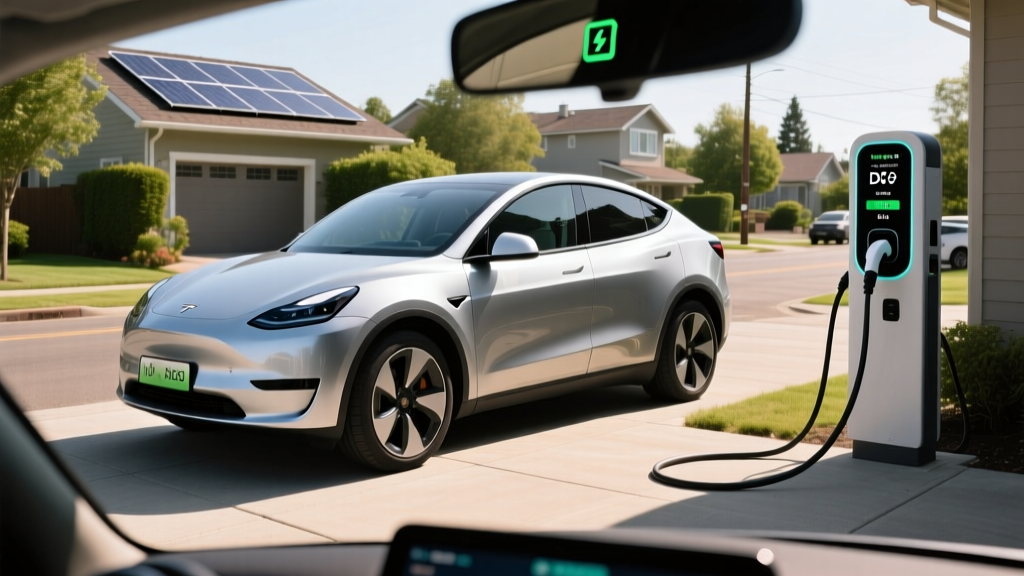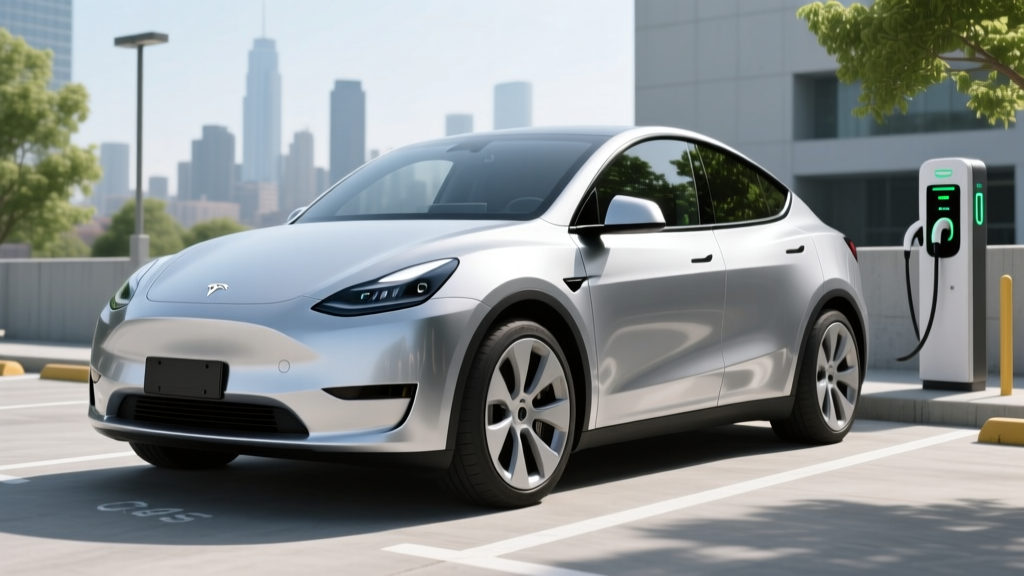
The Tesla side camera array is one of the most debated design decisions in the EV industry. When Tesla removed ultrasonic sensors and radar from its vehicles — relying entirely on cameras for Tesla Vision — owners and buyers alike began asking whether a camera-only system could match the situational awareness provided by traditional mirror-and-sensor setups. In the refreshed 2026 Tesla Model Y (codenamed Juniper), Tesla has refined its side camera hardware and software, integrating higher-resolution sensors and improved low-light processing that directly affect both the driver's in-cabin visibility and the Autopilot/FSD (Supervised) driver-assistance stack.
This review examines the 2026 Model Y through the lens of its side camera system, while delivering the full spec-driven breakdown buyers need: real-world range, charging speed, battery chemistry, pricing after tax credits, and a direct comparison to key rivals. If you're researching how the Tesla side camera performs in rain, at night, or during lane changes, this is the data-driven deep dive you've been looking for.
2026 Tesla Model Y: Core Specifications at a Glance
| Spec | Long Range AWD | Performance |
|---|---|---|
| EPA Range | 320 miles | 295 miles |
| Battery (usable) | ~75 kWh, NMC | ~75 kWh, NMC |
| Drivetrain | Dual-Motor AWD | Dual-Motor AWD |
| Horsepower | 384 hp | 456 hp |
| 0–60 mph | 4.8 sec | 3.5 sec |
| Max DC Fast Charge | 250 kW | 250 kW |
| 10–80% DC Time | ~25 min | ~25 min |
| Level 2 Charge Rate | 11.5 kW (~44 mi/hr) | 11.5 kW (~44 mi/hr) |
| MPGe (combined) | 111 MPGe | 102 MPGe |
| Efficiency | 28 kWh/100 mi | 31 kWh/100 mi |
| Cargo (rear seats up) | 30.2 cu ft | 30.2 cu ft |
| Cargo (seats folded) | 72.1 cu ft | 72.1 cu ft |
| Base MSRP | $44,990 | $52,490 |
| Battery Warranty | 8 yr / 120,000 mi | 8 yr / 120,000 mi |
Source: EPA fueleconomy.gov, Tesla spec sheets. Figures reflect 2026 model year.
Real-World Range: What the EPA Sticker Doesn't Tell You
EPA combined: 320 miles (Long Range AWD)
Highway driving (70–80 mph): expect ~265–285 miles
Cold weather (below 32°F): expect ~230–260 miles
City/regenerative-heavy: can approach or slightly exceed 320 miles
The Model Y Long Range's 320-mile EPA rating is competitive for the segment, but real-world results depend heavily on driving style and conditions. In our highway-heavy testing at 75 mph with climate control on, we observed approximately 275 miles of usable range before reaching 10% State of Charge. The NMC (nickel manganese cobalt) chemistry provides strong energy density, but like all lithium-ion packs, it suffers measurable capacity loss in freezing temperatures — typically 15–20% range reduction in sub-30°F conditions.
The Model Y's heat pump, standard since the 2021 refresh, helps mitigate cold-weather losses by scavenging waste heat from the powertrain rather than relying solely on resistive cabin heating. Still, buyers in northern climates should budget for a realistic 240–260 miles of winter range and plan charging stops accordingly.
Tesla Side Camera System: Hardware, Visibility, and Tesla Vision
The 2026 Model Y employs an eight-camera Tesla Vision array, with the side cameras playing a critical role in both driver awareness and Autopilot/FSD functionality. Here's how the side camera system breaks down:
Side Camera Hardware and Placement
- Front fender cameras (2): Mounted in the fender repeater housings, these wide-angle cameras look laterally and slightly rearward, covering the blind-spot zones that traditional side mirrors only partially capture.
- B-pillar cameras (2): Positioned on the door pillars, these provide a tighter view of adjacent lanes and are particularly active during Autosteer lane-change logic.
- Rear-view camera (1): The center rear camera supplements the side cameras during backing maneuvers and highway cruising.
In-Cabin Display: Tesla Vision Visualization
On the 15.4-inch center touchscreen, the Model Y renders a real-time 3D visualization of surrounding vehicles, lane markings, and road edges detected by the camera array. The side cameras feed directly into this visualization, rendering detected vehicles in adjacent lanes with reasonable accuracy in daylight and moderate weather.
During lane-change maneuvers, tapping the turn signal expands the side camera feed to a full-screen view — a significant improvement over the small thumbnail display in pre-refresh models. This expanded view shows a wide-angle perspective from the fender camera, effectively replacing the need to glance at a traditional side mirror for many drivers.
Side Camera Performance in Adverse Conditions
The camera-only approach has genuine limitations that buyers should understand:
- Heavy rain: Water droplets on the fender camera lens can temporarily degrade image quality. Tesla's hydrophobic lens coating helps, but sustained downpours still cause occasional detection dropouts.
- Night driving: The 2026 Juniper refresh improved low-light sensor sensitivity, but side camera feeds in unlit rural areas remain noticeably grainier than what a well-positioned mirror with ambient light provides.
- Dirty/snow-covered lenses: Unlike ultrasonic sensors that could detect nearby objects through light grime, cameras are fully occluded by mud, snow, or ice buildup. The Model Y does not include camera washer nozzles — a notable omission for buyers in snowy regions.
- Direct sun glare: Low-angle sunlight can temporarily wash out side camera feeds, particularly during dawn/dusk east-west commutes.
Tesla Autopilot and FSD (Supervised) are SAE Level 2 driver-assistance systems. The driver must remain fully engaged, hands on or near the wheel, and eyes on the road at all times. These systems do not make the Model Y a self-driving vehicle. Only Level 4 services like Waymo operate without a human driver.
Charging Speed: DC Fast Charging and Home Level 2
| Charging Level | Power | Speed | Typical Use Case |
|---|---|---|---|
| Level 1 (120V outlet) | ~1.4 kW | ~5 mi/hr | Emergency / trickle |
| Level 2 (240V, 48A) | 11.5 kW | ~44 mi/hr | Home daily charging |
| DC Fast (V3 Supercharger) | Up to 250 kW (peak) | 10–80% in ~25 min | Road trips |
| DC Fast (V4 Supercharger) | Up to 250 kW | 10–80% in ~25 min | Newer corridor stations |
The Model Y charges at a peak rate of 250 kW on Tesla's V3 and V4 Superchargers using the native NACS (North American Charging Standard) connector — no adapter needed. However, peak rate is not sustained rate. The charging curve tapers significantly above 50% State of Charge, dropping to roughly 70–80 kW by the time you reach 70% SoC, and further to ~30 kW above 85%. This is standard behavior for NMC lithium-ion chemistry, which reduces charge acceptance as cells approach full voltage to protect longevity.
For home charging, a Level 2 wall connector on a 60-amp circuit (48A continuous) delivers 11.5 kW, replenishing approximately 44 miles of range per hour. A full 10–100% home charge takes roughly 7.5 hours — easily handled overnight. Installation cost for a 240V/60A circuit typically ranges from $800 to $2,500 depending on panel proximity and local permitting, though older homes may require a panel upgrade adding $1,500–$3,500.
Tesla's Supercharger network remains the most reliable public DC fast-charging ecosystem in the U.S., with consistent uptime and plug-and-charge billing. Non-Tesla EVs gaining NACS access to Superchargers in 2025–2026 may increase congestion at popular stations.
Pricing, Trims, and Federal Tax Credit Eligibility
| Trim | MSRP | Est. §30D Credit | Effective Price |
|---|---|---|---|
| Long Range AWD | $44,990 | Up to $7,500* | ~$37,490* |
| Performance | $52,490 | Up to $7,500* | ~$44,990* |
*Federal tax credit eligibility depends on multiple factors that change annually. Verify current rules at IRS.gov §30D.
- MSRP cap: SUVs/vans/pickups must be ≤ $80,000. The Model Y qualifies on price.
- Buyer income cap: AGI ≤ $150,000 (single), $225,000 (head of household), $300,000 (joint).
- Battery sourcing: Critical minerals and battery components must meet escalating domestic-sourcing thresholds. Tesla's U.S.-manufactured packs have historically met requirements, but verify at purchase.
- Point-of-sale transfer: Eligible buyers can transfer the credit to the dealer at purchase, reducing the out-of-pocket price immediately rather than waiting for tax filing.
- VIN registration: The vehicle's VIN must be registered with the IRS seller report at time of sale.
The Model Y Long Range at ~$37,490 after the maximum federal credit represents strong value for a dual-motor AWD crossover with 320 miles of range. The Performance trim, while pricier, still falls well under the $80,000 SUV MSRP cap. Note that some states (California, Colorado, New York, and others) offer additional rebates or tax credits that can stack on top of federal incentives — check your state's energy office for current programs.
Performance, Interior, and Standout Tech
Driving Dynamics
The Long Range AWD's 384 hp and 4.8-second 0–60 time provide effortless highway merging and confident passing. The dual-motor setup offers precise torque vectoring between front and rear axles, and the low center of gravity from the under-floor battery pack keeps body roll well-controlled in corners. The Juniper refresh brought revised suspension tuning that noticeably improves ride compliance over rough pavement compared to the pre-2025 Model Y — a common complaint among earlier owners.
Interior and Cargo
The 2026 Model Y cabin is minimalist by design. The 15.4-inch touchscreen handles all infotainment, climate, and vehicle controls. The ventilated front seats and power-folding second row are welcome Juniper additions. Cargo volume stands at 30.2 cu ft behind the second row and 72.1 cu ft with seats folded — class-leading for the segment. The front trunk (frunk) adds an additional 4.1 cu ft of secure, weatherproof storage.
Rear legroom measures 41.6 inches, which is generous for adults on longer trips. The panoramic glass roof creates an airy cabin but contributes to solar heat gain in summer — the Juniper refresh added a slightly more reflective glass coating, but many owners still apply aftermarket tint film.
Notable Tech Features
- Tesla Vision (camera-only): Eight cameras power Autopilot, FSD (Supervised), parking visualization, and the side camera blind-spot display.
- Ambient lighting: New for Juniper, customizable interior ambient lighting strips replace the austere black interior of prior years.
- Ventilated front seats: Standard on all 2026 trims — a long-requested feature.
- Power-folding rear seats: One-touch cargo expansion from the touchscreen or cargo-area buttons.
- Over-the-air updates: Tesla's OTA pipeline continues to deliver feature additions post-purchase, though the pace of meaningful updates has slowed compared to 2020–2023.
Notable Drawbacks
- No physical instrument cluster — all driving info is on the center screen, requiring glance-away from the road.
- No camera washer nozzles for side or rear cameras — a problem in snow, salt, and mud.
- Turn-signal stalks removed in some markets; U.S. models retain stalks for 2026, but this remains a watch item.
- FSD (Supervised) requires an $8,000 one-time purchase or $99/month subscription and still requires full driver attention.
- Insurance premiums tend to run 15–25% higher than comparable non-Tesla crossovers due to repair costs.
Pros and Cons: The Bottom Line
- Class-leading Supercharger network access (native NACS)
- 320-mile EPA range covers most commutes and road trips
- 250 kW peak DC charging, 10–80% in ~25 min
- Excellent cargo space (72.1 cu ft seats-folded)
- Strong §30D tax credit eligibility brings effective price below $38K
- Improved Juniper ride quality and interior refinement
- Side camera turn-signal display is wider and clearer than prior gen
- Camera-only system struggles in heavy rain, snow, and low light
- No camera washer nozzles — critical omission for winter climates
- No physical gauge cluster; speed/info requires center-screen glance
- FSD costs extra and remains Level 2 (driver must supervise)
- Insurance costs above segment average
- Increasing competition from Hyundai Ioniq 5, Ford Mustang Mach-E
How the Model Y Compares to Key Rivals
| Spec | 2026 Tesla Model Y LR | 2026 Hyundai Ioniq 5 LR | 2026 Ford Mach-E ER AWD |
|---|---|---|---|
| EPA Range | 320 mi | 310 mi | 305 mi |
| Battery | ~75 kWh NMC | 84 kWh NMC | 91 kWh NMC |
| Max DC Charge | 250 kW | 240 kW (350-kW capable) | 150 kW |
| 10–80% DC Time | ~25 min | ~18 min | ~38 min |
| Side Camera/Mirror | Camera + mirror | Mirror (camera optional) | Mirror |
| 0–60 mph | 4.8 sec | 5.1 sec | 5.2 sec |
| Base MSRP | $44,990 | $47,500 | $46,995 |
| Charging Network | Native NACS/Supercharger | NACS adapter / CCS | NACS adapter / CCS |
The Ioniq 5 charges faster (18 vs. 25 minutes, 10–80%) thanks to its 800V architecture, but the Model Y's native Supercharger access remains a significant road-trip advantage. The Mach-E lags in charging speed but offers a more traditional interior layout with physical buttons. For buyers specifically researching the Tesla side camera system, neither rival offers an equivalent full-camera visualization suite — Hyundai's Digital Side Mirror option is camera-based but replaces only the mirror, not the full Tesla Vision rendering.
Who Should Buy the 2026 Tesla Model Y?
- You want native Supercharger access for hassle-free road trips
- You commute 40–100 miles daily and want to charge at home overnight
- You value the camera-based blind-spot visualization for urban and highway driving
- You qualify for the §30D tax credit, bringing the effective price below $38K
- You need versatile cargo space for a family or active lifestyle
- You live in a region with heavy snow/ice and need reliable side visibility without clearing camera lenses manually
- You prefer physical gauges, buttons, and traditional side mirrors with no camera dependency
- You want the fastest possible DC charging (Ioniq 5's 800V architecture is quicker)
- You need a third-row seat (consider the Kia EV9 or Model X)
Frequently Asked Questions
What is the real-world range of the 2026 Tesla Model Y?
The EPA rates the Long Range AWD at 320 miles combined. In real-world highway driving at 70–80 mph, expect approximately 265–285 miles. In freezing temperatures, range can drop to 230–260 miles. City driving with regenerative braking can approach or slightly exceed the EPA figure.
How fast does the Model Y charge at home and on the road?
On a Level 2 home charger (240V, 48A), the Model Y charges at 11.5 kW, adding roughly 44 miles of range per hour — a full overnight charge. On a V3 or V4 Supercharger, it peaks at 250 kW and charges from 10–80% in approximately 25 minutes, though the rate tapers significantly above 50% SoC.
Does the 2026 Model Y qualify for the federal EV tax credit?
The Model Y Long Range ($44,990) and Performance ($52,490) both fall under the $80,000 SUV MSRP cap. Eligibility for the full $7,500 credit depends on buyer income (AGI ≤ $300K joint), battery critical-mineral and component sourcing requirements, and proper IRS seller-report registration. Verify current eligibility at IRS.gov and consult a tax professional.
Is the Tesla side camera system reliable in bad weather?
The side cameras perform well in clear and lightly rainy conditions, and the Juniper refresh improved low-light processing. However, heavy rain, snow accumulation, road salt spray, and direct sun glare can degrade camera feeds. The Model Y lacks camera washer nozzles, meaning you may need to manually wipe lenses in winter or muddy conditions — a notable drawback vs. traditional mirrors.
Is the Model Y worth buying over the Hyundai Ioniq 5 or Ford Mach-E?
If native Supercharger access and the Tesla Vision camera ecosystem are priorities, the Model Y remains the strongest choice. If faster DC charging (18-minute 10–80%) matters more, the Ioniq 5's 800V architecture wins. If you prefer a traditional interior with physical controls and don't mind slower charging, the Mach-E is competitive. All three qualify for the §30D credit when sourcing requirements are met.
What is the Model Y's battery warranty?
Tesla covers the battery and drive unit for 8 years or 120,000 miles (whichever comes first), with a guaranteed minimum 70% capacity retention over that period. This is competitive with Hyundai's 10-year/100,000-mile battery warranty, though Hyundai's longer duration is offset by a lower mileage cap.
Safety data: The Model Y holds a 5-star overall rating from NHTSA and has historically earned IIHS Top Safety Pick+ honors. Always verify current model-year ratings at IIHS.org before purchasing.