Why a Tesla Senior VP Share Sale Matters to EV Buyers
When a Tesla senior VP share sale makes financial headlines, it's natural for prospective buyers to wonder: does insider selling signal trouble for the company, or is it routine portfolio diversification? In 2026, Tesla executives have moved billions in stock through pre-planned 10b5-1 trading plans, and the latest senior VP share sale is no exception. For EV shoppers evaluating the Model Y, Model 3, or Cybertruck, the real question isn't what insiders are doing with their portfolios — it's whether Tesla's vehicles, Supercharger network, and long-term support infrastructure remain compelling buys.
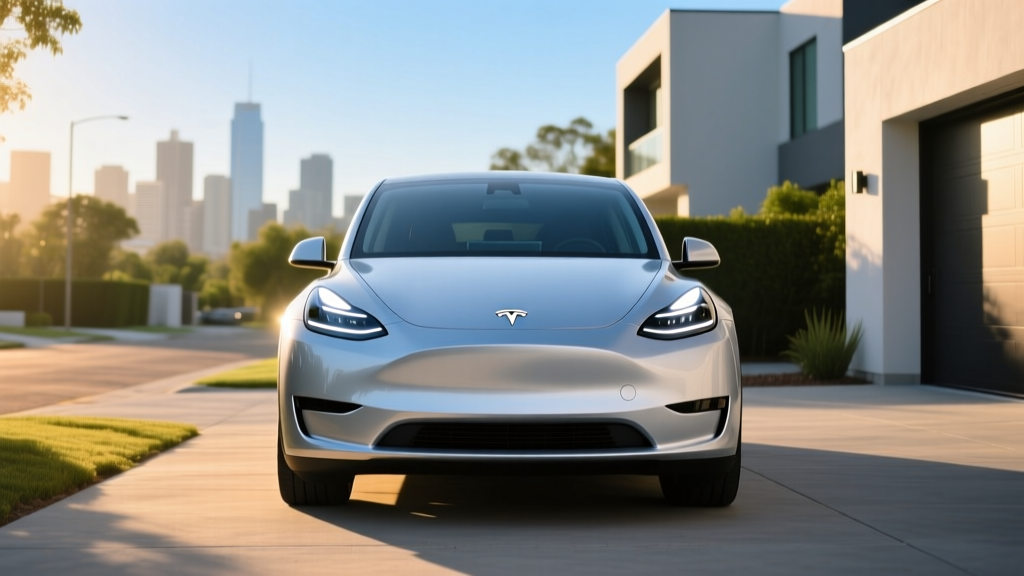
This article pairs the financial context behind the Tesla senior VP share sale with a hard-data, owner-focused review of the 2026 Tesla Model Y — the best-selling EV in America and the vehicle most buyers are cross-shopping when executive stock moves make the news.
2026 Tesla Model Y: Quick Verdict
The 2026 Model Y (refreshed "Juniper" generation) remains the default compact electric SUV for buyers who prioritize Supercharger access, over-the-air updates, and segment-leading efficiency. It's not the most luxurious cabin in its class, and competitors like the Hyundai Ioniq 5 and Ford Mustang Mach-E have closed the gap on ride quality and interior materials. But no rival matches Tesla's combination of 320 miles of EPA range, 250 kW DC fast-charging, and the most reliable public charging network in North America.
| Spec | Value |
|---|---|
| EPA Range | 320 miles |
| Battery (usable) | ~75 kWh, NMC chemistry |
| Drivetrain | Dual-motor AWD |
| Horsepower | 384 hp (combined) |
| 0–60 mph | 4.8 seconds |
| Peak DC Fast Charge | 250 kW (CCS/NACS) |
| 10–80% DC Charge Time | ~27 minutes |
| Level 2 Home Charge Rate | 11.5 kW (~44 mi/hr) |
| Efficiency | 122 MPGe / 28 kWh/100 mi |
| Cargo Volume | 30.2 cu ft (rear seats up) / 72.1 cu ft (folded) |
| Base MSRP (Long Range AWD) | $48,990 |
| Battery Warranty | 8 years / 120,000 miles |
Real-World Range: Beyond the EPA Sticker
EPA Estimated: 320 miles
Real-World Expectation: 260–290 miles on highway road trips at 70–75 mph; 230–260 miles in sub-30°F winter conditions; up to 310 miles in mixed city/regenerative driving.
The 2026 Model Y Long Range AWD carries an EPA-estimated 320 miles of range on its ~75 kWh NMC (nickel manganese cobalt) battery pack. That number is achievable in moderate temperatures with mixed city/highway driving, where regenerative braking recovers energy in stop-and-go traffic.
On sustained highway runs at 75 mph — the kind of driving that exposes range limitations — expect to use 300–310 Wh/mi, yielding roughly 260–280 miles before you'll want to stop at 10–15% state of charge. In freezing weather (below 30°F), the heat pump helps, but battery resistance and cabin heating still knock 15–25% off range. Plan for 230–260 miles in deep winter and precondition the battery before every DC fast-charge stop to maintain peak charge speeds.
The RWD Standard Range variant (LFP battery, ~60 kWh usable) is rated at 270 miles EPA and trades roughly 50 miles of range for a lower entry price and a battery chemistry that tolerates daily 100% charging without degradation concerns.
Charging Speed: DC Fast, Level 2, and the Supercharger Advantage
Charging speed is where Tesla still outpaces most competitors — not because of peak kW numbers alone, but because of sustained charge-curve performance and network reliability.
| Charging Level | Power / Rate | Miles Added per Hour | Notes |
|---|---|---|---|
| Level 1 (120V household) | ~1.4 kW | ~4–5 mi/hr | Emergency/trickle only |
| Level 2 (240V home, 48A) | 11.5 kW | ~44 mi/hr | Full charge in ~7 hours |
| DC Fast (Supercharger V3/V4) | Peak 250 kW | ~1,000 mi/hr (peak) | 10–80% in ~27 min |
| DC Fast (3rd-party CCS) | Up to 250 kW | Varies by station | NACS adapter included |
At a V3 or V4 Tesla Supercharger, the Model Y peaks near 250 kW and sustains above 150 kW through roughly 50% state of charge before tapering. A 10–80% session takes approximately 27 minutes — competitive with the Hyundai Ioniq 5's 800V architecture but achieved on Tesla's 400V system through superior thermal management.
For home charging, a Tesla Wall Connector on a 60-amp circuit delivers 11.5 kW (48 amps continuous), adding about 44 miles of range per hour. Most owners who plug in overnight never visit a public charger except on road trips. Budget $500–$1,500 for a licensed electrician to install a 240V/60A circuit, depending on panel proximity and local permit costs.
Performance and Driving Dynamics
The Long Range AWD Model Y puts down 384 combined horsepower through dual permanent-magnet motors, hitting 60 mph in 4.8 seconds. That's quick enough to merge onto any freeway with authority, though the Performance trim (456 hp, 3.5 seconds to 60) exists for those who want sports-sedan acceleration in a crossover body.
The Juniper refresh brought a retuned suspension with frequency-selective dampers that absorb sharp impacts better than the pre-2025 Model Y, though the ride still leans firm compared to a Hyundai Ioniq 5 or Volkswagen ID.4. Steering is precise and weighted well, and the low center of gravity (battery pack under the floor) keeps body roll minimal in corners.
Regenerative braking remains strong and enables one-pedal driving in most scenarios. Tesla removed the user-adjustable regen setting several years ago, so you get one aggressive calibration — most owners adapt within a week.
Interior, Tech, and Cargo
The 2026 Model Y cabin is minimalist by design. A single 15.4-inch touchscreen handles infotainment, climate, navigation, and vehicle settings. The Juniper update added ambient lighting, ventilated front seats, a rear-seat touchscreen for passengers, and acoustic glass that noticeably reduces wind and road noise at highway speeds.
Cargo space measures 30.2 cubic feet behind the second row and 72.1 cubic feet with the 60/40 split seats folded. The front trunk (frunk) adds another 4.1 cubic feet — useful for charging cables or a small bag. Rear legroom is 41.6 inches, adequate for adults on longer trips.
Tech highlights include:
- Autopilot (standard): SAE Level 2 adaptive cruise + lane centering. Requires hands-on-wheel supervision at all times.
- Full Self-Driving (Supervised) ($8,000 option): Adds automatic lane changes, traffic light/stop sign recognition, and city-street navigation. Still SAE Level 2 — you are the driver.
- Sentry Mode: 360° camera recording when parked, with phone alerts for impacts or break-in attempts.
- Over-the-air updates: Tesla pushes feature additions, efficiency improvements, and UI changes multiple times per year.
ADAS Reality Check: Autopilot and FSD (Supervised) are not self-driving systems. They are SAE Level 2 driver-assistance features. You must remain alert, keep hands on the wheel, and be prepared to take over instantly. Only Level 4 robotaxi services like Waymo operate without a human driver.
Pricing, Trims, and Federal Tax Credit Eligibility
The 2026 Model Y lineup starts at $44,990 for the RWD Standard Range and climbs to $52,490 for the Long Range AWD tested here. The Performance trim sits at $54,990 before options. Destination adds $1,390.
| Trim | Base MSRP | Est. After §30D Credit | Credit Eligibility |
|---|---|---|---|
| RWD Standard Range | $44,990 | ~$37,490 | Eligible (meets MSRP & sourcing rules) |
| Long Range AWD | $48,990 | ~$41,490 | Eligible (meets MSRP & sourcing rules) |
| Performance AWD | $54,990 | ~$47,490 | Eligible (under $80K SUV cap) |
Under current IRS §30D rules, the Model Y qualifies as an SUV (MSRP cap: $80,000). However, the full $7,500 credit depends on:
- Buyer income caps: AGI ≤ $150,000 (single), ≤ $225,000 (head of household), ≤ $300,000 (joint)
- MSRP cap: Vehicle must be ≤ $80,000 (SUV classification — all Model Y trims qualify)
- Battery component sourcing: Must meet North American assembly thresholds for battery components and critical minerals (phased requirements through 2026)
- Point-of-sale transfer: You can apply the credit at the dealer to reduce your purchase price directly, rather than waiting for a tax refund
Tesla's US-built battery packs have largely met critical-mineral and component sourcing thresholds for the full $7,500 credit through recent model years, but verify current eligibility on fueleconomy.gov before purchase, as sourcing rules tighten annually. Consult a tax professional for your specific situation.
Warranty and Long-Term Ownership
Tesla covers the Model Y's battery and drive unit for 8 years or 120,000 miles (Long Range/Performance) with a minimum 70% capacity retention threshold. The RWD Standard Range with its LFP battery carries the same 8-year/120,000-mile powertrain warranty. The basic vehicle warranty is 4 years / 50,000 miles.
Real-world degradation data from Tesla's fleet shows NMC packs retaining approximately 88–92% capacity at 100,000 miles under typical use (daily charging to 80%, occasional 100% for trips). LFP packs degrade more slowly and can be charged to 100% daily without penalty — a significant advantage for Standard Range buyers who charge at home every night.
If you're evaluating a Tesla purchase in the context of executive stock sales, the warranty and Supercharger network are the tangible ownership assets. Insider share sales don't void your battery warranty or deactivate Superchargers. Tesla's service infrastructure, while sometimes slow for body repair, remains intact and expanding.
Pros
- Best-in-class Supercharger network reliability
- 320-mile EPA range with strong real-world efficiency (28 kWh/100 mi)
- 250 kW DC fast charging with minimal taper through 50% SoC
- Spacious cargo area (72.1 cu ft) with practical frunk
- Continuous OTA updates add features post-purchase
- Strong resale value relative to non-Tesla EVs
Cons
- Firm ride quality vs. Hyundai Ioniq 5 or Kia EV6
- No Apple CarPlay or Android Auto integration
- FSD (Supervised) costs $8,000 and remains Level 2
- Minimalist interior not for everyone — no physical climate buttons
- Service center wait times can stretch weeks for bodywork
- Executive stock sales create negative headline risk
Who the 2026 Model Y Suits Best
Choose the Model Y if: You road-trip frequently and need reliable DC fast-charging across all 50 states; you want a practical family SUV with strong range and cargo space; you value OTA updates and tech-forward features; you can charge at home most nights.
Consider competitors if: You prioritize ride comfort and interior luxury (Hyundai Ioniq 5, BMW iX); you need Apple CarPlay (most non-Tesla EVs); you want 800V charging architecture for faster 10–80% top-ups (Ioniq 5, Kia EV6); you're uncomfortable with Tesla's corporate governance or executive stock-sale headlines.
Does a Tesla Senior VP Share Sale Affect Your Purchase Decision?
Insider stock sales are routine at large-cap companies. Tesla executives file Form 4 disclosures with the SEC, and most sales follow pre-arranged 10b5-1 plans established months in advance. A senior VP selling shares is not equivalent to a vote of no confidence in the product lineup.
What should influence your decision is the hardware: the Model Y's 320-mile range, 250 kW charging, Supercharger access, and $48,990 starting price (roughly $41,490 after the federal credit) represent a compelling value proposition in the compact electric SUV segment. The competitive landscape is stronger than ever — the Ioniq 5, EV6, Mach-E, and ID.4 are all capable alternatives — but Tesla's charging ecosystem and efficiency remain the benchmarks to beat.
Frequently Asked Questions
What is the real-world range of the 2026 Tesla Model Y?
The EPA rates the Long Range AWD at 320 miles. In real-world highway driving at 70–75 mph, expect 260–290 miles. In freezing temperatures, plan for 230–260 miles. The RWD Standard Range delivers approximately 270 miles EPA and around 220–245 miles in highway/cold conditions.
How fast does the Model Y charge at home and on the road?
At home on a 240V/48A Level 2 charger, the Model Y adds about 44 miles of range per hour (11.5 kW), fully charging overnight in roughly 7 hours. On a 250 kW Supercharger, a 10–80% session takes approximately 27 minutes, with peak charge rates sustained through about 50% state of charge before tapering.
How much does the 2026 Model Y cost after federal tax credits?
The Long Range AWD starts at $48,990 and drops to approximately $41,490 if you qualify for the full $7,500 §30D federal tax credit. Eligibility depends on your adjusted gross income (≤$300K joint), the vehicle's MSRP (under the $80K SUV cap), and battery sourcing requirements. The credit can be transferred at point of sale to reduce your purchase price directly.
Is the Model Y worth buying vs. the Hyundai Ioniq 5 or Ford Mach-E?
The Model Y wins on Supercharger network access, efficiency (28 kWh/100 mi vs. ~32 for competitors), and cargo space. The Ioniq 5 wins on ride comfort, 800V charging architecture (10–80% in ~18 min at 350 kW chargers), and interior design. The Mach-E offers a more traditional crossover feel and Apple CarPlay. Test-drive all three before deciding.
Does the 2026 Model Y qualify for the $7,500 federal EV tax credit?
Yes, all Model Y trims currently qualify under the §30D SUV MSRP cap of $80,000, provided the buyer meets income limits and the vehicle's battery meets North American sourcing requirements for components and critical minerals. Verify current eligibility on fueleconomy.gov and consult a tax professional, as sourcing rules tighten annually.
Should insider stock sales worry me about Tesla's future?
Executive share sales are typically pre-planned through SEC Rule 10b5-1 trading schedules and represent portfolio diversification, not product pessimism. Tesla's manufacturing footprint, Supercharger network, and service infrastructure are not dependent on any single executive's stock holdings. Focus on the vehicle's specs, warranty, and your local service-center capacity when making a purchase decision.