Why Tesla's Semiconductor Strategy Matters to EV Buyers in 2026
When most shoppers research a new electric vehicle, they focus on range, charging speed, and price. But one of the most consequential factors shaping those specs sits on a circuit board: the Tesla semiconductor ecosystem. Tesla's in-house chip design — spanning its Hardware 4 (HW4) Autopilot processor, custom battery-management-system (BMS) silicon, and powertrain inverters built on silicon carbide (SiC) — directly determines how efficiently its vehicles convert battery energy into miles, how fast they charge, and which features work on delivery day.
This review examines how Tesla's vertical semiconductor integration plays out across its two highest-volume 2026 models: the Model Y Long Range AWD and the Model 3 Long Range AWD. We'll pair hard EPA data with real-world ownership realities so you can decide whether Tesla's chip-driven engineering edge justifies the sticker price.
2026 Model Y Long Range AWD: The Volume Leader
The refreshed Model Y (internally dubbed "Juniper") carries Tesla's latest electrical architecture. A centralized compute node replaces the distributed ECU layout of the 2020-2024 generation, reducing wiring harness weight and enabling over-the-air updates that reach deeper into powertrain calibration.
| Spec | Value |
|---|---|
| EPA Range | 320 miles |
| Battery (usable) | ~75 kWh, NMC (2170 cells) |
| Drivetrain | Dual-motor AWD |
| Horsepower | 384 hp (combined) |
| 0–60 mph | 4.8 seconds |
| Peak DC Fast Charge | 250 kW (V3 Supercharger) |
| 10–80% DC Time | ~27 minutes |
| Level 2 Home Charge | 11.5 kW (~44 mi/hr) |
| Efficiency | 122 MPGe / 28 kWh/100 mi |
| Cargo (rear seats up / folded) | 30.2 / 72.1 cu ft |
| Base MSRP | $48,990 |
| Battery Warranty | 8 yr / 120,000 mi |
Charging: Supercharger Network Meets SiC Inverters
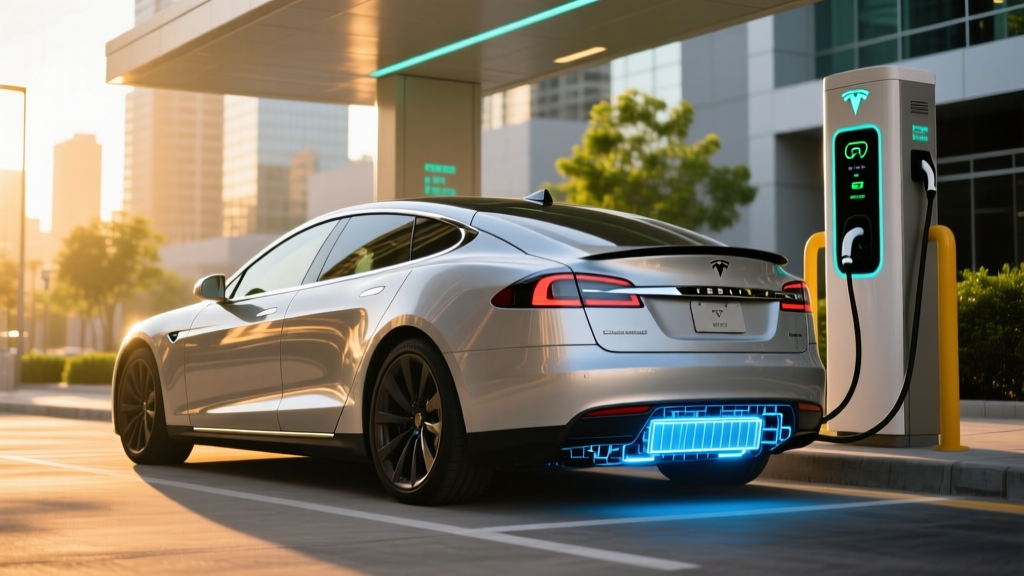
Tesla's silicon carbide inverter design — one of the first mass-produced in any EV — reduces switching losses during both propulsion and charging. The result is a sustained charge curve that holds closer to peak power longer than many competitors using traditional IGBT inverters.
| Level | Power | Miles Added per Hour | Notes |
|---|---|---|---|
| Level 1 (120V) | ~1.4 kW | ~5 mi/hr | Emergency/trickle only |
| Level 2 (240V, 48A) | 11.5 kW | ~44 mi/hr | Full charge in ~7 hrs |
| DC Fast (V3 Supercharger) | 250 kW peak | ~1,000 mi/hr (peak) | 10–80% in ~27 min; tapers sharply above 80% |
| DC Fast (V4 Supercharger) | Up to 325 kW peak | — | Available at select 2025+ stations; Model Y architecture limits sustained benefit |
Charging-curve reality: The Model Y peaks at 250 kW only between roughly 10–30% state of charge. From 50–80%, power drops to 100–130 kW. Plan your road-trip stops around 10–80% sessions for optimal throughput; charging past 80% adds significant time.
Tech, Autopilot, and the HW4 Chip
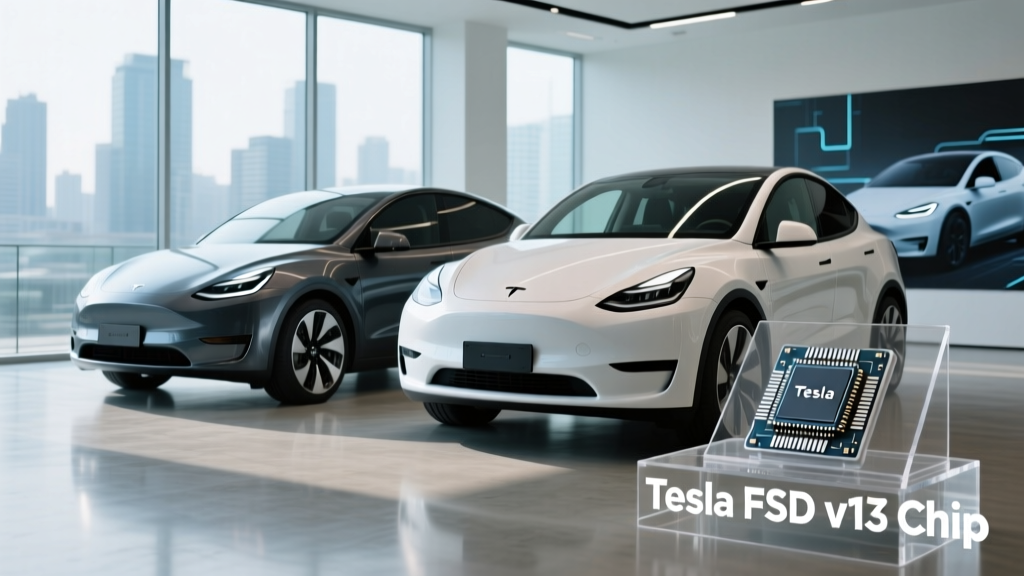
Tesla's HW4 (Hardware 4) computer uses a custom-designed neural-network accelerator built on a 7nm process node. It processes input from the vehicle's camera suite at higher resolution and frame rate than HW3, enabling smoother Autopilot lane-keeping and more confident FSD (Supervised) performance. However, it is critical to understand:
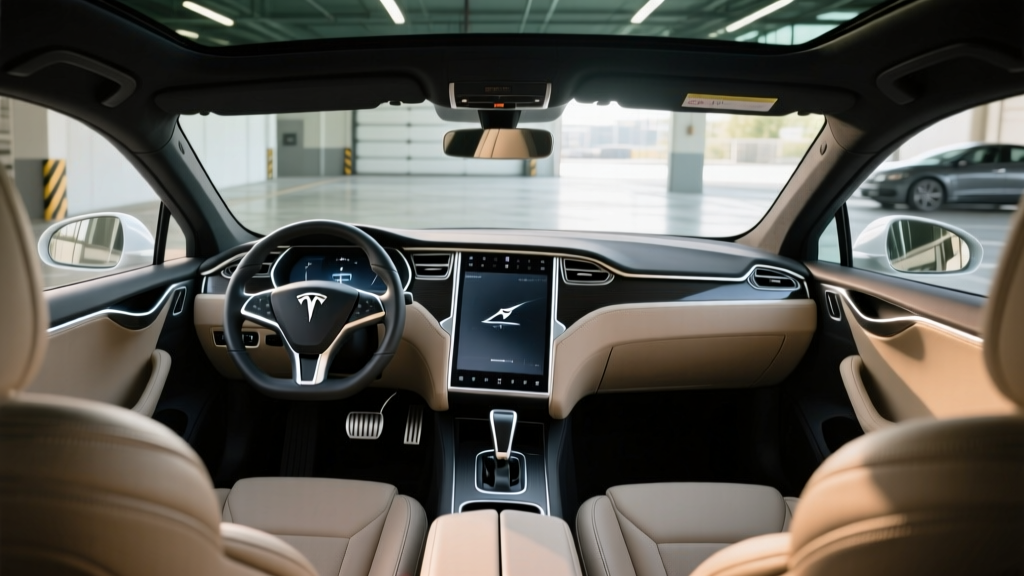
The cabin centers on a 15.4-inch touchscreen that handles climate, media, navigation, and vehicle settings — no physical instrument cluster. Build quality on the Juniper refresh has improved measurably (tighter panel gaps, acoustic glass), but the minimalist interior remains polarizing: no turn-signal stalk (signals are on the steering wheel), no physical gear selector (auto-shift via cameras and touchscreen backup).
2026 Model 3 Long Range AWD: The Efficiency Benchmark
The Model 3 "Highland" refresh continues into 2026 with minor software and battery-cell updates. It remains one of the most efficient AWD sedans on the market, a direct result of Tesla's integrated semiconductor and powertrain design.
| Spec | Value |
|---|---|
| EPA Range | 341 miles |
| Battery (usable) | ~75 kWh, NMC (2170 cells) |
| Drivetrain | Dual-motor AWD |
| Horsepower | 346 hp (combined) |
| 0–60 mph | 4.2 seconds |
| Peak DC Fast Charge | 250 kW |
| 10–80% DC Time | ~25 minutes |
| Level 2 Home Charge | 11.5 kW (~48 mi/hr) |
| Efficiency | 134 MPGe / 25 kWh/100 mi |
| Cargo (trunk + frunk) | 23.0 cu ft (trunk) + 3.1 cu ft (frunk) |
| Rear Legroom | 35.2 inches |
| Base MSRP | $47,740 |
| Battery Warranty | 8 yr / 120,000 mi |
Pricing, Trims, and Federal Tax Credit Eligibility
Tesla's pricing has stabilized after years of volatility. The critical question for 2026 buyers remains: does the vehicle qualify for the §30D federal EV tax credit?
| Model / Trim | MSRP | Est. Credit | Effective Price |
|---|---|---|---|
| Model 3 RWD | $38,990 | Up to $7,500* | ~$31,490 |
| Model 3 Long Range AWD | $47,740 | Up to $7,500* | ~$40,240 |
| Model Y Long Range AWD | $48,990 | Up to $7,500* | ~$41,490 |
| Model Y Performance | $52,490 | Up to $7,500* | ~$44,990 |
- MSRP Cap: SUVs (Model Y) must be ≤$80,000; sedans (Model 3) must be ≤$55,000. All current Tesla trims qualify.
- Buyer Income Cap: Modified AGI ≤$150,000 (single), ≤$225,000 (head of household), ≤$300,000 (joint). Exceed these and the credit phases to $0.
- Battery Sourcing: Critical-mineral and battery-component sourcing requirements tighten annually under IRS §30D rules. Tesla sources an increasing share of minerals from FTA-partner countries, but the full $7,500 depends on current-year compliance. Confirm at point of sale.
- Point-of-Sale Transfer: Buyers can transfer the credit to the dealer at purchase, reducing the out-of-pocket price immediately — no need to wait for tax filing.
*Credit amount depends on battery-sourcing compliance in the purchase month. Always verify on the IRS Clean Vehicle credit portal before signing.
How Tesla's Semiconductor Edge Translates to Ownership
Tesla's vertical integration — designing its own FSD chip, BMS controllers, and SiC power electronics — produces measurable ownership advantages:
- OTA longevity: HW4's compute headroom means Tesla can push new driver-assist features for years without hardware swaps.
- Efficiency: SiC inverters lose ~50% less energy as heat versus IGBT, translating directly to 3–5% more range per kWh.
- Thermal management: The integrated "octovalve" heat-pump system (controlled by custom Tesla silicon) scavenges waste heat from motors and batteries for cabin heating, reducing cold-weather range loss versus resistive heaters.
- Safety processing: HW4 handles 5MP cameras at higher frame rates, improving automatic emergency braking response time.
Model Y vs. Key Competitors: Quick Comparison
| Spec | Tesla Model Y LR | Hyundai Ioniq 5 AWD | Ford Mustang Mach-E ER AWD |
|---|---|---|---|
| EPA Range | 320 mi | 290 mi | 305 mi |
| Battery | ~75 kWh NMC | 84 kWh NMC | 91 kWh NMC |
| Peak DC Charge | 250 kW | 350 kW (800V) | 150 kW |
| 10–80% Time | ~27 min | ~18 min | ~38 min |
| Efficiency | 28 kWh/100mi | 31 kWh/100mi | 33 kWh/100mi |
| 0–60 mph | 4.8 sec | 5.0 sec | 5.1 sec |
| Base MSRP | $48,990 | $50,600 | $48,995 |
| Charging Network | Supercharger (native) | NACS adapter → Supercharger | NACS adapter → Supercharger |
Where Tesla wins: Efficiency (fewest kWh per mile), Supercharger network reliability, OTA update cadence, and resale value.
Where competitors win: Hyundai's 800V architecture charges faster at compatible stations. Both Hyundai and Ford offer physical controls, Apple CarPlay, and more conventional ergonomics. Ford's dealership service network is broader for rural owners.
Who Should Buy a 2026 Tesla?
- You want the most reliable DC fast-charging network in North America with no adapter needed.
- You value efficiency — getting maximum miles per kWh reduces charging costs over ownership.
- You're comfortable with a touchscreen-dominant interface and minimal physical controls.
- You plan to hold the vehicle 5+ years and want OTA feature updates backed by HW4 compute headroom.
- You need physical knobs for climate, volume, or mirrors (consider Hyundai Ioniq 5 or BMW i4).
- You want the fastest possible DC charging at 350 kW stations (Ioniq 5 / Kia EV6 800V architecture).
- You require Apple CarPlay/Android Auto integration.
- You frequently tow — the Model Y's 3,500-lb rating is adequate but not class-leading.
Pros
- Best-in-class efficiency (kWh/100mi)
- Supercharger network: 6,000+ NA stations, unmatched uptime
- HW4 provides years of OTA feature runway
- Strong resale value relative to EV segment
- Heat pump standard — better cold-weather range retention
Cons
- Touchscreen-only controls distract from driving
- No Apple CarPlay / Android Auto
- Insurance premiums 15–30% above average
- FSD costs $8,000 extra and is still Level 2 only
- Stalkless steering wheel requires adaptation period
Frequently Asked Questions
What is the real-world range of the 2026 Tesla Model Y?
EPA-rated at 320 miles. Expect 275–290 miles in real-world highway driving at moderate temperatures, and 220–240 miles in freezing weather. City driving with regenerative braking can push slightly above the EPA number in mild conditions.
How fast does a Tesla charge at home and on the road?
At home on a 240V/48A Level 2 circuit, the Model Y and Model 3 add approximately 44–48 miles of range per hour (11.5 kW), achieving a full charge overnight. On a V3 Supercharger (250 kW DC), a 10–80% session takes about 25–27 minutes. Charging slows significantly above 80% due to battery-protection taper.
How much does a Tesla cost after the federal tax credit?
The Model 3 RWD starts at $38,990 and can drop to approximately $31,490 if you qualify for the full $7,500 §30D credit. The Model Y LR AWD at $48,990 drops to ~$41,490. Eligibility depends on your modified AGI (≤$150K single / ≤$300K joint), the vehicle's MSRP falling under the cap, and current battery-sourcing compliance. The credit can be transferred at point of sale.
Does a Tesla qualify for the federal EV tax credit?
All current Model 3 and Model Y trims fall under the §30D MSRP caps ($55,000 sedans / $80,000 SUVs). Whether you receive $3,750 or the full $7,500 depends on critical-mineral and battery-component sourcing thresholds, which tighten each year. Verify on IRS.gov before purchasing.
Is Tesla's Autopilot or FSD self-driving?
No. Both Autopilot and FSD (Supervised) are SAE Level 2 driver-assist systems. You must keep your eyes on the road, remain ready to take over, and actively supervise the system at all times. Only Level 4 robotaxi services (Waymo, Zoox in limited geofenced areas) operate without a human driver.
Is a Tesla worth buying vs. Hyundai, Ford, or BMW EVs?
Tesla leads in efficiency, charging-network access, and software longevity. Competitors like the Hyundai Ioniq 5 charge faster on 800V infrastructure, and the BMW i4 offers a more traditional luxury interior with physical controls. If Supercharger access and OTA updates are priorities, Tesla remains the default; if ergonomics and faster peak charging matter more, cross-shop carefully.
What is Tesla's battery warranty?
Tesla covers the Model 3 and Model Y battery and drive unit for 8 years or 120,000 miles (whichever comes first), with a minimum 70% capacity retention guarantee over that period. This aligns with industry norms, though some competitors (Hyundai/Kia) offer 10-year/100,000-mile powertrain coverage.