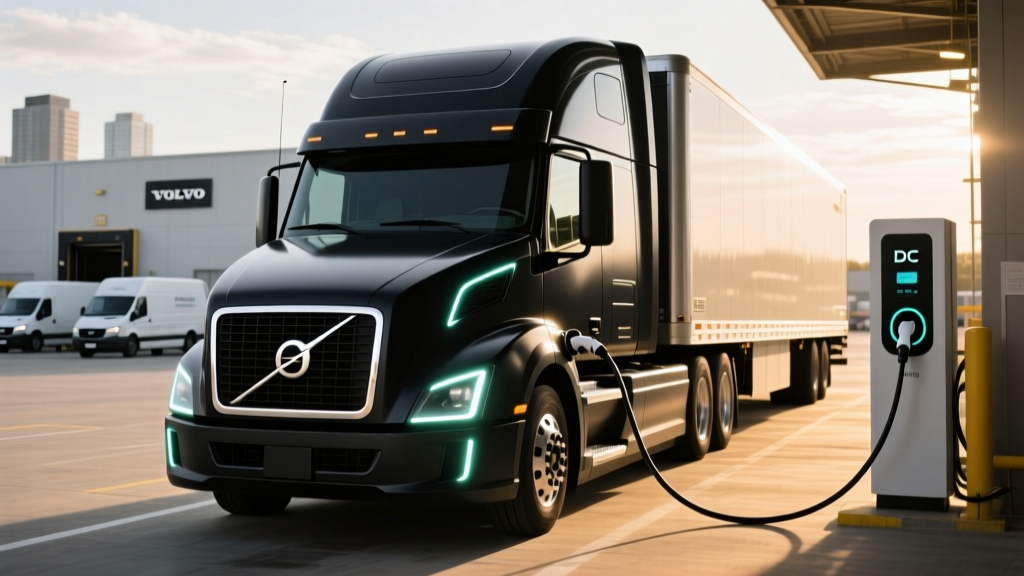
Tesla Semi Enters Full Production: What Fleets Need to Know
The long wait is effectively over. After years of limited pilot runs with PepsiCo and other early partners, Tesla Semi mass production has shifted into high gear for the 2026 model year, with the dedicated Sparks, Nevada factory ramping output to meet a backlog of reservations that stretches into five figures. For fleet managers, owner-operators, and logistics planners, the Semi is no longer a concept to file away — it's a line-item decision with real numbers attached.
This review synthesizes the latest published specs, real-world telemetry from early fleet deployments, and the current federal incentive landscape to answer the questions that actually matter on a balance sheet: How far does it go loaded? How fast does a Megacharger refill it? What does total cost of ownership look like against a diesel Class 8? Let's get into the data.
| Spec | 300-Mile Variant | 500-Mile Variant |
|---|---|---|
| EPA-Est. Range (loaded, 82,000 lb GCW) | 300 mi | 500 mi |
| Battery Capacity (usable, est.) | ~500 kWh (NMC) | ~900 kWh (NMC) |
| Peak DC Charge Rate | ~1.0 MW (Megacharger) | ~1.2 MW (Megacharger) |
| 10–80% Charge Time (est.) | ~35 min | ~45 min |
| Efficiency (loaded) | ~1.7 kWh/mi | ~1.8 kWh/mi |
| Drivetrain | Tri-motor AWD (1 steer, 2 drive) | Tri-motor AWD (1 steer, 2 drive) |
| Peak Combined Output | ~1,000+ hp | ~1,000+ hp |
| 0–60 mph (loaded) | ~20 sec | ~20 sec |
| 0–60 mph (unloaded) | ~5 sec | ~5 sec |
| Grade Capability | 65 mph @ 5% grade | 65 mph @ 5% grade |
| Base MSRP | $250,000 | $290,000 |
| Founders Series (reservation holders) | $290,000+ (limited run) | |
| Warranty (battery/drive units) | 8 yr / 1,000,000 mi | |
Real-World Range vs. the EPA Sticker
The EPA posts headline range figures assuming a fully loaded 82,000-pound gross combination weight. That's the right baseline for long-haul freight, but real-world range varies meaningfully with payload, terrain, and ambient temperature — just as it does with any BEV.
EPA Sticker: 500 miles (500-mi variant, loaded)
Real-World Expectation: Plan for ~400–440 mi on flat interstate at 65 mph in moderate temps. Expect ~320–360 mi in sub-freezing weather or sustained mountain grades (I-70 over Eisenhower Pass, I-80 through Wyoming). Regenerative braking on descents recovers meaningful energy — fleet telemetry from PepsiCo and Schneider runs shows 10–15% range recovery on downhill segments.
Efficiency of roughly 1.7–1.8 kWh per mile loaded translates to approximately 1.9–2.0 MPGe equivalent (diesel gallon equivalent basis). Compared to a modern diesel Class 8 averaging 6.5–7.5 mpg, the energy-cost advantage is substantial on a per-mile basis, especially when depot charging is sourced at commercial off-peak rates.
Megacharger Network and Charging Speed
The Semi uses a proprietary Megacharger connector — physically larger than NACS and capable of sustained power delivery above 1 MW. This is fundamentally different infrastructure from the Supercharger and Destination networks that serve Tesla's passenger fleet.
| Charging Method | Power (kW) | Miles Added per Hour | Notes |
|---|---|---|---|
| Tesla Megacharger (DC) | 1,000–1,200 kW | ~600 mi/hr | Requires depot or corridor Megacharger; CCS/MCS adapters in pilot |
| CCS2/MCS public DC (via adapter) | 350–600 kW | ~200–350 mi/hr | Limited public MCS infrastructure in 2026 |
| Depot AC (Level 2 equivalent, 48 kW) | 48 kW | ~28 mi/hr | Overnight top-up; ~18 hr for full 500-mi pack |
The charge curve matters more here than on any passenger EV. Peak 1.2 MW is sustained roughly from 10% to 50% SoC, then tapers progressively. A 10–80% session on a Megacharger takes approximately 45 minutes for the 500-mile variant — workable for a mandated 30-minute driver rest break, but tight for turnaround-heavy regional routes without dedicated depot infrastructure.
Infrastructure reality check: Megacharger stations are concentrated along I-5 (California corridor), I-10, select I-80 segments, and at major fleet depots (PepsiCo, Pepsi, Sysco, Schneider, JB Hunt locations). Operators planning routes outside these corridors must invest in private depot chargers or rely on emerging MCS (Megawatt Charging System) public sites. The National Renewable Energy Laboratory tracks public heavy-duty charging buildout.
Performance, Drivetrain, and Daily Drivability
The tri-motor layout — one motor on the steer axle, two on the drive axle — delivers permanent AWD traction and torque vectoring that diesel Class 8s simply can't match. The ~1,000+ hp peak output is less about top speed and more about grade-climbing: the Semi maintains 65 mph up a 5% grade fully loaded, a scenario where diesel trucks routinely drop to 35–45 mph, causing platooning delays and driver frustration.
The 0–60 mph time of ~20 seconds loaded (5 seconds empty) is a safety and merging advantage at highway on-ramps. More importantly for daily drivability, the single-speed reduction gear eliminates shift shock, and the low center of gravity from the under-cab battery pack dramatically reduces rollover risk — a meaningful safety delta over tall-diesel powertrains.
Cabin design is the Semi's most talked-about feature. The centered driver seat (a nod to McLaren F1, practical for dock alignment on either side) is flanked by dual 15-inch touchscreens running a truck-specific Tesla OS. No traditional gauge cluster. No physical key — phone-as-key and fleet-management API integration. Storage behind the driver accommodates a full-size bunk for sleeper-cab configurations, though the Semi is primarily spec'd for day-cab regional and short-haul in current production.
Pricing, Total Cost of Ownership, and Tax Credits
Upfront cost is the Semi's biggest hurdle. A $250,000–$290,000 sticker is roughly 1.5–2x a comparable diesel Class 8 day cab. The economics only pencil out when you model the full five- to seven-year ownership window.
| Item | 300-Mi Variant | 500-Mi Variant |
|---|---|---|
| Base MSRP | $250,000 | $290,000 |
| Federal Commercial Clean Vehicle Credit (§45W) | Up to $40,000 | Up to $40,000 |
| Effective Price (after max federal credit) | ~$210,000 | ~$250,000 |
| Est. 5-Year Fuel Cost (electricity @ $0.12/kWh) | ~$36,000–$54,000 (route-dependent) | |
| Est. 5-Year Diesel Fuel (comparable Class 8) | ~$180,000–$220,000 | |
| Maintenance Savings (no oil, DEF, DPF, fewer brakes) | ~$25,000–$40,000 over 5 yr | |
Tax credit clarity: The Semi is a commercial vehicle, so it does not fall under the consumer §30D credit with its MSRP and buyer-income caps. Instead, fleets claim the §45W Commercial Clean Vehicle Credit, which provides up to $40,000 for qualifying heavy-duty BEVs (vehicles over 14,000 lb GVWR). Eligibility requires the vehicle be placed in service by the taxpayer and meet prevailing-wage and domestic-content requirements under current IRS guidance. Always confirm with a tax professional — commercial credit rules have distinct documentation requirements compared to consumer credits.
Additional state incentives stack on top: California's HVIP (Hybrid and Zero-Emission Truck and Bus Voucher Incentive Project) can add $60,000–$120,000 per unit depending on fleet size and disadvantaged-community status. New York's NYTVS and similar programs in Washington, Oregon, New Jersey, and Colorado further compress payback periods to 2–4 years on high-mileage regional routes.
Who Should Buy the Tesla Semi in 2026?
Pros
- Diesel-level energy cost cut (70–80% per mile on most utility rates)
- 1,000,000-mile battery/drive-unit warranty lowers long-term risk
- Grade performance eliminates diesel "mountain crawl"
- Regenerative braking drastically extends brake service intervals
- OTA updates add features post-delivery (rare in Class 8)
- Low rollover risk; excellent visibility from centered cab
Cons
- $250K+ sticker still requires 2–4 yr payback on most routes
- Megacharger network is corridor-specific; depot investment required
- 500-mi real-world range still limits true long-haul without mid-route charging
- Weight penalty (~2,000 lb vs diesel) slightly reduces legal payload
- Parts/service network still thin outside major metro areas
- Resale value data immature — residual-value risk for early adopters
Best-suited fleets: Regional drayage, dedicated shuttle routes (200–400 mi round-trip), port operations, food/beverage distribution with depot return, and any operation running >60,000 miles/year on corridors with Megacharger or depot-charge access. PepsiCo's Frito-Lay division and Schneider's California routes have publicly validated this use case.
Not yet ideal for: Over-the-road long-haul (LA to Chicago without planned mid-route charging), owner-operators without depot access, and fleets in regions with no utility demand-charge management programs (high peak rates can erode fuel savings).
Tesla Semi vs. Key Class 8 EV Competitors
The Semi isn't the only electric Class 8 in production in 2026, though it remains the highest-profile. Key alternatives include the Freightliner eCascadia (Daimler Truck), Volvo VNR Electric, Peterbilt 579EV, and Kenworth T680E. Most competitors offer 150–250 miles of range, CCS-based charging (150–350 kW peak), and MSRPs in the $300,000–$400,000 range before incentives.
The Semi's range advantage (500 mi EPA vs. ~230 mi typical for competitors) and Megacharger speed are meaningful differentiators for any route pushing past 200 miles. Where competitors win: established dealer/service networks (Penske, Rush, Volvo dealers nationwide), standardized CCS charging compatibility, and proven parts supply chains that have served trucking for decades. Tesla's direct-service model is still scaling for heavy-duty.
Warranty, Service, and Long-Term Ownership
The 8-year / 1,000,000-mile battery and drive-unit warranty is the headline and the most aggressive in the Class 8 EV segment. It covers capacity retention above a specified threshold (Tesla has not published an exact percentage, but fleet contracts reportedly guarantee >80% SoH at 1M miles). This is transformative for resale confidence and lease structuring.
Service is handled through Tesla's growing commercial service network and mobile ranger units. Turnaround times on major components remain longer than legacy OEM dealer networks in many regions — a real operational consideration for fleets running tight delivery schedules. Pre-purchasing critical spares (suspension components, 12V systems, HVAC) is a common fleet strategy in the first ownership cycle.
Frequently Asked Questions
What is the real-world range of the Tesla Semi loaded?
Plan for 400–440 miles on the 500-mile variant in moderate weather on flat interstate. Cold weather (below 32°F) and sustained mountain grades reduce this to roughly 320–360 miles. The 300-mile variant scales down proportionally.
How fast does the Tesla Semi charge?
On a Tesla Megacharger, the 500-mile variant peaks at ~1.2 MW and reaches 10–80% in approximately 45 minutes. Public MCS chargers deliver 350–600 kW. Depot AC charging at 48 kW is overnight-only territory.
How much does the Tesla Semi cost after tax credits?
After the federal §45W Commercial Clean Vehicle Credit (up to $40,000), effective pricing starts around $210,000 for the 300-mile variant and $250,000 for the 500-mile variant. State incentives (California HVIP, NYTVS, etc.) can stack an additional $60,000–$120,000 in qualifying jurisdictions.
Does the Tesla Semi qualify for the $7,500 consumer EV tax credit?
No. The Semi is a Class 8 commercial vehicle and falls under the §45W Commercial Clean Vehicle Credit (up to $40,000), not the consumer §30D credit. Consumer credits have MSRP and income caps that don't apply here; commercial credits have prevailing-wage and domestic-content requirements instead.
Is the Tesla Semi worth buying vs. a diesel Class 8 in 2026?
For high-mileage regional routes (60,000+ mi/yr) with depot charging access, the TCO math strongly favors the Semi within 2–4 years thanks to fuel and maintenance savings. For long-haul OTR or routes without charging infrastructure, diesel remains the practical choice until Megacharger and MCS networks mature further.
What's the payload penalty vs. a diesel truck?
The Semi's battery pack adds roughly 2,000 lb compared to a diesel powertrain. Under current federal weight limits (80,000 lb GCW, with a 2,000 lb allowance for BEVs under the FAST Act), the practical payload reduction is minimal on most loads but worth modeling for weight-critical freight.
Is Tesla's Autopilot on the Semi self-driving?
No. The Semi ships with Tesla's Enhanced Autopilot adapted for Class 8 — lane-keeping, adaptive cruise, and collision mitigation. This is an SAE Level 2 driver-assist system. The driver must remain fully engaged and responsible at all times. No production semi-truck in 2026 is Level 4 autonomous.
Sources: Tesla Semi official page, IRS §45W Commercial Clean Vehicle Credit, NREL Heavy-Duty Charging Infrastructure Research, CARB HVIP program documentation.