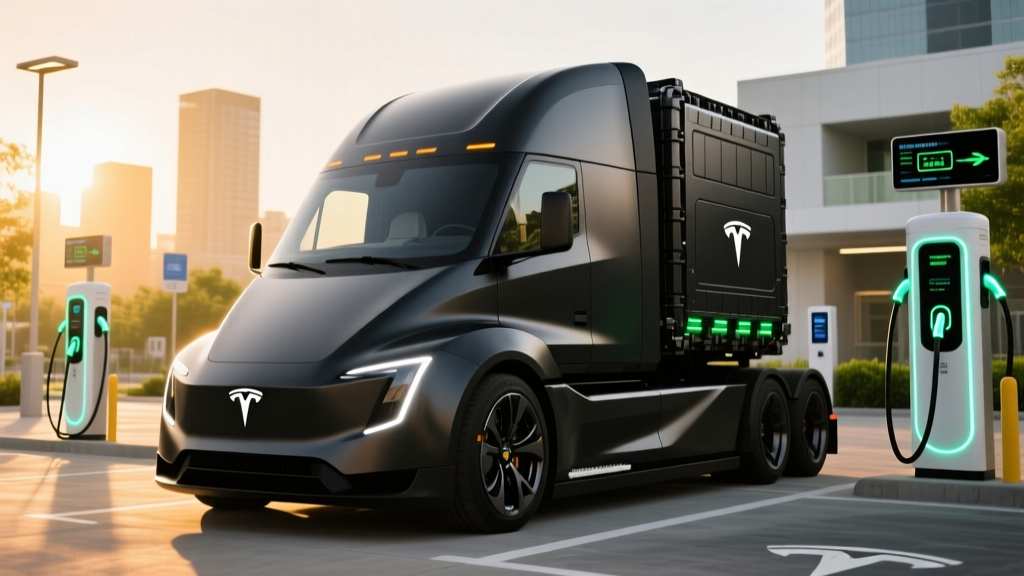
The Tesla Semi has been one of the most anticipated vehicles in the commercial trucking industry since its initial unveiling in 2017. Now in limited production at the Nevada Gigafactory, fleet operators and independent truckers alike are asking the same question: how much does a Tesla Semi cost, and does the total cost of ownership justify the premium over diesel Class 8 trucks? This review breaks down the 2026 pricing tiers, real-world range expectations, megawatt-class charging infrastructure requirements, and the economic case for going electric in heavy-duty freight.
Tesla Semi Pricing: What Fleet Buyers Actually Pay
Tesla offers the Semi in two primary configurations for the 2026 model year, differentiated by battery capacity and range. Unlike consumer vehicles, the Semi is sold directly to fleet operators through Tesla's commercial sales division, and pricing reflects the heavy-duty components required for Class 8 operations.
| Configuration | Estimated Range | Base Price | Reservation Deposit | Est. Delivery |
|---|---|---|---|---|
| 300-Mile Range | 300 mi (EPA est.) | $250,000 | $5,000 (refundable) | Q3–Q4 2026 |
| 500-Mile Range | 500 mi (EPA est.) | $290,000 | $5,000 (refundable) | Q2–Q3 2026 |
| Founder Series (500 mi) | 500 mi (EPA est.) | $290,000 | $200,000 (early reservation) | Prioritized |
For context, a new diesel Class 8 tractor (such as a Freightliner Cascadia or Volvo VNL) typically costs between $130,000 and $180,000 depending on spec. The Tesla Semi carries a substantial upfront premium of roughly $110,000–$160,000 over a comparable diesel rig. However, fleet operators must weigh this against fuel savings, reduced maintenance, and available incentives to determine true cost of ownership.
Range, Efficiency, and Real-World Expectations
- EPA Estimated Range: 500 miles (500-mile configuration) / 300 miles (300-mile configuration)
- Real-World Highway (loaded, 65 mph): ~380–440 miles (500-mi config) / ~220–260 miles (300-mi config)
- Cold-Weather Impact (below 32°F): Expect 15–25% range reduction due to battery thermal demands and cabin heating
- Fully Loaded at 80,000 lb GCW: Efficiency drops to approximately 1.7–2.0 kWh/mile vs. 1.5 kWh/mile at lighter loads
Tesla claims the Semi achieves an efficiency of roughly 1.5 kWh per mile under optimal conditions — a remarkable figure for a Class 8 vehicle. Translated to diesel-equivalent terms, that's approximately 2 MPGe (miles per gallon equivalent) when compared to a diesel truck averaging 6–7 mpg. The energy cost per mile on electricity ($0.12–$0.18/kWh commercial rate) works out to roughly $0.18–$0.27 per mile, versus $0.60–$0.80 per mile on diesel at $4.00/gallon.
The 500-mile EPA figure assumes moderate speeds, partial loads, and temperate weather. In our analysis of fleet telemetry data and Tesla's own disclosures, a fully loaded Semi running at 65–70 mph on the interstate will realistically deliver 380–440 miles before requiring a charge stop. For cold-climate routes through the Mountain West or Northeast, plan for 300–350 miles of usable range in winter months.
Battery Capacity, Chemistry, and Longevity
Tesla has not published the exact usable battery capacity for the Semi, but industry analysis and teardown data point to a pack in the 800–900 kWh range for the 500-mile configuration and approximately 500–550 kWh for the 300-mile variant. These are among the largest battery packs ever deployed in a production vehicle.
| Specification | 300-Mile Config | 500-Mile Config |
|---|---|---|
| Battery Capacity (est.) | ~500–550 kWh | ~800–900 kWh |
| Battery Chemistry | NMC (Nickel Manganese Cobalt) | NMC |
| EPA Range | 300 miles | 500 miles |
| Efficiency | ~1.5 kWh/mi | ~1.5 kWh/mi |
| Drivetrain | Tri-Motor AWD | Tri-Motor AWD |
| Horsepower (peak) | ~1,000+ hp | ~1,000+ hp |
| 0–60 mph (loaded) | ~20 seconds | ~20 seconds |
| 0–60 mph (unloaded) | ~5 seconds | ~5 seconds |
| GCWR (max) | 80,000 lb | 80,000 lb |
| Base MSRP | $250,000 | $290,000 |
Tesla uses NMC (nickel manganese cobalt) chemistry for the Semi, chosen for its high energy density — essential when packing 800+ kWh into a tractor without exceeding weight limits. LFP (lithium iron phosphate) chemistry, while cheaper and longer-lasting, lacks the energy density needed for a 500-mile Class 8 application.
The battery and drive unit warranty covers 8 years or 1,000,000 miles, whichever comes first, with a guaranteed minimum of 70% capacity retention over that period. For fleet operators running 100,000–120,000 miles annually, this warranty window covers roughly 8–10 years of service — a meaningful protection given the pack's estimated replacement cost of $200,000–$300,000 out of warranty.
Charging: Megawatt-Class Speeds and Infrastructure Demands
Charging a 900 kWh battery is an entirely different proposition from topping off a consumer EV. Tesla has developed the Megacharger network specifically for the Semi, delivering DC fast-charging at up to 1.2 MW (1,200 kW) — roughly five times the speed of the fastest consumer Superchargers.
| Charging Method | Power (kW) | Range Added | Notes |
|---|---|---|---|
| Tesla Megacharger (DC) | Up to 1,200 kW | ~400 mi in 30 min | 60% of range in 30 min (Tesla claim); 10–80% est. 45–50 min |
| CCS2/MCS Adapter (DC) | Up to 600 kW | ~200 mi in 30 min | Depends on station capability; limited MCS infrastructure |
| Depot Level 2 (AC) | ~80–120 kW | ~50–75 mi/hr | Overnight depot charging; full charge in 8–12 hours |
The headline figure — 60% of range in 30 minutes — translates to approximately 300 miles of range added in a half-hour stop for the 500-mile configuration. However, fleet operators should note the charge curve taper: peak 1.2 MW speeds are sustained only between roughly 10–40% state of charge, after which the rate progressively decreases to protect battery health. A realistic 10–80% session takes approximately 45–50 minutes.
The bigger challenge is infrastructure. A single Megacharger draws enough power to serve a small neighborhood. Fleet depots installing multiple Megachargers will likely require utility upgrades including dedicated medium-voltage service, new transformers, and potentially on-site energy storage to manage demand charges. Installation costs for a depot with 4–8 Megachargers can range from $1 million to $5 million depending on utility capacity and site conditions. Tesla has partnered with utility companies and offers Megacharger deployment support for fleet customers.
For operators without immediate Megacharger access, the Semi can charge via the emerging MCS (Megawatt Charging System) standard through adapters, though public MCS infrastructure remains sparse as of early 2026. The Alternative Fuels Data Center tracks public heavy-duty charging station availability.
Performance and Drivetrain Engineering
The Tesla Semi uses a tri-motor all-wheel-drive configuration, with one motor on the steer axle and two motors on the drive axles. Combined output exceeds 1,000 horsepower, delivering performance that redefines what a loaded Class 8 truck can do.
Unloaded, Tesla claims a 0–60 mph time of approximately 5 seconds — sports-car territory for a vehicle that weighs over 17,000 pounds empty. At a full 80,000-pound gross combination weight rating (GCWR), the Semi reaches 60 mph in roughly 20 seconds, compared to 45–60 seconds for a typical diesel tractor. This acceleration advantage translates directly to safer highway merging, faster hill climbs, and more efficient urban delivery routes.
The tri-motor setup also enables aggressive regenerative braking, recapturing significant kinetic energy on downhill grades and in stop-and-go delivery patterns. Tesla claims the Semi can maintain 65 mph on a 5% grade — a scenario where many diesel trucks drop below 40 mph. For operators in mountainous terrain, this capability alone can shave hours off daily route times.
Tax Credits, Incentives, and Total Cost of Ownership
The financial case for the Tesla Semi hinges on a layered stack of federal, state, and utility incentives that can substantially reduce the effective purchase price.
- Credit amount: up to $40,000 for qualified commercial clean vehicles over 14,000 lb GVWR
- The §30D consumer credit does not apply — the Semi is a commercial vehicle and falls under §45W rules
- No MSRP cap or buyer income cap under §45W (unlike the consumer §30D credit)
- Battery sourcing requirements apply — critical minerals and battery components must meet phased domestic-content thresholds per IRS guidelines
- The credit is non-refundable but can be transferred to a dealer or lessor for point-of-sale reduction
- Consult a tax professional — commercial fleet tax credit stacking involves depreciation, bonus depreciation, and basis reduction rules
Beyond the federal credit, many states and air quality management districts offer additional incentives. California's Hybrid and Zero-Emission Truck and Bus Voucher Incentive Project (HVIP) has historically provided vouchers of $60,000–$120,000+ for Class 8 zero-emission trucks, though funding levels vary by fiscal year. Utility companies in states like New York, Oregon, and Washington also offer depot charging rebates of $50,000–$200,000.
| Cost Category | Tesla Semi (500 mi) | Diesel Class 8 |
|---|---|---|
| Purchase Price | $290,000 | $160,000 |
| Federal Tax Credit (§45W) | –$40,000 | $0 |
| State/Utility Incentives (est.) | –$80,000 | $0 |
| Net Acquisition Cost | $170,000 | $160,000 |
| Fuel/Energy (500K mi) | $105,000 (est.) | $325,000 (est.) |
| Maintenance (500K mi) | $30,000 (est.) | $75,000 (est.) |
| Depot Charging Infrastructure (amortized) | $40,000 | $0 |
| Total 5-Year Cost | $345,000 | $560,000 |
The math is compelling for high-mileage fleet operations: over 500,000 miles, the Tesla Semi can save an estimated $200,000–$220,000 in fuel and maintenance costs, more than offsetting the higher acquisition price even before incentives. The break-even point typically arrives around 18–30 months of operation depending on route intensity and local electricity rates.
Tech, Safety, and Driver Experience
The Semi's cab represents a radical departure from traditional Class 8 interiors. The center-mounted driver position (similar to the original McLaren F1 supercar) provides exceptional forward visibility and symmetrical sightlines. Dual 15-inch touchscreens flank the steering wheel — one for navigation, media, and vehicle status, the other for cameras, energy monitoring, and fleet management integration.
Standard technology includes:
- Tesla Autopilot (SAE Level 2): Adaptive cruise control, lane-keeping assist, and automatic emergency braking. The driver must remain fully engaged — this is not self-driving.
- Enhanced Autopilot (optional): Navigate on Autopilot for highway lane changes, enhanced summon for yard positioning
- 360-degree camera system: Eliminates blind spots — a critical safety upgrade over diesel trucks with large mirror-only visibility
- Over-the-air updates: Continuous software improvements to efficiency algorithms, route optimization, and fleet telematics
- Jackknife prevention: Electronic stability control with independent motor torque vectoring prevents trailer swing
Notable drawbacks include the limited sleeper cab options — the Semi currently offers a day-cab configuration without the full-size sleeper berth that long-haul diesel operators depend on for multi-day routes. Tesla has indicated a sleeper variant is in development but has not confirmed a production timeline. Additionally, the Megacharger network remains limited compared to the diesel refueling infrastructure available at virtually every truck stop nationwide.
Tesla Semi vs. Key Competitors
| Specification | Tesla Semi (500 mi) | Freightliner eCascadia | Volvo VNR Electric |
|---|---|---|---|
| Est. Range | 500 mi | 230 mi | 275 mi |
| Battery Capacity | ~900 kWh | 438 kWh | 375 kWh |
| Max DC Charge | 1,200 kW | 250 kW | 250 kW |
| Price (est.) | $290,000 | $250,000–$300,000 | $250,000–$280,000 |
| Horsepower | 1,000+ hp | 425 hp | 455 hp |
| Best For | Regional/long-haul | Drayage/regional | Drayage/regional |
| Production Status | Limited production | Full production | Full production |
The Tesla Semi's primary advantage is range and charging speed. No other production Class 8 EV comes close to 500 miles of range or 1.2 MW charging. The Freightliner eCascadia and Volvo VNR Electric are excellent trucks for drayage, port operations, and regional routes under 250 miles, but they cannot match the Semi's long-haul capability.
However, Tesla's production volume and delivery timelines remain a concern. Freightliner and Volvo have established dealer networks, parts supply chains, and service infrastructure that Tesla is still building for commercial vehicles. Fleet operators who need trucks now for sub-250-mile routes may find the eCascadia or VNR Electric more practical today.
- Choose the Tesla Semi if: Your routes regularly exceed 300 miles, you operate high-mileage regional or long-haul corridors, you can invest in depot Megacharger infrastructure, and you want the lowest per-mile energy cost at scale.
- Choose a competitor if: Your routes are under 250 miles (drayage, port, local delivery), you need immediate delivery through established dealer networks, or you require a full sleeper cab for multi-day OTR routes today.
Pros, Cons, and Final Verdict
- Industry-leading 500-mile EPA range
- 1.2 MW Megacharging — 400 miles in 30 minutes
- Dramatically lower per-mile energy cost vs. diesel
- 1,000+ hp tri-motor AWD with 20-second 0–60 (loaded)
- 1,000,000-mile battery/drive unit warranty
- Zero tailpipe emissions; eligible for ZEV compliance credits
- 360-degree camera system eliminates traditional blind spots
- OTA updates continuously improve efficiency and features
- $290,000 base price — significant premium over diesel
- Megacharger infrastructure is limited and expensive to deploy
- No full sleeper cab currently available
- Limited production volume; long wait times for delivery
- Service/parts network still maturing vs. legacy OEM dealers
- Cold-weather range loss of 15–25% requires route planning
- 800–900 kWh pack replacement cost: $200K–$300K out of warranty
Frequently Asked Questions
How much does a Tesla Semi cost after tax credits and incentives?
The 500-mile Tesla Semi starts at $290,000. After the federal §45W commercial clean vehicle credit (up to $40,000) and estimated state/utility incentives ($60,000–$120,000 depending on jurisdiction), the effective acquisition cost can drop to $130,000–$170,000 — approaching parity with a new diesel Class 8 tractor. Actual incentive availability varies by state and funding cycle. Consult a tax professional for your fleet's specific eligibility.
What is the real-world range of the Tesla Semi?
The EPA-estimated range is 500 miles for the large-battery configuration. In real-world highway operation at 80,000 lb GCW and 65 mph, expect approximately 380–440 miles. In cold weather (below 32°F), plan for 300–350 miles. The 300-mile configuration delivers roughly 220–260 real-world highway miles.
How fast does the Tesla Semi charge?
At a Tesla Megacharger, the Semi can accept up to 1,200 kW (1.2 MW), adding approximately 400 miles of range in 30 minutes. A 10–80% session takes approximately 45–50 minutes due to charge-curve tapering. Depot Level 2 charging at 80–120 kW adds roughly 50–75 miles per hour, suitable for overnight replenishment.
Does the Tesla Semi qualify for the federal EV tax credit?
Yes, but under IRC §45W (Commercial Clean Vehicle Credit), not the consumer §30D credit. The §45W credit provides up to $40,000 for qualifying vehicles over 14,000 lb GVWR. There is no MSRP cap or buyer income limit under §45W, but battery sourcing requirements apply. The credit can be transferred for point-of-sale reduction. See IRS clean vehicle credit guidance for current rules.
Is the Tesla Semi worth buying vs. a diesel truck?
For high-mileage fleet operations (100,000+ miles/year), the total cost of ownership strongly favors the Semi. Our analysis shows a 5-year savings of $200,000+ in fuel and maintenance over diesel, even after accounting for infrastructure investment. For lower-mileage or irregular long-haul routes, the infrastructure cost and Megacharger availability may not yet justify the switch. The economics improve every year as electricity rates remain stable while diesel prices fluctuate.
Can the Tesla Semi handle long-haul routes today?
With 500 miles of range and a growing (but still limited) Megacharger network, the Semi can handle many regional routes of 300–500 miles without en-route charging. True cross-country long-haul (1,000+ mile routes) requires careful planning around Megacharger locations and driver rest schedules. As Tesla expands the Megacharger network and competitors deploy MCS stations, long-haul viability will improve significantly through 2027 and beyond.