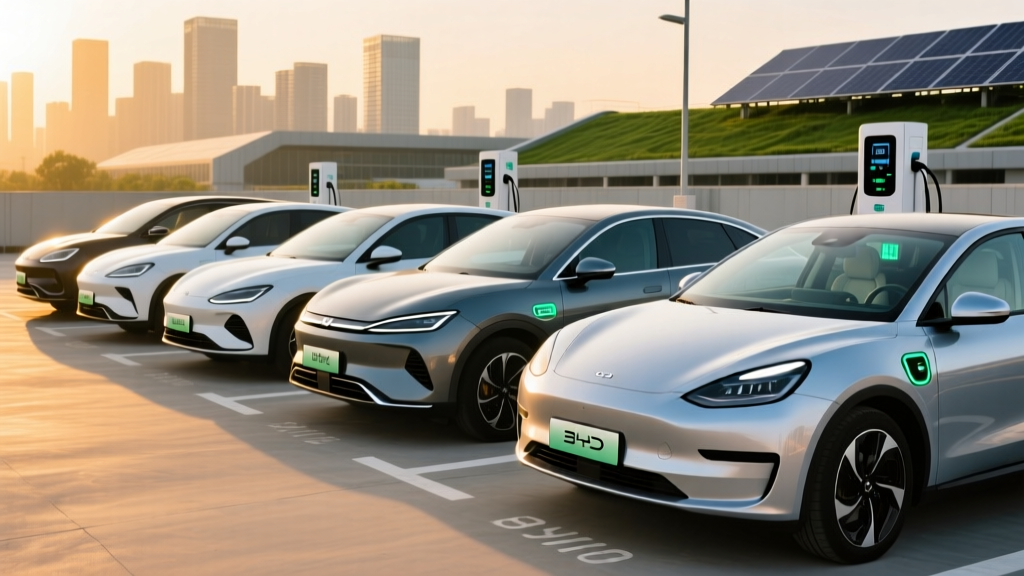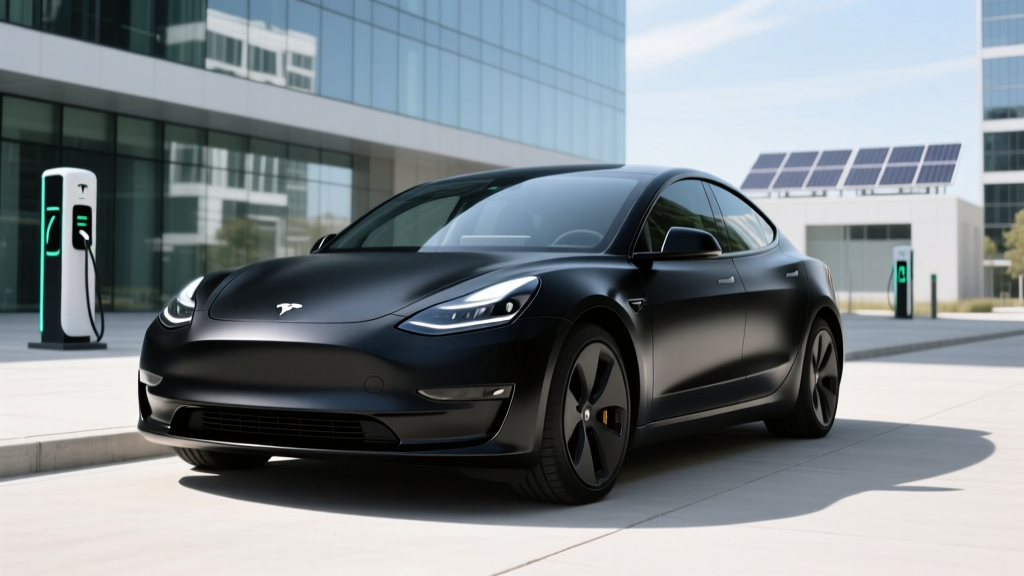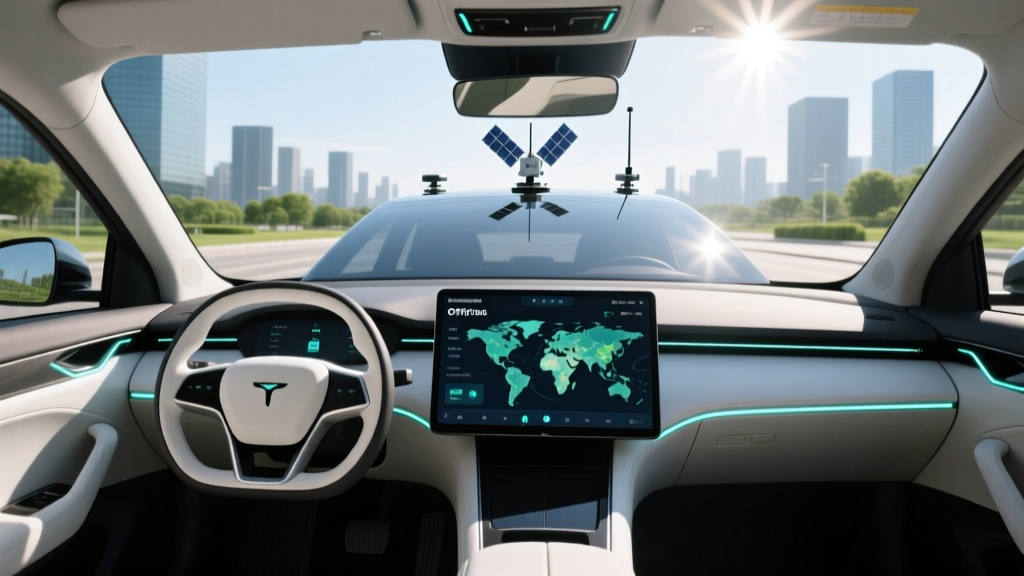
If you have searched for "Tesla satellite" in 2026, you are likely asking one of two questions: Does Tesla offer satellite-based connectivity for its vehicles, and how does that affect real-world EV ownership when you leave cell coverage behind? The answer involves Tesla's deepening integration with Starlink, the practical limits of satellite-to-car communication, and what EV drivers actually get today versus what remains on the roadmap.
This guide breaks down the current state of Tesla satellite connectivity, how it intersects with EV range and road-trip planning, and whether off-grid connectivity should factor into your next Tesla purchase.
What Tesla Satellite Actually Means in 2026
"Tesla satellite" is not a standalone vehicle or product. It refers to the connectivity layer between Tesla vehicles and SpaceX's Starlink low-earth-orbit (LEO) satellite constellation. Because Tesla and SpaceX share a founder and have progressively aligned their technology stacks, the expectation has long been that Tesla vehicles would eventually communicate directly with Starlink satellites — bypassing cellular dead zones entirely.
As of 2026, Tesla vehicles rely primarily on cellular connectivity (AT&T and partner networks in the U.S.) for navigation, over-the-air updates, streaming, and the Tesla mobile app's remote commands. Standard Connectivity comes with every vehicle; Premium Connectivity ($9.99/month or $99/year) adds satellite maps, live traffic visualization, video streaming, and music streaming over cellular.
Direct vehicle-to-satellite data communication — where your Tesla sends and receives data through Starlink without a cellular tower — remains limited. Tesla has not announced a production vehicle with a built-in Starlink terminal. However, Starlink's expanding direct-to-cell service (partnering with carriers like T-Mobile) means that in areas with satellite coverage, your phone and potentially your vehicle's cellular module may benefit from satellite-backhauled signals without any hardware change on Tesla's end.
How Connectivity Affects Real-World EV Ownership
Connectivity matters more for EVs than for gas cars. Navigation with real-time charger availability, battery preconditioning for DC fast charging, and remote climate control all depend on a live data connection. When you lose signal in rural areas or national parks, several Tesla features degrade:
- Navigation rerouting cannot pull live Supercharger stall availability
- Battery preconditioning still works if a Supercharger is already set as your destination (stored locally), but traffic-adjusted ETA updates stop
- Sentry Mode clips cannot upload to the cloud for remote viewing
- Remote commands from the Tesla app (climate, unlock, location) fail until the car reconnects
- OTA updates will not download over a missing connection
For most daily driving in metro areas, this is irrelevant. For overlanding, rural commuting, or national-park road trips — the exact scenarios where EV range planning gets most stressful — connectivity gaps compound range anxiety.
Tesla Model Lineup: Range, Charging, and Where Satellite Coverage Matters Most
Understanding where satellite connectivity would help most requires knowing which Tesla models are most likely to venture off-grid. Here is the 2026 lineup with the specs that matter when you are far from a cell tower and a Supercharger simultaneously.
| Spec | Model 3 Long Range | Model Y Long Range | Cybertruck AWD | Model S Long Range |
|---|---|---|---|---|
| EPA Range | 363 mi | 330 mi | 340 mi | 402 mi |
| Battery (usable) | ~75 kWh, NMC | ~75 kWh, NMC | ~123 kWh, NMC | ~95 kWh, NMC |
| Peak DC Charge | 250 kW | 250 kW | 350 kW | 250 kW |
| 10–80% DC Time | ~25 min | ~27 min | ~18 min | ~30 min |
| Level 2 Rate | 11.5 kW (~44 mi/hr) | 11.5 kW (~44 mi/hr) | 16.5 kW (~52 mi/hr) | 11.5 kW (~34 mi/hr) |
| 0–60 mph | 4.2 sec | 4.8 sec | 3.9 sec | 3.1 sec |
| Drivetrain | Dual-Motor AWD | Dual-Motor AWD | Dual-Motor AWD | Dual-Motor AWD |
| MPGe (combined) | 132 MPGe | 122 MPGe | 112 MPGe | 122 MPGe |
| Base MSRP (2026) | $47,740 | $48,990 | $79,990 | $74,990 |
Tesla Satellite Connectivity: What Works Today
Here is the honest breakdown of what Tesla owners actually get in 2026 when it comes to satellite-adjacent connectivity:
Standard Connectivity (Included)
- Basic navigation with map data (maps cache locally; routing works offline if destination is pre-set)
- Over-the-air software updates (via Wi-Fi or cellular)
- Remote commands via Tesla app when cellular coverage exists
- Traffic-aware navigation routing when connected
Premium Connectivity ($9.99/mo)
- Live traffic visualization on satellite-view maps
- Satellite map imagery (higher-resolution terrain rendering)
- In-car video streaming (YouTube, Netflix, Disney+) — parked only
- Music streaming (Spotify, Tidal) without phone pairing
- Caraoke and internet browser
Neither tier provides true direct-to-satellite data communication independent of cellular networks. The "satellite maps" in Premium Connectivity refers to map tile imagery, not a satellite data link.
Starlink Direct-to-Cell: The Indirect Benefit
T-Mobile's Starlink direct-to-cell service, which launched in beta in 2025, allows compatible phones to send texts and limited data through Starlink satellites when no terrestrial cell tower is reachable. If your phone connects to Starlink via T-Mobile, you can use it as a Wi-Fi hotspot for your Tesla — restoring basic navigation updates and remote app commands in dead zones. This is a workaround, not native vehicle integration, and bandwidth is limited to messaging-class speeds (not streaming).
Charging Infrastructure Where Cell Coverage Fails
The more pressing concern for EV road-trippers is not whether your Tesla can stream Spotify in a national park — it is whether you can find a working charger. Tesla's Supercharger network exceeds 6,500 stations and 70,000 stalls in North America as of early 2026, but rural coverage gaps remain, particularly in:
- Western Montana, Idaho, and eastern Oregon corridors
- Parts of West Texas and the Texas Panhandle
- Rural stretches of the Dakotas and Nebraska
- National park interiors (Yellowstone, Glacier, Big Bend)
When you lose both cell coverage and Supercharger proximity simultaneously, the trip-planning advantage of Tesla's integrated navigation disappears. You cannot check stall availability, and the car cannot precondition its battery for a charger it cannot look up. This is where satellite connectivity — even at messaging speeds — could provide meaningful value by relaying charger-status data from remote Supercharger stations.
| Charging Level | Power | Miles Added/Hour | Best Use Case |
|---|---|---|---|
| Level 1 (120V) | ~1.4 kW | 3–5 mi/hr | Overnight top-off, emergencies |
| Level 2 (240V home) | 7.7–11.5 kW | 29–44 mi/hr | Daily home charging |
| DC Fast (V3 Supercharger) | Up to 250 kW | ~1,000 mi/hr peak | Road trips, 10–80% in ~25 min |
| DC Fast (V4 Supercharger) | Up to 350 kW | ~1,200 mi/hr peak | Cybertruck, future models |
Federal Tax Credit Eligibility for Tesla in 2026
The IRS §30D Clean Vehicle Credit remains a major purchase factor, but eligibility depends on several moving targets: MSRP caps, buyer income limits, and battery-component/critical-mineral sourcing requirements that tighten annually.
| Model | Base MSRP | Under MSRP Cap? | Potential Credit | Effective Price |
|---|---|---|---|---|
| Model 3 Long Range | $47,740 | Yes (sedan cap: $55,000) | Up to $7,500* | ~$40,240 |
| Model Y Long Range | $48,990 | Yes (SUV cap: $80,000) | Up to $7,500* | ~$41,490 |
| Cybertruck AWD | $79,990 | Yes (truck cap: $80,000) | Varies* | Check IRS |
| Model S Long Range | $74,990 | No (sedan cap: $55,000) | $0 | $74,990 |
*Credit amount depends on battery-component and critical-mineral sourcing requirements that phase in annually. Buyer income caps apply: $150,000 single / $300,000 joint MAGI. The credit can now be transferred to the dealer at point of sale as an instant discount. Always verify current eligibility at IRS.gov and confirm with a tax professional before purchasing.
Competitor Connectivity: How Tesla Compares
Tesla is not the only automaker exploring satellite connectivity. Here is how the landscape looks in 2026:
- Toyota/Lexus: Partnered with Starlink for select off-grid fleet applications; no consumer vehicle integration yet
- Qualcomm + Snapdragon Satellite: Announced modem-level satellite messaging for Android Automotive vehicles — expected in 2027 model-year products
- Apple CarPlay 2 (where available): Leverages iPhone's Emergency SOS via satellite (Globalstar) for crash/emergency messaging, independent of vehicle hardware
- Rivian: Offers built-in Wi-Fi hotspot with optional satellite backhaul in Adventure Network areas, though bandwidth remains limited
Tesla's advantage is the Supercharger network's integrated navigation layer. Its disadvantage is that, as of 2026, there is no native satellite modem in any production Tesla vehicle — the company relies on cellular like every other automaker.
Pros
- Supercharger network remains the most reliable DC fast-charging ecosystem in North America
- Premium Connectivity satellite maps provide excellent terrain visualization for trip planning
- OTA updates continuously improve navigation and energy prediction algorithms
- Starlink direct-to-cell (via T-Mobile hotspot) provides an off-grid workaround today
- Best-in-class energy efficiency (kWh/100mi) stretches range in remote areas
Cons
- No native satellite modem in any 2026 Tesla — full dependence on cellular coverage
- Remote app commands and live charger-status data fail in dead zones
- Premium Connectivity is a subscription, not a one-time purchase
- Cybertruck and Model S do not qualify for the full §30D credit (MSRP or sourcing issues)
- Highway real-world range falls notably short of EPA estimates, especially for Cybertruck
Who Should Care About Tesla Satellite Connectivity?
You should prioritize this if: You regularly drive in rural areas, national parks, or corridors with known cellular dead zones (e.g., US-50 through Nevada, MT-200, or West Texas ranch roads). For these drivers, a T-Mobile Starlink-enabled phone as a hotspot is the most practical 2026 solution.
You can safely ignore this if: Your driving is 90%+ within metropolitan areas or along well-covered interstate corridors. Cellular gaps are brief and rarely coincide with charging needs in these regions.
Wait for future hardware if: You want native vehicle-to-satellite integration without phone-hotspot workarounds. Based on Tesla's hardware revision cycles, a built-in Starlink-capable modem is plausible for a next-generation vehicle platform, but no production timeline has been announced.
Frequently Asked Questions
Does Tesla have a satellite phone or satellite internet built into its cars?
No. As of 2026, no production Tesla vehicle has a built-in Starlink terminal or satellite modem. Tesla vehicles communicate via cellular networks and Wi-Fi. The "satellite maps" in Premium Connectivity refers to aerial imagery for map display, not a satellite data connection.
Can I use Starlink internet with my Tesla?
Yes, indirectly. If you have a Starlink dish at home or a Starlink Roam/RV unit, your Tesla can connect to it via Wi-Fi for software updates, streaming, and data uploads. You can also use a T-Mobile phone with Starlink direct-to-cell as a low-bandwidth hotspot in dead zones.
Will Tesla add native Starlink to future vehicles?
Tesla has not announced a production timeline for native Starlink vehicle integration. Given the SpaceX-Starlink relationship and Tesla's history of hardware iteration, it is a reasonable expectation for a future platform — but it is not available or confirmed for any current model.
Does Tesla navigation work without cell service?
Basic navigation works if your destination is set while connected — the route and map tiles cache locally. However, live traffic updates, Supercharger stall availability, and dynamic rerouting require an active data connection. Battery preconditioning for a pre-set Supercharger destination continues to function offline.
What is the best Tesla for off-grid and rural driving?
The Model S Long Range offers the longest EPA range (402 miles), providing the widest buffer between charges in areas with sparse Supercharger coverage. The Cybertruck AWD, with its 340-mile range and available range extender option, is the most practical for rugged terrain — but its real-world highway efficiency suffers. For pure rural-commuter value, the Model 3 Long Range at ~$40,240 after the potential tax credit is hard to beat.
How do I check current Tesla federal tax credit eligibility?
Visit IRS.gov's Clean Vehicle Credits page for the latest sourcing and income requirements. The credit can be transferred to the dealer at point of sale, reducing your out-of-pocket cost immediately — but confirm eligibility with a tax professional, as rules change and depend on your specific MAGI and the vehicle's battery sourcing at time of delivery.
Sources: fueleconomy.gov (EPA range and MPGe data), IRS.gov (§30D credit rules), Tesla.com official specifications.