Tesla remains the most recognized name in electric vehicles, but the question shoppers and analysts keep asking is: how many Tesla have been sold since the company began delivering cars? The answer tells you a lot about market maturity, charging infrastructure reliance, and whether Tesla's current lineup still earns its dominant reputation in 2026.
This profile covers Tesla's cumulative global deliveries, then dives into the real-world specs that matter for today's buyers — EPA range, battery chemistry, DC fast-charge curves, §30D tax credit eligibility, and how the 2026 Model 3, Model Y, Model S, and Model X stack up against rising competition from Hyundai, Ford, and BMW.
Tesla Cumulative Sales: By the Numbers
Through the end of 2025, Tesla reported approximately 6.3 million cumulative vehicle deliveries worldwide since its first Roadster in 2008. In 2025 alone, Tesla delivered roughly 1.79 million vehicles, a figure that reflects both intense price competition in China and refreshed Model 3/Y production ramp-ups across Berlin, Shanghai, and Austin.
Here's how cumulative deliveries have scaled:
| Year | Annual Deliveries (approx.) | Cumulative Total |
|---|---|---|
| 2012–2017 | ~250,000 | ~250,000 |
| 2018–2020 | ~1,400,000 | ~1,650,000 |
| 2021–2023 | ~3,100,000 | ~4,750,000 |
| 2024 | ~1,790,000 | ~6,540,000 |
| 2025 | ~1,790,000 | ~8,330,000 |
The takeaway for buyers: Tesla's Supercharger network has scaled alongside these numbers, with over 65,000 Superchargers globally. That infrastructure moat remains Tesla's strongest practical advantage, even as the NACS connector opens to Ford, GM, Rivian, and Volvo vehicles in 2025–2026.
2026 Tesla Lineup: Spec Comparison
Tesla's four-vehicle consumer lineup spans the affordable sedan segment through the premium SUV tier. Below is a side-by-side look at the specs buyers actually use to decide.
| Spec | Model 3 (Long Range) | Model Y (Long Range) | Model S (Plaid) | Model X (Plaid) |
|---|---|---|---|---|
| EPA Range | 341 mi | 320 mi | 402 mi | 335 mi |
| Battery (usable) | ~75 kWh (NMC) | ~75 kWh (NMC) | ~95 kWh (NMC) | ~95 kWh (NMC) |
| Drivetrain | Dual-Motor AWD | Dual-Motor AWD | Tri-Motor AWD | Tri-Motor AWD |
| Horsepower | ~346 hp | ~384 hp | 1,020 hp | 1,020 hp |
| 0–60 mph | 4.2 sec | 4.8 sec | 1.99 sec | 2.5 sec |
| Peak DC Charge | 250 kW | 250 kW | 250 kW | 250 kW |
| 10–80% DC Time | ~25 min | ~27 min | ~30 min | ~31 min |
| Level 2 Rate | 11.5 kW (~44 mi/hr) | 11.5 kW (~44 mi/hr) | 11.5 kW (~36 mi/hr) | 11.5 kW (~36 mi/hr) |
| MPGe (combined) | 132 MPGe | 122 MPGe | 120 MPGe | 109 MPGe |
| Cargo (rear+frunk) | 23 cu ft + 3 cu ft | 76 cu ft + 4 cu ft | 28 cu ft + 3 cu ft | 88 cu ft + 7 cu ft |
| Base MSRP | $47,740 | $49,630 | $89,990 | $94,990 |
Sources: fueleconomy.gov, Tesla.com 2026 spec sheets.
Real-World Range: What to Actually Expect
Model 3 Long Range (EPA 341 mi): Expect ~280–300 mi on a flat 70-mph highway run. In winter (below 30°F), plan for 230–260 mi due to cabin heating and battery resistance.
Model Y Long Range (EPA 320 mi): Real highway range lands around 260–285 mi. The taller crossover profile increases drag at speed.
Model S Long Range (EPA 402 mi): One of the longest-range EVs available. Highway real-world: ~330–355 mi. Cold weather: ~280–310 mi.
Tip: Tesla's heat pump (standard on all 2026 models) recovers waste heat from the drivetrain, reducing cold-weather range loss by roughly 10–15% compared to older resistance-heater EVs.
Charging Speed: Supercharger Network vs. Home
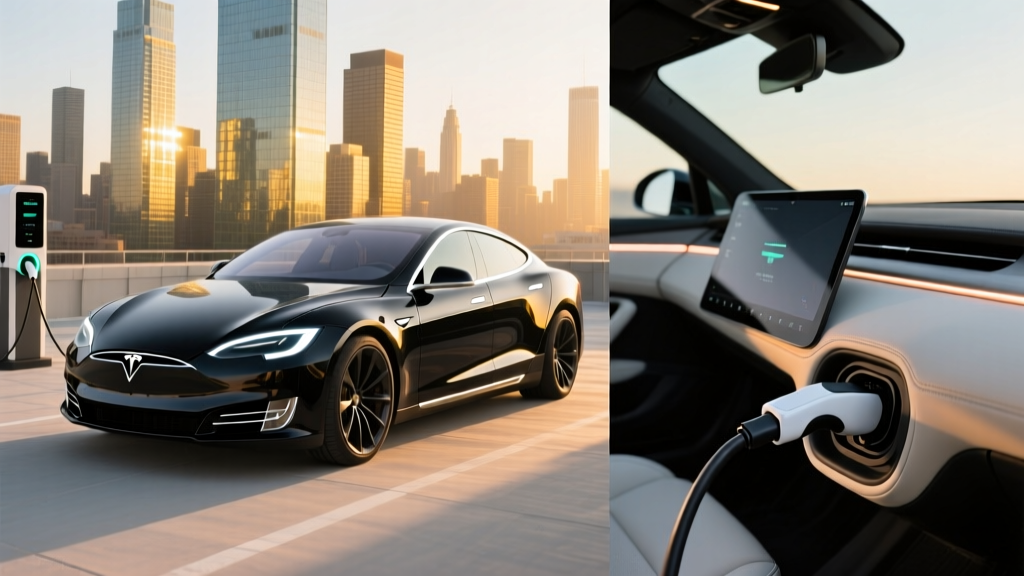
Tesla's V3 and V4 Superchargers deliver up to 250 kW peak on all current models. But peak kW is not sustained kW — here's what the charge curve actually looks like:
- 10–30% SoC: Sustains near 250 kW (Model 3/Y) or ~230 kW (Model S/X with larger packs)
- 30–60% SoC: Tapers to ~150–170 kW
- 60–80% SoC: Further taper to ~80–100 kW
- Above 80%: Drops below 50 kW — never fast-charge past 80% on road trips unless necessary
| Charging Level | Power | Miles Added/Hour | Use Case |
|---|---|---|---|
| Level 1 (120V) | ~1.4 kW | ~3–5 mi/hr | Emergency/top-off only |
| Level 2 (240V, 48A) | 11.5 kW | ~36–44 mi/hr | Daily home charging |
| DC Fast (V3 Supercharger) | Up to 250 kW | ~1,000+ mi/hr (peak) | Road trips |
Home charging cost: A Tesla Wall Connector costs ~$475. Professional installation on an existing 60A+ circuit runs $500–$1,500. If your panel needs a 200A upgrade, budget an additional $1,500–$3,000. Always get a licensed electrician's quote before committing.
Pricing, Trims & Federal Tax Credit Eligibility
Tesla's pricing has shifted repeatedly, but as of early 2026, the lineup breaks down as follows:
| Model / Trim | Base MSRP | §30D Credit Potential | Effective Price |
|---|---|---|---|
| Model 3 RWD | $38,990 | Up to $7,500* | ~$31,490* |
| Model 3 Long Range AWD | $47,740 | Up to $7,500* | ~$40,240* |
| Model Y Long Range AWD | $49,630 | Up to $7,500* | ~$42,130* |
| Model S Long Range | $89,990 | $0 (over MSRP cap) | $89,990 |
| Model X Long Range | $94,990 | $0 (over MSRP cap) | $94,990 |
*§30D credit requirements (2026 rules, per IRS.gov):
- MSRP cap: Sedans ≤ $55,000; SUVs/pickups ≤ $80,000 — eliminates Model S and Model X
- Buyer income cap: AGI ≤ $150K single / $300K joint filers
- Battery sourcing: Critical minerals and battery components must meet escalating North American/free-trade thresholds — Tesla's Austin and Fremont-built vehicles with LFP or domestically sourced NMC cells have generally qualified, but Tesla shifts supply chains frequently. Verify at the point of sale.
- Point-of-sale transfer: You can apply the credit as a down-payment reduction at the dealer (Tesla included) rather than waiting for tax filing
Technology, Driver Assists & Interior
Tesla's cabin remains minimalist — a 15.4-inch center touchscreen (17-inch tilt screen on Model S/X) controls virtually everything, including glovebox release and mirror adjustment. The 2026 refresh adds a rear touchscreen for Model 3/Y passengers and improved ventilated seats.
Autopilot & FSD (Supervised):
Standout tech:
- Over-the-air updates that add features post-purchase
- Sentry Mode dashcam surveillance with phone alerts
- Dog Mode and Camp Mode for climate-controlled parked scenarios
- Native Supercharger routing with battery preconditioning
- Gaming and streaming on the center screen while parked
Notable drawbacks:
- No Apple CarPlay or Android Auto — Tesla's ecosystem only
- No traditional instrument cluster (all info on center screen)
- Turn-signal stalk removed on refreshed Model 3/Y — signals on steering wheel buttons
- Panel gaps and paint quality still inconsistent vs. German competitors
- No physical buttons for climate, volume, or defrost
Warranty & Battery Longevity
Tesla's warranty coverage is competitive but not class-leading:
- Basic vehicle: 4 years / 50,000 miles
- Battery & drive unit: 8 years / 120,000 miles (Model 3/Y Long Range, Model S/X) or 8 years / 100,000 miles (Model 3 RWD with LFP)
- Capacity retention guarantee: Tesla warrants at least 70% battery capacity during the warranty period
Real-world data from Tesla's 2025 Impact Report shows Model 3/Y batteries retaining approximately 85% capacity at 150,000 miles on average. NMC chemistry in Long Range models degrades slightly faster in the first 20,000 miles before stabilizing. LFP batteries in the RWD trim tolerate regular 100% charging and show slower long-term degradation, making them well-suited for daily commuters who charge nightly.
Battery replacement cost (out of warranty): $12,000–$18,000 depending on pack size and model — a figure worth factoring into 10+ year ownership plans.
Who Should Buy a Tesla in 2026?
- You rely on road trips and want the most mature DC fast-charging network in the US
- You want OTA software updates that genuinely add features over time
- You value one-pedal driving with strong regenerative braking
- You want the strongest resale value in the EV segment (though depreciation has increased since 2023 price cuts)
- You need Apple CarPlay (Hyundai Ioniq 5/6, BMW i4, Ford Mustang Mach-E)
- You want a traditional luxury interior with physical controls (BMW iX, Mercedes EQE)
- You need a sub-$35,000 EV (Chevrolet Equus EV, older used Tesla Model 3)
- You want a truck form factor (Rivian R1T, Ford F-150 Lightning)
Pros & Cons at a Glance
- Best-in-class Supercharger network (65,000+ stalls globally)
- Strong efficiency (kWh/100mi among lowest in segment)
- Excellent OTA update track record
- Class-leading range on Model S
- Point-of-sale tax credit reduces upfront cost
- No CarPlay/Android Auto
- Build quality inconsistency
- FSD (Supervised) remains Level 2 — not autonomous
- Model S/X priced out of tax credit eligibility
- Increasing competition erodes value advantage
Frequently Asked Questions
How many Tesla vehicles have been sold worldwide?
Through 2025, Tesla has delivered approximately 8.3 million vehicles globally since 2008. Annual deliveries have plateaued around 1.8 million as competition intensifies, particularly from BYD in China and legacy automakers in Europe and North America.
What is the real-world range of a Tesla Model 3 or Model Y?
The Model 3 Long Range (EPA 341 mi) delivers roughly 280–300 miles on a highway trip at 70 mph in mild weather, dropping to 230–260 miles in sub-freezing temperatures. The Model Y Long Range (EPA 320 mi) returns about 260–285 miles highway in similar conditions.
How fast does a Tesla charge at home and on the road?
On a V3 Supercharger, Tesla's 250 kW peak delivers a 10–80% charge in approximately 25–31 minutes depending on the model. At home on a Level 2 Wall Connector (11.5 kW), expect roughly 36–44 miles of range per hour of charging — enough to fully replenish overnight for most drivers.
Does the Tesla Model Y qualify for the $7,500 federal tax credit?
The Model Y Long Range AWD (MSRP $49,630) falls under the §30D SUV MSRP cap of $80,000 and has generally qualified for up to $7,500 — but eligibility depends on your AGI (≤$300K joint), battery sourcing compliance, and point-of-sale verification. Always confirm current eligibility on fueleconomy.gov and with your tax professional before purchasing.
Is Tesla still worth buying vs. Hyundai, Ford, or BMW?
Tesla's Supercharger network, efficiency, and software remain advantages. But the Hyundai Ioniq 5 charges faster (800V architecture, 10–80% in ~18 min), the Ford Mustang Mach-E offers CarPlay, and the BMW i4 delivers a more premium interior. If charging access and software matter most, Tesla wins. If interior quality, CarPlay, or charging speed matter more, cross-shop aggressively.
How long will a Tesla battery last?
Tesla's NMC batteries in Long Range models typically retain ~85% capacity at 150,000 miles based on fleet data. LFP batteries in the Model 3 RWD show even slower degradation and tolerate daily 100% charges. The 8-year/120,000-mile battery warranty covers defects and capacity loss below 70%. Out-of-warranty replacements run $12,000–$18,000.