Why Tesla Sales in Germany Matter for American EV Shoppers
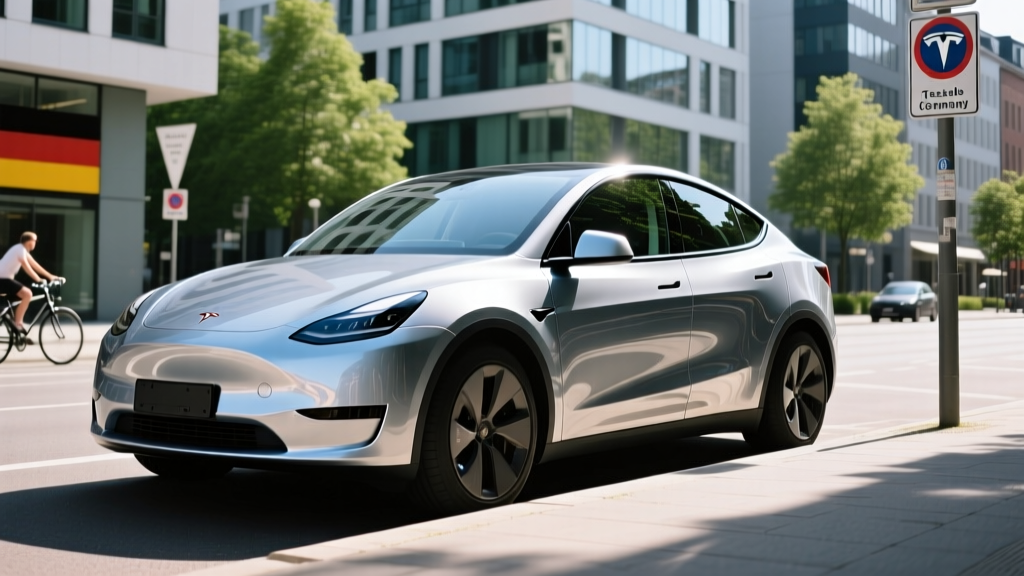
When Tesla's Gigafactory Berlin-Brandenburg ramped to over 5,000 vehicles per week, it didn't just reshape Tesla sales in Germany — it altered the global supply chain for the Model Y, Tesla's best-selling crossover. European-market feedback has directly influenced the 2026 US-spec Model Y's interior refinements, suspension tuning, and acoustic glass. For US buyers, understanding this transatlantic loop means getting a sharper product at a more competitive price point, as Tesla leverages economies of scale across two continents.
This review covers the 2026 Tesla Model Y as sold in the United States, with exact specs, real-world range data, charging performance, and federal tax credit eligibility under current IRS §30D rules.
2026 Model Y: Spec Table at a Glance
| Attribute | Long Range RWD | Long Range AWD | Performance |
|---|---|---|---|
| EPA Range | 320 mi | 308 mi | 285 mi |
| Battery (usable) | 75 kWh (est.), LFP | 75 kWh (est.), NMC | 75 kWh (est.), NMC |
| Drivetrain | Rear-Wheel Drive | Dual Motor AWD | Dual Motor AWD |
| Horsepower | 295 hp | 384 hp | 456 hp |
| 0–60 mph | 6.5 sec | 4.8 sec | 3.5 sec |
| Max DC Fast Charge | 250 kW | 250 kW | 250 kW |
| 10–80% DC Time | ~25 min | ~25 min | ~25 min |
| Level 2 Rate | 11.5 kW (~37 mi/hr) | 11.5 kW (~37 mi/hr) | 11.5 kW (~37 mi/hr) |
| MPGe (combined) | 122 MPGe | 117 MPGe | 111 MPGe |
| Efficiency | 28 kWh/100 mi | 29 kWh/100 mi | 30 kWh/100 mi |
| Base MSRP | $44,990 | $48,990 | $54,490 |
Real-World Range: What the EPA Sticker Doesn't Tell You
Real-World Expectation: Plan for ~260–280 miles on sustained highway driving at 70–75 mph. In cold weather (below 32°F / 0°C), expect a 15–25% reduction, yielding roughly 220–260 miles depending on cabin heating use and terrain. City driving with regenerative braking recovers closer to the EPA sticker.
Tesla's LFP (lithium iron phosphate) battery in the RWD trim offers excellent cycle life and can be charged to 100% daily without degradation concerns — a significant ownership advantage. However, LFP chemistry is more sensitive to cold temperatures, so preconditioning the battery before DC fast charging in winter is essential to hit peak charge rates. The NMC (nickel manganese cobalt) packs in AWD and Performance trims deliver slightly better cold-weather performance but carry the standard recommendation to charge to 80% for daily use.
According to fueleconomy.gov, the Model Y's efficiency of 28–30 kWh/100 mi ranks among the best in the electric crossover segment, a result of Tesla's industry-leading thermal management and aerodynamic drag coefficient of 0.23.
Charging Speed: DC Fast, Level 2, and the Charge Curve Reality
The 2026 Model Y peaks at 250 kW on a V3 (or newer V4) Tesla Supercharger or any CCS-compatible DC fast station (via the NACS-to-CCS adapter now included, or native NACS at non-Tesla networks adopting the standard). That peak rate holds between roughly 10–45% State of Charge (SoC), then tapers progressively:
- 10–45% SoC: ~250 kW sustained
- 45–65% SoC: ~170–200 kW
- 65–80% SoC: ~100–130 kW
- 80–100% SoC: ~40–60 kW (trickle)
This taper is why the 10–80% time lands around 25 minutes, not the "15 minutes" some marketing materials imply from peak rate alone. On a road trip, plan your stops around the 10–80% window and skip topping off to 100% unless your destination lacks charging.
At home, the onboard charger accepts up to 11.5 kW on a 48-amp Level 2 circuit (hardwired, 60-amp breaker). That delivers roughly 37 miles of range per hour, meaning a full overnight charge from 20% to 80% takes about 5–6 hours. Tesla's Wall Connector remains the most cost-effective home option at around $475 for the unit, with professional installation typically running $500–$1,500 depending on panel proximity and local permitting.
Pricing, Tax Credits, and Total Cost
| Trim | MSRP | Destination | §30D Credit Potential | Effective Price |
|---|---|---|---|---|
| Long Range RWD | $44,990 | $1,390 | Up to $7,500* | ~$38,880* |
| Long Range AWD | $48,990 | $1,390 | Up to $7,500* | ~$42,880* |
| Performance | $54,490 | $1,390 | Up to $7,500* | ~$48,380* |
* Federal §30D tax credit eligibility depends on multiple factors per current IRS rules:
- MSRP Cap: SUVs/crossovers must be ≤ $80,000 — all Model Y trims qualify.
- Buyer Income Cap: AGI ≤ $150,000 (single) / $300,000 (joint). Exceed this and the credit phases out entirely.
- Battery Sourcing: The $7,500 credit splits into $3,750 for critical-mineral sourcing and $3,750 for battery-component manufacturing, both with escalating domestic-content thresholds. Tesla's US-assembled battery packs have historically met these requirements, but confirm at point of sale — rules tighten annually.
- Point-of-Sale Transfer: You can transfer the credit to the dealer at purchase, reducing your out-of-pocket cost immediately rather than waiting for a tax refund.
Always verify eligibility with a tax professional before relying on the credit in your purchase budget.
Performance, Ride, and Daily Drivability
The Long Range AWD's 4.8-second 0–60 mph time is quick enough to merge onto any freeway with authority, while the Performance trim's 3.5-second sprint rivals sports cars costing twice as much. Dual-motor torque vectoring provides confident all-weather traction — a reason the Model Y dominates Tesla sales in Germany, where winter conditions and Autobahn-speed stability demand composure.
For 2026, Tesla has carried over the revised suspension introduced in the "Juniper" refresh: softer damping over low-speed bumps, improved acoustic isolation, and ventilated front seats as standard on Long Range trims. Ride quality still trends firm compared to a Hyundai Ioniq 5 or Ford Mustang Mach-E, but it's a meaningful step up from pre-2025 builds.
Cargo space remains a strong suit: 30.2 cu ft behind the second row and 72.1 cu ft with seats folded, plus a 4.1 cu ft front trunk (frunk) for charging cables or groceries. Rear legroom measures 40.5 inches, adequate for adults on longer trips.
Technology, Autopilot, and What It Doesn't Do
Tesla's Autopilot (standard) and Full Self-Driving Supervised (FSD, $8,000 option or $99/mo subscription) are Level 2 driver-assistance systems. They require continuous driver supervision — hands on or near the wheel, eyes on the road. They are not self-driving. The vehicle does not handle all driving scenarios autonomously. You are legally and operationally responsible at all times.
The 2026 Model Y's 15.4-inch center touchscreen runs Tesla's latest infotainment stack, which now includes native Apple CarPlay and Android Auto projection — a concession to European market demand that benefits US buyers as well. The Tesla app ecosystem, Sentry Mode dashcam recording, and over-the-air updates remain best-in-class for feature velocity.
FSD Supervised impresses on well-marked highways and suburban arterials but can struggle with construction zones, faded lane markings, and unprotected left turns in dense urban traffic. Treat it as a fatigue-reducer on long trips, not a replacement for attention.
Warranty and Long-Term Battery Confidence
| Component | Coverage |
|---|---|
| Basic Vehicle | 4 years / 50,000 miles |
| Battery & Drive Unit | 8 years / 120,000 miles (Long Range/Performance) |
| Battery Capacity Retention | ≥ 70% over warranty period |
Tesla guarantees the battery will retain at least 70% of its original capacity during the warranty window. In practice, fleet data from high-mileage Model Y owners shows degradation curves flattening around 90–92% capacity after 50,000 miles, with LFP packs in RWD models showing even slower fade. Replacement cost out of warranty remains steep — roughly $12,000–$16,000 for a full pack — but catastrophic failure within the first decade is statistically rare based on NHTSA complaint databases.
Pros and Cons
Pros
- Class-leading efficiency (28 kWh/100 mi RWD)
- Supercharger network access — most reliable DC network in the US
- LFP battery option allows daily 100% charging without degradation worry
- Strong cargo capacity (72.1 cu ft max) with frunk
- Over-the-air updates continuously add features
- Eligible for full $7,500 §30D credit (verify sourcing at purchase)
Cons
- Firm ride quality vs. Hyundai Ioniq 5 or Kia EV6
- FSD ($8,000) is expensive and still Level 2 — not autonomous
- No physical buttons for climate or mirrors — all touchscreen
- Cold-weather range loss more pronounced on LFP RWD trim
- Insurance premiums run 15–25% higher than comparable ICE crossovers
- Rear visibility limited by thick C-pillars and small rear window
Who Should Buy the 2026 Model Y?
Best for: Daily commuters with home charging access, small families needing 30+ cu ft of cargo flexibility, and frequent road-trippers who value the Supercharger network's reliability. The Long Range AWD at ~$42,880 after the federal credit (if eligible) is the sweet spot for value, range, and all-weather capability.
Look elsewhere if: You prioritize a plush ride (try the Ioniq 5), need third-row seating (Kia EV9), or want to avoid Tesla's touchscreen-only control philosophy. Buyers in apartments without home charging should weigh the public-charging time cost carefully — even 25-minute fast charges add up versus a gas fill-up.
Frequently Asked Questions
What is the real-world range of the 2026 Tesla Model Y?
Expect 260–280 miles on highway trips at 70 mph in mild weather, and 220–260 miles in freezing conditions. City driving with regen braking returns closer to the 320-mile EPA sticker on the RWD trim.
How fast does the Model Y charge at home and on the road?
On DC fast charging, it peaks at 250 kW and reaches 10–80% in about 25 minutes. At home on a 48-amp Level 2 charger, it gains roughly 37 miles of range per hour (11.5 kW).
Does the 2026 Model Y qualify for the $7,500 federal EV tax credit?
All trims fall under the $80,000 SUV MSRP cap. However, you must meet IRS income limits (≤ $300,000 AGI joint), and the battery must satisfy critical-mineral and component-sourcing thresholds that tighten each year. Confirm with your dealer and a tax professional before purchase.
Is the Model Y worth buying over the Ford Mustang Mach-E or Hyundai Ioniq 5?
The Model Y wins on efficiency, Supercharger network access, and cargo space. The Ioniq 5 offers a more comfortable ride and 800V architecture for faster peak charging on compatible stations. The Mach-E provides a more traditional interior layout. Test-drive all three — your preference for ride quality vs. tech integration will decide it.
How do Tesla sales in Germany affect the US Model Y?
Gigafactory Berlin's high-volume production has driven global cost reductions and forced interior/suspension refinements to meet European buyer expectations. US-market 2026 Model Y vehicles benefit from these improvements, including acoustic glass, revised damping, and ventilated seats that were first prioritized for the European market.