Why Tesla Sales in Europe Still Revolve Around One Vehicle
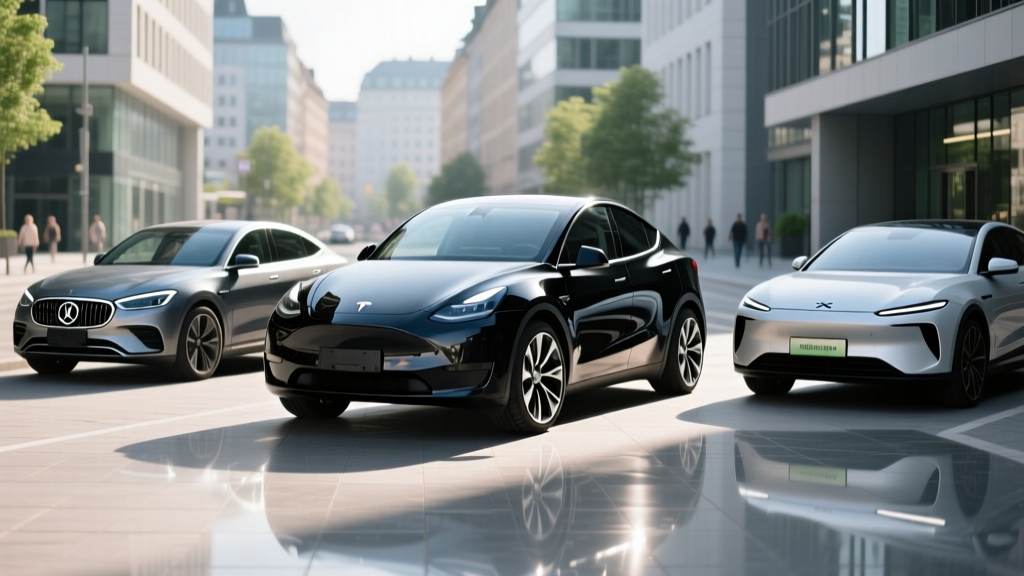
Tesla's footprint on the European EV market has been defined by a single model since 2022: the Model Y. Despite intensifying competition from the Volkswagen ID.4, Hyundai Ioniq 5, and a wave of Chinese entrants including BYD's Atto 3 and Seal U, Tesla sales in Europe continue to track closely with Model Y delivery volumes. In key markets like Norway, Germany, the Netherlands, and the UK, the Model Y has consistently placed among the top-selling EVs — and frequently the top-selling car overall — through 2024 and 2025.
For 2026, Tesla refreshed the Model Y with the "Juniper" update, bringing a redesigned interior, improved NVH (noise, vibration, harshness), a front light bar, rear passenger screen, and revised suspension tuning. But the fundamental engineering proposition remains the same: a mid-size crossover with class-leading efficiency, access to the Supercharger network, and a starting price that undercuts many rivals. Below, we break down the 2026 Model Y Long Range AWD — the volume variant — with the exact numbers buyers need.
2026 Tesla Model Y Long Range AWD: Core Specifications
| Attribute | Value |
|---|---|
| EPA Range | 320 miles |
| Battery (usable) | ~75 kWh, NMC (nickel manganese cobalt) |
| Drivetrain | Dual-motor AWD |
| Horsepower | 384 hp (combined) |
| 0–60 mph | 4.8 seconds |
| Top Speed | 125 mph |
| MPGe (combined) | 122 MPGe |
| Efficiency | 28 kWh/100 mi |
| Max DC Fast Charge | 250 kW peak |
| 10–80% DC Charge | ~25 minutes |
| Level 2 (11.5 kW) | ~37 mi/hr |
| Cargo (rear seats up) | 30.2 cu ft |
| Cargo (rear seats folded) | 72.0 cu ft |
| Rear Legroom | 38.2 in |
| Front Headroom | 40.3 in |
| Towing Capacity | 3,500 lbs |
| Battery Warranty | 8 yr / 120,000 mi |
| Vehicle Warranty | 4 yr / 50,000 mi |
| Base MSRP | $47,990 |
Range and Efficiency: EPA vs. Real World
Real-World Expectation: ~260–280 mi at sustained highway speeds (70–80 mph); ~220–250 mi in freezing temperatures (below 32°F) with cabin heating. City/regenerative driving in mild weather can approach or slightly exceed the EPA figure.
The 2026 Model Y Long Range AWD carries an EPA-estimated 320 miles of range. That figure represents a mixed driving cycle, but real-world results diverge significantly depending on conditions — a truth that applies to every EV but matters especially for road-trip planning.
At highway speeds of 75 mph on a warm day, expect roughly 260–280 miles before needing to charge. The Model Y's efficiency advantage — roughly 28 kWh per 100 miles — is among the best in its class. The Hyundai Ioniq 5 AWD, for comparison, consumes about 32 kWh/100 mi. That 4 kWh/100 mi gap translates to roughly 30–40 additional miles of real-world range in the Tesla despite similar battery capacities.
In cold weather (below freezing), lithium-ion batteries face increased internal resistance, and cabin heating draws significant power without a heat pump's efficiency gains. While the Juniper-refreshed Model Y includes a standard heat pump (which reduces winter HVAC energy draw by roughly 30–50% compared to resistive heating), you should still plan for 220–250 miles of usable range in harsh winter conditions. European buyers in Scandinavia and alpine regions should factor this into route planning.
Charging Speed: DC Fast, Level 2, and the Supercharger Advantage
| Charging Level | Max Power | Speed | Notes |
|---|---|---|---|
| Level 1 (120V) | ~1.4 kW | ~4 mi/hr | Emergency/trickle only |
| Level 2 (240V, 48A) | 11.5 kW | ~37 mi/hr | Full charge in ~8 hrs |
| DC Fast (V3 Supercharger) | 250 kW peak | 10–80% in ~25 min | Sustained rate tapers above 60% |
| DC Fast (CCS adapter, EA/others) | ~150–200 kW typical | 10–80% in ~30–35 min | Varies by station; CCS adapter included |
The Model Y's 250 kW peak DC fast-charging rate is not sustained across the entire session. Like all EVs, the charge curve tapers as the battery fills. You'll see peak rates between roughly 10–40% state of charge (SoC), after which the rate progressively decreases. A 10–80% session at a V3 Supercharger takes approximately 25 minutes under ideal thermal conditions.
Preconditioning matters. Navigate to a Supercharger using the car's built-in routing, and the battery will automatically warm to optimal charging temperature before you arrive. Without preconditioning — for example, plugging into a non-Tesla DC charger on a cold morning — peak rates may be limited to 100–150 kW until the battery warms, adding 10+ minutes to your session.
For home charging, a Level 2 Wall Connector at 48 amps delivers 11.5 kW, adding roughly 37 miles of range per hour. A full overnight charge from 20% to 100% takes about 7–8 hours. Installation costs for a home Level 2 setup typically range from $800–$2,500 depending on panel capacity and run length — budget more if your electrical panel requires a 200A upgrade.
The Supercharger network remains Tesla's strongest competitive moil in both North America and Europe. In Europe, Tesla has opened many Supercharger stalls to non-Tesla EVs, but Tesla owners still benefit from seamless plug-and-charge integration, automatic billing, and generally higher station reliability compared to fragmented third-party networks.
Performance and Driving Dynamics
The Long Range AWD pairs a front induction motor with a rear permanent-magnet synchronous motor for a combined 384 hp and 364 lb-ft of torque. The 0–60 mph time of 4.8 seconds is brisk — quicker than most buyers need and quicker than rivals like the ID.4 Pro S AWD (5.4 sec) and the Ioniq 5 AWD (5.1 sec).
The Juniper suspension retuning softens the ride over sharp impacts compared to the pre-2025 Model Y, though it remains firmer than comfort-oriented competitors like the Ford Mustang Mach-E. Steering is precise and well-weighted. Regenerative braking is strong and enables one-pedal driving in most scenarios, though Tesla removed the user-adjustable regen setting several model years ago — you get one level of regen, and it's aggressive.
NVH improvements in the Juniper refresh are notable: acoustic glass and additional insulation reduce wind and road noise measurably at highway speed, addressing one of the most common complaints about the previous generation.
Technology, Safety, and Driver Assistance
The 2026 Model Y centers its tech experience on a 15.4-inch touchscreen that handles infotainment, climate, navigation, and vehicle settings. The Juniper refresh adds an 8-inch rear-passenger screen for climate control and media, ventilated front seats, ambient lighting, and a front light bar. Wireless phone charging, HEPA air filtration (Bioweapon Defense Mode), and a powered liftgate are standard.
Autopilot and FSD (Supervised): Every Model Y ships with Tesla's Basic Autopilot, which includes adaptive cruise control and lane-centering on marked highways. The optional Full Self-Driving (Supervised) package ($8,000 or $99/month) adds automatic lane changes, traffic-light recognition, and city-street navigation assistance.
Autopilot and FSD (Supervised) are Level 2 driver-assistance systems. The driver must remain fully engaged, hands on the wheel (or providing torque input), and eyes on the road at all times. These are not self-driving systems. Tesla's camera-only "Tesla Vision" approach forgoes radar and ultrasonic sensors — a design choice that has drawn scrutiny from NHTSA and resulted in recalls for phantom-braking and driver-monitoring concerns.
Safety ratings are strong: the Model Y earned a 5-star overall rating from NHTSA and a Top Safety Pick+ designation from IIHS in prior model years. European NCAP also awarded the Model Y five stars with top marks in adult occupant protection.
Pricing, Trims, and Federal Tax Credit Eligibility
| Trim | MSRP | Drivetrain | EPA Range |
|---|---|---|---|
| Long Range RWD | $44,990 | RWD | 335 mi |
| Long Range AWD | $47,990 | Dual-motor AWD | 320 mi |
| Performance | $52,490 | Dual-motor AWD | 295 mi |
- Maximum credit: $7,500 (if both battery-component and critical-mineral requirements are met)
- MSRP cap: Vehicle must be under $80,000 (SUVs/crossovers) — Model Y qualifies at all trims
- Buyer income cap: AGI ≤ $150,000 (single) / $225,000 (head of household) / $300,000 (joint)
- Battery sourcing: Must meet escalating critical-mineral and battery-component thresholds per IRS §30D guidelines
- Point-of-sale transfer: Eligible buyers can apply the credit as a down-payment reduction at purchase
Battery-sourcing requirements tighten annually. Consult a tax professional and verify current eligibility on IRS.gov before purchasing. State and local incentives may apply separately.
The Model Y Long Range AWD at $47,990 qualifies as a crossover/SUV under the §30D MSRP cap of $80,000. Whether you receive the full $7,500, a partial $3,750, or nothing depends entirely on your income and the battery-sourcing compliance for your specific build. Tesla's Fremont and Austin factories have shifted battery-cell sourcing in recent years, but critical-mineral requirements have tightened each model year since 2024. Always verify before ordering.
With the full $7,500 credit applied at point of sale, the effective price of the Long Range AWD drops to approximately $40,490 — competitive with a well-equipped Toyota RAV4 Hybrid and significantly below European competitors when adjusted for incentives.
European Market Context: Why Tesla Sales in Europe Remain Resilient
Tesla sales in Europe face headwinds that don't appear in quarterly delivery charts. Brand sentiment in markets like Germany and Norway has softened due to association with CEO Elon Musk's political activities, and BYD's Seal U and MG4 have captured budget-conscious buyers. Yet the Model Y retains structural advantages:
- Supercharger network density: Europe's public-charging infrastructure remains fragmented. Tesla's proprietary network (now partially open) still offers the most reliable cross-border charging experience.
- Efficiency leadership: At 28 kWh/100 mi, the Model Y consumes less electricity per mile than nearly every rival, reducing per-km operating costs — a significant factor in European markets where electricity prices average €0.25–0.35/kWh.
- Giga Berlin production: Local manufacturing reduces shipping costs and delivery times, enabling Tesla to price aggressively in the EU market.
- Resale value: Despite price cuts eroding used values, the Model Y still commands stronger residuals than the ID.4 or Mach-E in most European markets.
In Norway — Europe's most EV-dense market — the Model Y was the best-selling vehicle (of any powertrain) in 2023 and 2024, though registration volumes dipped in 2025 as the market matured and new incentives shifted. Germany, the UK, Sweden, and the Netherlands remain the next-largest European markets, where the Model Y competes against strong domestic offerings.
Pros, Cons, and Who Should Buy
Pros
- Class-leading efficiency (28 kWh/100 mi)
- Supercharger network access (most reliable DC network)
- Strong real-world range (320 mi EPA)
- Spacious cargo area (72 cu ft folded)
- Quick 250 kW DC charging capability
- Heat pump standard (improves cold-weather range)
- OTA updates continuously add features
Cons
- No physical buttons or stalks (all touchscreen)
- FSD costs $8,000 extra and remains Level 2 only
- Camera-only vision system has phantom-braking history
- Rear visibility limited by design
- Non-adjustable regenerative braking
- Insurance premiums above class average
- Brand controversy affects resale in some European markets
Best for: Daily commuters and families who need a versatile, efficient crossover with strong road-trip capability. The Model Y's Supercharger access, 320-mile range, and 3,500-lb towing capacity make it one of the most practical EVs for mixed use — city commuting during the week, long-distance travel on weekends. European buyers who regularly cross borders will find the Supercharger network's reliability especially valuable.
Consider alternatives if: You prefer physical controls and traditional ergonomics (look at the Hyundai Ioniq 5 or Kia EV6), you need third-row seating (Kia EV9), or you want the quietest, most comfort-tuned ride in the segment (BMW iX or Mercedes EQB).
Frequently Asked Questions
What is the real-world range of the 2026 Model Y Long Range AWD?
The EPA rates it at 320 miles. In real-world highway driving at 75 mph, expect 260–280 miles. In freezing temperatures with cabin heating, plan for 220–250 miles. The standard heat pump mitigates but does not eliminate cold-weather range loss.
How fast does the Model Y charge at home and on the road?
At a V3 Supercharger (250 kW peak), 10–80% takes approximately 25 minutes with battery preconditioning. At home on a 48A Level 2 charger (11.5 kW), you'll add about 37 miles per hour, fully replenishing overnight. On non-Tesla DC networks with the included CCS adapter, expect 150–200 kW peak and 10–80% in 30–35 minutes depending on the station.
Does the 2026 Model Y qualify for the $7,500 federal EV tax credit?
The Model Y qualifies under the MSRP cap ($80,000 for SUVs/crossovers). However, the full $7,500 credit depends on meeting IRS critical-mineral and battery-component sourcing requirements, which tighten annually. Buyer income must not exceed $300,000 (joint) / $150,000 (single). Verify current eligibility on IRS.gov and consult a tax professional.
Is the Model Y worth buying vs. the Ioniq 5, ID.4, or BYD Seal U?
The Model Y wins on efficiency, charging infrastructure access, and cargo space. The Ioniq 5 charges faster at 800V-capable stations (10–80% in ~18 min at 350 kW chargers) and offers more distinctive styling with physical controls. The ID.4 is softer and more comfort-oriented but less efficient. The BYD Seal U undercuts on price in Europe but lacks Supercharger access and has a less proven service network outside China.
What battery chemistry does the Model Y Long Range use?
The Long Range AWD uses an NMC (nickel manganese cobalt) lithium-ion pack with approximately 75 kWh of usable capacity. NMC offers higher energy density than LFP (lithium iron phosphate), which Tesla uses in the base RWD Standard Range model. NMC batteries are generally recommended to be charged to 80% daily, with 100% reserved for trips — whereas LFP batteries can and should be charged to 100% regularly.
Is Tesla Autopilot self-driving?
No. Autopilot and the optional FSD (Supervised) are SAE Level 2 driver-assistance systems. The driver must remain fully attentive with hands on the wheel and eyes on the road. Tesla's camera-only approach lacks the lidar redundancy found in Level 4 robotaxi systems like Waymo. Treat these as advanced cruise control and lane-keeping, not autonomous driving.